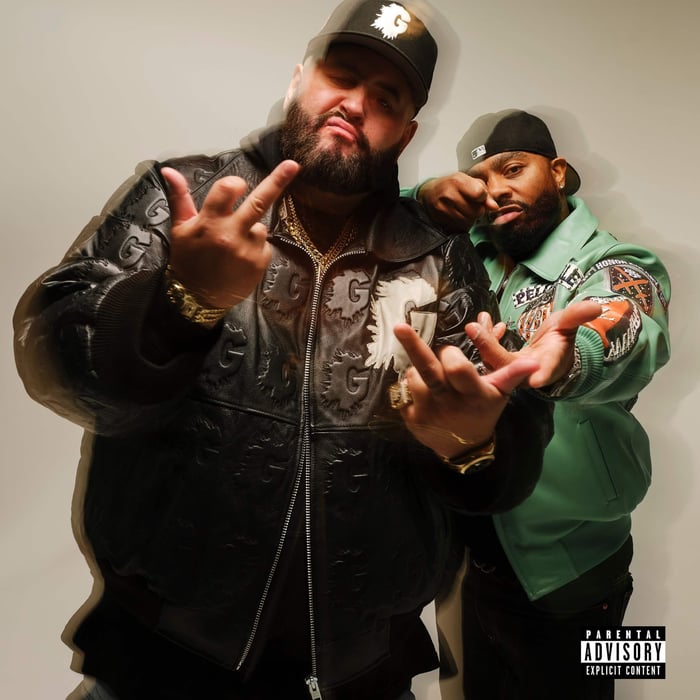
Boom You Album Review: NEMS & Ron Browz Turn Threats Into Therapy


 See more Architeg Prints stories on Google.
Boom You Album Review: NEMS & Ron Browz Turn Threats Into Therapy
Boom You isn’t subtle: NEMS raps like a fight breaks out mid-thought, and Ron Browz keeps the room bright so you can’t pretend you didn’t hear it.
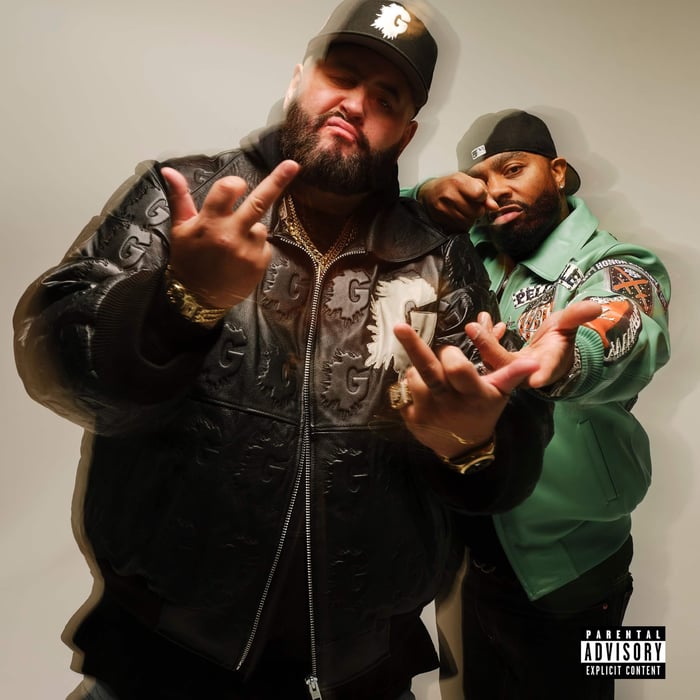
A record that kicks the door in, then explains why
Some albums ease you in. Boom You basically grabs your collar on track one and starts talking at full volume like it’s already track seven.
And that’s the point: this project feels built to remove the listener’s comfort. Not by being experimental, not by doing anything fancy—by making everything plain and still refusing to relax.
Ron Browz’s backstory hangs over every drum hit
Here’s the vibe I can’t shake: Ron Browz raps and produces like someone who learned early that the “big moment” can show up after the tragedy already happened. The first beat he heard on the radio was tied to Big L—picked for “Ebonics,” released later on The Big Picture, after Big L had already been killed. That’s not just trivia; you can hear that kind of origin story in the way Browz refuses to decorate these tracks.
Then there’s the other hinge point: Nas taking a Browz instrumental for “Ether,” and Browz not even knowing it was going to be that record until it was finished. Imagine your sound becoming part of rap history basically by accident. You’d either spend your life chasing that lightning, or you’d get stubborn and strip everything back to fundamentals so nobody can distract themselves from the core.
On Boom You, he chooses stubborn.
The production is intentionally “lights on” rap
If you’re hoping for lush layers, shimmering synth beds, or some trendy haze to blur the edges—nope. These beats are mostly drums and loops. That restraint isn’t a limitation; it’s a decision. Browz is basically saying: I’m not going to save you from the lyrics.
- “P Anthem” flips Junior M.A.F.I.A.’s “Player’s Anthem” into something meaner than it has any right to be. The melody gets buried under kicks that feel like they’re aimed at your sternum. It’s not “classic homage,” it’s more like taking something familiar and sanding off the nostalgia until it’s just pressure.
- “Kruger” runs a nightmare-movie hook and then makes the drums show up slightly wrong—late, spaced out, full of gaps. It actually sells the Freddy Krueger idea better than a bunch of horror-movie sound effects would’ve. The beat behaves like it’s stalking you, not chasing you.
- “The Bar Exam” straight-up borrows Black Moon’s “How Many MC’s” beat. That’s both a flex and a trap: you’re basically inviting Buckshot into the room to silently judge everybody. I’m not totally sure it’s “worth it” as a gamble… but I respect the nerve. Sometimes confidence is the aesthetic.
The arguable claim here: Browz isn’t trying to modernize anything—he’s trying to corner you into paying attention. The minimalism is confrontational, not nostalgic.
NEMS raps like he’s still in the ring—because he is
NEMS comes in with that battle-rapper posture where every line is either a punch or a setup for a punch. The detail that keeps echoing for me: he won 25 straight battles on Fight Klub before even dropping a mixtape. That’s not “fun fact” energy; it explains why the album’s default stance is aggression.
On “First48,” he drops lines that are so casually unwell they almost slip by because his delivery doesn’t blink. One moment he’s by a hospital yelling “death to the victim,” then he’s in the suburbs hunting for a new home after waving a gun near a school zone. It’s like watching someone toss Molotovs with the calmness of a guy making a grocery list.
And here’s the tricky part: I thought that constant heat would get monotonous. On first pass, I honestly did start to feel the same tempo of menace across tracks. But on second listen, it clicked that the sameness is the strategy. NEMS isn’t trying to show “range.” He’s trying to show stamina—like, how long can he keep the pressure up without needing a hook to breathe?
That said, there’s one mild problem: when everything is a threat, some threats stop sounding specific. A few songs could’ve used one extra left turn—one moment of weirdness—to make the violence feel less “default setting” and more “targeted emotion.”
Identity sits in the verses without an explanation, and that’s the flex
NEMS references his Puerto Rican heritage constantly, and he does it with the confidence of someone who doesn’t feel like translating himself for anybody.
He calls himself the “Puerto Rican Chris Wallace” on “The Bar Exam.” On “The Mush,” he frames it like Boricuas are already in on who he is—“he the one.” And “Bendición” uses the Spanish blessing for the title and hook, letting that word do cultural work without pausing for a footnote.
Then he drops “Alhamdulillah” on “Here I Go,” and it lands alongside Coney Island block talk like it’s the most normal thing in the world. NEMS got sober in 2009—no drinking, no smoking, no anything—and in 2024 he converted to Islam. A lot of artists would treat that as a “new era.” He doesn’t. He just stacks it next to everything else.
Arguable but I’ll say it anyway: the album’s quiet triumph is how it refuses to make identity inspirational. It’s just present—like breath.
The guests don’t change the weather, and that’s kind of the point
Lil’ Fame shows up on “Earl Manigault” and sounds exactly like Lil’ Fame has sounded since 1996: harsh, direct, unapologetically the same guy. Lines like “My shit more crack than Pookie at the Carter,” and “A buck fifty from ear to mouth” aren’t there to impress you with novelty—they’re there to remind you some styles are meant to be repeated like a ritual.
Papoose appears on “Here I Go” and does what he does: bars about being “the nicest alive,” plus a gun line about it being fired so much it needs to be employed. It’s a solid line buried inside a verse that, if I’m being honest, runs a little on autopilot. Not bad—just not hungry in the way the rest of the album is hungry.
The bigger choice is that neither guest disrupts the album’s atmosphere. Track one and track nine live in the same temperature. Some listeners will call that a flaw. I think it mostly pays off because Boom You is built like a brick wall: uniform, heavy, repetitive on purpose.
When the album stops bragging, it accidentally gets more dangerous
Then “Nothing Gon’ Stop Me” happens, and the album does the one thing I wasn’t expecting: it drops the tough-guy posture long enough to show what’s underneath it.
Ron Browz’s verse drifts—friend dying in a car crash, not knowing his father, anxiety about AI taking over, fear about Trump bringing in the troops. It doesn’t feel neatly outlined; it feels like somebody talking too fast because they don’t want to sit with the thought.
And then NEMS comes in and says the quiet part out loud: waking up mad, body knotted up, caught cheating, now he’s got to face his girl. It’s domestic, shame-flavored, human. No performance grit. Just a dude pinned to the wall by his own choices.
“That ain’t my therapist, nah, that’s my engineer.” — NEMS
That’s the album’s real reveal. The booth isn’t a stage here; it’s the one room where these guys can admit anything without it getting used against them later. Everywhere else on Boom You, the mic is a weapon. On this track, it’s a window, and weirdly, both of them sound more natural there than they probably planned to.
The title phrase works like a producer tag—ugly on purpose
Between songs, the phrase “I should fucking boom you” pops up in intros and outros, stitching the project together the way a producer tag would on another album. It’s abrasive, repetitive, almost stupidly blunt.
And that bluntness is the glue.
I kept wondering if it would get corny—like, say it enough times and it turns into a catchphrase costume. But it never quite collapses into parody because the rest of the record stays committed to the same unsmiling energy. The phrase becomes a mission statement: not “I am violent,” but “I am ready.” Readiness is the real obsession here.
There’s also an underlying irony the album doesn’t comment on but clearly understands: NEMS has been sober since 2009, found Islam in 2024, and still makes mixtapes about shooting people like it’s a day job he clocks into. Browz taught himself to make beats, and his first radio moment was connected to an artist who didn’t live to see the release. Both of them are still here, still loud, still on the same block—mentally and musically.
“It’s nothing paying homage to the man who made Ebonics.” That line lands like a nod and a warning at the same time.
Favorite moments (because pretending I don’t have bias would be silly)
I’m not going to rank the whole thing like a spreadsheet, but the tracks that actually stick are the ones that either heighten the pressure or crack the mask:
- “Nothing Gon’ Stop Me” — the one time the album admits what all that anger is doing to the body.
- “Earl Manigault” — Lil’ Fame shows up and proves consistency can still feel violent.
- “The Bar Exam (Black Moon Remix)” — borrowing that beat is risky, which is exactly why it works.
Conclusion
Boom You is what happens when two artists decide subtlety is just a way for listeners to avoid accountability. Ron Browz keeps the production bare so every bar hits like a shoe on concrete, and NEMS raps like the only emotion worth trusting is aggression—until one song proves he’s been carrying other emotions the whole time.
Our verdict: People who like rap that sounds like a bright-lit interrogation room will love this album—battle-heads, grimy beat loyalists, anyone who thinks “vibes” are overrated. If you need choruses, melodic relief, or even a hint of softness every few tracks, Boom You is going to feel like getting yelled at by design (because it is).
FAQ
- Is Boom You more about Ron Browz or NEMS?
It’s a true split: Browz sets a stripped, unforgiving frame, and NEMS fills it with constant confrontation. Neither feels like a “feature” on the other’s project. - Does the production ever get lush or experimental?
No, and that’s the point. The beats are mostly drums and loops—“lights on” production that refuses to distract you. - What’s the most personal track on the album?
“Nothing Gon’ Stop Me.” It’s the moment where the tough talk pauses and the anxiety leaks through. - Do the guest features change the sound a lot?
Not really. Lil’ Fame and Papoose slide into the same temperature; the album stays consistent from start to finish. - Why does the phrase “I should fucking boom you” keep appearing?
It functions like a grim tagline—part producer tag, part mission statement—tying the tracks together with the same blunt threat-energy.
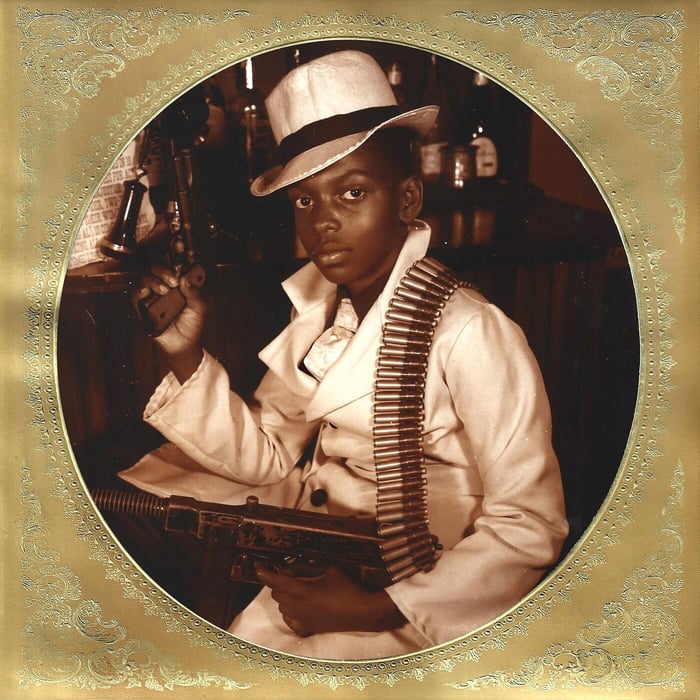
If this album’s cover has that same “no comfort allowed” vibe you want on your wall, you can shop a favorite album cover poster at our store here: https://www.architeg-prints.com.
 | DISCOUNTGET 30% OFF*Use code on your next order:
|
* This post may contain affiliate links, meaning we earn a commission if you make a purchase through these links, at no additional cost to you.