BEEMER ON BROADWAY Review: CRIMEAPPLE Drives Luxury Bars Into Traffic


 See more Architeg Prints stories on Google.
BEEMER ON BROADWAY Review: CRIMEAPPLE Drives Luxury Bars Into Traffic
BEEMER ON BROADWAY showcases CRIMEAPPLE’s ability to treat each beat like a distinct room he owns, delivering sharp lyricism and varied production without losing focus or energy.
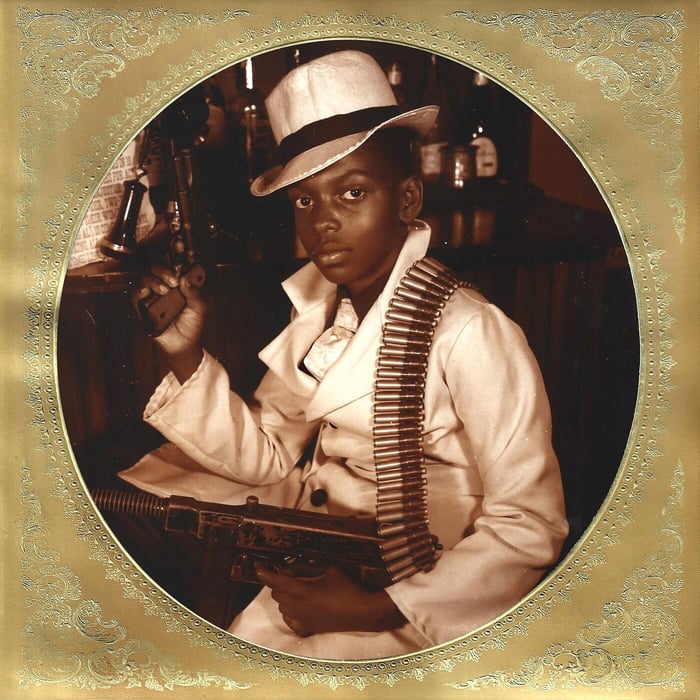
A cover that already tells you the posture
The first thing you notice is the stance: polished, expensive, and a little impatient—like the album already knows you’re going to ask it for “context,” and it’s going to keep walking anyway.

What BEEMER ON BROADWAY really sells isn’t a car-flex title or a location name-check. It’s the idea that CRIMEAPPLE has learned how to keep moving without getting sloppy. Most rappers dropping a dozen-plus projects in under a decade start sounding like they’re trying to meet a quota. Here, the opposite happens: he treats each collaboration like a short, controlled residency—show up, eat, talk slick, exit before anybody starts asking about “growth.”
Arguable take: the secret isn’t that he works a lot; it’s that he leaves early. That’s the discipline.
The real switch: one kitchen vs. six
Here’s the pivot that matters: instead of doing the single-producer lock-in, BEEMER ON BROADWAY runs a rotation—Preservation, LOMAN, QThree, Wino Willy, Comma Uno, DJ Skizz, and Cuffedgod. It’s the widest bench he’s had since that self-titled run back in 2020, and it changes his body language on the mic.
At first, I thought the multi-producer approach would scatter him—like he’d lose that tight, one-world feeling you get when an album lives inside a single beatmaker’s skull. But on second listen, the variety actually loosens his cadence in a good way. He’s not adapting so much as rearranging himself depending on the room: one track he’s drawling like he’s leaning on a marble counter, the next he’s snapping syllables like he’s late for a flight.
Arguable take: the “locked-in” collab albums can make him sound too comfortable—this one forces him to keep his shoulders up.
“Blue Angel” opens with a lie, then a warning
The opening move on “Blue Angel” is a vintage BMW ad sample telling you about a “brisk commute.” That’s cute. It’s also a setup, because as soon as Preservation’s filtered loop drops, CRIMEAPPLE starts rapping like he’s diagnosing the genre from a dim hallway.
He stacks medical terminology the way some rappers stack designer labels—except his version feels less like showing off and more like turning the rap game into a sick patient. “The game got hepatitis,” he says, and he’s already pivoting to swollen egos and encephalitis before the first idea even finishes landing. The trick is how lightly he carries it. A lesser rapper would underline every punchline like they’re afraid you won’t get it. CRIMEAPPLE just keeps walking.
Then he’ll flip the lens completely: one moment he’s talking about buying land in the Dominican Republic to disappear from public noise, the next he’s metaphorically X-raying friends for loyalty. And when he lands on “only my mama thought I’d get commas off the monologue,” it’s one of those compressed-life bars that doesn’t beg for applause—it just sits there like a fact you weren’t supposed to overhear.
Arguable take: that line isn’t “relatable,” it’s strategic—he’s reminding you the flex is built from somebody else believing first.
The beats aren’t just different—they’re different temperatures
This album doesn’t merely change producers; it changes climate track to track.
- LOMAN’s three beats (“Fireworks,” “Open Road,” “Jean Paul”) hit the hardest in terms of bounce. The drums leave enough pocket space for CRIMEAPPLE to do that thing where he slows down and speeds up inside the same couplet, like he’s bending time but pretending he isn’t.
- Comma Uno’s tracks feel sparser and meaner. “Broadway Interlude” comes off like a freestyle carved into stone—minimal, cold, almost ceremonial. And “No Reason” gives him the emptiest backdrop on the whole project, which is basically a dare: say something that stands up without scenery.
- Wino Willy’s “Patio Bonito” is the muggiest loop here, swamp-air production that matches the opening sample about a man traveling with three colonels and seven machine guns. That’s not “cinematic,” that’s suffocating on purpose.
If there’s a mild problem, it’s that the constant room-switching can make the album feel like it refuses to settle into one emotional temperature for long. Sometimes I wanted two tracks in a row that lived in the same weather. But I also get that restlessness is kind of the point: the title says motion, not residence.
Arguable take: this record doesn’t want cohesion—it wants leverage.
“Rosie Perez” is the commitment track—and it doesn’t blink
DJ Skizz gives him that slow boom-bap that practically forces you to lean back in your chair. “Rosie Perez” is where CRIMEAPPLE stops doing drive-by ideas and commits to a single conceit from top to bottom: he personifies his jewelry as women.
Rosie travels—Japan, Italy. Two “white bitches” named Anise and Claire are “twenty-four, VVS faces.” They’re heavy together and sometimes hurt to wear. He even mentions Rosie has a tattoo with his name on her clasp.
And here’s the sly part: he doesn’t wink at you. No “get it?” tone. No nudge-nudge. He plays it straight through both verses, the interlude, and the outro, so by the time you realize you’ve been listening to a love song about a Cuban link, you’re already emotionally participating in the lie.
Arguable take: this is the most focused writing on the album, and it’s not because the subject is deep—it’s because the form is disciplined.
Spanish isn’t seasoning here—it’s oxygen
A lot of rappers sprinkle bilingual lines like garnish, like they’re adding “flavor.” That’s not what’s happening on BEEMER ON BROADWAY. Spanish runs through these eleven tracks without subtitles, without explanation, without asking your permission.
“Patio Bonito” opens with that Colombian sample about colonels and machine guns. On “No Reason,” Mir Nicolas runs his entire verse in Spanish—buying a three-hundred-dollar necklace without thinking, calling Buenos Aires the new center of attention. “Pigs Feet” opens with a father sending his kid to school in Spanish. CRIMEAPPLE drops Spanglish ad-libs across “Fireworks” and “Broadway Interlude” like it’s the most normal thing in the world—because for him it is.
When he mentions customs asking why he’s in Colombia ten times a year on “Patio Bonito,” it lands funny and factual at the same time, the way real life does. There’s no “look how worldly I am” performance. It’s more like: this is the air in the room. Either breathe it or step outside.
I’ll admit, I wasn’t totally sure on first pass how much I was missing without translating every line in real time. But the confidence of the delivery makes the meaning feel present even when the specifics blur.
Arguable take: the album doesn’t translate because it doesn’t need you—it needs itself.
“Beef” turns the old question into a ledger
Late in the tracklist, “Beef” flips Biggie’s classic question into something colder. CRIMEAPPLE runs through what “beef” isn’t, then what “beef” is, and you can feel the focus tightening like a noose.
Children starving around the world. Spotify paying pennies per usage for lyrics. AI replacing people at work. Then he mentions oppressively wealthy people doing “wicked shit to kidnapped babies.” He also cites Michelle—someone who has died in his life from substance use. That’s not thrown in for drama; it lands like a bruise he doesn’t press on, because he doesn’t have to.
The structure matters: every “beef ain’t” shrinks petty issues. Every “beef is” replaces them with measurable ones. It’s an argument disguised as a hook pattern.
Arguable take: this is CRIMEAPPLE at his most morally direct, and it’s more unsettling than any threat-rap could be.
“Pigs Feet” is the image that flips the whole album backward
Then “Pigs Feet” comes in with what might be the sharpest image on the record: a mother pulling out a pot to cook for her children when there’s nothing else.
After ten tracks of jewelry, cars, land, and ego-talk, he drops the line about how “me and my brothers wore the same shoes.” And suddenly all the earlier flexing gets re-lit. It’s not that he’s contradicting himself—it’s that he’s showing you the origin story after the success story, like he’s forcing you to re-hear the earlier songs through the lens of scarcity.
Even the hook swings back to the stew, the same shoes, and the line “Crime so nice, when God made him, should’ve made two.” It’s not played like a joke. He’s dead serious. The absurdity is that he’s bragging and confessing in the same breath, and expecting you to keep up.
Arguable take: “Pigs Feet” doesn’t add “depth”—it exposes what was already underneath the luxury.
The guest verses aren’t features—they’re chapters that bump into each other
The features here don’t feel like playlist-friendly cameos. They feel like different lives briefly crossing the same street.
On “Jean Paul,” Jay Worthy frames the social experience of being that guy—his son witnessing the Section 8 reality of his father, sleepless nights trying to figure out what “peace” even means. He also calls CRIMEAPPLE “one of the truest young players in the USA,” with that veteran-earned tone that implies dues were paid, not granted.
Estee Nack shows up on “Patio Bonito” with a different kind of weight—remembering his brother under conditions he can’t explain (through a kite), representing dead friends, and cruising the Bahamas all in one breath. It shouldn’t hold together, but it does, because grief and flexing often travel in the same suitcase.
Seafood Sam’s verse on “Open Road” is more straightforward—he calls himself “like a cross between Raekwon and John Wick,” which is a clean little self-portrait. But this is where the album briefly loses me: the ambition is implied more than defined. The line is cool, the silhouette is sharp, yet the verse doesn’t fully tell you what he’s aiming at beyond the pose.
Arguable take: Worthy and Nack deepen the album’s world; Seafood Sam mostly decorates it.
CRIMEAPPLE’s bravado is the point—and it’s not a gag
CRIMEAPPLE openly talks like someone who believes he’s elite. He’s said he’s “one of the greatest ever to touch a microphone,” and calls himself “top 89 dead or alive.” The “89” detail is so oddly specific it almost dares you to argue with it. And honestly? The weirdness is part of why it works. Anyone can claim top 10. Top 89 sounds like an internal ranking system he refuses to explain.
That confidence ties back into “Pigs Feet,” where the hook circles mama’s stew, the same shoes, and that “should’ve made two” line. The album’s not trying to be funny with pig’s feet references or odd-number brags. It’s doing something more annoying and more compelling: refusing to soften its own mythology.
Arguable take: the arrogance isn’t a character—it's the delivery mechanism for the vulnerability he hides in plain sight.
Conclusion: the luxury is real, but so is the hunger
BEEMER ON BROADWAY moves like someone who’s lived both sides of the counter: the broke kid reality and the jewelry-language present. The multi-producer spread keeps CRIMEAPPLE alert, and when the album wants to punch, it doesn’t swing wildly—it picks a spot and hits it again.
Our verdict: People who like rap that sounds expensive and slightly haunted will actually love this. If you need big choruses, neat morals, or hand-holding translations, this album will shrug at you and keep driving.
FAQ
- Is BEEMER ON BROADWAY a single-producer album?
No—CRIMEAPPLE rotates across multiple producers, and that constant shift is part of the album’s personality. - What’s the most “conceptual” track here?
“Rosie Perez,” because it commits to the jewelry-as-women idea from start to finish without breaking character. - Does the Spanish language use feel like a gimmick?
Not at all. It’s integrated like everyday speech, not a special effect. - Which tracks hit the hardest emotionally?
“Beef” and “Pigs Feet,” because they pivot from flex talk into real-world stakes and family scarcity. - Any downside to the rotating production?
If you want one consistent mood for the whole runtime, the beat changes can feel restless rather than immersive.
If this album’s imagery stuck with you—the cars, the street geography, the hard little snapshots—getting a favorite album cover as a poster kind of makes sense. You can browse prints at our store here: https://www.architeg-prints.com/
 | DISCOUNTGET 30% OFF*Use code on your next order:
|
* This post may contain affiliate links, meaning we earn a commission if you make a purchase through these links, at no additional cost to you.