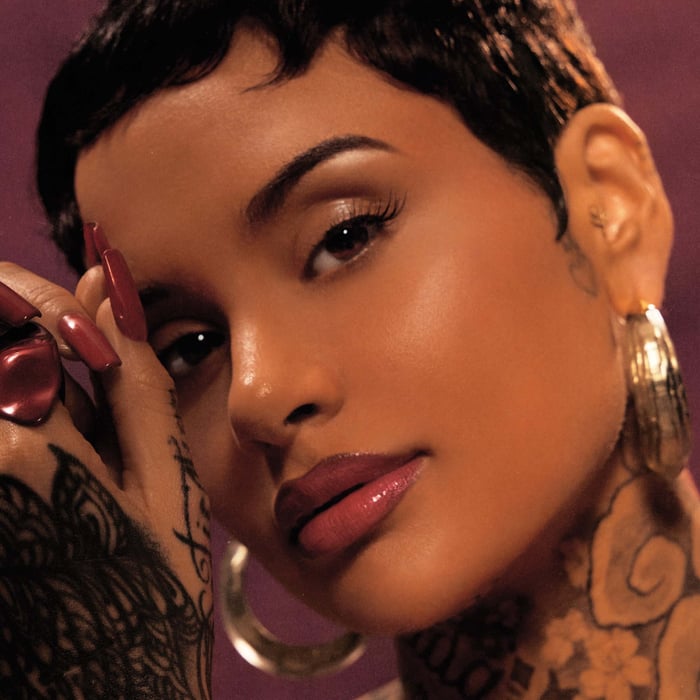
Kehlani Album Review: a self-titled flex that somehow stays human


 See more Architeg Prints stories on Google.
Kehlani Album Review: a self-titled flex that somehow stays human
Kehlani’s self-titled album transforms messy relationship whiplash into a mature R&B triumph—featuring quiet vocals, prominent collaborations, and a raw honesty that breaks the usual mold.
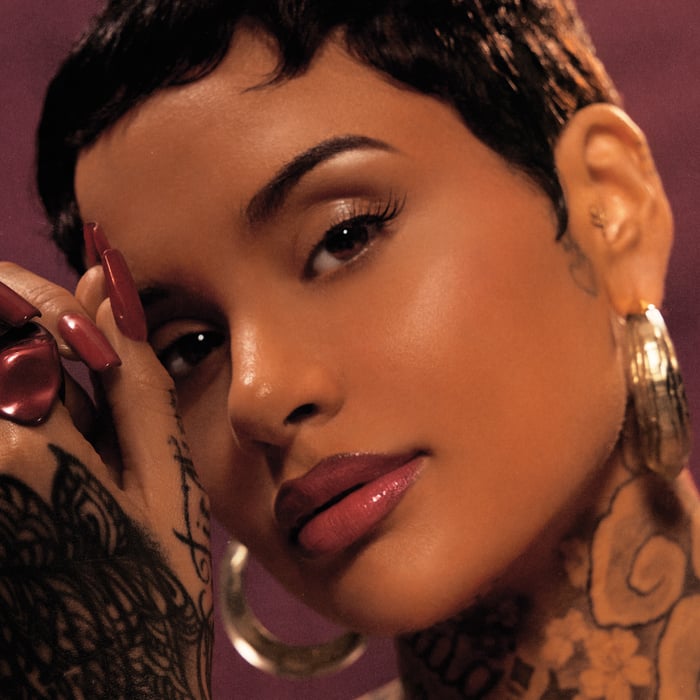
This album isn’t trying to “introduce” Kehlani—it's trying to lock her in
Self-titled albums usually show up when an artist wants you to take them as a fixed object: this is me, stamp it, stop arguing. Kehlani calls this one Kehlani, and the move is bold enough that I expected a chest-out victory record.
What I got instead is more specific—and honestly more revealing. It’s an album about a single relationship that keeps getting kicked out of the house and then immediately invited back in through a side door. It’s not a new story. The point is how deliberately she stages it, track by track, like she’s testing which version of herself she can live with.
The “Intro” basically dares you to listen without flinching
Right away, the album tells you what it thinks it’s doing, in Kehlani’s own words:
“Growth doesn’t always sound pretty at first. Sometimes it cracks. Sometimes it bends, but it always finds its way to the light. You’re about to hear a heart that’s been stretched, healed, and reborn. A voice stepping into its truth with no fear, no filter, and no apologies. I am Kehlani.” — Kehlani, on “Intro”
That’s a mission statement, sure, but it’s also a warning: don’t expect tidy. And she mostly follows through—by refusing to oversing, refusing to dress up the hardest emotions, and letting the contradictions sit in the open instead of cleaning them up for streaming.
Context matters here, and she clearly knows it
This album lands after a public stretch that wasn’t exactly quiet.
She’d spent a decade collecting Grammy nominations without a win, then finally walked onto the 68th annual ceremony stage and left with Best R&B Performance and Best R&B Song. When she spoke, she didn’t act grateful in the obedient way the industry prefers. She made a point of how long it took, then closed her remarks with “Fuck ICE” and left the stage like she was done negotiating.
The year before that ceremony, the blowback got louder: a major university canceled her spring headliner slot in April 2025, and a city foundation pulled a summer Pride performance a month later. On an awards red carpet, she ended her comments with “Free Palestine.” She later described getting organized death threats and said she moved residences because of them. A 2024 video for “Next 2 U” included Palestinian flags and the phrase “long live the intifada,” and that specific detail was cited as part of the cancellation reasoning.
Eight weeks after the Grammy moment—on her thirty-first birthday—Kehlani arrives. And the thing is: the record doesn’t turn those headlines into content. It doesn’t do “brave pop star.” It does something pettier and more honest: it narrows all that external noise down to one door, one apartment, one pile of clothes, one person she can’t stop calling.
That’s not escapism. That’s control.
“Folded” wins because she refuses to perform the win
The lead single, “Folded,” is the clearest example of Kehlani’s new discipline. The concept is simple: the ex has left clothes at her place, and she’s calling like she’s doing him a favor—but you can hear the trapdoor under every line.
She’s basically whispering. Tiny head voice, phone-call volume, right up on the mic. No big climb. No vibrato flexing. It’s a performance about not performing.
And the lyrics aren’t poetic on purpose—they’re domestic, like an argument you overhear through a wall:
“Come pick up your clothes
I have them folded
Meet me at the door while it’s still open
I know it’s getting cold out, but it’s not frozen.”
Then she keeps turning the offer over in her hands instead of resolving it. The second verse is the real knife because it sounds like boundaries, but it’s still bargaining:
“I don’t need no more empty promises
Promise me that you got it
I don’t need roses
Just need some flowers from my garden.”
The production stays intentionally spare—guitar, groovy drums, and strings—so nothing distracts from how close she’s keeping her voice to her chest. Executive producer Khris Riddick-Tynes, working with D.K. the Punisher, makes the smart choice to not decorate the track into drama. The Grammy finally showed up for a song like this because it sounds like adulthood: no fireworks, just consequence.
Then “Out the Window” flips the same relationship like a coin
Right after “Folded” establishes the power move—door’s open, come get your stuff—the second single “Out the Window” yanks the camera outside the house. Same emotional characters, opposite posture.
Now she’s the one begging at the door, and the line that sticks is the one that makes silence feel physical:
“Damn, who knew the silent treatment’d be so fucking loud?”
She even says it plainly:
“But, baby, I want you
I’m focused, it’s overdue
Don’t throw it out the window.”
I thought this would feel like backtracking at first. On second listen, it felt more like the point: the album isn’t tracking a linear healing arc. It’s showing how pride and need trade places every twelve hours.
The early-2000s R&B cosplay is deliberate—and it mostly works
“Out the Window” leans hard into late-’90s/early-2000s R&B iconography. The video references Aaliyah’s “Try Again,” and the aesthetic isn’t subtle: rain-soaked longing, payphone drama, the whole era where love required public infrastructure.
That throwback reach even bleeds into the visuals around the project: the “Out the Window” single cover was shot by Markus Klinko, whose resume includes some of the most era-defining pop/R&B cover images. The homage got an online nod from Aaliyah’s posthumous account, which is about as close as you can get to the culture saying, “Fine, you can touch the sacred stuff.”
And Kehlani didn’t stop there—last October, a “Folded” homage package had Toni Braxton, Brandy, Mario, and Ne-Yo covering the song multiple ways, like the old tradition of R&B elders pulling up on a younger artist’s record and treating it like a shared language. That’s the vibe this album wants: not just nostalgia, but inheritance.
A reasonable listener could call it fan service. I think it’s more strategic than that. She’s building a sonic family tree and placing herself in the center—politely, but firmly.
These features aren’t decoration; they’re a roll call
The guest list is bluntly intentional. Kehlani isn’t grabbing the moment’s hottest names. She’s calling in the voices that built the room she learned to sing in.
- Lil Wayne opens the record—starting with a Wayne verse is a choice, and it instantly frames the album as legacy-first.
- Brandy appears on the Jam & Lewis-produced “I Need You” and takes a full verse, then splits the bridge line-for-line with Kehlani. That isn’t a cameo; it’s a duel where nobody flinches.
- Missy Elliott shows up on “Back and Forth” doing a jealous-boyfriend bit—“Where you goin’?” / “Who you riding with?”—with that casual menace she’s always had.
- Usher doesn’t just stop by; he duets through “Shoulda Never” front to back. It plays like two people refusing to be the “regular type,” and the commitment is what sells it.
- Pusha T and Malice appear together on “No Such Thing” like it’s nothing, dropping a Clipse couplet over a drum loop pulled from The Pharcyde’s “Runnin’.”
Then there are the smaller margin features:
- Leon Thomas on the slow “Sweet Nuthins”
- Cardi B on “Pocket,” which bounces harder and gets filthier in a very writerly way
- Big Sean on “Lights On,” where his verse lands a little too safely—“My lil’ water sign, I might plant a seed and grow out your family tree”—which is the kind of line that sounds like he wrote it while waiting for his food
- Lil Jon ad-libbing on the T-Pain-assisted “Call Me Back,” and the production leans into a “Buy U a Drank” feel like it’s daring you to admit you miss that era
Every one of these names dominated a window that closed roughly two decades ago. Kehlani isn’t pretending it’s 2004 again—she’s admitting she was raised by those records, then proving she can stand next to the elders without shrinking her own voice.
Kehlani’s real flex: she stops trying to prove she can sing
Here’s what surprised me: the big vocal “moments” aren’t the moments that matter. The album’s best choice is restraint.
On “Folded,” she never really climbs. On “You Got It,” she sings from a place that sounds tired but clear, asking for a partner who can hold her down when she can’t keep herself together:
“Can you stick around and hold me down / When I can’t keep my shit together / When its all chipping away, is you gonna put me back in place?”
That’s not a hook designed to impress. It’s a hook designed to confess.
And when she shares space with Brandy on “I Need You,” Kehlani matches her note for note—no showing off, no trying to “win” the track. Same story with Usher on “Shoulda Never.” The new grit in her chest voice matters because it doesn’t sound like a technique upgrade; it sounds like she stopped chasing perfection and started chasing the truth of the line.
I’m not totally sure everyone will like that trade. Some people want the big belt as proof of feeling. This album keeps insisting feeling can be quieter than that.
The album’s main plot is indecision—and she treats it like theology
Song after song, she changes her mind about the same person. And instead of editing that out, she makes it the engine.
On “Cruise Control,” she gets crisp and self-satisfied:
“I been alone so long and I’m proud to be / You say you need more, you know how that sounds to me.”
But earlier, “Anotha Luva” hands off from Lil Wayne to Kehlani, and she’s looping in her own head:
“I know you’re not mine, telling myself / But every time that I rewind, I don’t want nobody else.”
Then “I Need You” hits like the hinge point, especially when Brandy shares the bridge:
“I’m not too proud to say, ‘Better try somebody else’ / Wanted to fill your space, but baby, can’t nobody help.”
That’s the genre’s oldest magic trick—push, pull, collapse, repeat. R&B relationship albums live and die by that emotional ping-pong. And Kehlani writes better when she’s inside the mess, not floating above it acting enlightened.
“Still” is where the album finally stops posing
Past the midpoint, “Still” slows everything down, and it’s not just pacing—it’s an admission of defeat.
It opens in a hotel room:
“Damn, you got me cryin’ / In this hotel / And I got a secret that I won’t tell nobody.”
She doesn’t oversing it. She doesn’t try to make the pain sound pretty. The arrangement stays smart—strings sitting behind the chorus in a way that feels like the room itself humming back at her.
And then there’s this detail that kept nagging me: the additional vocals, those ad-libs under “My body knows I love you still.” They’re subtle enough that you could miss them, but once you catch them, they feel like the part of her that won’t stop interrupting the “logical” version of the story.
The second verse lands the line she’s been dodging:
“You think we’re good, well, I’m not at all.”
Same hotel room. Same problem. No heroic resolution. That’s the first moment on the album that feels like it isn’t trying to win the argument—just tell you what happened.
One track drifts, and it’s the only time I wanted her to edit herself
“Sweet Nuthins” isn’t bad; it’s just slack.
The premise—making up for flaking by offering intimacy—is fine. But the song never really pushes past the premise. Leon Thomas’ verse mostly restates Kehlani’s apology from the male side (“I gotta work on me, that doesn’t mean I don’t deserve you”), which means the duet doesn’t actually add a new angle.
That’s the difference between this and “Shoulda Never,” where the duet structure creates friction because both people are stubborn in different ways. “Sweet Nuthins” feels like two people agreeing in slow motion. Pleasant, but it doesn’t move.
“Unlearn” points forward, which is rare on a record built on circles
If one song actually aims beyond the relationship loop, it’s “Unlearn.”
No guest. No flashy feature bait. Just Kehlani alone, and—crucially—the writing holds a position instead of changing its mind every eight bars.
“I got a lot to unlearn about me / But I’ll do the work if you still believe.”
That’s not triumphant. It’s conditional. And that’s why it feels real. On an album where she keeps revisiting the same door, “Unlearn” is the moment she admits she might be the one carrying the key.
Also: it’s arguably the best “Underdogs”-style record here—tight, emotional, built to support the vocal without dressing it up. Kehlani sings harder across this whole album than she did on the first four, and “Unlearn” is where that extra muscle actually lands.
So why did the Grammy take so long? This album answers without saying it
Listening to Kehlani album front to back, it’s hard not to feel like the industry spent years treating her like a boutique act—useful, tasteful, easy to praise without fully crowning.
This time she stacks the tracklist with the exact voices that shaped modern R&B and rap—Brandy, Usher, Missy, an actual Clipse verse—and she doesn’t duck behind them. She sings beside them. That’s the flex: not “look what I got,” but “watch me stand here.”
Self-titling it might be a tiny overreach. Not in a disastrous way—more like she’s claiming the whole nameplate before everyone agrees she owns it. But fifth albums tend to do that. She’s got a lifetime to name the next ones.
Before I finished the record, I assumed the title was ego. By the end, it felt more like a boundary.
Standout tracks that tell you what the album is really about
Not “favorites,” exactly—more like the tracks that reveal the intent:
- “No Such Thing” — the legacy-rap collision that proves she can host heavy guests without disappearing
- “Still” — the hotel-room confession where the album stops flirting and finally bleeds
- “Cruise Control” — the cleanest example of her trying on independence like it’s a jacket that might actually fit
Kehlani didn’t make Kehlani to summarize her life. She made it to prove she can control the room: the politics outside, the elders inside, the ex at the door, and the part of her voice that used to reach for fireworks. The album’s best moments aren’t the loud ones—they’re the ones where she refuses to act like healing needs a climax.
Our verdict: People who like R&B when it’s intimate, contradictory, and a little petty (in the real way) will eat this up. If you need every chorus to explode, or you get impatient when a singer changes their mind three times in one verse, this album will feel like watching someone text their ex in real time—because that’s basically what it is.
FAQ
- Is Kehlani album more about vocals or writing?
It’s writing-first, but the vocals matter because she intentionally holds back—especially on “Folded,” where restraint is the point. - Do the big features distract from Kehlani?
Mostly no. Brandy and Usher feel like full collaborators, not spotlight thieves. The whole idea is Kehlani standing next to her influences without flinching. - What’s the emotional core track?
“Still.” The hotel-room framing and the “You think we’re good, well, I’m not at all” admission is where the album stops negotiating. - Is there a weak spot?
“Sweet Nuthins” drifts. It doesn’t ruin anything, but it’s the one time the album feels content to coast on a premise. - Why is the album self-titled?
It reads like a claim of identity—especially after a long stretch of public pressure—more than a “best of me” statement.
If you’re the type who wants music to live on your wall too, you can shop a favorite album cover poster at our store: https://www.architeg-prints.com — it pairs nicely with records that keep the door open and closed at the same time.
 | DISCOUNTGET 30% OFF*Use code on your next order:
|
* This post may contain affiliate links, meaning we earn a commission if you make a purchase through these links, at no additional cost to you.