GABO Album Review: Massachusetts Coke-Rap Wearing a Nobel Mask


 See more Architeg Prints stories on Google.
GABO Album Review: Massachusetts Coke-Rap Wearing a Nobel Mask
GABO album sounds like street math over bookish ghosts—smart, cold, and a little smug about it.
A rap album that drags literature into the kitchen
Some albums want to be “cinematic.” GABO album doesn’t. It wants to be inevitable—like the story was written before the first drum hit, and the rappers are just acting out the pages with Pyrex on the counter.
The title nods to a Colombian novelist everybody called Gabo—Nobel Prize, 1982, the whole mythology—and that nickname has outlived the man enough to end up plastered across a ten-track rap record from Massachusetts. That alone tells you the play: take something “high,” pin it onto something “low,” and let the friction do the talking.
The group chemistry matters here. Primo Profit, RLX, and producer MichaelAngelo move inside the Manteca orbit (the same crew led by CRIMEAPPLE), and they’ve been pushing this lane of coke-rap laced with Caribbean-Latin slang for years. This album doesn’t introduce that aesthetic so much as tighten the screws on it.
The Gabo samples aren’t decoration— they’re a dare
Right away, GABO album drops Spanish-language samples between songs—mostly untranslated—and it never bothers to explain itself. Primo and RLX don’t even name García Márquez in their verses. They don’t quote him like schoolkids trying to prove they read the book. They let his voice drift in and out like a conscience that refuses to speak English.
At first, I thought the Spanish samples were just mood lighting—nice texture, little film-grain, move on. But the longer I sat with it, the more it felt like the album was testing the listener: Are you going to chase meaning, or are you going to treat this like background flavor? And honestly, I’m not 100% sure the record cares which choice you make. It kind of enjoys leaving you there.
There’s a blunt confidence in that decision. The album doesn’t translate. It doesn’t annotate. It just drops the voice in the gaps and keeps walking.
MichaelAngelo produces like a guy who learned patience the hard way
The most telling fact about the sound is simple: MichaelAngelo made every beat here, and it shows because the percussion behaves like someone who’s spent years doing work where rushing gets you hurt. He left construction work to produce full-time, and you can hear that tradesman patience in how he refuses to overstuff a loop.
On “Macondo Marmalade,” a low organ figure barely shifts. It’s not trying to charm you; it’s trying to hold the floor steady while Primo and RLX trade verses. The kicks leave space—actual gaps you feel—so the bars have to stand on their own legs. This is production that makes the MCs accountable. No fog machine, no sugar high.
And then MichaelAngelo does the move that explains the whole album: he drops everything out for a García Márquez sample, and it doesn’t feel like a smooth interlude—it’s a hard cut. Like a chapter ending whether the rappers were done or not. That choice is almost rude, and I mean that as a compliment. It forces structure onto music that could’ve easily sprawled into endless coke-rap comfort food.
“01841 / 02128” plants the flag, then twists it
The regional claim is spelled out in the second track title: “01841 / 02128,” the ZIP codes where RLX and Primo grew up—Lawrence and East Boston. RLX opens with a practical angle, rapping about flips, exits, property. It’s the language of movement: how to get out, how to stack, how to own what you used to rent.
Then a sample shows up like a loud stamp across the page: “The East Coast jungle—Boston.” It’s not subtle, and it’s not supposed to be. The album wants to make Massachusetts sound like its own ecosystem, not a footnote to New York.
Primo’s half, though, goes somewhere sharper and frankly more uncomfortable. He talks about cocaine processing with the casual expertise of someone who has done it, and the calmness is the scary part. No moral speech, no cinematic danger—just procedure.
“I could even use a microwave
Don’t gotta turn the fucking stove on.” — Primo Profit
That line hits because it’s not “clever.” It’s efficient. And that’s what this album keeps circling: street life as workflow.
Then the track ends with a García Márquez quote from Chronicle of a Death Foretold:
“Vete pa’ tu casa y ármate, que te voy a matar.” — Gabriel García Márquez
Go home and arm yourself, I’m going to kill you. I played it back three times because the sequencing is nasty in a very deliberate way: a literary threat of murder dropped right after a verse about microwaving coke. That isn’t random; that’s the album telling you violence and craft can share a hallway.
Primo Profit raps like he’s keeping receipts
Across all ten tracks, Primo keeps his word-bank tight: Pyrex, plate of white, microwave. He isn’t trying to be a poet in the obvious way—he’s trying to be consistent, like repetition itself is a form of truth.
On “Macondo Marmalade,” he flips the title into both a drug pun and a family stamp:
- “I’m still living off the shit that the Pyrex made”
- “Smoking marmalade, I’m what my father made”
That second line matters. He’s not just selling a product; he’s claiming lineage. The album’s big trick is making personal history sound like supply chain.
On “Blossom,” he calls himself Perico, collapsing alias and self-portrait into one word, then lands on a line that’s equal parts prayer and stubbornness: “When I ain’t have shit, Perico ain’t never lose his faith.” He asks who the king of Boston is and dodges the corny self-crowning by outsourcing it: “I let my fiends do the talking.” That’s a flex, sure—but it’s also a reveal. His identity is mirrored back by dependency.
And on “Until August,” his Spanish slips mid-verse like first-generation reflex, not like a “look at me” trick:
- “Conmigo no se crezca”
- “’Cause when I met you we was in la lleca”
- “When you met me I was sellin’ teca”
That’s the album in miniature: two languages in one bar, two worlds in one breath, no pause to translate because the point is that he doesn’t have to.
RLX lives above the stove—counting money at altitude
If Primo stays in the kitchen, RLX is already on the plane, tallying what he stacked and what it cost him socially. Their contrast is what keeps GABO album from turning into one long monochrome brag.
On “Still Tippin,” a title that nods to Mike Jones’s 2005 Houston record but lands on boom-bap here, RLX delivers the album’s bluntest self-read:
“Finally gave ‘em a real topic to talk about
Behind the stage, it was real quiet and awkward now
Without a label, I’m goin’ crazy, don’t box me out.” — RLX
He says it flat—three bars about independence without the usual victory-lap tone. That’s a choice. He’s not acting like freedom is clean. He’s saying it’s isolating, and it makes people weird around you. That’s the kind of honesty coke-rap often avoids, because honesty messes up the flex.
Then on “Of Solitude,” he gets autobiographical in a way that’s almost suspiciously casual: “Aight, I’m from Lawrence/I grew up in Prospect/I do what you not did/I knew I would profit.” It’s a tight little ladder—place, neighborhood, separation, destiny—and then the punchline lands quietly: “profit,” which is both a normal word and his collaborator’s name. It’s so easy you almost miss it, which is probably the point.
“Infinite Chapters” makes the book metaphor literal, then shrugs
On “Infinite Chapters,” a sample bookends the track singing: “Just like a book up in my shelf, I will keep you for me/Preserve for me and no one else.” It’s intimate in a way the drug bars aren’t. Possessive, even. Like memory isn’t something you revisit—it’s something you lock away.
The outro carries García Márquez’s reported line about finishing One Hundred Years of Solitude: “Ahora lo único que falta es que esta novela sea mala.” Now the only thing left is for this novel to be bad. It’s a joke, but it’s also a dare: what if this whole project collapses under its own concept?
And then the drums come back, and Primo and RLX pick up where they left off, basically ignoring him. That’s the funniest part in a dry way: the album drags “Gabo” into the room, lets him speak, and then keeps talking over him like he’s just another guy at the table.
“Money > Fame” says the quiet part out loud—maybe too plainly
After “Money > Fame,” where Primo raps, “I just want the money, I don’t want the fame,” a different sample lands: “García Márquez didn’t yet know that his nostalgia for this world would be the wellspring of his writing.”
The pairing is too clean to be accidental. It’s the record spelling out its own thesis: nostalgia fuels art; money fuels survival; fame is a distraction. The only issue is that the line “I don’t want the fame” is almost too on-the-nose compared to how sly the rest of the writing can be. It’s not a dealbreaker, but it’s the one moment I wished Primo trusted the listener a little more. This album is at its best when it implies, not when it posts a slogan.
Still, the sequencing works. The sample reframes the hustler talk as something closer to memoir—like all this street detail is also a way of preserving a world before it disappears or gets sanitized.
Favorite tracks (because some songs just hit harder)
Even when I’m side-eyeing a bar here or there, a few tracks keep pulling me back:
- “01841 / 02128” — the ZIP-code thesis statement, and it doesn’t blink.
- “Still Tippin” — RLX sounds oddly human here, which is rarer than it should be.
- “Money > Fame” — blunt, yes, but it pins the album’s priorities to the wall.
Conclusion
GABO album isn’t pretending street rap needs a literature co-sign. It’s doing something sneakier: using García Márquez as a ghost in the margins, a reminder that stories—whether they’re about Macondo or Massachusetts—still run on obsession, routine, and the threat underneath everyday life. I went in expecting a clever concept record, but I came out thinking it’s more like a disciplined rap tape with a novelist haunting the transitions, occasionally interrupting just to prove the album doesn’t need permission.
Our verdict: People who like coke-rap with structure, bilingual texture, and cold-room discipline will actually love this. If you need big hooks, obvious choruses, or emotional hand-holding, you’ll hear these ten tracks as “samey” and you’ll be half right—this album isn’t trying to entertain you, it’s trying to outlast you.
FAQ
- Is GABO album really about Gabriel García Márquez?
Not directly. His presence is mostly in Spanish samples and quotes, like a shadow over the tracklist rather than a lyrical subject. - Do Primo Profit and RLX reference García Márquez by name?
No, and that feels intentional—like they’d rather let the voice and themes hang in the air than turn it into a classroom citation. - What does “01841 / 02128” mean?
It’s the ZIP codes for where RLX and Primo grew up: Lawrence and East Boston. The track uses place like proof. - Who produced the album?
MichaelAngelo produced every beat, and the drum choices leave space that forces the rappers to carry momentum themselves. - What’s the main contrast between Primo Profit and RLX?
Primo sounds rooted in the “kitchen” details—process, tools, routine—while RLX writes from a higher vantage point, focused on movement, independence, and status.
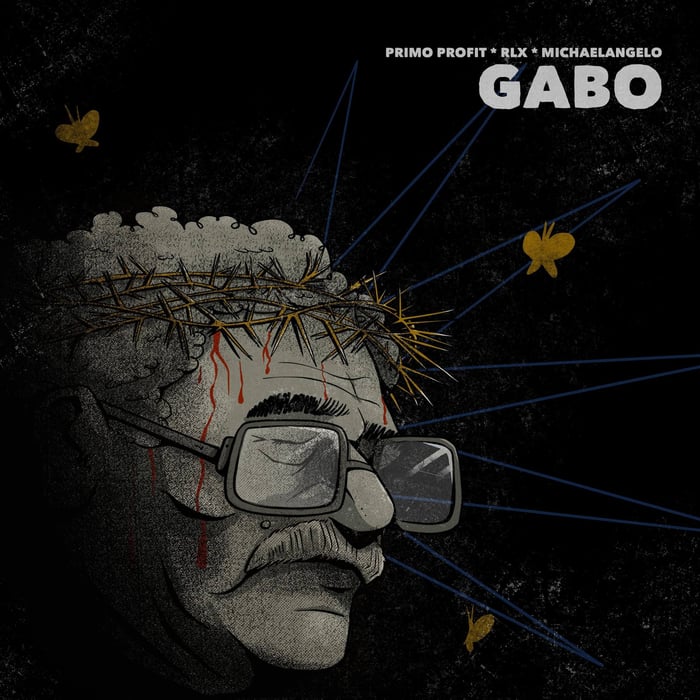
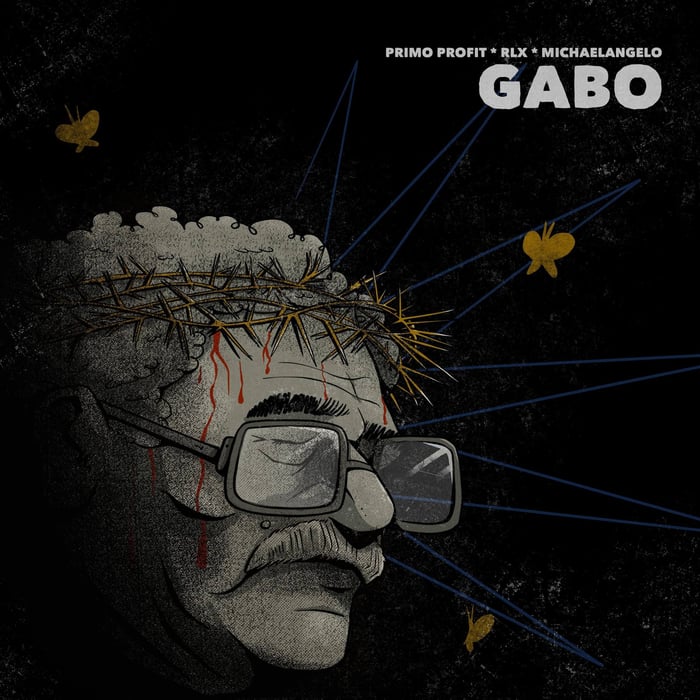
If this album’s cover has been living in your head the way the samples do, you can grab a clean poster print for your wall over at our shop: https://www.architeg-prints.com. It fits the whole “art meets street” contradiction nicely.
 | DISCOUNTGET 30% OFF*Use code on your next order:
|
* This post may contain affiliate links, meaning we earn a commission if you make a purchase through these links, at no additional cost to you.