Traditional Noise Review: April + VISTA’s “Medicine” That Worsens You


 See more Architeg Prints stories on Google.
Traditional Noise Review: April + VISTA’s “Medicine” That Worsens You
Traditional Noise plays like a fake cure that hands you your panic back—cleanly produced, emotionally messy, and stubbornly uninterested in being anyone’s “debut.”

The opening “ad” is a trick—and it tells you the whole plan
The first thing that hits my ears isn’t a melody or a groove. It’s a sales pitch. A calm, clinical voice asking the kind of questions that usually end with “talk to your doctor”: Are you restless? Afraid? Can’t seem to focus? It’s delivered with that unnervingly gentle cadence—like anxiety is a stain and somebody’s about to upsell you detergent.
And then the ad evaporates. The music arrives. The “product” was never relief. The product is the feeling you were trying to get rid of.
That’s the basic joke of Traditional Noise: it presents itself like treatment and behaves like exposure therapy. A lot of albums flirt with mental-health language like it’s a hoodie graphic. This one actually makes you sit in the uncomfortable chair.
Who April + VISTA sound like when they stop introducing themselves
This is the part where most “first albums” explain who the artist is. Traditional Noise doesn’t. It moves like two people who’ve been circling the same emotional subjects for years and finally got tired of staying polite about it.
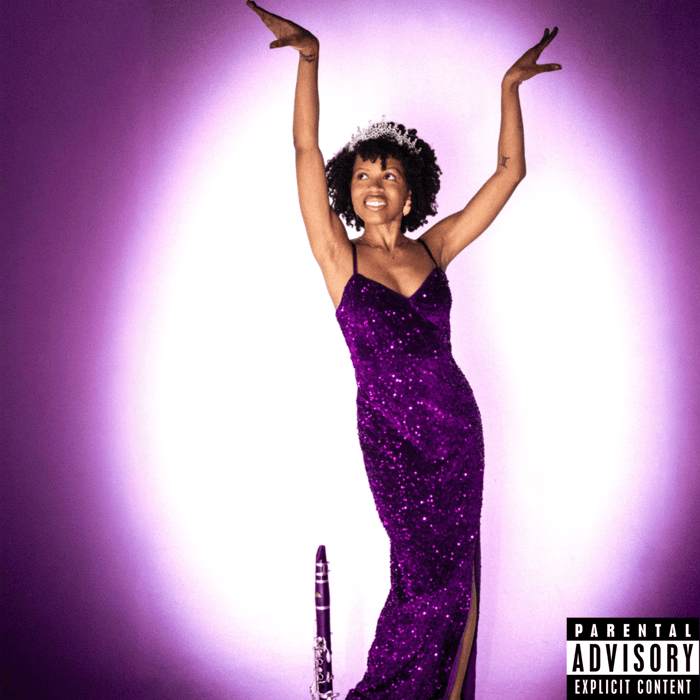
April + VISTA are a Washington, D.C. duo, and you can hear the long history in how little they seem interested in easing you in. April George is the voice you follow—she sings and moves between piano and strings (violin and viola). Matthew “VISTA” Thompson is the builder in the background, producing and engineering with a kind of patience that feels almost stubborn.
They’ve been making songs together for over a decade without putting out a full-length album, and honestly, that delay becomes part of the album’s personality. This doesn’t sound like a grand arrival. It sounds like something that got postponed because it was easier to keep it unfinished than to admit what it’s actually saying.
They met through mutual connections around a beat on SoundCloud and crossed paths in person at Busboys and Poets—fresh out of Hampton University—bonding over Portishead and Donnie Hathaway like that combination is a normal way to build a musical identity. At one point they describe their shorthand as “50% A Moon Shaped Pool, 50% Ludacris Saturday,” which is so specific it’s basically a diagnosis.
Here’s my arguable take: the album’s biggest flex is that it doesn’t “blend influences”—it digests them until they stop being citations. Nothing pops out as a named reference; it all gets melted into their own private weather system.
The nature imagery isn’t pretty—it’s a weapon
Moving from the opener into the early songs, I kept waiting for the album to settle into something like “vibes.” It doesn’t. It uses beauty the way some people use sarcasm: to smuggle the painful point into the room without making eye contact.
On “Two Evergreens,” April sings about two giant trees towering over her. There’s sticky sap melting in heat, and a crystal lake whistling in the breeze. It takes a second to realize the whole landscape is camouflage. The scenery isn’t the subject—it’s a cover story. The real reveal is small and human: “Her fingertips are folded into mine.” That pronoun flips the entire scene into a love poem that’s been hiding in plain sight.
And I’ll admit it: on first listen I thought the natural imagery might be a little precious—like aesthetic journaling. But on second listen it landed differently. It isn’t decoration. It’s a way to talk about intimacy without using the tired vocabulary that makes intimacy feel fake. The world becomes a set of objects she can press into service because the feeling itself doesn’t have a clean name yet.
“Standing in Place” pushes that same move: she’s asking someone to stay while flies get plucked from balm and sins get cast into the tide. That’s not “pretty writing.” That’s someone trying to build a ritual out of whatever’s nearby.
Then “Do What You Know” goes blunt in a different direction—digging a hole to the other side, going lower to reach higher. It’s the kind of line that could sound inspirational in a worse song. Here it sounds like a survival method she doesn’t fully trust, but keeps doing anyway.
Arguable statement, and I mean it: this album treats the physical world like a set of handles—something to grip when the emotional floor turns liquid.
“Grotto” is where the album stops pretending to move forward
If the early tracks feel like scenery turning into confession, “Grotto” is the moment the album just… stops. Four and a half minutes of refusing to hurry.
It opens with a confession that functions like the whole plot being said out loud:
“I ran so fast, I left myself behind
Soaking in a brine, weeping through the night.”
From there, she’s basically underwater. The song feels submerged—wishes made by other people filling up a salty sea she could drown under. “Ugliness” and “words” orbit her head like debris, and the language gets bodily in a way that isn’t romantic: lungs, clouds of red, the sense of choking on something you can’t explain without sounding melodramatic.
Someone has told her that faith will leave her dry. She heads to this grotto like it’s a wash station—somewhere to wipe her body clean. And what does she find? Silence. Not healing silence. Not meditative silence. The kind that empties you out until you don’t even remember what you were trying to fix.
“The silence I pursued emptied out my mind.” That line lands like a diagnosis you didn’t ask for.
The most telling decision: the song gives up on “ending.” It settles on waves rolling in, like closure would be dishonest. I kept waiting for a turn, a lift, a hook that would resolve it. It never arrives. Whether that’s brave or frustrating probably depends on how allergic you are to unresolved feelings. I’m still not totally sure if I love that choice—or if I just respect it.
You can hear the seams, and I think that’s the point
A lot of producers hide the stitching. VISTA doesn’t always bother. You can hear how these songs are built—home-recorded, self-assembled, lived-in. Sometimes that makes the album feel intimate; sometimes it makes it feel like you’re standing a little too close to the machinery.
April’s background shows up in the arrangements: she grew up in a musical family in Virginia Beach where learning an instrument wasn’t optional. Piano came first, then violin, and she picked up viola on her own. She composes her own string arrangements now, and you can hear that she thinks in parts, not just chords. Strings don’t float in as “cinematic texture.” They behave like characters.
VISTA’s origin story is a different kind of discipline: he started making beats in high school after hearing The College Dropout, downloaded FL Studio, and got to work—building tracks with a friend (Sir E.U.) at Friendly High School in Maryland. That’s not a fancy conservatory path; that’s the “repeat until it works” path. It shows in the album’s structure.
The influence stew (Radiohead, Björk, Hiatus Kaiyote) doesn’t show up as a checklist. It’s absorbed. No single reference sticks out. What does stick out is pacing: the drums often lag behind April’s singing in a way that feels closer to trip-hop patience than any strict R&B grid. The rhythm isn’t trying to impress you. It’s trying to keep you suspended.
And the interludes—“Hello,” “Rot,” “Modify Your Transition”—don’t function like cute breathers. They split the album into sealed sections. Each one feels like a door closing behind you.
Hot take: the interludes aren’t transitions—they’re locks. They stop you from pretending you’re still in the same emotional room.
The collaboration is the roughest patch, and it’s rough on purpose
The only guest moment is also the album’s most abrasive: “Bless My Heart.” April sings “Lost myself there, bless my heart,” and TonyKILL’s ad-libs crowd the background—“ready if ya want it now,” “how dare you, dare you”—like intrusive thoughts that learned how to talk.
This track feels like being pinned by your own narrative. April calls herself “the theory of the running man,” which is a nasty little self-read: always moving, always escaping, always turning flight into identity. And then the lyric turns ugly fast:
“Flush it down the barrel of a gun.”
That line is a flare shot into an otherwise watery album. It’s shocking, and it’s supposed to be. It also links up with something earlier: the “take you out” phrasing that closes “Very Bad News,” which is the first real song after the opening interlude.
On “Very Bad News,” she tells someone, “before you claim your throne, there’s something you should know,” while describing deception in their voice and danger in their eyes. It plays like a spy-movie opener, slick and tense. Then “Bless My Heart” drags that cinematic language into self-obliteration. The album stitches those meanings together and refuses to label which is which.
Here’s where I’ll be mildly critical: TonyKILL’s ad-libs sometimes crowd the emotional center instead of sharpening it. I get the intention—pressure, noise, confrontation—but a couple moments feel busy in a way that blunts April’s lines. The track is still compelling; it just flirts with stepping on its own throat.
Faith keeps changing costumes—and nobody agrees on the rules
One of the most uncomfortable threads in Traditional Noise is that faith never stabilizes. It doesn’t become a clean “belief” arc or a tidy rejection. It’s argued with, warned about, leaned on, then doubted again—sometimes within the same stretch of listening.
On “Standing in Place,” April sings:
“My faith alive
I cast my sins into the tide.”
That’s the sound of someone using belief as a tool: confession, cleansing, a tide that can take it away.
But then “Grotto” carries that warning: “all that faith will leave you dry.” And on “Morning Star,” she’s burying roots and scorn “all the way down,” with blood on the title like belief has become something you pay for, not something that saves you.
My arguable claim: this album doesn’t portray faith as comfort—it portrays it as a negotiation you never finish. April never fully stops believing, and crucially, nobody in the songs steps in to reassure her she’s correct. No choir. No tidy lesson. Just the feeling of reaching for a rope that might not be tied to anything.
“Love Unspent” turns tenderness into something brittle
By the time “Love Unspent” arrives, the album has already taught you not to expect relief. And still, this one caught me off guard because it makes love feel like a fragile object rather than a warm place to stand.
Love freezes in her palm—brittle, thin. She shakes it off. She holds her breath trying to make it stop. And just when she feels fine enough—fine-ish, at least—she hears a rattling inside a box.
That last detail is what makes it stick. A rattling in a box is such an everyday horror: not a monster, not a tragedy, just the suggestion that something you sealed away is still alive in there, knocking around, refusing to die quietly.
If the opening ad promised to reduce existential panic, the album’s real move is handing you panic that’s been named but not fixed. It’s not therapy music. It’s the opposite: music that shows you what you’ve been calling “fine.”
Where I landed after living with it for a bit
I didn’t experience Traditional Noise as a “debut” at all. It feels more like a long-delayed statement—something that’s been in a drawer because finishing it would make it real.
And yes, it’s impressive. But it’s also prickly. It asks you to tolerate ambiguity, to sit with lyrics that don’t resolve, to accept that the prettiest images might be disguises for the worst feelings.
If you’re looking for neat catharsis, this album will irritate you on purpose. If you’re looking for a record that treats your inner mess like it’s worth describing accurately—even when it’s ugly—this one actually shows up.
Favorite tracks (the ones that won’t leave me alone)
- “Standing in Place”
- “Grotto”
- “Bless My Heart”
Conclusion
Traditional Noise starts by parodying a cure and then spends the rest of its runtime proving it was never joking. April + VISTA built an album where nature becomes code, silence becomes a threat, and faith keeps changing shape mid-sentence. It doesn’t soothe you; it names you—and then it walks away before you can ask it to tidy up.
Our verdict: People who like emotionally specific records that refuse easy closure will actually love this album (and probably text someone about “Grotto” at an inconvenient hour). People who want hooks to rescue them, or who need lyrics to “make sense” on the first pass, will bounce off it and call it “too much,” which is sort of the point.
FAQ
- What is the core idea behind Traditional Noise?
It frames itself like a remedy and then delivers the symptoms—restlessness, faith anxiety, love that turns fragile—without offering a clean fix. - Is Traditional Noise more R&B or more experimental?
It sits in an in-between space: the pacing leans trip-hop patient, but April’s vocals and harmonies keep it tethered to songcraft. - Do the interludes matter, or are they filler?
They matter. They feel like hard separators—little doors closing—so the album can change emotional rooms without apologizing. - What’s the most intense song on the album?
“Grotto” is the one that stops time and refuses resolution, and “Bless My Heart” hits hardest when the lyric turns dangerously blunt. - Who are April + VISTA on this record—what do they each do?
April George sings and plays piano plus strings (violin/viola) and writes string arrangements; Matthew “VISTA” Thompson produces and engineers, shaping the album’s pacing and texture.
If you want to keep this album’s mood on your wall—something beautiful that still feels slightly haunted—consider grabbing a favorite album cover poster from our store: https://www.architeg-prints.com.
 | DISCOUNTGET 30% OFF*Use code on your next order:
|
* This post may contain affiliate links, meaning we earn a commission if you make a purchase through these links, at no additional cost to you.