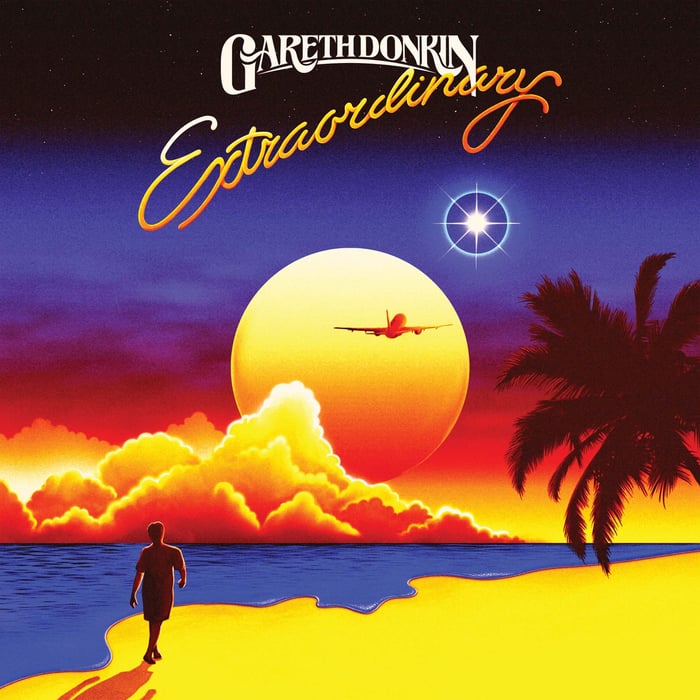
Extraordinary Album Review: Gareth Donkin’s Self-Worth (Where Is It?)


 See more Architeg Prints stories on Google.
Extraordinary Album Review: Gareth Donkin’s Self-Worth (Where Is It?)
Extraordinary album sounds like a confidence speech with better chords than proof—until the breakup tracks finally sharpen the knife.
A six-minute closer that refuses to “end”
Six minutes and forty-one seconds is a weird amount of time to spend insisting something is “just the start.” And yet that’s exactly how Extraordinary wants to leave you: Gareth Donkin plants this extended hum right in the center of the closing song, then keeps looping “It’s only the start, it’s only just the start,” like repetition can brute-force closure.
The funniest (and most telling) detail is the kind you can’t un-hear once you notice it: this same long closer bothers to rhyme “sunrise” with “photobook.” That’s not a crime. But it does tell me Donkin’s priorities on this record—vibe first, specificity later, and clarity maybe never.
I kept waiting for that closer to reveal why it needs all that runway. It doesn’t exactly collapse, but it also doesn’t land. It sort of… keeps being pretty until the clock runs out.
The resume shows up before the person does
Donkin’s the 25-year-old London singer/producer with perfect pitch, and he’s been working in Ableton since he was 13. You can hear the years of control in the cleanliness of the sessions—nothing feels accidental, nothing spills. And honestly, the pedigree tends to get mentioned like it’s part of the music.
His 2023 debut Welcome Home was self-produced R&B that got him onto BBC Radio 6 and out to SXSW. Then came the cathartic Suite Escape EP in 2024. Extraordinary is the follow-up, framed around him learning to stand up for himself and recognize his self-worth.
Here’s the blunt part: that’s a great frame, but most of these songs don’t actually behave like a person learning self-worth. They behave like a person practicing supportive phrases in the mirror. There’s a difference. One has teeth marks.
When it’s a breakup, the writing suddenly wakes up
The breakup material is meaningfully better than the rest, because it finally gives Donkin something to push against. “Never Gonna Break Your Heart” basically runs on negation—quoting someone else’s lie back at them and forcing the hook to carry accusation instead of comfort.
The key move is how his voice pitches upward into something interrogative when he delivers the title line. It doesn’t feel like a big chorus meant for strangers; it feels like a question meant for one specific person who already knows the answer.
“Don’t say that ‘I’m never gonna break your heart’
If you knew it wasn’t true right from the start, why lie?”
And the closer line—“I’ve been there before / But you owed me so much more.”—does more than the hook, mostly because the hook sets it up as a confrontation instead of a slogan. That’s Donkin at his best: when he stops trying to float and starts trying to win an argument.
A reasonable listener could disagree and say the softer, generalized stuff is the point. I don’t buy it. The record doesn’t sound like it’s choosing vagueness as an aesthetic; it sounds like it’s dodging the awkward details.
“Extraordinary” (the song) is where the album actually argues
The title track comes later and stays in that same direct address mode—finally. It opens with an accusation: “You took a part of me and threw it all away / Like I can’t tell?” That’s not a mantra. That’s a pointed sentence with a finger attached.
And then Donkin does the cleverest structural thing on the album: the chorus-level pun on the title, presented as both “extraordinary” and “extra ordinary” with a visible gap, basically becomes the song’s internal conflict. Underneath Donkin singing “I’m free,” there’s this counter-melody voice that keeps interrupting with “you’re never gonna change me,” and the two phrases bicker through the outro.
That’s the record, accidentally telling the truth: part of him wants the empowerment narrative (“I’m free”), and part of him is still stuck in the debate (“you’re never gonna change me”). The friction is the interesting part. It also makes me suspect the album’s “self-worth” theme is less of a destination and more of a poster he’s been staring at.
On first listen I thought “Extraordinary” was just another clean mid-tempo uplift track. On second listen, the arguing voices in the outro changed the whole thing—it’s not uplift, it’s unresolved bargaining dressed up as confidence.
When “you” becomes everybody, the songs stop meaning anything
The moment the “you” stops being an ex and starts being a generic listener—or Donkin addressing himself—the tightness drops. Not “slightly.” It drops like someone unplugged the specificity.
“Please Don’t Give Up!” has a chorus that’s basically the title phrase plus “you’re only one of one.” That can work, in theory. But the verses don’t bother to particularize the situation at all:
- “Tell me what you want to say, if you can try, please show me, say what you wanna say”
- “all of the things make me happy, night and day”
That’s not emotional openness. That’s polite filler, like when you’re trying to keep a conversation going with someone you don’t actually know. The song is cheering, but it isn’t seeing anyone.
“Don’t Be So Hard On Yourself” does the same trick, only softer—and maybe that’s why it’s sneakier. It’s built on five lines of verse:
“I don’t wanna be alone
It’s more than you could ever know
Same old city
Swim in circles
Time to get out there!”
The one concrete noun there is “city,” and it’s doing absolutely nothing. “Swim in circles” is the kind of phrase you write when you haven’t decided what the problem actually is. The coaching voice has nothing specific to coach against, so the “Ba da ba” syllables step in and carry the melody—because actual lines would have to commit to an actual life.
Donkin keeps singing to “you,” track after track. And I’m not even sure who “you” is supposed to be anymore. Nobody’s home.
That’s my mild criticism, and it’s not even about taste: if the record wants to be about self-ownership, it can’t keep talking like it’s printing motivational posters.
The musicianship is gorgeous—sometimes too gorgeous
Track to track, the playing is lovely. The sound design is careful without being sterile, and Donkin clearly knows how to recruit people who sharpen the edges.
“Where Did We Go?” is co-produced by Kiefer, and Kiefer also features (yes, that Kiefer—the jazz pianist). After the first chorus, the chords open up into voicings Donkin’s own ballads don’t attempt anywhere else on the album. It’s the kind of harmonic widening that makes you sit up and think, okay, we’re going somewhere—finally.
But here’s the arguable take: the guests sometimes make Donkin sound more emotionally generic by comparison, because the music suddenly gets specific in a way the lyrics won’t. When the harmony gets interesting, the words don’t level up with it. The band is painting in high resolution; the vocal is writing in soft-focus.
“Half Shuffle” proves how far rhythm can drag a song even when the writing doesn’t show up. It carries its vamp on conviction alone. Lyrically it basically gives you “It’s time we move it on” and not much else—yet the groove keeps insisting that’s enough. I’m not convinced it is enough, but I can’t pretend I didn’t nod along.
UHMEER writes the most human moment on the whole record
“Play the Game” is the best sustained piece of writing on Extraordinary, and the most painful part is that it belongs to the featured rapper, UHMEER.
UHMEER spends a full verse on the embarrassment of a blown almost-romance—the kind where nobody did anything unforgivable, you just both fumbled the vibe in real time:
“Failed the assignment
My jokes wasn’t landing
Panic residing
In the convos that are random
Like fun fact
We both felt it fall flat.”
That’s an actual evening. You can hear the air changing after the bad joke. You can feel the little silence that tells you the night is dying. “We both felt it fall flat” is five words that contain an entire walk home.
And it loops back to the album’s central problem: on a record supposedly about self-worth, the most self-aware, self-owning moment comes from the guest. Donkin has the singing, the playing (and yeah, he comes off like a sweetheart), and the ear for collaborators. And when he has an ex across the table, he can write sharply.
What he can’t seem to find across thirteen songs is a corner as small and remembered as UHMEER’s. That’s not a technical limitation. That’s a decision—conscious or not—to keep life at arm’s length.
“Running Away” is slick on purpose—and that’s the issue
Howard Lawrence of Disclosure co-produced “Running Away,” and it arrives as slick as that credit promises. Everything sits exactly where it should. The track glides.
The writing, though, is basically: “Hold out your hands, come and dance with me.” Which isn’t nothing, sure. But it’s also the whole of it. The song feels like it’s dressed for a night out, only to spend the evening making small talk.
I’m a little unsure whether that’s the point—maybe Donkin wanted the emptiness to show through the sheen, like a smile you hold too long. If that’s the intent, it half-works. If it isn’t, then the song just proves how easy it is to confuse polish for presence.
Where Extraordinary actually lands for me
By the end, I don’t think Extraordinary fails because it’s underwritten across the board. It fails because it keeps choosing the safest possible “you.” When Donkin aims at a real person, the lines tighten and the melodies start behaving like sentences instead of wallpaper. When he aims at everyone, the songs turn into encouragement with no recipient.
So yeah: slightly below average for me—not because it’s ugly, but because it’s oddly evasive for a record about self-worth. And the irony is that the best evidence of self-worth on the album is when Donkin allows himself to sound a little petty, a little bruised, a little specific.
Favorite tracks: “Play the Game,” “Extraordinary”
Conclusion
Extraordinary album is at its strongest when it stops trying to be universally healing and starts being personally accusatory. The moments that stick are the ones where Donkin admits a real conflict—between “I’m free” and “you’re never gonna change me,” between wanting to move on and still needing someone to answer for what they did.
Our verdict: People who like clean, modern R&B with tasteful players and a “keep going” tone will actually enjoy this—especially if you don’t need every song to name names. If you’re the type who needs details, mess, and a little interpersonal wreckage to believe the emotion, you’ll get impatient and start rooting for the guest rapper to take over the album.
FAQ
- Is Extraordinary album mainly a breakup record?
Not exactly, but the breakup-focused songs are the ones where the writing tightens and the emotions stop sounding generic. - What’s the most memorable songwriting moment?
UHMEER’s verse on “Play the Game,” especially the embarrassment captured in “We both felt it fall flat.” - Does the title track “Extraordinary” represent the album well?
Yes—and that’s the twist. It’s the rare moment where the album’s confidence narrative visibly argues with itself. - How do the collaborators change the sound?
Kiefer’s involvement on “Where Did We Go?” brings richer chord movement, and Howard Lawrence’s co-production on “Running Away” delivers maximum sleekness. - What’s the main weakness across the tracklist?
When Donkin writes to a vague “you,” the lyrics drift into motivational language that doesn’t feel tied to a real moment.
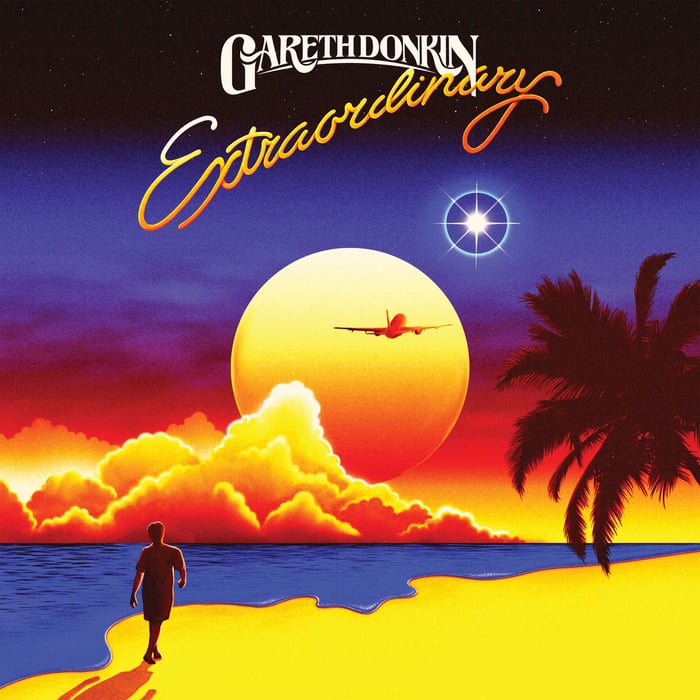
If you want something tangible from this whole “extraordinary vs extra ordinary” tension, a good album-cover poster scratches the itch—quietly. You can shop favorites at our store: https://www.architeg-prints.com/
 | DISCOUNTGET 30% OFF*Use code on your next order:
|
* This post may contain affiliate links, meaning we earn a commission if you make a purchase through these links, at no additional cost to you.