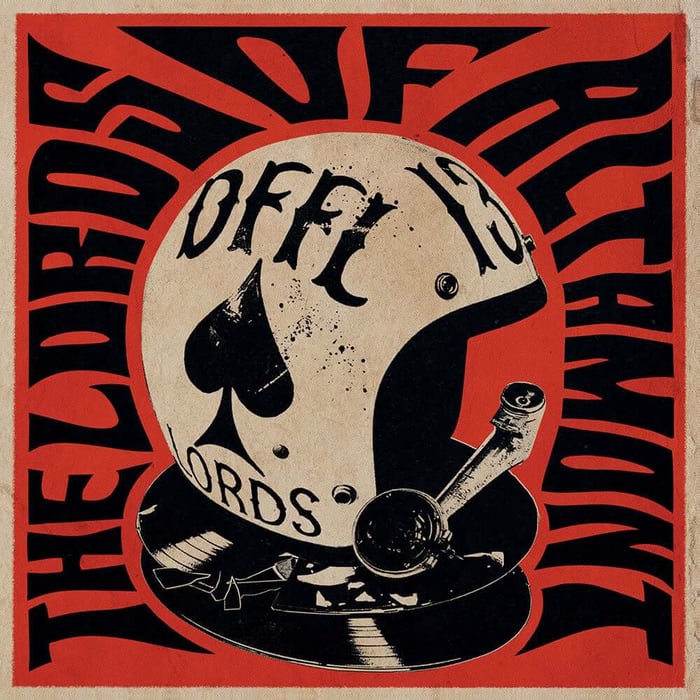
Selfy Album Review: A.G. & Stu Bangas Make Longevity Sound Rude


 See more Architeg Prints stories on Google.
Selfy Album Review: A.G. & Stu Bangas Make Longevity Sound Rude
Selfy album isn’t a comeback or a victory lap—it’s a selfie with the flash on, daring you to look away.
You know that feeling when a veteran rapper doesn’t “age gracefully,” because he flat-out refuses to age at all? That’s Selfy album in a nutshell: A.G. sounding like the calendar is fake, over Stu Bangas beats that could crack a sidewalk if you played them loud enough.

Courtesy of Lastop Records.
The Point Isn’t Nostalgia—It’s Control
Here’s the first thing I noticed: this record doesn’t beg for respect. It assumes it already has it, which is either confident or annoying depending on your tolerance for grown-man certainty.
A.G. has been one of those New York lifers—introduced like his borough is a permanent stamp on his forehead. You can hear decades of identity welded into his delivery. He’s been around long enough that the “Andre the Giant” name doesn’t feel like a gimmick; it feels like a job title he never clocked out from.
What matters on Selfy album is the framing: this is his seventh solo cover, and it’s also the first time he hands all the production to one outside collaborator. That’s not trivia. That’s intent. One voice, one producer, one lens. The album title is basically him saying: I’m not sharing the mirror today.
Arguable take: a lot of “legacy” rap albums hide behind reunions or concept fog. Selfy does the opposite—it reduces the variables so you can’t blame the chemistry if it hits (or doesn’t).
Stu Bangas Doesn’t Dominate—He Steps Back Like He’s Supposed To
The transition into the sound is the real trick. Stu Bangas comes in with a reputation for drums that feel like they’re trying to wake you up mid-scroll. He’s built that resume with work alongside names like Sean Price, Vinnie Paz, and Ill Bill—music where the drums don’t politely sit under the rapper, they heckle him.
But on Selfy album, I kept hearing him pull the drums a notch back from the front edge. Not softer—just placed differently. Like he knows A.G. doesn’t need to fight for oxygen.
- “Get It Going” opens with a cracked soul loop that feels already worn-in, like it’s been played through somebody else’s history first.
- “Borderline” snaps into place with a heavy boom that organizes the track like a foreman. Nothing fancy. Just structure.
- “Skywalker” floats on half-remembered chords that sound borrowed from some film score you can’t name. Which fits, because A.G. raps like he’s remembering things he refuses to explain.
Arguable take: producers like Bangas usually want you to notice them. Here, he seems to win by acting like the rapper is the event and the beat is the lighting.
“Borderline” Is Where the Album Admits It’s Still a D.I.T.C. Kid
To bridge into the meat of the record: “Borderline” is the moment where the album tells you it still has crew DNA, even if it’s technically a solo statement.
A.G.’s first verse hits with that internal-rhyme density that makes you rewind without thinking. And the line that stuck isn’t just clever—it’s loaded with history.
“You paper thin like Light’s head”
—A.G., on “Borderline”
That’s a Big L nod tucked into a punchline that also feels like a bruise he’s learned to press without flinching. On first listen I thought it was just one of those “rap memory lane” flexes. On second listen, it sounded colder: like he’s hiding grief inside the kind of bar you’re supposed to smirk at.
Then the motif shows up: the marriage-to-music vow. It’s not a single bar; it’s a thread that keeps reappearing later, like he’s reminding himself what he committed to when the rest of life got messy.
And yeah, the “Rock of Gibraltar” reach lands like a wink to the old heads—especially anyone who clocked his Diggin’ in the Crates orbit early on. Diamond D shows up next with a verse that feels brief and genuinely happy to be in the room. D-Flow closes it out with talk that gets specific fast—grills, Joe Colombo, kush in Dumbo, world travel while a rival sits at the precinct talking too much.
Arguable take: the features are positioned like a handshake line—one track to prove the connections still exist, then the door closes so the album can stop socializing.
The Tokyo Distance Isn’t a Vibe—It’s a Rolodex
From there, the album pivots into something more personal without getting sentimental about it. A.G. has lived in Tokyo since 2016, and “All These Things All These People” is the clearest evidence that relocation didn’t soften him—it just expanded the map he name-drops.
The first verse plays like an actual contacts list spoken out loud, almost aggressively unedited: Antho in Athens, Lizzie in Aspen, Bud in Nebraska, Keisha in Manhattan, Kim on Hennepin. Then the energy shifts—Killer Tone calling from Baton Rouge, “dancing with his gun” the way Jamaican shooters do. Winston from Kingston married marijuana, found religion, then got caught snitching by the very people who introduced him to both.
The second verse flips the U.S. roll call into Europe—Berlin, Finland, Denmark, Oslo, Amsterdam, Paris—rooms he’s been in, but he refuses to write it like tourism. It’s not “I saw the sights.” It’s “this is where life landed.”
I’ll admit: I wasn’t sure at first if this track was going to feel like pointless name-stacking. But it ends up reading as something else—proof-of-life via geography. When you’ve been gone long enough, places start functioning like timestamps.
Arguable take: most rappers treat travel as status; A.G. treats it like paperwork.
The Bronx Claim Still Hits Harder Because He Has to Keep Repeating It
That brings the record back into its core tension: if you live in Tokyo, how do you keep the Bronx from turning into mythology?
A.G. answers by repeating the Bronx harder, not softer—like he’s worried the story will get stolen if he stops telling it.
“Megatron Bronx, reside in Tokyo / Fuck the bullshit, no rodeo.”
—A.G., on “Suspense”
It’s a blunt line, almost too blunt, and that’s the point. No poetic bridge, no “both worlds” diplomacy. Just a stamp: I’m still that, even if I’m here.
Arguable take: the harder he insists, the more you can hear that distance actually matters—and he’s trying to outrap the gap.
“Skywalker” Is the Andre the Giant Myth with the Lights Turned Up
To move from geography into persona: “Skywalker” is A.G. going maximal with the Andre the Giant identity, and it’s one of the album’s most committed swings.
The chorus pushes cloud imagery until it’s almost comical, like he’s determined to out-metaphor the metaphor:
“I walk the sky / Use the clouds as my steppin’ stone / Universe proud, I made it cry.”
—A.G., on “Skywalker”
Later he drops the wrestler reference outright—“Long as they can hear Andre the Giant when he’s walkin’ on air.” The name matters because he’s been using it for thirty-six years, borrowed from seven-foot-four French icon André Roussimoff. It’s not cosplay. It’s brand permanence.
And then the song does something sneakier: near the end he raps about playgrounds filled with used rubbers and crack bottles, presented with zero moral caption. No “isn’t that tragic?” signaling. He sets the image down and walks away.
That choice will bother some people, and I get it. Personally, I think it’s stronger than adding commentary—it treats the listener like an adult who can sit with an ugly picture without being told what face to make.
Arguable take: the emotional punch lands because he refuses to “teach” you how to feel.
Features That Spike the Pulse, Then Vanish
Next bridge: the guest spots that matter don’t overstay.
“Replicant” gets Cory Gunz, and the verse arrives like somebody kicked the door mid-tempo. Tongue-twister flow, a Vegas Warren Beatty name-check, “hydraulics on a Glock,” and then this weirdly vivid line about being put in a cage in Wakanda because nobody wants to see him “like a baby near a piranha.” It resets the song’s blood pressure instantly.
Arguable take: Cory Gunz doesn’t “fit” the record—he jolts it on purpose, and that’s why it works.
“Creatures” brings in Sadat X for the hook, delivered in Five Percent vocabulary—four bars about justice penalizing wrong action and how no confusion brings complete satisfaction. Then Sadat steps out of the way, and A.G. gives what felt to me like his most generous verse on the album.
He recounts a fifth-grade betrayal, then pivots into the lessons gathered from older folks—mostly by staying quiet around them long enough to learn something. It’s not inspirational, and it doesn’t try to be. It’s just a man finally describing how the wiring got installed.
Then he returns to his forever metaphor: the Bronx as a rotten apple he can’t stop describing. The sequence matters. He says “Born and raised in Bronx County,” then “the apple’s so rotten,” then “no stopping.” It’s like watching him recite the order of operations for his whole identity.
Mild criticism, though: “Creatures” is so strong in its writing that it made me wish one other track hit that same level of plainspoken memory. A couple moments elsewhere feel more like stance than story.
Arguable take: the slow burn honesty on “Creatures” outmuscles the tougher tracks without even raising its voice.
The Album’s “Real Hip-Hop” Argument Isn’t an Invitation—It’s a Wall
So here’s the blunt part: A.G. spends a lot of Selfy album drawing a line in the sand, and he doesn’t care who’s on the other side.
On “All These Things All These People,” he outright calls out anyone from his era who didn’t write their own lyrics: “I call that shit wack and I don’t like it.” No hedging, no diplomacy. Then on “Creatures,” he says “no diss to Chris, I’m still number one,” clearly meaning Chris Brown—another reminder that he’s not trying to win the current pop conversation.
The closing title track “Selfy” samples KRS-One’s “Ova Here” as a hook that scratches out “the real hip-hop is over here.” The funniest thing is how unbothered it is. The album never asks you to agree. It just plants its flag and keeps rapping.
I kept waiting for a moment where he’d soften the stance, give a wink, admit it’s just preference. It never happens. That’s either refreshing or exhausting.
Arguable take: the record’s biggest flex isn’t skill—it’s the refusal to negotiate with modern taste.
Why the Features Cluster Early (and Why That’s the Whole Concept)
Final bridge: the album’s structure is quietly doing the work.
After that early burst of guests, the last stretch gets mostly solitary. Not because he ran out of friends—if anything, he just proved he has plenty. It feels intentional: the cover says Selfy, and the title insists the camera stays on one face.
Near the close, he raps: “This hip-hop from the streets to the suburbs,” right after mentioning hors d’oeuvres at a five-star dinner he can now afford. That juxtaposition is the entire point. The hunger voice is still there, but now it’s wearing a blazer if it feels like it.
And when he gets asked where he’s from, the answer still comes from the same place: the Bronx, thumb pointed down like it’s engraved in his reflexes.
Arguable take: the album isn’t about proving he can still rap—it’s about proving he never stopped, even when life changed scenery.
Conclusion
Selfy album feels like A.G. choosing clarity over charm: one producer, a tight guest window, and a closing run that dares you to sit with just him. It’s not here to be liked by everyone; it’s here to be understood by the people who already speak the language—and to annoy everyone else into silence.
Our verdict: If you like veteran rap that doesn’t “update” itself, and you enjoy bars that carry history without explaining it, you’ll live inside Selfy album. If you need melodies, softness, or an artist who apologizes for having opinions, this record will feel like a guy talking over you at the bar—and honestly, he’s fine with that.
FAQ
- What is the core sound of Selfy album?
Drum-forward, loop-rooted production that leaves A.G. a lot of space to talk his talk without competing with the beat. - Does the album rely heavily on features?
Not really—features show up early like a roll call, then the record narrows to A.G. for the final stretch. - Which track best explains A.G.’s current life situation?
“All These Things All These People” spells out the global web he lives in now, without turning it into postcard rap. - What’s the most personal moment on the record?
“Creatures,” where A.G. digs into childhood betrayal and the quiet lessons learned from older heads. - Is this album friendly to new listeners?
Depends. If you like being thrown into someone’s world without hand-holding, yes. If you want context and softness, it might feel deliberately closed-door.
If you’re the type who treats album art like part of the statement, you can grab a favorite album cover poster at our store—something about Selfy begs to be on a wall: https://www.architeg-prints.com
 | DISCOUNTGET 30% OFF*Use code on your next order:
|
* This post may contain affiliate links, meaning we earn a commission if you make a purchase through these links, at no additional cost to you.