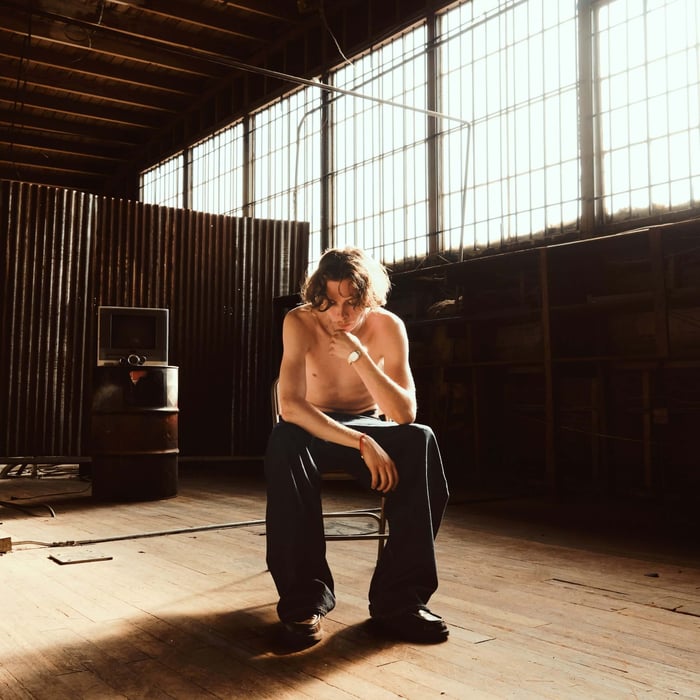
For What It’s Worth Review: cortex’s Lover-Boy R&B With Bad Boundaries


 See more Architeg Prints stories on Google.
For What It’s Worth Review: cortex’s Lover-Boy R&B With Bad Boundaries
For What It’s Worth sounds sweet until you notice the narrator keeps pushing past “no”—and the album doesn’t realize that’s the plot.
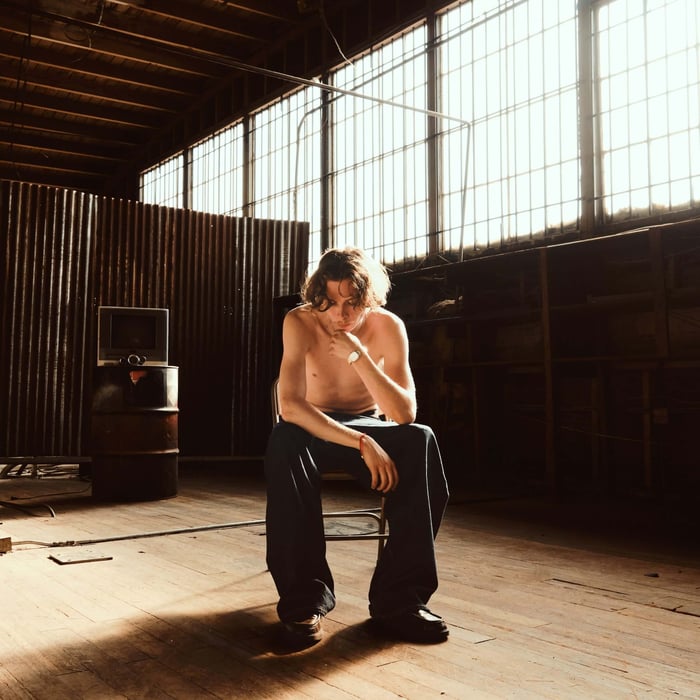
A pretty voice can’t hide a weird agenda
A debut R&B album in the lover-boy lane has one real job: understand what love costs the people you claim to love. For What It’s Worth does the opposite. It keeps framing control as romance, like if the chords are warm enough we won’t notice someone’s getting boxed in.
cortex comes out of Malmö in 2026 looking “ready” on paper—connections, a real producer presence, a whole stack of songs already finished. You can hear that readiness in the polish. What you can also hear, almost immediately, is a narrator who spends most of the runtime cornering somebody. And the album doesn’t treat that as a problem. That’s the part that made me squint.
Saw OTB handles ten of the fifteen tracks, and to my ear he keeps building rooms cortex isn’t actually prepared to stand in. The production says “late-night tenderness.” The writing keeps saying “you’re not leaving.”
The moment the album tells on itself: “6 in the Morning”
Here’s where the record accidentally gets honest: “6 in the Morning.” It’s the one track that actually names what a bunch of the others hint at and then try to play cute.
The hook opens with drunk-dial energy—calling an ex at 6 a.m.—and at first I thought, okay, classic messy-heart R&B setup. But then the second verse turns into a whole stalking paragraph dressed up like determination. If she doesn’t answer, he’ll “replace” her, post the new girl online, wait for the friends to report back. If that doesn’t sting enough, he’ll go to where the ex lives and literally post up outside her place—with the new girl—so she can see it. If the bait doesn’t work today, he’s back tomorrow.
And what’s wild is how the song presents it: not as a confession, not as a self-own, not even as a spiral. It’s laid out like a reasonable chain of steps. Then, two minutes later, the track slides back into a sweet plea to “meet me at the heartbreak hotel,” like the listener’s supposed to forget the part where “heartbreak” got converted into a surveillance schedule.
That whiplash is basically the album’s signature move.
Ultimatums wearing cologne on “Don’t Say” and “Close to Me”
Once you catch the pattern, you start hearing it everywhere. “Don’t Say” has that classic pose—devotion as dominance. The speaker tells her she can leave right now if she doesn’t already understand he’s got her. Which, let’s be real, is what an ultimatum sounds like when it’s trying to cosplay as commitment.
Then “Close to Me” doubles down: it’s built around him admitting he made her stay away once, and now demanding she doesn’t do the same to him. The track wants to be about longing, but it comes off like a custody negotiation where nobody filed paperwork.
A reasonable listener could argue this is just dramatic writing, genre theater, lovers fighting in neon lighting. Maybe. I’m not totally sure where the line is for cortex yet. But the album keeps asking for sympathy while refusing to admit what it’s doing to earn that sympathy. That’s the tension you feel in your shoulders while the synths keep purring.
“Change the World” and the fantasy of distance as proof
“Change the World” is where the record tries to sell obsession as effort. He’s flying thirteen hours because he heard there was another guy “in the past.” He daydreams about Barcelona. He drops a line about “I can’t wait to put you in your place,” which is one of those phrases that tells you everything and nothing at the same time. If you hear it as flirtation, it’s bold. If you hear it literally—even slightly literally—it’s the mask slipping.
And then there’s the opener’s line—“love don’t barely happen”—which is almost tender in isolation. But across this album, tenderness keeps getting stapled to possession. Two impulses show up in the same chorus, sometimes the same line, and nobody in the writing room seems interested in solving that contradiction. The record just keeps moving, hoping vibe will cover motive.
Saw OTB doing the heavy lifting (and you can hear it)
The funniest thing about For What It’s Worth is that the most responsible adult in the room might be the production.
Saw OTB is doing the heavy lifting—consistently. “Hypnotized” leans into a two-step-adjacent groove that gives cortex’s falsetto a place to float without sounding flimsy. It’s one of the moments where the album actually feels like it’s living up to its own sleekness.
“Days Are Over” carries the lewdest hook on the whole project, and the reason it works is kind of simple: the track’s verse music stays casual enough that the line lands more comic than smug. It’s the difference between a wink and a lecture.
“Love how you act, bring that back to my home
Yeah, throw it back, put your ass in my zone.”
That’s not poetry, but it is a choice. And on this beat, it lands like a dumb grin instead of a power move—which is exactly why it’s one of the more listenable moments.
Guest appearances quietly expose the main limitation
There’s a stretch where the album accidentally proves it could’ve used more outside voices—more pens, more perspectives, more people willing to say, “Hey, maybe don’t write it like that.”
“Make Me Feel” goes to Kaliyah immediately. From the first second, she claims the room. She drops the kind of refrain that sounds expensive—like it should be playing in a car with leather seats—and then she disappears for the rest of the runtime. It’s almost frustrating, because her presence makes the track feel sharper, like someone opened a window.
Halfway through “Heaven,” matt proxy shows up and writes the strongest verse anyone contributes on the album:
“Poke holes through my spine, postponin’ my lies
Post all my hoes to show my hurt inside
But your heart know I’m broken, you ‘posed to be mine.”
That verse is messy, but it’s aware of its mess. It admits damage without turning it into a strategy. After hearing that, I kept waiting for cortex to respond with the same level of self-recognition. He mostly doesn’t. And you start wondering—not in a hateful way, just in a practical way—what this LP would sound like if that kind of writing discipline showed up more than once.
“Forever” is the one time he’s allowed to lose
There’s exactly one song where cortex stops trying to win. It’s “Forever.” And of course it’s one of the best.
He sees her with someone else, calls it funny, then admits he’s still thinking about her. The key detail is what he doesn’t do: he doesn’t demand her time, doesn’t remind her she belongs to him, doesn’t posture like he’s owed a sequel. He just remembers.
When he sings, “Sometimes I wonder how life woulda been if we chose forever instead of the distance,” it lands because it isn’t bait. It’s not a trap door to get her back. It’s a genuine ache.
The verses do the math out loud: becoming better friends, then falling in love. Cold nights. Long nights. Not having much. Finding something that still felt fine. And cortex’s voice—malleable falsetto, melodic ear, all the tools—finally settles into the writing instead of fighting it.
On second listen, I realized I liked this track even more than I thought I would, because it proves the album can do humility. It just chooses not to, most of the time. That’s one out of fifteen, and the ratio matters.
The album’s “wisdom” pose is the real tell
By the time the record reaches its closing logic, cortex positions himself like he’s handing you a thesis—like he’s the guy who learned something and is now offering it up, neatly folded.
But what the album actually carries for most of its runtime is simpler and uglier: a narrator demanding access from women who already said no.
That doesn’t mean every line is a manifesto. It means the default posture is entitlement, and the album keeps trying to slide that posture under the door labeled “romance.” Some albums are knowingly about the kind of man you wouldn’t want to date—and the songs know that’s the subject. Here, the narrator keeps getting pulled toward sympathy he hasn’t done the work for. And Saw OTB keeps getting asked to bridge the gap with lush chords and pretty pacing.
Saw OTB is good. He cannot book Barcelona for you. He also can’t rewrite a controlling line after it’s already been sung like a confession.
So what’s actually “worth it” here?
The singing is fine—sometimes better than fine. cortex has a flexible falsetto and an ear for melody, and the producer roster clearly has chops. If you put individual moments on a playlist, a lot of them would slide right in. That’s part of the trick: the surfaces are so smooth you almost miss the pressure underneath.
But across these fifteen songs, the writer rarely stops to notice what his own narrator is doing. And that blind spot becomes the album’s loudest sound—louder than the drums, louder than the hooks, louder than the late-night reverb.
I’m not saying cortex can’t write a lover record. I’m saying For What It’s Worth keeps mistaking insistence for intimacy, and it expects the listener to call that “passion.” Some people will. I didn’t.
The verdict: If you like glossy, modern R&B where the production does most of the emotional explaining, you’ll find plenty to loop—especially “Forever” and “Heaven.” If you’re allergic to lover-boy lyrics that treat boundaries like a temporary inconvenience, this album will start feeling less like seduction and more like a long text you don’t answer.
FAQ
- Is “For What It’s Worth” more about romance or control?
It wants to be romance, but a lot of songs lean on control language—ultimatums, possession, “prove you’re mine” energy—without acknowledging the cost. - Which track shows cortex at his most honest?
“Forever.” It’s the one moment where he loses gracefully and stops trying to negotiate his way back into someone’s life. - Do the guest features help the album?
Yes—because they bring sharper writing and presence. Kaliyah sparks “Make Me Feel,” and matt proxy’s verse on “Heaven” raises the bar. - Is Saw OTB’s production a highlight?
Absolutely. Saw OTB supplies the album’s best atmosphere and pacing, often making shaky lyrical moments feel smoother than they deserve. - What are the best starting songs if I’m unsure?
Start with “Forever” and “Heaven,” then try “Hypnotized” if you’re here for the groove more than the narrative.
If you’re the type who remembers albums visually as much as sonically, a good cover print hits different on the wall—especially for a record this obsessed with appearances. You can shop your favorite album cover poster at our store: https://www.architeg-prints.com
 | DISCOUNTGET 30% OFF*Use code on your next order:
|
* This post may contain affiliate links, meaning we earn a commission if you make a purchase through these links, at no additional cost to you.