Fidelity Album Review: Yaya Bey Turns Grief into a Quiet Flex


 See more Architeg Prints stories on Google.
Fidelity Album Review: Yaya Bey Turns Grief into a Quiet Flex
Fidelity album isn’t a dramatic breakdown—it’s Yaya Bey refusing to perform pain for you, then sliding into a hook like nothing happened.
A record that starts after the “big moment”
Most albums show you the storm. Fidelity album is what happens after—when the dramatic part is over, your face is dry, and you still don’t feel “fixed.”
The thing that hits immediately is how uninterested Yaya Bey seems in giving anyone a neat arc. I can practically hear the decision: no cinematic catharsis, no tidy healing montage, no “look how strong I am” press-photo version of grief. The whole listen feels like she’s pushing back against being watched.
And honestly, I didn’t expect it to feel this private. On first impression, the looseness almost read like casualness—like she’d just tossed ideas into the room and hit export. But the longer I sat with it, the more it felt deliberate: she’s making the listener lean in, not lean back and consume.
She refuses to let Black grief become a spectator sport
There’s a specific kind of tired in these songs: not “I’m sleepy” tired—more like “I’m done being interpreted” tired. The emotional center of Fidelity album isn’t grief as a dramatic event. It’s grief as a permanent roommate.
The album follows the aftermath of her previous record Do It Afraid—the one that named the worst year of her life and tried to survive it out loud. But Fidelity doesn’t act like a sequel where everything improves. It basically says: I made the brave record, and guess what, I’m still not okay.
There’s also this sharp realization hovering behind the writing: if you’re a Black artist grieving publicly, people don’t just empathize—they watch. They turn it into content. I’m not inside her head, obviously, but the album behaves like someone who noticed the crowd gathering and decided to turn off the lights anyway.
The family history isn’t trivia—it’s the engine
Yaya Bey doesn’t come from “influences” in the cute playlist way. She comes from an actual lineage.
Her father was Kaleel Allah, a Queens rapper who worked in that golden-era Cold Chillin’ orbit under the name Grand Daddy I.U. He died in 2022, and you can tell Bey has been writing toward that absence for a while now. On earlier records, the loss felt like a sore spot you avoid touching. On Fidelity album, his presence stops being only a wound and starts becoming usable memory—still painful, but no longer untouchable.
What’s sneaky about this album is how it lets two worlds sit in the same room without forcing them to shake hands for the audience:
- the reggae she grew up with through her Bajan side
- the ’90s rap her father did for a living
They’re not pasted on as “genre moments.” They’re just… in her bloodstream. And the big tell is that she doesn’t sound like she’s borrowing them to prove a point. She sounds like she’s finally able to use them without flinching.
The production is home-recorded on purpose—and it shows
Here’s where Fidelity album makes its biggest statement without saying a word: it sounds like it was made at home because it was.
Bey produced this record nearly alone, with Exaktly popping in to co-produce in a handful of places. Otherwise, it’s her setup—an SP-404 and a ukulele doing a lot of the heavy lifting. And she leans hard into intuition and first-take looseness until the “imperfections” become the point.
You can hear the room. You can hear the breath between lines. The takes don’t get polished into that vacuum-sealed studio sheen. These songs sit low in the speakers like they’re trying not to wake someone up.
I’ll admit, part of me kept waiting for the mix to “open up,” for a big, glossy payoff. It doesn’t really happen, and that might frustrate people who want their emotional music to arrive with dramatic lighting. But the restraint is the whole thesis: this isn’t spectacle. It’s the opposite.
When she raps, she turns into an accountant
Bey’s writing tightens when she switches from singing into rapping—like the syllables snap into place and suddenly she’s keeping receipts.
“Freeze Flight Fawn” is one of those moments where she sounds less like she’s venting and more like she’s documenting. She’s talking about how everyone’s basically forced to sell pieces of themselves online just to cover rent. She questions who’s tracking what gets lost in that exchange—and who’s paying the inflation on the cost.
That’s what makes it sting: she isn’t delivering a trendy “capitalism is bad” bumper sticker. She’s running a ledger. And Fidelity album keeps returning to this idea that somebody should be counting what gets taken.
That same accounting shows up in “The Towns (bella noche pt. 2),” which acts like a sequel to a song from last year about a Baton Rouge nightclub that’s now closed. The lyrics don’t romanticize the place as some perfect utopia—it’s more brutal than that. The club mattered because it held people, and now it’s gone, and so is the sound that came with it.
“The rent is too high
The wages too low
Home girls can’t drop it low to the floor
If you can’t get down at Bella Noche’s no more.”
The song ends on “no music,” and it lands like a door shutting. Not metaphorically. Literally: no venue, no gathering, no noise, no culture in public. The claim here is arguable, sure, but it feels true in the way her delivery makes it feel true: when spaces disappear, community doesn’t just “adapt.” Sometimes it just gets quieter until it’s gone.
“Forty Days” is the album’s most direct conversation with death
If there’s a track on Fidelity album that stops hiding its target, it’s “Forty Days.”
Bey holds to the idea that it takes forty days after death for a loved one to reach the ancestors. The song sits right at that threshold—like she’s speaking to her father while he’s still in transit, still close enough to hear her clearly.
Over a dusty shuffle, she sings: “Shine your light down on me… Hold me while I’m lonely / Guide me to a love that was made special for me.” It’s not just mourning. It’s asking for one more act of care, one more nudge, one more sign.
And the refrain—“and it don’t stop”—sounds like a vow to keep asking, not because she expects a reply, but because stopping would mean accepting the silence. That’s the hard part: the song doesn’t resolve. It just keeps its hand out.
Late in the tracklist, she finally lets herself get mean
The record saves its sharpest knife for later, which feels intentional. Like she’s saying: I’ll give you tenderness first, but don’t confuse that with softness.
“The Breakdown” starts as a grief ballad, then pivots halfway into something aimed at a very specific kind of person: the friend who got successful and let the wrong people crowd the room. She’s not vague about it either. She catalogs the betrayal like she’s seen this movie too many times.
“You got all them crackers in your ear, they wreaking havoc,” she raps, and even if the listener doesn’t know the exact person she’s talking to, the type is familiar across indie rap and adjacent scenes: the one who gets their shot, gets surrounded by handlers, and starts shrinking.
The closing punch—“They just wanna pimp it, sell it, bag it”—could hang over half the industry like a bad smell. It’s not subtle. It’s also not wrong.
If I have a mild criticism here, it’s that the pivot can feel almost too sudden on first play, like two songs stitched together. But on second listen, that whiplash started to feel like the point: grief doesn’t stay in one genre, and neither does resentment.
The soft middle is where her Bajan side walks in and takes over
After the album bares its teeth, it slides into its warmest stretch—and this is where Bey lets her Bajan side show without translating it for anybody.
“Egyptian Musk” is a reggae duet with the Queens singer NESTA, and it has that casual, real-life chemistry that only happens when a session comes together fast. NESTA even shifts into patois for his verse—“Mi nah give pon you… Even if yuh mek mi likkle vex / A likkle blue”—and Bey doesn’t frame it as a “feature moment.” It’s just part of the air in the room.
Then there are the guitar-and-voice love songs like “In the Middle” and “Higher,” which stay conversational—like she’s singing across the sink while the dishwater runs. These aren’t big declarations. They’re lived-in. And I’d argue they’re stronger for refusing to chase drama.
“Simp Daddy Line Dance” might be the most quietly hilarious track conceptually: a cha-cha aimed at an old hookup who “wasn’t all that back in the day” and is suddenly back around trying his luck. The hook goes: “left foot, yeah, right foot, left stomp,” and it’s built like a chant the whole room can join.
This is where Bey’s definition of fidelity finally comes into focus: not loyalty to a person, but a stubborn devotion to joy—even while the world is on fire. That’s an arguable philosophy, sure. Some people think joy under pressure is denial. Bey makes it sound like survival.
“Cup of Water” is the most human request on the record
Bey is thirty-something, based in Brooklyn, producing her own records inside a culture that keeps trying to price out the scenes where Black women get to be loud. That context isn’t a footnote—Fidelity sounds like someone building their own room because the public rooms keep getting taken away.
Her last album title was a command: Do It Afraid. This one answers back with “Cup of Water,” where she says—plainly—that she could use a cup of water if the path gets any longer.
That request is almost painfully small, especially on a record loaded with loss. And the brutal irony is that the people she names across these songs—her dead father, her priced-out neighbors, her sold-out friend—aren’t exactly in a position to hand her anything. She keeps asking anyway.
That’s the album’s real flex: not “I’m healed,” not “I’m above it,” but “I’m still here, and I still want something gentle.”
Where I land on it (and the tracks that prove the point)
I walked into Fidelity album expecting something more outward—bigger hooks, cleaner transitions, more “album” in the traditional sense. What surprised me is how the record wins by staying half-lit. It doesn’t chase you down. It waits.
If you want the songs that best show what she’s doing, these are the ones I kept replaying because they carry the record’s thesis in different ways:
- “The Towns (bella noche pt. 2)” — community as a disappearing sound
- “Forty Days” — grief as an ongoing conversation, not a goodbye
- “The Breakdown” — the industry critique she refuses to soften
None of them feel like an attempt to go viral. Which, in 2026, is basically a radical creative choice.
Conclusion: Fidelity album is Yaya Bey choosing intimacy over performance—keeping the room tone, keeping the breath, keeping the anger for when it counts, and letting joy show up without permission.
Our verdict: People who like late-night, home-recorded honesty (and don’t need everything polished into a playlist-friendly shine) will actually love this. If you need big choruses, loud resolutions, and “healing” packaged like a motivational poster, you’re going to get impatient and start checking your phone.
FAQ
- What is the core idea behind Fidelity album?
It treats grief and joy like roommates: always sharing space, never fully resolving, and definitely not performing for strangers. - Is Fidelity album more rap or singing?
It’s both, but her rapping feels like the sharpest tool—especially when she’s keeping “receipts” about money, culture, and betrayal. - Does the production sound lo-fi?
Yes, in a deliberate way. You can hear the room and the breath, and it’s clearly meant to feel private rather than pristine. - Which track feels most directly connected to her father?
“Forty Days,” where she writes to him at the threshold of reaching the ancestors and keeps asking for guidance. - What tracks should I start with if I’m new to Yaya Bey?
Start with “Forty Days,” then “The Towns (bella noche pt. 2),” then “The Breakdown” for the hardest left turn.
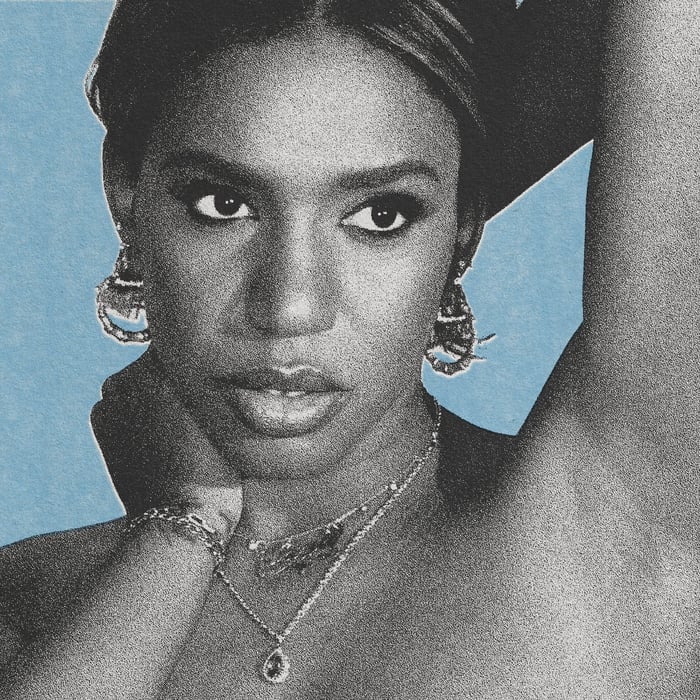
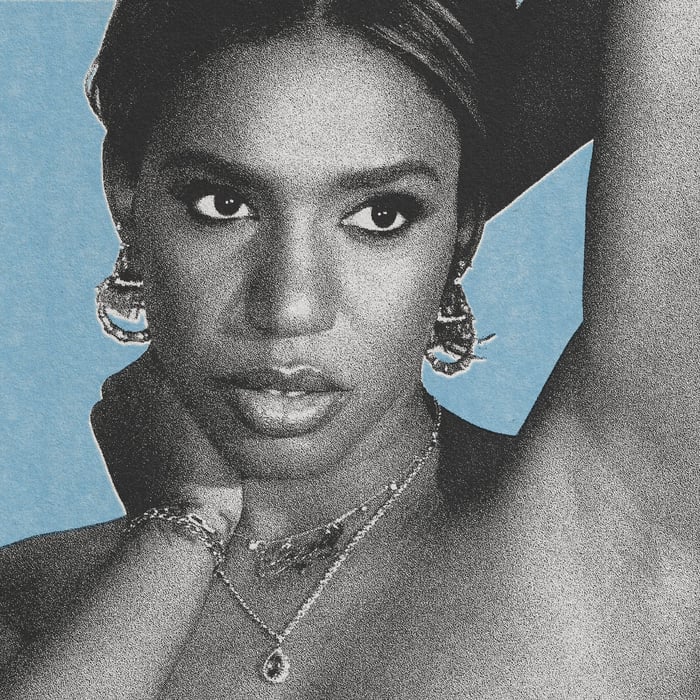
If Fidelity album put an image in your head you can’t shake, you can always pin it to your wall instead of your memory. Shop your favorite album cover poster at our store: https://www.architeg-prints.com.
 | DISCOUNTGET 30% OFF*Use code on your next order:
|
* This post may contain affiliate links, meaning we earn a commission if you make a purchase through these links, at no additional cost to you.