Wesley Joseph’s Forever Ends Someday Review: Youth Ends, He Won’t Shut Up


 See more Architeg Prints stories on Google.
Wesley Joseph’s Forever Ends Someday Review: Youth Ends, He Won’t Shut Up
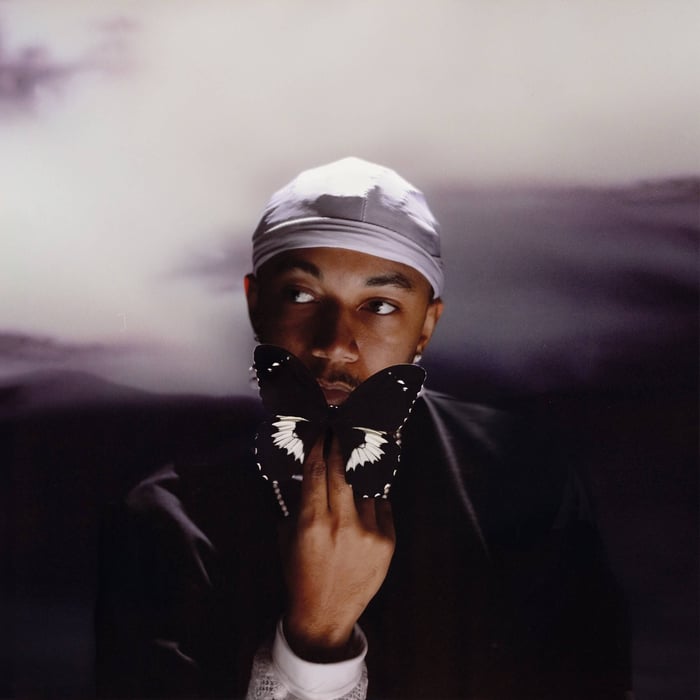
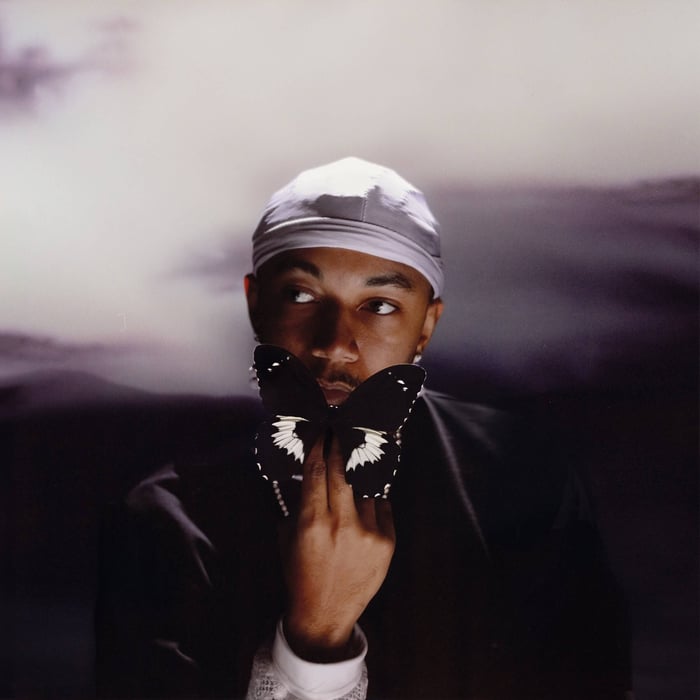
Wesley Joseph’s Forever Ends Someday turns hometown pressure into sleek anxiety-pop—sometimes gorgeous, sometimes claustrophobic, always human.
First, the album doesn’t “introduce” itself—it confesses
Some records ease you in with vibes. Forever Ends Someday walks up, grabs your sleeve, and starts talking like it’s already late. Wesley Joseph isn’t trying to win you over with charisma first; he’s trying to get something off his chest before the room changes and he misses the chance.
Walsall isn’t a “backstory”—it’s the unpaid bill
Here’s what I hear in the DNA of this album: Walsall—the post-industrial West Midlands town that gets treated like blank space on the UK music map until somebody forces a marker onto it. When that happens, it’s rarely polite. It’s more like: you’re going to acknowledge me because I exist, and I’m tired of being invisible.
That’s the pressure humming under these songs. Not the romantic, Pinterest version of “my roots,” but the real one: you leave, you grow, and then home looks at you like you owe them proof.
And Joseph sounds like someone who understands that specific demand. The kind that isn’t exactly support, and isn’t exactly guilt, but sits right in the middle like a weight you learn to carry without announcing it.
“Do your thing for us” becomes the album’s engine
Joseph is a 29-year-old singer, producer, and filmmaker who moved from Walsall to London to study film—and the move doesn’t feel like an escape on this record. It feels like relocation with a return address permanently stamped on his forehead.
The message from home—do your thing for us—doesn’t land here as a cute slogan. It lands like an instruction that turns into a responsibility. Forever Ends Someday keeps answering that call, track after track, without pretending it’s easy or glamorous. He’s singing to people back home, sure, but more pointedly he’s singing for them—like he’s been assigned the task.
A lot of artists say they represent. This album sounds like Joseph actually means it, which is inconvenient, because meaning it has consequences.
The title isn’t poetic—it’s a coping mechanism
The phrase Forever Ends Someday isn’t abstract here; it’s basically the thesis statement Joseph can’t stop circling. Across the three-year writing stretch that shaped this album, that idea—youth feels permanent until it doesn’t—keeps flashing like a warning sign in the corner of the screen.
I’m not going to pretend this is a “youthful” album in the way people usually mean it. It doesn’t chase youth as a vibe. It studies youth like it’s already started slipping away, like someone already came through and erased a few names from the list.
There’s a blunt line on “Quicksand” that says the quiet part out loud: you can come a long way, but forever ends someday. And “If Time Could Talk” takes it even further, basically imagining time as a smug witness that doesn’t comfort you—it just reminds you you were warned.
What surprised me is the album doesn’t treat that realization as a tragedy. The point isn’t “everything ends, so despair.” The point is: once you accept the clock exists, you can finally see small pleasures clearly again. Not bigger. Clearer. There’s a difference.
The “brothers” thread is the real plot, and it keeps shape-shifting
The most persistent presence on Forever Ends Someday is “my brothers”—and that phrase keeps changing meaning depending on the track. Sometimes it feels like one specific person who’s gone. Sometimes it’s the ones still here, but not fully themselves. Sometimes it’s a whole group whose stories don’t travel unless Joseph carries them.
The album opens with a line that basically lays out the job description: back home, his brothers never had a voice, so he’ll sing for them. That isn’t a flex. That’s duty.
On “Quicksand,” the obligation starts to sound like panic—there’s a moment describing a boy who isn’t the same anymore, thoughts not his, the strange intimacy of being seen as twins, “stood in the same skin.” And then, in the same song, Joseph snaps back to the private shorthand of people who’ve known each other since they were kids: memories in a suitcase, 100 miles away, and no soup when your belly aches.
That soup detail is brutal precisely because it’s small. It assumes a kind of closeness you can’t fake—like you’d only mention soup if you’ve actually shown up at someone’s door with it. Later, “Blinded” answers the whole mission in a single survival instruction: for his brothers’ sake, keep it going.
This is where the album stops being merely “good writing.” It becomes reporting. Not to the audience—back to the people who will recognize themselves.
The production roster isn’t a flex either—it’s a map of what he needed
The producer list is stacked, but it doesn’t feel like name-dropping. It feels like Joseph booked rooms based on what kind of truth he was trying to tell.
- Harvey Grant (Harvey Dweller) is the stabilizing constant across most of the record—the steady hand that keeps the songs from drifting off into pretty nothingness.
- Nicolás Jaar shows up on the tracks that lean hardest into electronic weather: “If Time Could Talk,” “Pluto Baby,” “Peace of Mind,” and “100 Miles.” Those songs don’t just sound electronic; they sound like they’re lit by a flickering streetlamp.
- A. K. Paul carries “Distant Man” and “White Tee,” adds another figure beneath “Blinded,” and brings in that soul-guitar shape that makes certain emotions feel physical.
- Tev’n runs melodic counterpoint through the sequence, like a second voice that doesn’t interrupt—just shadows.
- Romil Hemnani co-produces “Shadow Puppet” and “Peace of Mind,” and you can feel that push toward structure without sanding down the weird edges.
The key detail: Joseph has a co-producer credit on every track. That’s why the album can shift from house-adjacent electronics to soul-guitar warmth inside the same song without sounding stitched together in a lab. The tone is the glue. Not the genre.
I thought on first listen that the constant shape-shifting might make the album feel scattered—but on second listen, it felt more like he’s refusing to lie. Like, why should one sound be “the truth” when life isn’t?
“Peace of Mind” tries to earn its feature before the guest even shows up
The biggest swing is “Peace of Mind,” mainly because it pulls in Danny Brown—a hero Joseph apparently carried with him since making DIY videos at age twelve back in Walsall.
The song understands its first job: don’t waste the guest. And Joseph doesn’t. Before Brown arrives, Joseph has already set a tense scene—empowered but unsettled, like someone smiling with their toes on the ledge. There’s a line that basically stages self-destruction as a canceled appointment: if he doesn’t do what he said, then forget it, pull up, he’s already dead.
“Push me, I’m already close to the edge
Smile on my face with my toes on the ledge
If I don’t do what I already said
Well, fuck it, pull up, I’m already dead.”
Then the song does something I didn’t expect: it turns away from the audience. Joseph drops the sense of being watched—done with news, internet, press—done with recording tears he never even shed. He stages his own wake inside the track and shuts off every feed that could broadcast it.
When Danny Brown finally comes in, he doesn’t “save” the song. He reframes it. He’s dodging death, stepping over dollars to pick up a dime, and suddenly Joseph’s anxiety feels less like spiraling and more like two grown men handing each other heavy thoughts while they keep walking.
If there’s a mild issue here, it’s that the song’s intensity is so high so early that I kept waiting for the album to top it—and it mostly refuses. That’s not a disaster, but it does mean “Peace of Mind” can feel like the peak you hit before you’ve finished the hike.
“July” with Jorja Smith refuses the cheesy full-circle moment
Jorja Smith shows up on “July,” and the pairing makes sense beyond the obvious: she and Joseph both grew up in Walsall, and you can hear the shared history without them having to spell it out.
The best choice the song makes is what it doesn’t do. It doesn’t turn into a triumphant “look at us now” hometown victory lap. Instead, it’s two people talking through something hard in real time, quietly, with production that gives them space to be honest without raising their voices.
Joseph delivers a line that sounds like it’s aimed at someone absent—hoping they’re proud, just knowing he tried—and then he opens the lens wider: distance, time damage, and the weird fact that every July makes you older whether you consent or not. Jorja answers from deeper inside the same memory, not offering neat reassurance. The past doesn’t loosen its grip. They just learn to speak to it in present tense anyway.
That refusal to “resolve” is the point. Closure is overrated. Accuracy isn’t.
“Up 10,000 miles, the sun in my eyes
It doesn’t feel blameless, the way we’re damaged by the time
Yet I get older with every July.”
The love songs don’t pretend love is a shelter
Joseph’s romantic tracks don’t arrive as escapism. They arrive already aware the thing they’re describing might not survive the month.
“White Tee” has a chorus that practically flinches mid-sentence—an invitation to blow up your life for the night, with tomorrow looming like a bill. “Pluto Baby” feels like the narrator has started noticing the ceiling, like intimacy isn’t floating anymore; it’s getting measured. There’s a line about the floor spinning so they step on the ceiling, and another about missing the way someone’s skin is undressed—physical, specific, not romanticized.
“I think the floor is spinning so we step on the ceiling
Us against the globe from when I first saw her
I miss the way your skin is undressed.”
“Manuka” plays like a night balanced between love and a crash—maybe both. It hangs on one question: did I fall in love just to be capsized? And “Seasick” goes philosophical in a way that could’ve been annoying, but instead it lands because Joseph keeps it tethered to self-report: he’s 27, time is changing, and yet nothing’s changed about what he’s seen.
Here’s my arguable take: these songs work because they don’t perform heartbreak. They don’t pose in it. They stand inside it and tell you what the view looks like, which is rarer than people admit.
“Shadow Puppet” and “Mind Games” do the quiet accounting
“Shadow Puppet” is where the album keeps its private ledger. He drops a line about losing friends and now some people having sons, and on first pass it can sound almost plain—like, yeah, time passes, people grow up.
Then you hear it again, and it’s not plain at all. It’s about uneven survival. About how some lives continue and others just… stop, and the world keeps shining the same sun like it didn’t notice.
“Mind Games” is shorter, more interior—insomnia, alternate lives projected on the bedroom ceiling, and the reach for some kind of mercy: looking through the ceiling to the night sky and tomorrow’s kindness. It’s not “hopeful” in a motivational way. It’s hope as a practical tool: something you use because you don’t have a better option at 3 a.m.
Calling this a “debut” is technically true and emotionally misleading
Marketing-wise, sure, this is the debut album. But listening-wise? It doesn’t feel like someone’s first time trying. Joseph has been releasing music since 2020, supported Loyle Carner on the hugo tour, and he’s been making his own videos since he was twelve.
That history shows. The album doesn’t sound like it’s auditioning for an identity. It sounds like it already has one and is just refining the language.
He’s also clearly trying to punch above his weight—except I’m not convinced he’s actually punching above it. The space he’s operating in feels adjacent to the lane where Dean Blunt, Sampha, and Loyle Carner have been building: long-form projects that refuse to pick a genre first, but still keep something plain and human under the production.
The rarest thing here isn’t the guest list or the producer credits. It’s that the songs seem to know exactly whose absence they’re reporting back to.
Where I landed: the tracks that actually hold the spine
By the end, three songs feel like the album’s vertebrae—the ones that keep its posture straight:
- “Distant Man” — the emotional control here feels intentional, like he’s refusing melodrama on principle.
- “Peace of Mind” — the big swing, the public-private collapse, the feature that actually means something.
- “Shadow Puppet” — quiet lines that get heavier the longer you live with them.
I’ll admit, I wasn’t sure at first whether the album’s restraint would read as distance. Then I realized it’s not distance—it’s discipline. Joseph isn’t hiding emotion. He’s refusing to oversell it.
Conclusion: Forever Ends Someday doesn’t chase timelessness; it stares down the fact that time wins and still decides to sing anyway. It turns hometown obligation, grief math, and short-term romance into something carefully built—almost too carefully—like he’s trying to carry everyone without dropping a name.
Our verdict: People who like albums that whisper devastating things into expensive headphones will actually love this. If you need big choruses, clean closure, or a clear genre label to hold your hand, you’ll get impatient and wander off by track four—probably claiming it’s “mood music,” which is exactly the kind of misunderstanding this record dares you to make.
FAQ
- Is “Forever Ends Someday” more about Walsall or about leaving it?
It’s about the debt you carry after you leave—like the town becomes a voice in your head that doesn’t accept excuses. - Does the album feel overloaded with features and producers?
No, because the collaborators feel assigned to specific emotional jobs. The sound shifts, but the intention stays stubborn. - What’s the most intense moment on the record?
“Peace of Mind” hits like someone locking their phone and making a hard decision. It’s controlled chaos, not messy chaos. - Are the love songs traditional R&B romance tracks?
Not really. They’re closer to romantic realism—chemistry with an expiration date, and Joseph doesn’t pretend otherwise. - Does it actually feel like a debut album?
Only in the official sense. Sonically and structurally, it plays like someone who’s already been doing this and finally decided to put the full statement in one place.
If you want a physical reminder of this album’s whole “time is rude” vibe, you can shop your favorite album cover poster at our store: https://www.architeg-prints.com
 | DISCOUNTGET 30% OFF*Use code on your next order:
|
* This post may contain affiliate links, meaning we earn a commission if you make a purchase through these links, at no additional cost to you.