10 Til’ Midnight Review: Snoop Dogg Rebuilds Death Row Like a Bossy HOA


 See more Architeg Prints stories on Google.
10 Til’ Midnight Review: Snoop Dogg Rebuilds Death Row Like a Bossy HOA
10 Til’ Midnight isn’t a nostalgia trip—it’s Snoop Dogg stapling his name to Death Row in public, over and over, until you stop arguing.
The Cover Tells You the Point (Even If It Looks a Little… Synthetic)
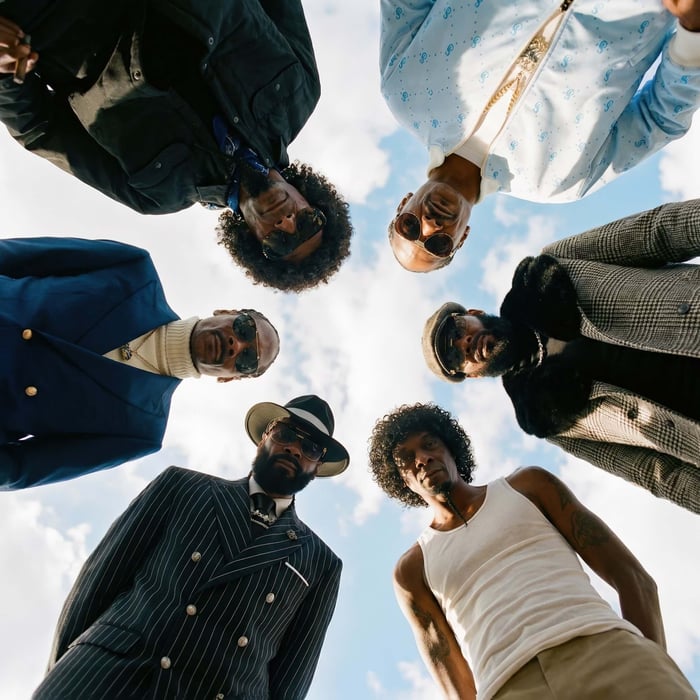
The cover hits you first: eight figures staged in that classic black-and-white block formation, with little red and blue flares shoved into the corners like warning lights. It’s basically the same posture West Coast rap used to drag the whole country’s attention toward one zip code and say, look here.
And yeah—I can’t unsee it: the artwork has that slightly “generated” stiffness to it, like a human idea rendered through a robot’s hands. Still, the intent is loud. Quoting that old confrontational stance this late into a career isn’t “homage.” It’s a claim of ownership.
This album feels welded to Snoop being back at the helm of Death Row. Not as a nostalgic symbol. As a property. As a megaphone. As a flex he wants repeated until it becomes boring.
Snoop Keeps Saying “Death Row” Because He Wants You to Repeat It Back
Here’s the funny part: Snoop doesn’t imply the Death Row angle. He says it. A lot. Like he’s training the listener.
On “Step,” Swizz Beatz is still doing his hyped ad-lib thing when Snoop drops in with the bluntest kind of aging-gangster realism—he’s “50 somethin’ years old,” still flagging, still talking like the past didn’t get archived. Then he lands the mission statement: Death Row as an “army” and a “navy,” turning “crumbs into biscuits.” He’s not describing a label. He’s describing a machine he controls.
On “Stop Counting My Poccets,” the setup starts petty—someone counting his money out loud—then Snoop pivots into the cleanest ownership declaration imaginable: Death Row Records, he owns it. No metaphor. No cute framing. Just a receipt slammed on the table.
“Pop My Shit” doubles down with the “Death Row is back” angle, pulling in the Crips-and-Pirus name-check like it’s a banner being unfolded on a stage. And “QTSAMYAH” has October London singing the kind of hook that’s designed to sound like a slogan: if you’re not on Death Row, you’re starving. That’s not subtle. That’s branding with teeth.
A reasonable listener could say it’s overkill. I get it. But I think the repetition is the point: this album is Snoop making the label name feel unavoidable again, even if he has to tattoo it across every track himself.
The Real “You” on This Album Is Somebody Younger Than Him
This record has a target, and it isn’t the old heads who already salute Snoop automatically. The “you” here keeps sounding young—people who still think consequences are optional, people who confuse attention with power.
“OG to BG” is where the album actually starts talking like it has something to lose. Soopafly’s bassline moves like it’s been doing this for decades, and Snoop rides it like a man giving directions he wishes he’d followed.
“Half of the homies had hands on real keys
I’m not talkin’ instruments for this incident
We sell crack and mines by the increment.”
Then his mother’s voice shows up in the lyrics like a bruise you can still press: In due time, you’ll do time. Teenage Snoop ignores it, because of course he does. Kanobby’s hook comes in like a hand on the shoulder—“I’m just givin’ you a little game”—and the track ends with Snoop basically saying: I hope you grow into OGs and don’t get grabbed by the feds. He even tells you to let it sink in.
If you’re expecting the album to be party-first, this is where it flips you. On second listen, I realized this isn’t Snoop trying to sound young. It’s Snoop trying to sound useful.
“17 Rules” Doesn’t Entertain You—It Runs the Numbers Like a Sentence
The bridge from advice to consequence lands hardest on “17 Rules.” The piano figure from MyGuyMars ticks along while the song counts—literally counts—through a kid’s life turning into a math problem: a shooting at twelve, fifteen years, then a RICO at nineteen, then the counting stops because “life” doesn’t need more arithmetic.
A lot of rappers talk about the system like it’s a spooky fog. This track talks about it like paperwork. That’s why it sticks. You can disagree with Snoop’s delivery being more lecture than poetry here, but I don’t think he’s trying to be pretty. He’s trying to be unmistakable.
And the album keeps that same posture when he’s dealing with younger rappers coming for him on “Leave That Dogg Alone.” He frames the whole thing like a peasant tugging a legend’s tail—almost bored, but not quite. The closer “QTSAMYAH” even ends with a line that’s basically: some of you won’t get a hit until you get hit. It’s a cold way to sign off, like the lesson isn’t optional.
The Producers Are the Real Supporting Cast (And Snoop Knows It)
The production lineup reads like Snoop picking tools off a wall, not chasing trends.
- Pharrell gives “Lied 2 U” that glossy R&B bounce he’s been wiring into Snoop’s world for ages. Snoop uses it to dismiss some guy whispering into his woman’s ear—calling himself “boss” and “well off”—while Snoop plays the “I fell off” card like bait. The hook of the track is basically: you believed a lie because you wanted to.
- Swizz Beatz shows up on “Step,” leaning into that stretchy, barked ad-lib style that points back to his older era.
- Nottz brings two different gears: “Stop Counting My Poccets” has this loose horn-and-snare strut, while “Long Beachin’” crawls in a slow West Coast roll.
- Soopafly not only anchors “OG to BG,” he also does “No Ticcet Needed,” looping a piece of “Ticket to Ride” while Snoop turns it into a scene—platinum plaques, hosting energy, and the little stage-direction moment where he promises he’ll be back “in somethin’ more comfortable.”
- Rick Rock supplies “Bread Under the Bed,” where Stresmatic chants “rubber bands” like it’s both money talk and a nervous tic.
If you want the short version: the beats aren’t trying to rescue Snoop. They’re framing him like a man who wants to be heard clearly, not loudly.
“Long Beachin’” Is Snoop Talking Like He’s Under Oath—and That’s Why It Works
“Long Beachin’” moves like molasses. Shawn Louisiana sets up the vibe with three-wheel tires screeching and Dickies sagging, and then Snoop comes in… and basically speaks.
Not raps. Speaks.
He runs through Roosevelt Elementary, Martin Luther King Jr. Park, Long Beach Poly—like he’s reading a personal affidavit. It’s oddly gripping because he’s not performing “memory.” He’s listing coordinates. The ending lands like a street address: turf by the surf, Long Beach City.
You could argue it’s too local, too granular, too “you had to be there.” I don’t think so. I think the hyper-specificity is the flex. After decades, he’s still making the case that he didn’t leave—he expanded.
And that makes the cover’s old West Coast pose feel less like cosplay and more like a relay baton passed between neighboring cities, like the history never stopped breathing.
A Few Tracks Slump—But They Don’t Break the Room
Not everything hits with the same purpose, and I’m not going to pretend it does.
“Slid Off” (self-produced) has bounce, sure, but it circles the same “I get money while you sleep” energy without climbing anywhere. It’s functional. It’s not especially sharp.
“Pop My Shit” has Trinidad James delivering a hook that actually snaps—clean, high-impact, built for repetition. But Snoop’s verses underneath feel like tour-bus notes and brand-name wordplay, including a “Big Mac is back” kind of line that made me exhale through my nose more than nod my head. The part that lost me wasn’t the humor—it was the sense that he didn’t bother sharpening the verse because the hook already did the work.
And “Daddy Rich” is basically a short Richard Pryor sample used like a billboard for the next track. It’s not “bad,” exactly. It just feels like dead air with a famous voice attached.
Still, none of these dips sink the album. They sit in the same room as the stronger cuts, and the stronger cuts win the argument.
The Actual Surprise Is Peezy, Not Snoop
The moment I didn’t expect to care about is Peezy on “Dogg Wattup Doe.” The track gets framed like a “Detroit vs. everybody” moment, but Peezy doesn’t come in screaming regional pride. He comes in doing mechanics.
Simple, plain-talk hustle details. Clean sequencing. Then—almost casually—he pivots into something like burnout: he sounds tired of rappers pretending, tired of people rapping about what he says they really do.
And that’s the sneaky genius of it: Peezy doesn’t just add a feature verse. He adds a mood Snoop can bounce off. When Peezy ends a thought by saying the loudest guys are usually the brokest in the room, Snoop reacts with this near-involuntary laugh like he recognizes the truth and hates it.
Snoop’s always been good at cross-regional alliances, but this one feels unusually fresh because it’s not celebrity pairing. It’s chemistry.
Favorite Moments (Because Some Tracks Actually Carry Weight)
If you want the parts where 10 Til’ Midnight stops posing and starts landing punches, it’s these:
- “OG to BG” — the advice track that actually sounds lived-in, not scripted
- “17 Rules” — the counting-story that refuses to romanticize the outcome
- “Long Beachin’” — Snoop turning his hometown into a spoken deposition
Snoop Dogg didn’t make 10 Til’ Midnight to prove he can still rap. He made it to make a point about what he owns, what he built, and who he thinks is next in line—if they don’t trip over their own ego first. The album’s best moments sound like a man choosing clarity over flash, even when it means repeating himself until you get annoyed. And honestly? The repetition is part of the pressure.
Our verdict: People who like grown-rapper albums that lecture a little—but back it up with real locations, real consequences, and producer choices that make sense—will get what Snoop is doing here. If you want Snoop to be a carefree mascot floating over party beats, you might get impatient, because this version of him is holding a clipboard and checking names at the door.
FAQ
- Is 10 Til’ Midnight a “Death Row comeback” album?
It plays that way. Snoop says the label name so often it stops being subtext and becomes the album’s spine. - What’s the most story-driven track?
“17 Rules” turns a life path into numbers and consequences, and it doesn’t blink. - Does Snoop actually rap-rap on this, or is it more vibe?
Both, but “Long Beachin’” is practically spoken-word—on purpose—while “OG to BG” feels more traditionally structured. - Any weak spots?
A few. “Slid Off” doesn’t go many places, and “Daddy Rich” functions more like a signpost than a full song. - What’s the most unexpected moment?
Peezy on “Dogg Wattup Doe”—not because it’s flashy, but because it’s honest enough to change the temperature of the track.
If you’re the type who judges an era by its cover art, it’s kind of perfect to hang that contradiction on a wall—classic posturing, slightly modern weirdness. If you want, you can shop your favorite album cover poster at our store: https://www.architeg-prints.com
 | DISCOUNTGET 30% OFF*Use code on your next order:
|
* This post may contain affiliate links, meaning we earn a commission if you make a purchase through these links, at no additional cost to you.