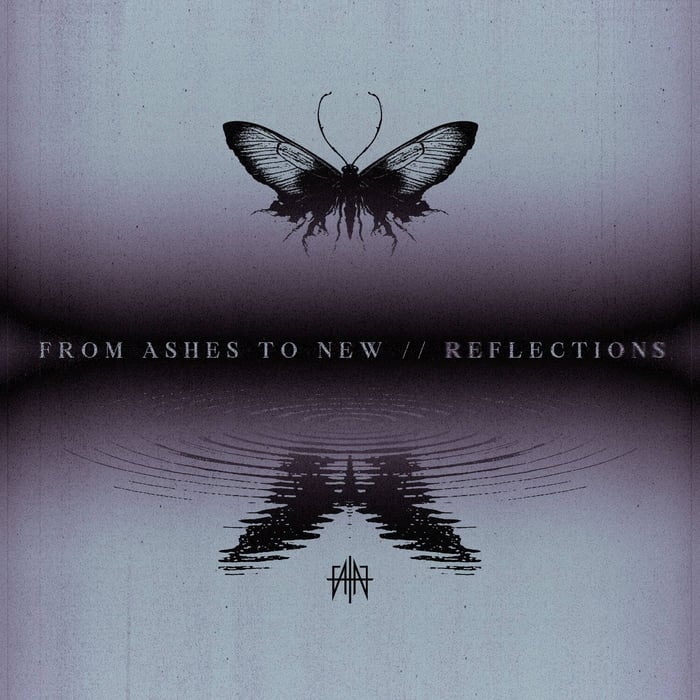
Reflections Album Review: From Ashes to New Play It Safe (Too Safe?)


 See more Architeg Prints stories on Google.
Reflections Album Review: From Ashes to New Play It Safe (Too Safe?)
Reflections album is polished radio-metal comfort food—catchy hooks, flat riffs, and rap lines that try hard to feel dangerous.
Hook: this is the sound of a playlist refusing to surprise you
Some albums feel like a band taking a swing. Reflections album feels like a band trying not to spill anything on the carpet—tight, clean, and weirdly proud of how predictable it is.
The “Octane-core” blueprint isn’t subtle—and that’s the point
Here’s what hit me immediately: From Ashes to New are basically the band your brain auto-summons when someone says “modern commercial hard rock.” That’s not an insult by default. It’s more like a diagnosis.
The record leans into a formula that’s become almost embarrassingly standardized in this lane:
- verses that get screamed or rapped (or both, in quick rotation)
- a huge chorus built for big-room singalongs
- a breakdown that lands like a required checkbox
- riffs that feel more like a texture than an idea
The title Reflections matches the vibe—generic on purpose, like it’s trying not to commit to a personality. I thought that might be a misdirect at first (maybe it’d get weird, or personal, or at least jagged), but it never really swerves. On second listen, I stopped waiting for the left turn and realized the straight line is the entire concept.
Nothing is offensively bad… which is kind of the problem
I’m not going to pretend this is unlistenable. It isn’t. The record is competently assembled, and that’s exactly why it’s frustrating: it has so little identity that it slides past you like background noise in a car while you’re scanning stations.
A lot of songs trigger that odd déjà vu effect—like you’ve heard them before, not because they’re stealing, but because they’re built from the same prefab parts as everything else in the format.
The main thing that consistently works is the obvious one: Danny Case’s vocals. He sounds solid, controlled, and professional, like someone who knows the chorus is the real battlefield and shows up prepared. If I remember anything after the album ends, it’s usually a hook carried by him.
Instrumentally, though? I kept waiting for a riff to actually step forward and introduce itself. Sometimes one tries to surface through the compression, and then it gets swallowed again.
The production is clean to the point of erasing the guitars
This album is mixed like a product demo: loud, compressed, and streamlined. The guitars often feel pushed back—not absent, but flattened into a general “heavy” blur.
And the drums… look, I can’t prove what plug-in is doing what in the session file, so maybe I’m wrong. But the snare sound has that super-polished, modern-metal snap that makes everything feel pre-approved. It’s the kind of drum tone that tells you the song is ready for radio before the band even finishes tracking it.
The result is this: when the production is constantly sanding down edges, the band doesn’t get to rely on texture or danger. So they rely on structure. And structure alone doesn’t make a moment feel real.
The rap problem: it’s not the presence, it’s the execution
The biggest drag on Reflections album isn’t that it uses rapping. It’s how it uses rapping. There’s a version of this hybrid that works when the rap voice feels like a real counterweight—another character in the song, not just a different setting on the same vocal preset.
Here, the rap sections from Matt Brandyberry often feel like they’re trying to inject intensity the music hasn’t earned. And the writing doesn’t help. Lines like:
“Your sticks and stones may break my bones / But your words make me wish I was dead” (Die For You)
“There’s nothing louder than the silence / The evil hides until it tells me, ‘Bring the violence’” ((Not) Psycho)
…land with a thud, because they sound like placeholder “tough” lines that never got upgraded.
And then the album doubles down by coating the rap vocals in heavy digital effects—pitched-down moments, glossy processing, and added samples that don’t add personality so much as they add clutter. It’s like the production doesn’t trust the vocal to hold attention on its own, so it keeps handing it costumes.
I’ll admit, part of me wondered if the corniness was intentional—like they’re leaning into exaggerated melodrama as a style choice. But it doesn’t feel self-aware. It feels sincere, which makes the weakest bars impossible to hide behind attitude.
Song titles that feel like they were chosen by algorithm
I don’t usually nitpick titles, but Reflections keeps stepping on the same rakes other bands have stepped on for years.
Die For You is one of those titles you could slap onto a hundred rock singles and nobody would blink. And then there’s Parasite, which has become such a standard “heavy song name” that it’s basically a genre tax.
Even (Not) Psycho feels doomed by its own naming. The parentheses read like a wink, but the song doesn’t actually wink—it commits. The title tries to be clever, and the track comes off more like it’s begging you to take the edginess seriously.
That contradiction—trying to feel massive and modern while using the most overused language in the playbook—keeps showing up. The album wants to be urgent. The writing often sounds mass-produced.
The hooks are sticky, and that’s the record’s main defense
When Reflections album wins, it’s because the chorus hits clean and simple. “Darkside” and “Upside Down” are the clearest examples: the choruses are built to stick, and they do.
But even there, I kept having this annoying thought: “Yeah, this works… but I’ve heard this done better.” Not because those songs are bad, but because they don’t bring a new angle—no fresh phrasing, no new emotional color, no riff that brands the track like a signature.
It’s like the band has mastered the shape of a big chorus, but they don’t always have a reason for this chorus to exist instead of any other.
And to be fair, I didn’t fully appreciate how effective some of those hooks were on first pass. The initial listen blended together. Later, a couple choruses popped back into my head while I was doing something else, and I had to grudgingly give them credit: the sticky parts are sticky.
Why the album feels empty even when it’s “fine”
The strangest thing about Reflections is how hard it works to avoid being offensive—and how that choice drains it of impact.
There’s nothing here that feels truly risky:
- the breakdowns arrive where they “should”
- the vocal trade-offs happen on schedule
- the riffs mostly serve as scaffolding, not identity
- the production polishes everything until it’s uniformly shiny
So the album ends up as factory-built modern hard rock: streamable, playlist-friendly, and basically designed to be consumed in the background without demanding a reaction.
That might be the intent, honestly. And if it is, it succeeds. But “it goes down easy” isn’t the same thing as “it leaves a mark.”
Album art
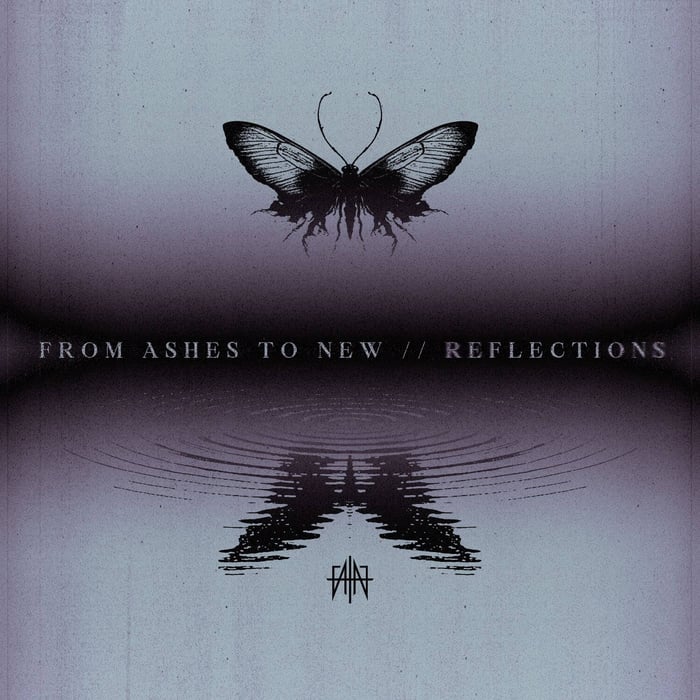
Release note (because it matters to how it’s positioned)
Reflections is out now via Better Noise Music. That label pairing makes sense: this album is engineered for the modern hard rock pipeline, not for cult status.
Conclusion: the record streams well because it’s built to disappear
Reflections album isn’t a trainwreck. It’s something more boring: a careful, competent record that treats originality like a liability. When it hits, it’s because Danny Case sells a chorus like he’s paid per hook. When it misses, it’s because the rap writing and hyper-processed delivery flatten whatever human edge the songs might’ve had. I kept hoping for one moment—one riff, one left-field bridge, one lyrical punch—that would make the band feel unavoidable instead of merely usable. It never came.
Our verdict: People who treat hard rock like a reliable energy drink will actually like this—clean choruses, predictable punches, no awkward surprises. If you want riffs that bite, lyrics that don’t sound like they came from a template, or anything resembling risk, this album will feel like being trapped in a “recommended for you” loop.
FAQ
- Is Reflections album heavy or more radio-rock?
It plays heavy, but it’s built for radio/playlist impact—big choruses first, real heaviness second. - What’s the strongest part of the album?
Danny Case’s vocal performance, especially when the chorus is allowed to be the main event. - What holds the record back the most?
The rap sections: the lines can be eye-rolling, and the heavy vocal effects make them feel even less natural. - Are there standout tracks?
“Darkside” and “Upside Down” have the kind of choruses that stick, even if they don’t feel unique. - Who is this album not for?
Anyone craving distinctive riffs, adventurous songwriting, or lyrics that don’t lean on genre clichés.
If you’re the kind of listener who remembers albums by their covers as much as their choruses, you can shop a favorite album cover poster at our store: https://www.architeg-prints.com/ — it fits the whole “make the background music visible” theme.
 | DISCOUNTGET 30% OFF*Use code on your next order:
|
* This post may contain affiliate links, meaning we earn a commission if you make a purchase through these links, at no additional cost to you.