Friko’s Something Worth Waiting For Review: A Loud Patience Flex


 See more Architeg Prints stories on Google.
Friko’s Something Worth Waiting For Review: A Loud Patience Flex
Friko’s Something Worth Waiting For pretends it’s about hope, then cranks the amps until hope sounds like a dare.
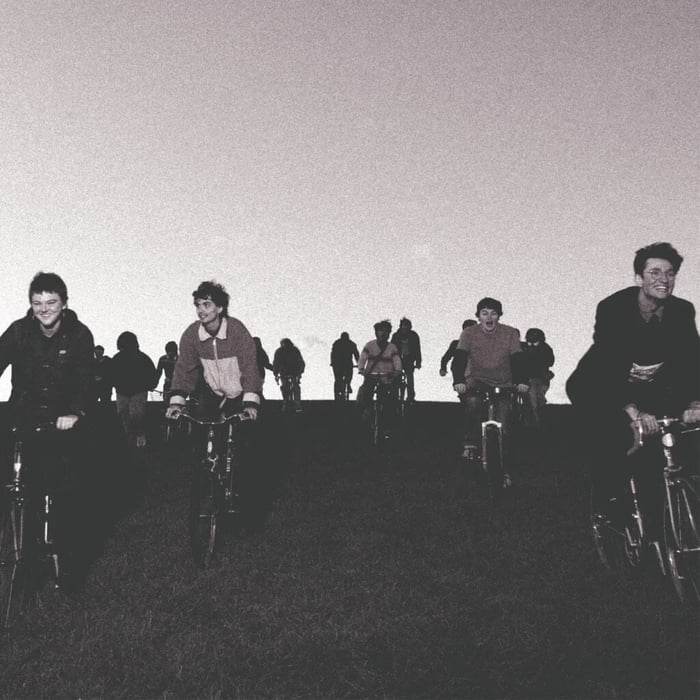
The hook: this album doesn’t “arrive”—it lunges
Some records try to convince you they were carefully crafted. Something Worth Waiting For sounds like it was earned in public, night after night, and then dragged into the studio still sweating.
This is Friko’s second album, and it has the weird confidence of a band that should’ve needed ten years to make it—but didn’t. The irony baked into the title is that it actually is something worth waiting for… even though the wait barely happened. Two years after their debut, they show up sounding like an indie rock “buzz band” that’s already lived through the rise, the fall, and the reunion tour. That’s not normal. It’s also the point.
The lineup’s bigger now: Niko Kapetan (vocals/guitar) and Bailey Minzenberger (drums)—who started this thing right out of high school—are joined by bassist David Fuller and guitarist Korgan Robb. And you can hear what that expansion does: the songs don’t just explode; they coordinate their explosions. John Congleton’s production doesn’t sand the rough edges off, either. It frames them like they’re the selling feature—which, honestly, they are.
I walked in expecting a rushed “we’re-on-tour-let’s-capitalize” sequel. On second listen, I realized it’s the opposite: the touring energy isn’t a shortcut here, it’s the engine. The band doesn’t let the wave subside—they surf it until their knees buckle.
1. “Guess” — ambiguity, but make it physical
This is the kind of opener that doesn’t “set the tone.” It grabs your collar and makes you pick a mood.
Power chords are naturally ambiguous, and “Guess” weaponizes that—dipping in and out of the crucial third interval like it’s refusing to commit to a single emotional truth. It’s major-ish until distortion swallows it, then it’s just pressure and nerve. The refrain, “Don’t make me guess if that’s a cry or a laugh,” gets repeated so much it should feel overworked, but Kapetan sings like repetition is the whole point: if you have to say it ten times, you probably mean it.
The structure messes with you, too. It keeps hinting at the moment where everything detonates, then delaying it, then letting it happen in a way that doesn’t even feel like “resolution.” It’s more like a clenched jaw deciding to stay clenched. The chord under the word “happy” lands stubbornly minor—Friko basically underlines the contradiction and says, “Yep. That’s life.” And that final “haha”? It’s unsettling at first, then weirdly sincere. I didn’t expect it to actually make me smile, but it did.
Arguable take: the best hook here isn’t the lyric—it’s the way the guitars dodge emotional clarity like it’s a trap.
2. “Still Around” — survival anthem with teeth marks
The bridge from the opener matters: after “Guess” plays tug-of-war with emotion, “Still Around” shows what Friko do with that mess. They turn it into momentum.
It’s got that The Bends DNA—sure—but with more pep, less paralysis. The song sells itself as an anthem of survival, but it doesn’t go clean or inspirational. It’s hopeful in a slightly morbid way, like someone grinning while listing injuries: “There’s always someone letting you down/ But still there’s salt in every kill.”
The real move is the group vocals. When the band leans into “You’re still around,” they magnify the we hiding under the you. That’s the trick: the lyric points at one person, but the performance makes it communal. It sounds like a band in constant motion, turning personal strain into something general-purpose.
Arguable take: the chorus is doing more emotional work than the verses—on purpose—and that imbalance is what makes it stick.
3. “Choo Choo” — the onomatopoeia isn’t cute, it’s a coping mechanism
Here’s where Friko’s early big-band indie comparisons make sense—but they don’t stop there. “Choo Choo” has that sprawling, scrappy energy that suggests they’re trying to fit a whole crowd into one vocal mic.
And yes, the hook is literally “choo choo.” There’s no mystery about what reaction it’s supposed to get. It’s a laugh that turns into a chant. After “Still Around” drops the line about a “home in every hell,” this track feels like the thank-you note to the people who make that line true.
The pace is frantic—like the bumpiness of the ride got translated into drum hits and breathless transitions. If the song has a “message,” it’s that speed can be comfort. Not healthy comfort. Just… real.
Arguable take: the “choo choo” hook should be annoying, but it works because the band commits like it’s a sacred lyric.
4. “Alice” — quiet, but not gentle
The shift into the first quiet song doesn’t deflate the album; it sharpens it. “Alice” is still dynamic, just in a way that moves like a slow inhale.
The piano melody came from Korgan Robb, written when he was 16, and you can feel that young clarity in it—simple, earnest, unembarrassed. The song offers reassurance to a friend, and it keeps a bit of naivety in an Alice in Wonderland-style metaphor about not staring into the keyhole. It’s basically saying: don’t obsess over the door you can’t open.
“I do know you/ And I know you know me,” Kapetan sings, and the guitar scales act like body language—familiar, private, almost conversational. Instead of killing the album’s communal charge, the track makes it personal, like the band steps closer to the listener without lowering their voice.
Arguable take: this song proves the band’s “big” moments only work because they can also sit still.
5. “Certainty” — intimacy, staged like a spotlight
The album threads from “Alice” into “Certainty” like it’s turning the room lights down one more notch. There’s piano again, and it does that emotional time-travel thing—jumping forward in your head to melancholy without ever announcing itself as “sad.”
It also connects back to Friko’s earlier mid-album track “For Ella,” but “Certainty” refuses to be eerily muted. Instead, it goes expansive, with arrangement work from Jherek Bischoff and production that stays pristine without going sterile. Congleton makes it sound huge, but the smarter move is how Kapetan’s voice gets treated—mic’d and mixed so the closeness changes from phrase to phrase, like the singer keeps stepping toward you and away again.
The song blurs public-transport daydreaming with a more fantastical kind of escape. And just when you think you can drift with it, the performances yank you back into focus: Bailey Minzenberger’s haunting solo vocal, then the breathtaking verse that follows, like the track quietly levels up while you’re still processing the last line.
Mild criticism, though: the polish here is almost suspicious. Part of me misses a little grime in the corners—because Friko wear chaos so well.
Arguable take: “Certainty” is proof that “clean” production can still feel desperate if the vocal is mixed like a moving target.
6. “Hot Air Balloon” — a rant against pretty songs (using a pretty song)
This is where the album starts telling on itself. Something Worth Waiting For sounds like the product of a band determined to make an actual living out of music—not just make music, but survive through it.
“Hot Air Balloon” takes that anxiety and turns it into a denunciation: “singers and painters and all and bands with their pretty songs.” It’s a hissed rejection of art-as-decoration, like they’re sick of beauty being performed instead of meant. And the detail that really lands? The follow-up line—“girls with their discoteques”—gets accented by a funky guitar chord. They can’t help making the thing they’re criticizing sound good. That contradiction is the human part.
The track suggests you sometimes have to back away from the thing you’re betting your life on just to feel alive again. The hot air balloon becomes the symbol: burn the fuel, rise above the circuit, see if you still recognize yourself.
I’m not totally sure if the song is aiming at the industry, the audience, or the band’s own temptation to prettify pain. Maybe it’s all three. Either way, it’s the album admitting it doesn’t trust “nice.”
A related visual idea gets name-dropped via this YouTube link (no idea if Friko will ever go that route, but the thought fits the song’s fantasy of escape):
https://www.youtube.com/watch?v=a2e82FyTcJY
Arguable take: the album’s boldest moment is when it complains about “pretty songs” while sneaking in one of its prettiest guitar accents.
7. “Seven Degrees” — classic-rock warmth used as a weapon
This one shows how Friko smuggle longing into playfulness. It’s the lead single, and it runs on a premise that’s almost goofy—misremembering “six degrees of separation” as “seven”—but the song doesn’t treat the mistake like a joke. It treats it like fate.
“For a long time I thought the saying was ‘seven degrees of separation’ and not ‘six.’” — Niko Kapetan
It starts as a “Dad once told me” kind of song, which gives it a classic rock sensibility that feels like tribute more than cosplay. Kapetan’s father was an aspiring musician, and you can hear the inheritance: not just sound, but the urge to turn advice into a chorus.
Then the desperation creeps in, poetic and blunt at the same time: “Now I have searched and I have crawled/ I have drank at every bars/ But still I sit and weep.” At some point the whole “degrees” thing stops being a game of chance and becomes a problem of time. And the answer isn’t action. It’s waiting.
Arguable take: the song’s “playful” premise is a decoy; it’s actually one of the album’s most defeated moments.
8. “Something Worth Waiting For” — the thesis statement, finally shouted
The middle of the record leans understated without getting bogged down, and that pacing matters, because the title track doesn’t just bring back the band’s dynamism—it collects the album’s best weapons and uses them all at once.
You get the wall of noise that first bursts out on “Guess.” You get the triumphant backing vocals from “Still Around.” You get the unyielding sprawl of “Alice.” And it runs on the same yearning fuel that powers “Seven Degrees.” It feels like Friko saying: okay, now you understand what we’ve been holding back.
The word “something” is vague on purpose, and Friko clearly love that kind of vagueness—“somewhere,” “someone,” now “something.” It’s not laziness. It’s the point: persistence hurts more when you can’t even properly name what you’re chasing. The track keeps insisting anyway, and that insistence is what stings.
This is the perfect penultimate song because it almost satisfies. It would feel wrong as a closer precisely because it’s reaching for a thing it can’t fully grab. Here, near the end, that failure feels honest. It justifies the wait—right now, not later.
Arguable take: if this were the closer, it would feel like a cheat; as penultimate, it feels like a confession.
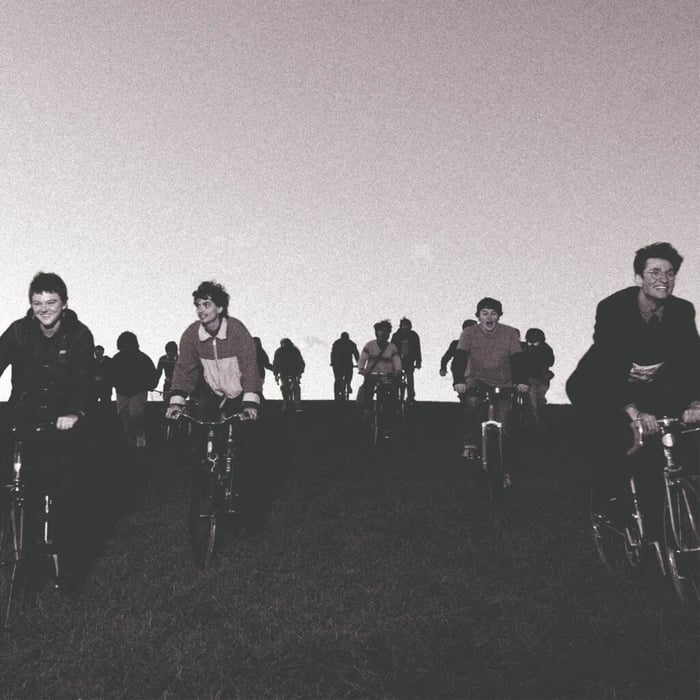
9. “Dear Bicycle” — childhood isn’t nostalgia, it’s an exit wound
The album keeps mentioning modes of transportation, and it’s never about being in control. Nobody’s behind the wheel. The closest we get is here, gripping handlebars—metaphorically, but it still feels like the first time the protagonist is steering anything.
The bicycle gets personified into a reminder of youth, calling back in a slow-burn arrangement: lilting piano, melodic bass, atmospheric cymbals, and—yes—synths. Another pummeling crescendo gets teased, like the album can’t resist its usual tactic, but the song retreats instead. It backs into childhood rather than charging into catharsis.
“I was empty then, I’m not empty now,” Kapetan sings. And that line hits like delayed bruising. Sometimes you don’t realize you climbed out of the void until you feel the next one clawing through you. The earlier refrain from “Still Around”—“The kids are alright/ But then where they’re going nobody knows”—starts reverberating backward through the whole record. The difference now is Friko sound less bothered by not knowing. The destination is uncertain, sure, but the album keeps arguing there’s “home” inside the dirt and sting anyway.
Arguable take: the closer’s power is that it refuses the big ending it keeps promising—like the band doesn’t trust catharsis anymore.
What this album is really doing (beneath the noise)
The through-line isn’t just “yearning.” It’s the refusal to make yearning polite.
Friko keep staging motion—trains, bikes, public-transport daydreaming—not as freedom, but as proof you’re still moving even when you’re not in control. They write choruses that sound communal, then fill them with private dread. They shout like it’s joyful, then slip minor chords under the word “happy.” It’s not mixed messaging. It’s the band insisting those things are the same moment.
And if I’m honest, I kept waiting for the record to trip over its own bigness—to do the classic indie thing where the feelings are huge but the songwriting can’t cash the check. It never fully collapses. The closest it gets is “Certainty,” where the polish almost smooths out the fingerprints. But even that track stays emotionally unsettled, like the mix itself can’t decide how close you deserve to be.
Conclusion
Something Worth Waiting For doesn’t sound like Friko “leveling up.” It sounds like they’re trying to outrun the version of themselves that would settle for aesthetic sadness and clean little metaphors. The album keeps picking the messier option: louder, rawer, more exposed, sometimes even a little ridiculous (“choo choo,” said with full sincerity). And that’s why it works—it’s not trying to be tasteful. It’s trying to be true.
Our verdict: People who like indie rock that means it—big choruses, bigger feelings, and zero interest in being chill—will latch onto this hard. If you want subtle background music, or you flinch at earnestness delivered at stadium volume, this album will feel like someone yelling their diary at you on public transit.
FAQ
- Is Something Worth Waiting For a loud album or a soft one?
It’s loud in its bones, even when it goes quiet—because the quiet songs still feel like they’re bracing for impact. - Which track shows Friko’s “anthem” side best?
“Still Around” does it cleanest: communal vocals, forward motion, survival-as-chorus. - What’s the deal with all the transportation imagery?
It’s motion without control—trains, bikes, daydream travel. The album keeps circling the idea of moving through life while still guessing where you’ll land. - Does the title track feel like the album’s climax?
Yes, but it’s placed as the penultimate track on purpose. It flares up, then the closer backs away instead of exploding again. - Any weak spot?
“Certainty” is gorgeous, but the pristine production nearly sands off the grit that makes Friko so magnetic. Nearly.
You can shop your favorite album cover poster at our store: https://www.architeg-prints.com/
 | DISCOUNTGET 30% OFF*Use code on your next order:
|
* This post may contain affiliate links, meaning we earn a commission if you make a purchase through these links, at no additional cost to you.