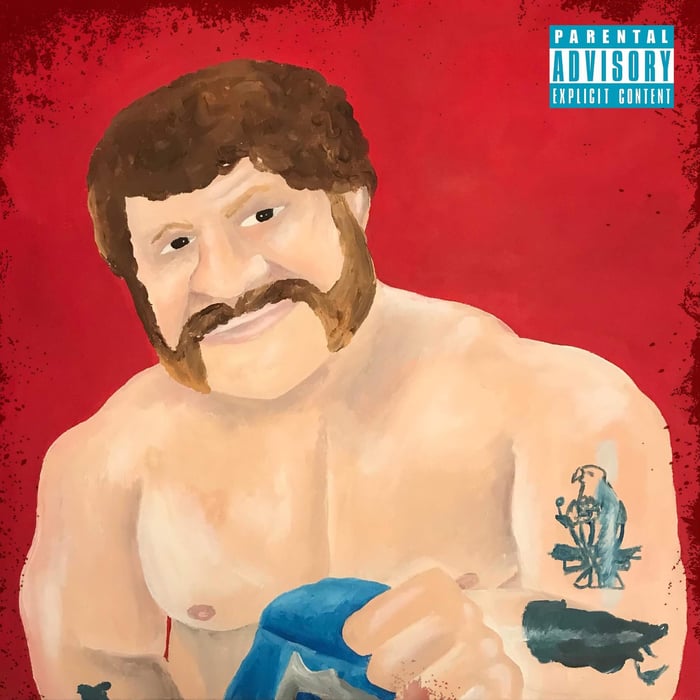
Sir Michael Rocks Album Review: “Choices” Is Flex Rap With a Memory Problem


 See more Architeg Prints stories on Google.
Sir Michael Rocks Album Review: “Choices” Is Flex Rap With a Memory Problem
Sir Michael Rocks delivers a raw, unfiltered look at money and relationships in his album “Choices,” blending storytelling with a quiet hustle mentality that stands apart from modern rap theatrics.
This album shows up like it didn’t ask permission
Some albums arrive like a campaign. This one shows up like a text from an old friend who never stopped moving—no warning, no roll-out, just a new stack of songs and the expectation you’ll keep up.
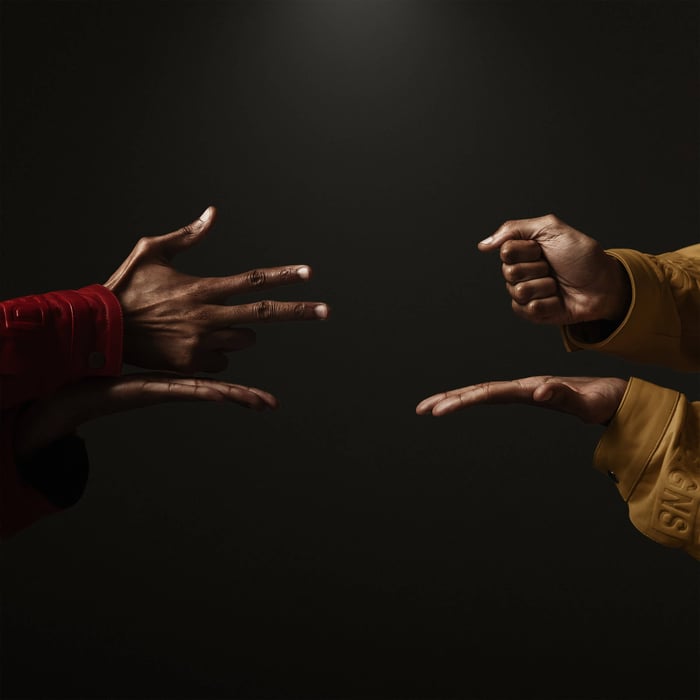
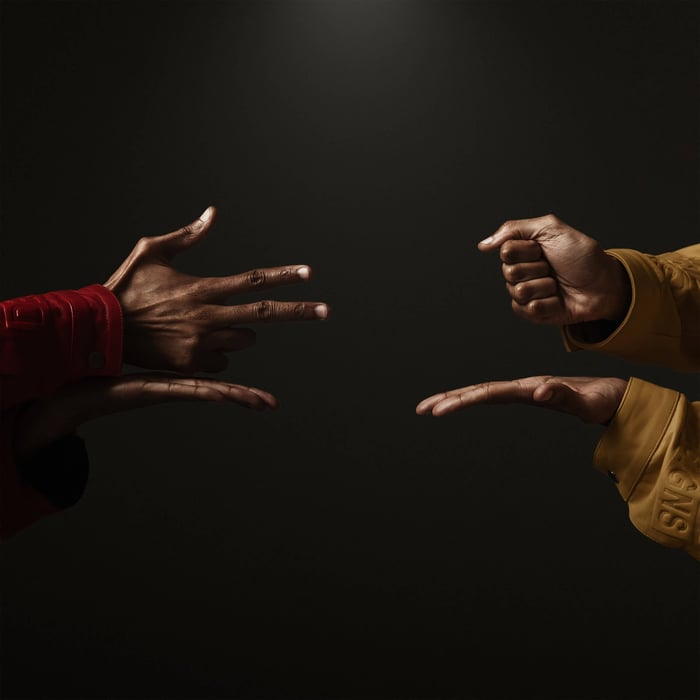
I’m listening to Rocks, Paper, Scissors: Choices like it’s a deliberate decision to ignore modern “importance.” It feels released because Sir Michael Rocks felt like releasing it. It’s on Fake Shore Drive, and it has that “local legend who doesn’t need your approval” vibe—twelve tracks, and he keeps the subject matter locked on money, women, or the messy overlap where those two topics start negotiating with each other.
The backstory is the point, even when he’s not saying it out loud
Rocks comes off like somebody who got famous early, got stalled by industry nonsense, and learned how to keep the lights on without begging for a spotlight. I hear that in how he raps: not rushed, not starved, not wide-eyed. More like: I’ve seen what hype does and I’m not dating it anymore.
There’s a practical, almost suburban origin baked into the way he moves—like he remembers the garage, the shipping, the grind that isn’t glamorous enough for rap mythology. And I can’t shake the feeling that this album is him proving (to himself more than anyone) that he can keep turning the crank: solo tapes, rebuilding the clothing thing, later projects with Chuck Inglish, and eventually the Cool Kids reunion energy floating around the timeline. Choices doesn’t sound like a comeback. It sounds like a guy who never left.
That’s an arguable take, sure. Someone else could hear this as nostalgia rap. I hear it as a routine: the workday version of charisma.
“Expensive Taste” wins because it stops posing and starts remembering
Here’s where the album actually gets teeth: “Expensive Taste.” Rocks tells that Auntie Greta story—his aunt as the neighborhood weed lady, black trash bags stacked to the ceiling in a garage, the casual pat on the back, the fifty-dollar handoff, and that line: “Act like I’m chillin.”
That moment does more world-building than any designer label can. And yes, he still drops the Prada/Porsche-type flex language afterward. It’s fine. But the reason the track lands is because the money isn’t abstract—it’s witnessed. It’s familial. It’s domestic. It’s criminal-but-normal in the way a teenager might experience it: half awe, half “don’t ask questions.”
At first I thought the song was just going to be another glossy victory lap, the kind that slides by pleasant enough and leaves nothing behind. Then the Auntie Greta scene kicks in and suddenly the flexing has gravity. On second listen, it feels like the real flex is that he can make a garage in the suburbs sound like an origin story without over-selling it.
When Rocks tells full stories, he stops being “cool” and starts being good
The album’s clearest proof of concept is “Last Dub,” because Rocks actually commits to narrative. He gives names. He gives actions. Tenille forgetting her keys, the stove situation, climbing through a window, people watching from the shadows—then the place gets cleaned out: video games, jewelry, new iMacs, even Tenille’s clothes.
“The money vanished out the vault
Man, I was frozen, couldn’t walk.”
And he raps it in this even, controlled tone that makes the whole thing feel worse. Like he’s narrating a memory he still doesn’t understand, not performing pain for applause. That’s the trick: he doesn’t beg you to feel it. He just keeps walking you through the room after it happened.
Then Bruiser Wolf shows up on the same track and basically detonates the vibe—in a good way. Wolf’s verse feels like it’s from a different planet: consignment talk, running it back up, body parts in different time zones. It’s so unhinged compared to Rocks’ plainspoken shock that it accidentally highlights what Rocks is doing. Rocks is grieving in a straight line; Wolf spirals. Two reactions to the same universe, and they don’t match—which is exactly why it works.
I’m not totally sure that contrast was planned, but it plays like an intentional choice: the guest verse as a spotlight that makes the main verse look more human.
The “player code” songs act like rules, not romance
A big chunk of the album runs on what sounds like inherited behavior—Rocks straight-up frames it like something passed down. On “Sneak N Geek,” he’s in full “my dad was a player so I keep it on that side” mode, and the whole song is basically a field manual about sneaking around with a woman whose boyfriend monitors her every move.
It’s not presented as tragic. It’s presented as normal. That’s the tell. Rocks isn’t romanticizing cheating; he’s normalizing a code where discretion is the real love language. Reasonable listeners can argue whether that’s honest or gross. I hear it as the album refusing to pretend it’s morally evolved.
“For the Money” doubles down with a line that doesn’t even try to be sweet. He admits—plainly—that cash came first, and anything emotional has to live underneath that roof. It’s not a “villain” confession; it’s a working principle. And that’s what makes it interesting: Rocks says the quiet part like it’s obvious.
“My first love was a hundred bucks
So puttin’ you over cash is a heart I could never crush.”
“She Don’t Wanna Ride” runs a similar play but with different clothes. Her man “calls the plays”; Rocks can get her a new car quickly. It’s transactional, but it’s also framed like competence—like the real seduction is speed and access.
What surprised me is that the tracks with actual spoken bits or character voice tend to stick longer than the ones that just ride the premise. When the album “acts out” a scenario, it feels lived-in. When it just states the rules, it can blur together.
The production is functional on purpose—and that’s both smart and limiting
Tavaras Jordan and Geeohhs carry most of the production, and the beats largely behave like they’re trying not to steal focus. That’s a decision. Jordan’s drums stay simple on “For the Money” and “Sneak N Geek,” with warm bass and low kicks—giving Rocks space to use that half-rapping, half-conversational cadence he defaults to. It’s like the rhythm is built to hold his posture.
Geeohhs gets moodier on “Expensive Taste” and “Soda Club Pelle.” The latter hangs on a hook about Rocks’ big cousin taking somebody’s Pelle Pelle jacket, and the weight of that hook sits heavier than the drums underneath it. The beat isn’t trying to be the headline; it’s trying to be the room temperature.
DJ Fresh tags “500K,” and the beat sounds like it time-traveled from the exact year Rocks is rapping about. That’s not an insult—it’s a texture choice. The song plays like a photo from 2012: cracking cards, car-dealership scams, guys getting money, guys getting locked up. It’s era-accurate in a way that feels almost stubborn.
Then “Walls” closes with Playa Haze pushing a faster tempo while Rocks starts stacking names and scenarios—Ghazi, Toosie—like he’s speed-running his own lore.
If I’ve got a mild complaint, it’s this: sometimes the beats do their job too well. A few tracks feel like they’re intentionally refusing to peak, which fits the “no press cycle, no theatrics” attitude, but it also means the album occasionally slides by on competence when it could’ve hit harder with one riskier musical left turn.
The guest features show the album’s main weakness: memorability
I kept waiting for “All the Chips” and “Mind Yours” to give me guest verses I’d want to replay for specific lines. They didn’t.
It’s not that anyone raps badly. The Musalini talks steak dinners by the lake and stock going up. Skooda Chose arrives in a Cadillac and starts questioning everyone else’s brokenness. Valee on “In Solace” buys Chanel and flies to Monaco. All acceptable. Smooth, even.
But here’s the problem: try telling a friend one unforgettable image from those verses. Not a vibe. An image. A moment you can point to. I came up empty, and I don’t think that’s me being difficult—I think it’s the album showing its habit of leaning on brand language when it runs out of lived details.
That’s the contradiction at the heart of Choices: Rocks can absolutely tell stories that stick, but he doesn’t always insist on it.
“Talkin’ Legit” is where the confidence turns into perspective
“Talkin’ Legit” is Rocks sounding like he’s been himself for a long time and sees no reason to cosplay youth. He remembers his dad’s Ford Explorer, a red Aurora with a TV screen, that teenage feeling of thinking you looked incredible just because the car had a screen in it.
That kind of detail is sneakily important. It’s not “content.” It’s evidence.
He’s also still selling the lifestyle—Marriani down to boxers and socks, smoking “avocado chocolate.” And the hook drops the line that actually lingers: “That’s boys leading boys, that’s why you niggas ain’t growing.” It’s blunt and a little smug, sure, but it’s also a mission statement: he’s watched people follow each other in circles and he’s not pretending that’s wisdom.
And whether you like the line or not, it has a spine—something parts of the feature-heavy flex section of the album could’ve used.
So what are the actual “choices” here?
This record keeps presenting choices like they’re simple—cash over feelings, discretion over honesty, brands over boredom. But the real choice Rocks makes is structural: he chooses tone over spectacle.
He rarely raises his voice. He rarely begs you to care. He just lays out the facts like he’s done explaining himself. That will either feel refreshing or flat, depending on what you want from rap in 2026.
My favorite tracks ended up being the ones where the “money/women/both” formula gets punctured by an actual scene:
- “Expensive Taste”
- “Last Dub”
- “Sneak N Geek”
Not because they’re morally superior songs—because they’re the moments where Rocks stops being a logo and turns back into a person.
Conclusion
Rocks, Paper, Scissors: Choices works best when Sir Michael Rocks treats wealth like a memory instead of a costume, and when he remembers that the most expensive thing in the room is usually the detail you can’t fake.
Our verdict: This album will hit for listeners who like cool-headed rap that treats hustling like a day job and storytelling like a flex. If you need giant hooks, dramatic beat switches, or guests who leave dents in the wall, you’ll get bored and start checking your phone by track five—no shame, just honesty.
FAQ
- Is “Sir Michael Rocks” the same artist from The Cool Kids?
Yes. This album sounds like a solo extension of that world—older, calmer, and more interested in control than hype. - What’s the most memorable moment on the album?
The Auntie Greta garage scene on “Expensive Taste.” It feels like a real snapshot, not a rap requirement. - Does the album have a lot of storytelling?
Not consistently. “Last Dub” proves he can do it brilliantly, but several tracks lean more on lifestyle statements than scenes. - How do the beats sound overall?
Mostly understated and functional—warm bass, simple drums, moody pockets. Great for Rocks’ cadence, occasionally too safe. - Which tracks should I start with?
Start with “Expensive Taste,” then “Last Dub,” then “Sneak N Geek.” If those don’t work for you, the rest probably won’t either.
If this album made you miss when cover art felt like a statement instead of a thumbnail, you can shop your favorite album cover poster over at our store: https://www.architeg-prints.com.
 | DISCOUNTGET 30% OFF*Use code on your next order:
|
* This post may contain affiliate links, meaning we earn a commission if you make a purchase through these links, at no additional cost to you.