Play With Something Safe Review: Rosco & Craven Make Pain Sound Casual


 See more Architeg Prints stories on Google.
Play With Something Safe Review: Rosco & Craven Make Pain Sound Casual
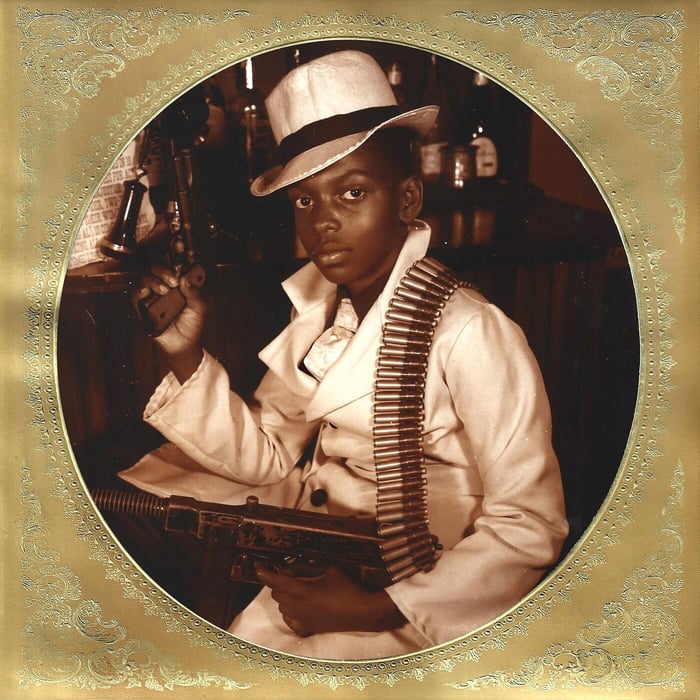
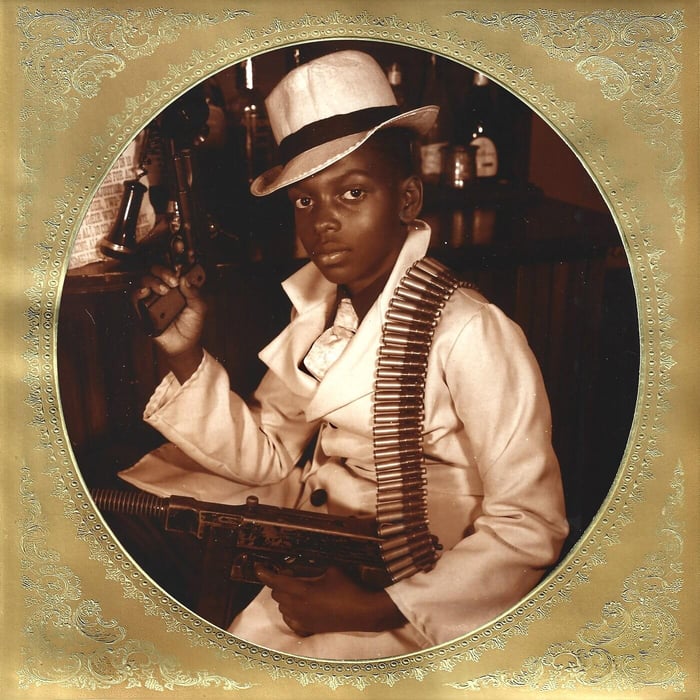
Play With Something Safe isn’t a comeback victory lap—it’s Rosco P Coldchain sounding unnervingly normal about things most rappers only cosplay.
This album doesn’t “return”—it resumes
Most albums like this are framed as redemption stories. This one doesn’t bother. Play With Something Safe feels like Rosco P Coldchain didn’t step back into rap so much as step back into the same sentence he was already mid-way through. The tone isn’t triumphant. It’s practical. Like he’s checking the locks, counting the money, and telling you what happened—without pausing to ask if you can handle it.
And that’s the first creative decision you can hear: the record refuses catharsis. It doesn’t swell into “look how far I’ve come” moments. It keeps walking.
Rosco’s origin story isn’t inspirational—it’s mechanical
The backstory that leaks into these songs is almost absurd in how quickly it flips from random chance to industry fate. Around 18th and Oxford in North Philly, early 2000s, Rosco walks up to Pharrell at a Philly’s Most Wanted shoot, name-drops a local MC, rolls a blunt, and starts rapping. It’s a cartoon version of “being discovered,” except the details are too specific to feel like a myth.
That move gets him to Star Trak, then the Clipse placements—“Cot Damn,” “I’m Not You,” and later “Chinese New Year.” You can feel how those verses would’ve been the start of the traditional arc: debut album, big producers, a clean runway. Timbaland, Kanye West, Alchemist, DJ Premier—names that usually mean the machine is already running.
Then the machine breaks. Distribution collapses. The finished debut just… dies in the building.
What’s brutal is how the album treats that not as tragedy, but as weather. This record’s whole worldview seems built on the idea that opportunity is real, and also completely flimsy.
Nicholas Craven’s production chooses one mood and refuses to blink
Here’s where the album makes its smartest—and most stubborn—choice: Nicholas Craven produces all ten tracks, and he doesn’t do the modern thing where every song has to prove it’s “different.” He sticks to warm, slow, dusty loops—drumless soul-flip territory that doesn’t spike into beat-switch theater.
If you want fireworks, you’re in the wrong room.
The steadiness is the point. The loops sit underneath Rosco like a table, not a rollercoaster. No guest-producer mood swings. No sudden genre cosplay. It gives Rosco space to talk the way he talks, which is half the album’s entire premise: he’s not auditioning for rap in 2026, he’s documenting a life that already happened.
An arguable take: Craven’s restraint is so consistent it’s almost confrontational—like he’s daring you to get bored so Rosco can keep talking anyway.
“Prayer Group” is the album turning around and staring at the past
The album mostly faces forward, but “Prayer Group” pivots and looks straight back. And it doesn’t do nostalgia the cute way. It opens on childhood objects like they’re evidence bags: Power Wheel, Oshkosh sneakers, Nike Cortez.
Then it gets uglier—matter-of-fact ugly. His father smoking pipe during the crack era, his mother not being able to deal with it. A Norman Connors record spinning while a kid absorbs the message that life is supposed to become something else: kiss the pretty girl, fly off in a starship.
That’s the kind of detail that would sound corny if it were polished. Here it lands because it’s not polished. It’s remembered.
He describes the block’s glamour like a crime scene catalog: Troop jacket, Lee jeans, Gucci sneakers, diamond rings. Then the real hinge: lying in bed next to his sleeping mother, wondering if he could sell what that guy sells. Not “will I be a rapper,” not “will I escape,” but “can I become the local economy.”
The song keeps stacking the unpretty parts:
- kids at school calling him Pookie, Pork Chop, Saddam Hussein
- dropping out in ninth grade
- powder milk, welfare cheese, boiling water on a kerosene heater
- watching his mother starve until it eats him alive
- running away and buying a “buck-thirty pack” on credit, owing a hundred back
He ends up asking how many pairs of Jordans he can buy.
That question hits because it isn’t a punchline. It’s a child’s math problem that becomes an adult’s trap. None of it feels arranged for a “verse.” It feels like he’s testing the memory for accuracy while it’s still warm enough to be useful.
I’ll admit, I wasn’t sure at first if “Prayer Group” was going to drown in detail. On second listen, that clutter becomes the point: the mess is the autobiography.
“Hold My Hand” hides its hook like it’s ashamed to be gentle
“Hold My Hand” does something nasty in a quiet way. It takes a soft, normal memory—his mother at a crosswalk saying, “Look both ways before you cross the street, hold my hand”—and buries it inside verses where killing is routine.
“Look both ways before you cross the street, hold my hand.” — Rosco P Coldchain
That contrast isn’t “clever.” It’s accusatory. The hook is what childhood was supposed to be. The verses are what the neighborhood trained instead.
Rosco talks about violence like it’s as regular as laundry. Brain matter on his Louis wouldn’t cost him sleep. He shouts out a widow and a baby daddy who promised to ball like Wake Forest—now a daughter is too young to understand why her dad’s in a casket.
Then the second verse turns the knife: buying an outfit for a closed casket because the bullet hole is too big. An epitaph that reads like an Instagram bio carved into stone: “goon gone, I lived hard, died young, I did my thing.” A man leaking on a stretcher rambling about whether he’d do it all again.
An arguable take: the song’s most “catchy” element is the mother’s warning, and the track uses that sweetness like a weapon. It’s not there to comfort you. It’s there to remind you what got stolen.
The title track is a reunion, but it isn’t friendly
“Play With Something Safe” brings Rosco back alongside Ab Liva and Jimmie D—voices that share his Star Trak/Re-Up Gang lineage. The chemistry isn’t about trying to “recreate an era.” It’s more like three people comparing scars without lifting their shirts.
Jimmie D raps about scraping pots and treats the school of hard knocks like an alma mater. Ab Liva has one of those lines that’s too vivid to be fictional: filing the numbers off a gun “like a pimp’s nails,” hand on the trigger at seventeen, pops stuck in the Blumberg high-rises. He flashes a memory of “Clue tapes in the barn,” blue tops and brown Dickies, beef-and-broccoli Timbs.
The title sounds like advice. The song sounds like the opposite: nobody in this world plays safe, and the title is basically a dare.
Here’s a mild criticism, though: as much as I like the reunion energy, I kept waiting for the song to pivot into a bigger moment—some structural twist, a hook that bites harder, anything. Instead it stays disciplined. That discipline is admirable… and also slightly frustrating.
“Die Slow” proves the guests aren’t features—they’re evidence
Bruiser Wolf showing up on “Die Slow” is one of those choices that works because it doesn’t try to impress you. He calls himself a manic depressant, says he probably should’ve told Andrew before he invested. Development arrested, desperate, desolate, margin for error thin.
No glamor. No motivational speech.
And that’s what ties the guests together across the album: everybody talks like they grew up in the same room. Different geography, same arithmetic—risk, loss, and the casual math of what it costs.
An arguable take: most rap features feel like visitors; these features feel like neighbors banging on the wall because they heard you telling the truth too loud.
“Boogie Nights” is where prison stops being a fact and becomes a philosophy
Rosco gets the most direct about prison on “Boogie Nights,” and it’s the closest the album gets to a long-form confession. He admits he cared what people said. Stayed in North Philly when he should’ve left. And the part that stings: nobody warned him to go.
He drops the kind of line that sounds like a proverb you learn too late: misery loves company. Pride plus arrogance equals jail time.
Then he sketches prison life without dramatics—racist hillbilly COs in the mountains dictating when he eats, sleeps, and shits, and Rosco basically shrugging because he’s lived in worse conditions. The flex isn’t macho. It’s bleak.
He even flashes back to the era where he had Skateboard P on a skateboard at 18th and Oxford doing ollies—like he’s checking whether the world remembers he was once close to the sun.
The track runs three verses and ends on a question that doesn’t get answered cleanly: does pain bring joy only if you survive it?
That’s the album’s core tension right there. Not “is it worth it,” but “is survival the only thing that makes meaning legal?”
The “Frankenstein flow” is Rosco refusing to smooth out for your comfort
Rosco’s cadence hasn’t been sanded down. If anything, it’s the same lurching, stalling, almost-spoken style that refuses to sit neatly on the beat. On “Frankenstein,” he names it himself—“Frankenstein flow”—like he knows it’s a little misshapen and he’s keeping it that way on purpose.
He raps about smacking a man like he’s a bongo. Smoking a disrespectful man “like some fronto.” He mentions a plug named Alfonso who reminds him of Benny Blanco and sounds “a little too ambitious”—a line that’s funny, but it’s funny like a warning label is funny.
Then “The Future” swerves into punchlines that are jagged and almost dad-joke adjacent. He compares his storytelling to Charles Dickens (his comparison), then hits a man with a McDonald’s and calls him Ronald. It shouldn’t work. And yet, because he delivers it like casual conversation, it lands.
An arguable take: the humor is doing the same job the violence does—normalizing the abnormal until you realize you’ve been nodding along to something insane.
I’ll be honest, my first impression was that the punchlines might undercut the gravity. But later, they started to sound like coping mechanisms that got promoted into style. The jokes aren’t there to lighten the mood. They’re there because the mood has been heavy since childhood, so the language has to do something else besides cry.
The album’s “settled” feeling is the real flex
There’s a shadow of influence and legacy hovering around Rosco whether he asks for it or not—Vince Staples naming Shyne Coldchain after him, DJ Premier staying in contact, Premier calling the jail. Rosco comes home in 2023 and records immediately: Sin City, Last Night Should Have Never Happened, Living on Borrowed Time, plus singles with Statik Selektah.
You can hear that urgency in the broader context, but Play With Something Safe doesn’t sound rushed. It sounds settled—like the difference between talking fast and talking clearly.
On “Prayer Group,” after the second verse—after that Jordans question—an L.T.D. song slides in, singing about learning to live, learning to give, togetherness. It’s one of the only moments where the album lets the room fill with something resembling warmth.
And then there’s that detail that feels like life’s weird footnote: his grandmother shared blood with David Porter of Stax Records. It’s not used as a brag. It’s tossed in like “yeah, the universe is tangled, what else is new?”
An arguable take: this record’s confidence isn’t in how hard it hits—it’s in how little it begs you to care.
Conclusion
Play With Something Safe doesn’t chase closure. It lays out memory like items on a table—childhood, hunger, street math, death rituals, prison logic—and lets you sit with the fact that this is what “normal” looked like where Rosco grew up. Nicholas Craven’s steady, warm loops don’t save you from the stories; they keep the lighting consistent so you can’t pretend you didn’t see anything.
Our verdict: People who like rap when it sounds like lived experience—unpolished, occasionally funny in the wrong spots, allergic to theatrics—will actually love this album. People who need big hooks, obvious climaxes, or “uplifting” arcs will bounce off it and call it monotonous, which is kind of the point.
FAQ
- What is the core sound of Play With Something Safe?
Nicholas Craven builds warm, dusty, mostly drumless soul loops that stay steady so Rosco’s stories can dominate. - Which tracks hit the hardest emotionally?
“Prayer Group” for childhood detail, and “Hold My Hand” for the way it weaponizes a gentle memory against normalized death. - Is this album focused on prison?
Not exclusively, but “Boogie Nights” addresses prison most directly and turns it into an argument about pride, survival, and regret. - Do the guest verses feel tacked on?
No—Ab Liva, Jimmie D, and Bruiser Wolf sound like they share the same grim math, not like they’re visiting for streams. - Is Rosco’s rapping style “modern”?
Not really. His “Frankenstein flow” intentionally lurches and talks over the beat in a way that refuses polish.
If you’re the kind of person who misses staring at album art while the music explains itself, it’s worth putting a favorite cover on your wall. We keep tasteful album-cover posters over at https://www.architeg-prints.com.
 | DISCOUNTGET 30% OFF*Use code on your next order:
|
* This post may contain affiliate links, meaning we earn a commission if you make a purchase through these links, at no additional cost to you.