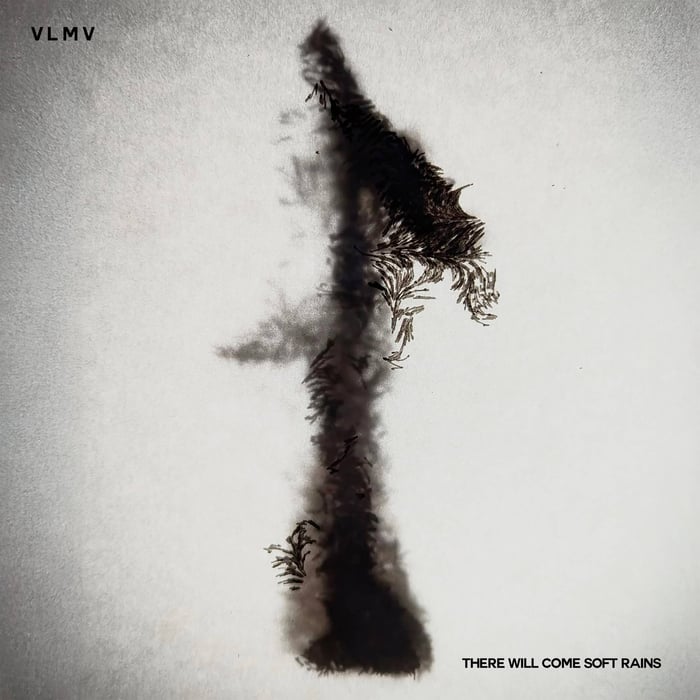
Soft Rains Album Review: VLMV’s Calm Music That Refuses to Hurry


 See more Architeg Prints stories on Google.
Soft Rains Album Review: VLMV’s Calm Music That Refuses to Hurry
Soft Rains turns ambient post-rock into a slow-motion argument with modern life—pretty, stubborn, and occasionally a little too polite.
A record for when the world won’t shut up
Modern life sprints. This album doesn’t. Soft Rains (yeah, I’m calling it that because that’s how it behaves) is VLMV digging their heels into the floor and insisting you sit there and feel time pass.
VLMV is essentially multi-instrumentalist Pete Lambrou building a private weather system: post-rock and electronica stretched out to their most ambient edges, where “song” starts to mean “a place you stand for a while.”
The template is familiar—and that’s the point
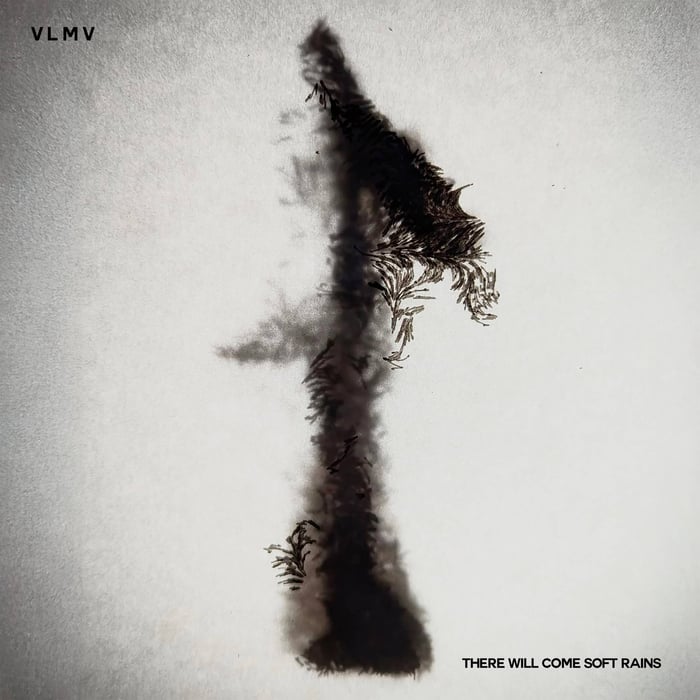
Here’s what VLMV commits to on this fourth album There Will Come Soft Rains: slow tempos, soft swells, strings that arrive like fog, synth pads that glow instead of flash, vocals that don’t show off, and builds that take their time getting anywhere.
At first, I honestly thought, Okay, I know exactly what this is going to do. But a couple listens later, I caught myself leaning in—because the album’s real move isn’t novelty. It’s restraint. It wants to make “not much” feel like “enough,” which is a risky ask in a world trained to skip after 12 seconds.
“Tribal (A Heart, Self Taught)” starts the spell
The opener “Tribal (A Heart, Self Taught)” lays down the album’s mission statement fast: synth-pad swells that feel huge without getting loud, and Lambrou’s voice hovering over them in a calm, steady drone.
Then it quietly pivots—almost like the track remembers it has a body—into a more electronic lane, with a gentle four-on-the-floor kick anchoring everything. It lands in that zone where the beat isn’t there to hype you up; it’s there to keep you from floating away.
Arguable take: the track’s biggest flex is that it doesn’t chase a climax—it just gets truer to its own pulse.
A narrow palette, but it’s layered like a widescreen film
This album doesn’t throw a hundred instruments at you. It works with a relatively sparse set of sounds, and then wins (when it wins) by stacking them intelligently.
A lot of the “big” feeling comes from space—this thing was initially mixed in Dolby Atmos, and you can hear that intent even in regular listening: parts feel positioned, separated, given air. The electronic components don’t reinvent themselves from track to track so much as shift in execution—same family of sounds, different lighting.
- “Bodies Grown (Pt. 1)” gets clever with layering, like it’s braiding shimmer and shadow together.
- “Somnolence In Reverse” (instrumental) is where the album’s synth foregrounding finally feels confident instead of cautious.
Meanwhile, other tracks lean on strings and piano as support beams, and every so often you get those reverb-drenched post-rock guitar dabs—“In Absentia” is the obvious example.
And the vocals? Lambrou’s voice is the opposite of flashy—no big “look at me” phrasing—but it never collapses into weakness. It moves from lullaby calm to stacked, overlayed falsetto refrains that feel like they’re meant to blur into the synths, not stand above them.
Arguable take: the vocals are mixed like another instrument, which will either feel tasteful or maddening depending on whether you came here for “songs.”
The album sometimes fights the danger of being too easy
Ambient music has a classic trap: it can slide from “calming” into “background,” and then into “accidental nap.” There Will Come Soft Rains knows that risk, and a few tracks try to jolt you awake with more insistent synth leads—especially “We Are All Explorers Now” and “In Absentia.”
“We Are All Explorers Now” tries to hypnotize you… and slightly overdoes it
This one runs a repeated staccato figure in 5/8 the whole time, while strings and vocals move underneath in a different time feel. In theory, that’s tension. In practice, after a couple minutes, it starts to feel mildly grating—like the track is poking you at the same spot to prove it’s alive.
What throws me is that I can sense there are undertones and detail that should be blooming under that pattern, but something about the stereo presentation feels like it scrubbed away part of the intended texture. I’m not completely sure if that’s the mixdown or just my ears wanting more contrast, but either way, it’s one of the few moments where the album’s patience reads as stubbornness.
Arguable take: repetition here isn’t trance—it’s a loop that forgot to evolve.
“In Absentia” lands the “attention grab” better
This track uses bold detuned synths that slide between chords, so even when it’s persistent, it’s not static. The vocal line is more prominent too, and that alone gives the piece a clearer center of gravity.
Arguable take: the detune is doing emotional work—making “pretty” feel unstable without resorting to drama.
The title isn’t decoration—this album is thinking about aftermath
The album draws its title and inspiration from a Sarah Teasdale poem from 1918, written in the wake of World War I and the Spanish flu epidemic. The poem’s core idea—nature’s indifference to humanity’s possible disappearance—lands differently now, especially with the climate crisis hanging over everything like low cloud cover that never burns off.
And here’s the part that matters: for all the calm-nature and post-apocalyptic stillness the sound palette suggests, this record doesn’t feel cold. It feels human, like it’s made by someone trying to keep a grip on tenderness while looking straight at an ugly horizon.
Arguable take: this isn’t “escape” music—it’s “stay here and cope” music.
“Philistine! (Reclaim The Sky!)” is where the album grows teeth
Later on, “Philistine! (Reclaim The Sky!)” starts with post-rock guitar nudging through synth pads—gentle pressure, not a shove—and then switches to piano and vocals.
The emotional shape is the point: it begins in something like despondency about the future, then turns toward a more defiant pushback—right there in the title. It’s one of the clearer examples of the album refusing to be pure ambience. It wants to be felt, not just used.
Arguable take: the track is basically the album admitting it’s angry, but doing it in indoor voice.
Most tracks behave like vignettes, not “songs”
For the most part, the pieces on There Will Come Soft Rains play like scenes—moments you pass through—rather than fully fleshed, verse-chorus “songs.”
- “We Are All Explorers Now” has that looping intermezzo feel, almost structure-less, like it’s more about staying in a mental posture than traveling anywhere.
- “Bodies Grown (Pt. 1)” sparkles and recedes on its own schedule. It honestly sounds like the kind of ambience that a latter-day 65daysofstatic track could slap a breakbeat onto—except VLMV refuses that easy adrenaline.
- Tracks like “Philistine!” can trail off with their crescendos arriving and evaporating before you fully register them.
This is where some listeners will bounce off. If you need obvious signposts—big choruses, clear arrivals—this album will feel like it’s always walking you toward the door and then turning left at the hallway.
Arguable take: the album’s “unfinished” feeling is deliberate; it’s making you do the closing of the circuit.
When structure finally shows up, it hits harder than it should
A couple tracks actually build in a way that resembles a classic emotional arc, and when they do, the album suddenly feels twice as tall.
“The Pilot” earns its catharsis
“The Pilot” starts from a sparse looped synth idea and works upward into cathartic strings and looped vocal refrains. It’s not a twist; it’s a slow tightening of focus. The build is “decent” in the sense that it’s not trying to be clever—it’s trying to be effective.
Arguable take: this is the album proving it can do traditional payoff, it just usually chooses not to.
“I Am An Officer” is the album’s clearest highlight
“I Am An Officer” repeats the build trick too, but with a piano-driven approach and an actual memorable hook—rare currency on a record that sometimes treats melody like a liability.
The final section changes pace, and Anja Madhvani’s harmony vocals are the cleanest “this is the moment” stamp on the whole album. It’s the standout because it commits: it gives you a shape you can remember, not just a mood you can inhabit.
Arguable take: if more of the album fought for melodic staying power like this, it would be harder to dismiss as “nice.”
“Somnolence In Reverse” deserves credit too
Even without vocals, “Somnolence In Reverse” finally nails the balance: foregrounded synths that feel present without being obnoxious, plus percussion that’s genuinely deft and a little exciting—like the track briefly remembers that rhythm can be more than a heartbeat.
Arguable take: this instrumental does more “speaking” than some of the sung tracks.
Who this album disappoints (and who it quietly rewards)
Even at its best, ambient music doesn’t forcibly grab you by the collar. Anyone coming to Soft Rains expecting constant “payoff” is going to feel teased, maybe even bored.
VLMV does achieve a lot with a limited toolset—even if the execution gets choppy in spots and the standout moments are honestly a bit scarce. And yeah, I’ll say it: there are stretches where the album’s calm starts to feel like it’s playing it safe. Not disastrously. Just enough that I caught myself wishing for one more risk—one more moment where the sound design gets weird, or the drums decide to matter.
Still, this is the kind of record that pays you back if you meet it halfway:
- headphones instead of speakers
- a dark room instead of background daylight
- closed eyes instead of multitasking
Then you start noticing the slow swells, the subtle layering, the way the vocals sit inside the synths instead of on top of them. The album’s best trick is making “languid pace” feel like an actual choice, not a default setting.
Arguable take: this record isn’t trying to impress you—it’s trying to outwait you.
Release notes and where to follow
There Will Come Soft Rains is set for release on April 24 via Pelagic Records.
Like VLMV on Facebook.
Conclusion
Soft Rains is VLMV choosing slowness as a kind of protest: against panic, against constant stimulation, against the idea that music has to “earn” your attention every ten seconds. It’s not flawless—some repetitions wear thin, and a few tracks fade out just when they could’ve landed a stronger final statement—but when it locks in (especially on “I Am An Officer”), it feels like staring at a still landscape long enough to notice it moving.
Our verdict: People who actually like ambient post-rock for the space—not the fireworks—will click with this immediately, especially headphone devotees and night-time listeners. If you need big hooks every track, you’ll last about two songs before you start reorganizing your inbox “while it plays,” which is the album’s polite way of telling you it won’t chase you.
FAQ
- What is the core mood of Soft Rains?
It’s calm but not empty—more like quiet endurance than relaxation music. - Is There Will Come Soft Rains more electronic or more post-rock?
It leans electronic in pulse and texture, but keeps post-rock’s sense of slow emotional lift, especially when guitars or strings swell. - Which track hits hardest on first listen?
“I Am An Officer,” because it actually commits to a hook and a structural payoff, plus the harmony vocals seal it. - Does the album work as background music?
It can, but the better experience is focused listening—otherwise the subtleties that make it worthwhile blur into wallpaper. - What’s one moment that doesn’t fully work?
“We Are All Explorers Now” leans so hard on its repeating 5/8 figure that the tension can turn into irritation before it says anything new.
If you’re the type who bonds with an album’s visual as much as its atmosphere, consider grabbing a favorite album cover poster for your listening corner at our store: https://www.architeg-prints.com
 | DISCOUNTGET 30% OFF*Use code on your next order:
|
* This post may contain affiliate links, meaning we earn a commission if you make a purchase through these links, at no additional cost to you.