House of Cards Review: The Amity Affliction’s “New Era” Hits Like a Truck


 See more Architeg Prints stories on Google.
House of Cards Review: The Amity Affliction’s “New Era” Hits Like a Truck
House of Cards turns The Amity Affliction’s turmoil into clean, brutal momentum—heavy enough to bruise, slick enough to hook you back in.
The hook: this is what “starting over” sounds like
Some albums try to convince you they’ve changed. House of Cards doesn’t ask permission—it kicks the door in and acts like the past was just dead weight.
After a turbulent stretch, The Amity Affliction sound like a band that’s decided to stop explaining themselves. This is their first album in three years, and it lands without Ahren Stringer, now with Johnathan Reeves in the picture alongside Joel Birch. And yeah, the lineup shift matters—not as gossip, but because the record is clearly built to prove a point: they can be heavier, sharper, and more direct without sounding like they’re cosplay-ing their own legacy.
Vida Nueva: the calm before the blunt-force opener
The intro “Vida Nueva” is moody and atmospheric in that “something bad is about to happen” way. It’s foreboding without being fancy—more like the lights dimming before impact than an actual song you’d put on a playlist.
And then it does exactly what it’s designed to do: it sets up the launch.
Kickboxer: they didn’t come back to be polite
“Kickboxer” hits like the band decided subtlety is for other people. The double bass pedals don’t just run—they pummel, and the guitars come in with riffs that sound intentionally nasty, like they’re scraping rust off the inside of your skull.
The line “I can’t live like this!” isn’t just a lyric; it’s the record’s mission statement. It feels like the band blowing dust off their own history and refusing to romanticize any of it. If this is a “new era,” it starts with a punch, not a press release.
I honestly thought—on first impression—that the heaviness might be a front-loaded flex, like they’d calm down two tracks later. That assumption doesn’t last long.
House of Cards (the track): the “contradiction” that makes the album work
The title track “House of Cards” keeps the momentum but changes the lighting. There’s a more symphonic flavor threaded into the metalcore chassis, and it works precisely because it contradicts what came right before. Instead of softening the impact, it makes the aggression feel staged and deliberate—like the band is controlling the chaos rather than drowning in it.
This is where Reeves becomes impossible to ignore. The interplay of harsh and clean vocals between Reeves and Birch feels like a structural decision, not just “new guy, new tone.” It’s engineered to broaden the attack: brutal where it needs to be, melodic where it sells the hook.
And here’s the thing a casual fan might not expect: the first two tracks are already massive highlights, but they’re also built like lead singles—big shape, clean payoff, easy to latch onto. That balancing act is harder than bands pretend it is.
Heaven Sent: the album’s speed limit is basically nonexistent
“Heaven Sent” swerves back into punishment mode and just keeps accelerating. This is the kind of track that makes you start moving without realizing it—two-stepping in your kitchen while you’re doing something embarrassingly normal, like washing dishes.
If someone told me this band was trying to sound like the heaviest version of themselves on purpose, I’d believe it. Not “heaviest they’ve ever been” as a marketing line—more like they’re using heaviness as a reset button.
Bleed: the sly electronic pulse under the metalcore pile-on
“Bleed” comes in with a beat that’s almost… delightful, which is a weird word to use when guitars are still dropping boulders on your head. There’s a cool electric shimmer running underneath, subtle enough that it doesn’t turn into a gimmick, but present enough that you can already picture a crowd bouncing in sync when it’s played live.
This is one of those choices that sounds obvious after you hear it. Before that, you don’t realize the album needed a shot of pulse and movement that isn’t just chugs and breakdown gravity.
Break These Chains: a fake-out ballad that refuses to be one
“Break These Chains” opens with tinkling sounds and clean vocals from Reeves, and for a second it sells you a story: okay, here comes the slow one.
Nope.
Birch storms in and the whole thing flips into a maelstrom that stitches clean and harsh together like it’s the only sane way to communicate. It’s a well-played fake-out, and it also tells you something blunt about the album’s personality: it doesn’t want to sit still long enough to be tender.
If I’m nitpicking, this is where the album’s “gotcha” instinct shows a little too clearly. The tease is fun, but it’s also a bit calculated—like they wanted to deny you softness on principle.
Beso De La Muerte: the breath you’re allowed before the next shove
Then “Beso De La Muerte” drops in as a short interlude, and it actually matters. Not because it’s some profound standalone moment, but because it gives your ears a breather before the album throws you back into the main fight.
Interludes can be filler. This one feels like pacing—like someone in the band understood that nonstop intensity can turn into wallpaper if you never open a window.
Swan Dive: melody with teeth, not a surrender
“Swan Dive” leans more melodic, and it does offer something different—but it doesn’t abandon the band’s core identity to do it. The best part is that it doesn’t sound like an apology for being heavy. It’s just a different angle, the way a bruise looks different under new light.
A reasonable listener could argue it’s a “safer” moment, but I hear it as the band proving they can pull back without deflating.
Speaking In Tongues: the catharsis track that refuses to be petty
“Speaking In Tongues” might be the heaviest track here—at least in pure weight and attitude. It also sounds like it’s addressing the band’s recent drama without turning into a childish diss.
“hypocrite, I’m better off without you here”
Reeves screams it like he means it, but what surprised me is how mature the framing feels. It’s not “look at me, I’m angry.” It’s “this needed to be said so we can move.”
I’ll admit I’m not 100% sure whether I’m reading the subtext correctly—but even if you ignore the backstory completely, the performance still sells the emotion as real rather than theatrical.
Why the back half works: it’s concise, and it knows when to stop
As the album heads toward the finish, the thing that stands out is how tight it is. No track feels like it’s hanging around because the runtime needed padding. That’s rare in heavy records that want to feel “epic.” This one feels intentional instead.
Also: picking a favorite gets weirdly hard, which is usually how I know an album’s sequencing is doing its job.
Afterlife: desperation that actually sounds desperate
“Afterlife” is drenched in lyrical desperation, and the band plays like they’re locked in. This is where the musicianship feels less like “watch us shred” and more like “help us carry this feeling.” It’s not a complicated trick, but it’s effective.
If anything, it exposes the album’s real strategy: keep the emotional temperature high, then change the shape of the heat song to song.
Reap What You Sow: anger with a clean-chorus release valve
The penultimate “Reap What You Sow” keeps the punishing House of Cards attitude alive. The verses feel engineered for the pit—mosh-inducing, destructive, leaving a path. Then the chorus goes clean, and it hits like a pressure release in the middle of a storm.
That contrast is the album’s recurring weapon: smash you, then hand you a melodic rope to grab onto, then yank it away again.
Eternal War: the finale where they throw everything at the wall—and it sticks
“Eternal War” closes the record by refusing to go quietly. It feels like every track has been stacking weight so this one can drop it all at once. And somehow, it sticks—like the band tested each ingredient and decided, yes, we’re putting all of it in the last song.
I kept thinking, it can’t possibly get heavier than this, and then it does. The ridiculousness of that escalation is part of the fun.
And honestly, the quote that fits the moment is blunt and perfect:
“it can!” — Mick McCarthy
When it fades out, you’re left feeling battered and weirdly eager to hit play again. That’s the album’s real flex: it exhausts you, then dares you to repeat the experience.
The bigger point: this doesn’t sound contrived, it sounds decided
This album makes it clear why The Amity Affliction can shake off the shadow of the past without sounding like they’re faking confidence. House of Cards doesn’t read as “reinvention” so much as commitment—like they stopped negotiating with their own identity and just picked a lane.
They genuinely sound like a different band in motion, and if you came in as a casual listener, you’d probably be shocked this is their ninth album. It plays like a reset with muscle behind it.
And yeah, I can see this turning up on a lot of year-end lists when 2026 wraps—because it’s the kind of record that makes replaying feel automatic. Turn it up too loud, let it flatten you, repeat.
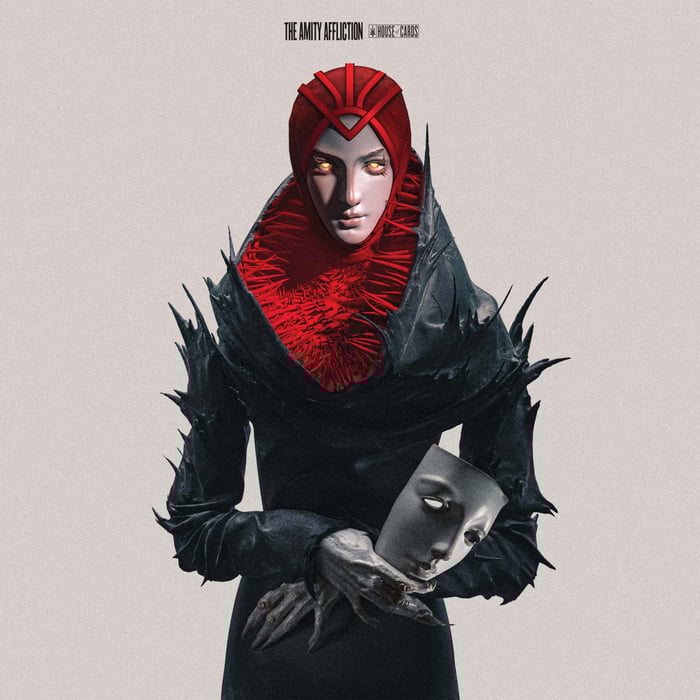
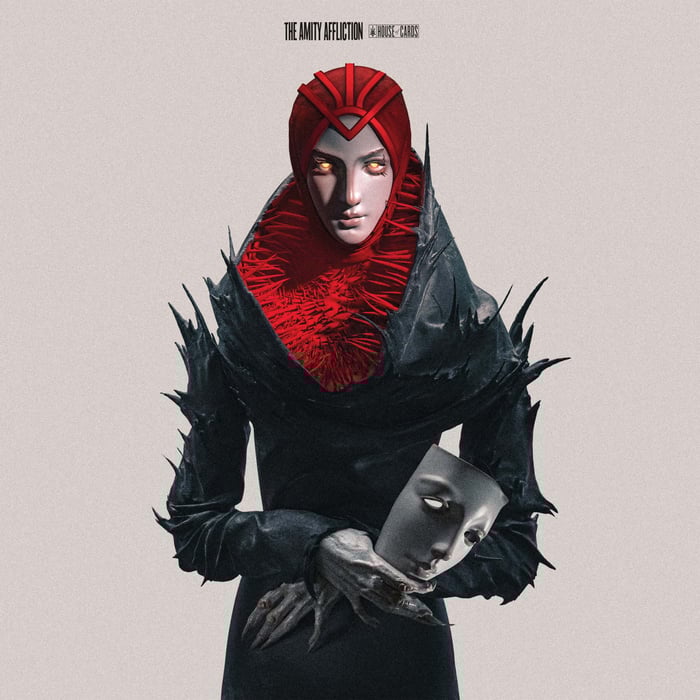
Album art
Release info
House Of Cards is out now via Pure Noise Records.
Conclusion
House of Cards isn’t trying to be “the next chapter.” It’s trying to be the chapter that erases the footnotes, and it mostly succeeds by being unapologetically heavy, tightly paced, and emotionally blunt without turning childish.
Our verdict: If you like metalcore that treats catharsis like cardio—clean hooks, nasty riffs, and breakdowns that don’t ask how your back’s doing—you’ll actually love House of Cards. If you’re hoping for a gentler, more reflective Amity record, this one will politely shove you out of the room and lock the door.
FAQ
- Is “House of Cards” more heavy or more melodic overall?
It leans heavy, but it keeps pulling you back with clean choruses and symphonic touches—especially early on with the title track. - Which track sets the tone best on first listen?
“Kickboxer.” It’s a statement opener that makes it clear the band came back swinging. - Does the album have any breathing room?
Yes—“Beso De La Muerte” functions like a quick reset so the back half doesn’t blur into one long punch. - What’s the most “live-friendly” moment?
“Bleed” has that jumping, bouncing pulse—helped by the subtle electric layer under the heavier parts. - Does the album stick the landing?
“Eternal War” goes for maximum impact and surprisingly holds together, even when you think it can’t get any bigger.
If you’re the type who treats album art like part of the experience, you can always grab a favorite album cover poster for your wall over at our store: https://www.architeg-prints.com/ — it fits the whole “loud feelings, permanent display” vibe.
 | DISCOUNTGET 30% OFF*Use code on your next order:
|
* This post may contain affiliate links, meaning we earn a commission if you make a purchase through these links, at no additional cost to you.