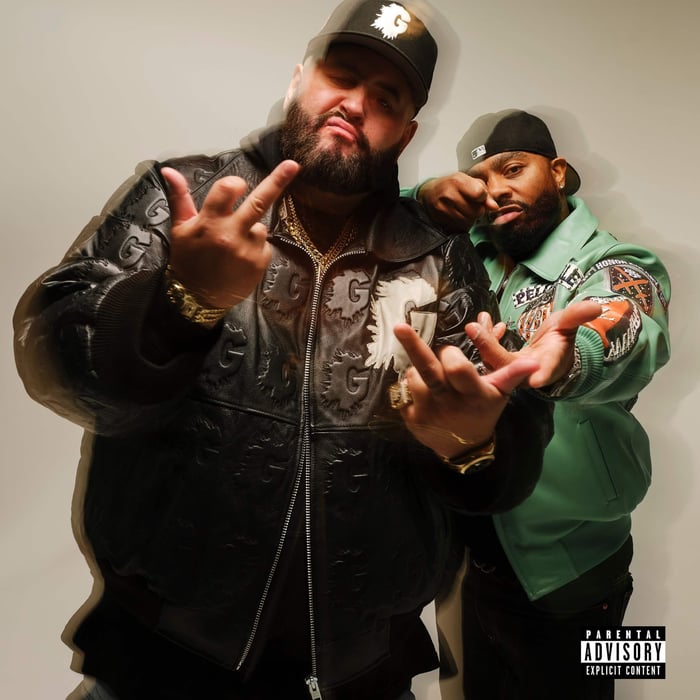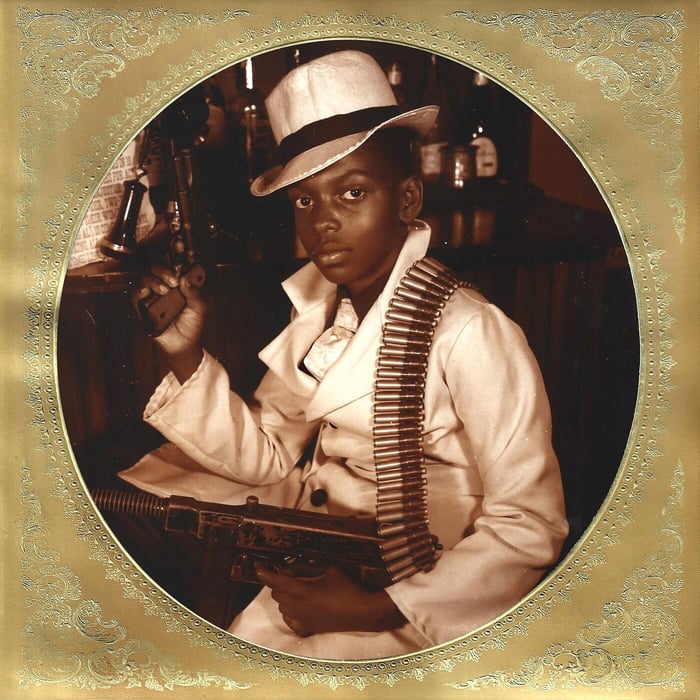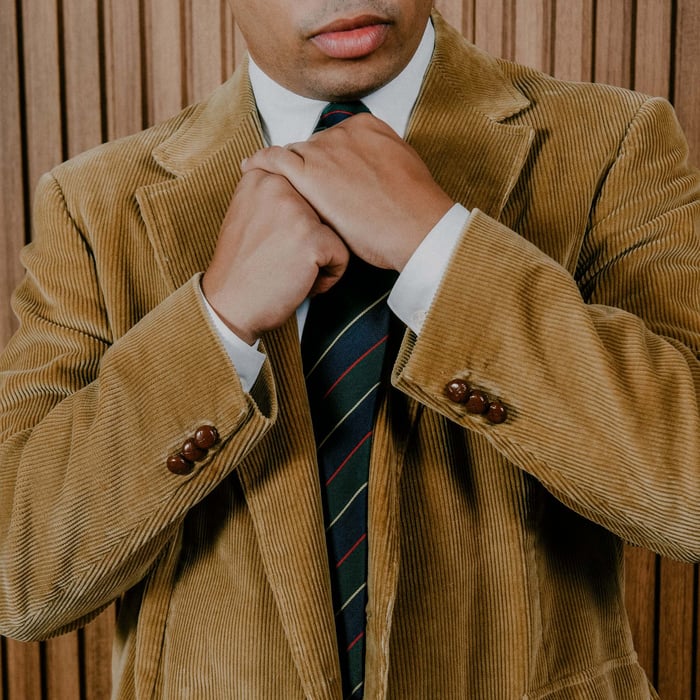
Forager Album Review: Cadence Weapon Turns Thrifting Into a Flex Trap


 See more Architeg Prints stories on Google.
Forager Album Review: Cadence Weapon Turns Thrifting Into a Flex Trap
Forager album plays like a rummage sale with a PhD—warm beats, obsessive details, and a dad-rap twist that’s weirder (and smarter) than it sounds.
A hook before the hooks
This album doesn’t want you to “relate.” It wants you to watch someone turn obsession into craft—then dare you to call it shallow.
And yeah, Forager album is technically about clothes. But it’s really about control: how you organize a life, a mind, a past, and a new family role when your brain won’t stop scanning the racks.
The backstory that actually matters
Let’s start where the record’s confidence comes from. Cadence Weapon (Roland Pemberton) doesn’t rap like someone who had to ask permission to be here. The origin story is wired into him: his dad, Teddy Pemberton, hosted The Black Sound Experience, one of the earliest Canadian radio shows to put hip-hop on air—and he brought that show to Edmonton.
You can hear the side effects. Pemberton grew up with one foot in underground rap and the other in experimental electronic parties, like he was raised by two rival scenes and decided not to pick a favorite. He rapped in math class, failed math (which somehow feels important), and built a resume early—writing about hip-hop before he was even old enough to rent a car, publishing a memoir, and later winning the Polaris Music Prize for Parallel World in 2021 after stacking nominations over a long stretch. He even served as Edmonton’s poet laureate.
That list could come off like a victory lap, but on Forager album it reads more like a warning label: this is what happens when a hyper-literate mind decides to make rap as detailed as a collector’s catalog.
The concept is “thrifting,” but the real subject is obsession
Here’s what Forager is doing: it takes the act of finding used clothing—patiently, methodically, almost ritualistically—and uses that as a blueprint for writing verses.
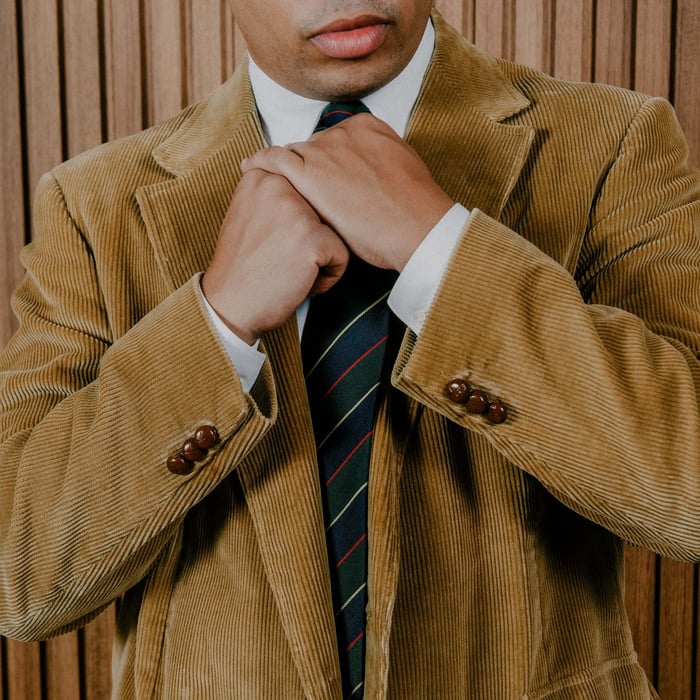
The album leans into “pieces” the way a collector does, not the way an influencer does. Pemberton doesn’t sell you a look with a photo; he makes you feel the object through description, texture, provenance, and the strange emotional buzz of scoring something rare on the way to a studio session.
There’s a moment where he talks about buying a Harris tweed blazer—virgin Scottish wool, handwoven in the Outer Hebrides—while driving to record. And the way he describes it lands like a baseball card nerd describing a rookie card in protective plastic. Not “this is stylish,” but “this is authenticated.” He wants the item’s history to be part of his identity, and he wants you to admit that’s kind of intoxicating.
At first, I thought, okay, so it’s going to be fashion-rap with nice beats. On second listen, it clicked that the clothes are just the most socially acceptable way to talk about compulsion.
Interludes aren’t filler here—they’re the album’s pulse
The album’s rhythm isn’t just drums and rhymes. It’s also the interludes—little spoken bits that keep dragging you back into the “foraging” mindset.
One interlude right before “501XX” hits especially hard: it goes into hidden rivet jeans that sold for 25K at auction. That number isn’t dropped to impress you. It’s dropped to make you question the whole ecosystem of value—how something old, worn, and practical turns into a trophy the second the right people agree it’s rare.
Between tracks, you also hear mini-interludes with other thrifters talking shop: what it means to be a veteran, why touch matters more than sight, how your hands “know” the good fabric before your eyes do. It’s low-key hilarious that a rap album is out here arguing for haptic intelligence, but it works because the music itself is built around feel—space, warmth, and restraint.
And then Pemberton drops the thesis in two lines, like he’s tired of explaining himself:
“Took a lifetime for me to find these perfect jeans
Took a lifetime for me to find these rhyme schemes.” — Cadence Weapon
That’s the whole record. The patience is the point. The hunt is the point. The flex is just the receipt.
Junia-T’s production makes room like it’s an ethical choice
This collaboration only works because Junia-T doesn’t treat Pemberton like a rapper who needs to be “contained.” He gives him a room with high ceilings.
Junia-T produces all twelve tracks, and you can hear the motivation of someone who had to rebuild. He nearly quit music after an unsuccessful debut in 2014, then clawed his way back through Addy Papa’s Riot Club sessions and later released Studio Monk (2020), which landed on the Polaris longlist and pulled strong critical attention. He also tours as Jessie Reyez’s DJ, which—let’s be real—sounds like the practical backbone behind being able to take creative risks again.
The soundscape on Forager album is warmer and wider than the jagged, claustrophobic corners Pemberton used to rap over on his self-produced work. This time, the beats are designed like displays: enough negative space that every word looks more expensive.
- “Babymoon” runs on a soft loop that never crashes into the verse. The loop behaves. It knows when to get out of the way.
- “Barabbas” has that addicting head-knock, but it’s full of gaps—intentional pauses where Ariel’s hook can slide in without wrestling the drums.
- “Yves Klein Blue” includes an interlude about Klein’s blue having no boundaries, and the music underneath spreads out to match that idea. It’s the rare concept-meets-sonics moment that doesn’t feel like homework.
If there’s a drawback, it’s that the warmth sometimes makes the album feel too comfortable—like the beats are being polite. I kept waiting for one track to get a little uglier, just to prove it could.
The bars are dense on purpose—and sometimes that’s the trap
Pemberton’s biggest strength is also the thing that can make Forager album feel knotty: he packs lines like he’s trying to fit an entire annotated bibliography into a carry-on.
“Alpenflage” alone flings out references—Carlos Alcaraz, Dapper Dan, David Cronenberg, Alan Erasmus, Gang of Four—like he’s speed-running his own brain. “Barabbas” jumps from the War of 1812 to Bob Dylan’s awkwardness during the We Are the World session. “501XX” has him calling himself the Black Bryan Ferry, then dropping into Oaxaca with a Mexican bracelet on his wrist.
A reasonable listener could say it’s too much—name-drops as sport, density as armor. And sure, there are moments where the reference-stacking threatens to crowd out the feeling.
But here’s what surprised me: some of the best verses happen when he stops trying to impress and locks into a groove between the facts. “Niagara Region” is the prime example—he’s eating fancy cheeses with his wife, she orders Riesling, and then he describes an all-wool Woolrich barn jacket like he’s outside tapping maple trees. That’s not just flexing; that’s a person building a life and trying to narrate it without sounding sentimental.
The domestic songs are the real plot twist
I didn’t expect the album’s most human moments to show up as domestic scenes, but they do—and they change the weight of the flexing.
“Babymoon” is about a trip to Miami’s Arts District with his wife before their son was conceived. The interlude is delivered like a memory he’s carefully unpacking, and it’s weirdly intimate—especially when it brushes up against the purchase-talk (like his wife ordering a blazer). It made me realize, uncomfortably, that I’m not living that version of adulthood—the calm planning, the shared routines, the future implied in small purchases. I’m not totally sure the album wants that reaction, but it landed anyway.
Then “Toronto Zoo” swerves again: therapy improving his life, and the blunt reminder that his parents couldn’t afford to keep the lights on. That’s the sort of line that instantly recontextualizes the fashion obsession—not as shallow taste, but as a coping mechanism with receipts.
And “Barabbas” puts the addiction language right on the table: spending compulsion, dopamine chasing, then the hard landing on what matters:
- making sure his son is protected
- making sure his wife is respected
He’s still flexing on these tracks, but the flex is carrying different cargo now. It isn’t “look what I bought.” It’s “look what I’m trying to hold together.”
On “Fall 2012 Couture,” he raps about being a dad disposing of vermin—and in the same breath admits he still buys a shirt when he gets nervous. No wink. No “isn’t that crazy?” Just a tic, documented.
Canada isn’t scenery here—it’s the anchor
The geography on Forager album isn’t travel-blog fluff. It’s ballast.
Edmonton is the origin story: born in 1986, poet laureate, and the family thread running back to his grandfather Rollie Miles in the Eskimos’ hall of fame. Toronto shows up as work. Hamilton is home now. The Niagara region becomes a weekend trip—Riesling, exotic cheese, countryside calm. He’s not touring Canada in these songs; he’s living in it.
Sure, he raps about Oaxaca, Hamburg, and North London too, but those places feel like postcards from a suitcase. The Canadian cities feel inhabited, like he knows where the light falls in the room.
“Alpenflage” spells it out in motion—Hamburg and back to Hamilton—and the return is what rings true. International references read like flex vocabulary; Canadian addresses read like autobiography. That contrast feels deliberate, and honestly, it’s one of the sharper creative decisions on the album.
When the record loosens up, it accidentally shows you the cheat code
The loosest track here is “Step Out,” where DijahSB trades verses with Pemberton over a hook that’s clearly nodding toward OutKast. And the vibe matters: they sound like they’re having the kind of fun that Pemberton’s densest writing sometimes squeezes out.
DijahSB drops a line that’s pure kinetic swagger:
“I stay bomb like the Hundreds, drip stay cold like the tundra.” — DijahSB
That breezy confidence is contagious. It argues—quietly but convincingly—that Pemberton doesn’t always need to pack every bar with five references and a footnote.
“Raghouse” carries similar energy: Pemberton dressed like security at Altamont in biker boots, Ariel singing about pockets full of love notes, and the whole song moving with a looseness that fits the rag-house idea. The fashion bars on “Step Out” and “Raghouse” are actually funny in that deadpan way—he needs your opinion the way he needs another tote bag. He shows up dressed like Bebop and Rocksteady. Ridiculous, yes. Also effective.
The clothes talk is the record’s motor. And the wild part is: when a track runs on nothing but that motor, it still moves.
The album admits doubt, then immediately argues with itself
Near the end, Pemberton admits on “Fall 2012 Couture” that the poetry might be leaving him, that maybe his mind is deceiving him.
For a second, I believed him. The confession lands because the album has already shown how compulsive his mind can be—how it spirals, catalogs, compares, appraises.
But then, a few bars later, he pairs the perfect jeans with the rhyme schemes and basically disproves his own fear in real time. That contradiction is the point: he doubts himself like a person, then writes like a machine anyway. It’s not inspirational. It’s just accurate.
Favorite tracks (because some moments really do hit harder)
Not a ranking, just where the album’s intent feels the most fully realized:
- “501XX” — the foraging mythology clicks into place, and the auction detail sharpens the obsession.
- “Babymoon” — soft loop, emotional clarity, and domestic life used as tension rather than comfort.
- “Niagara Region” — the groove-between-name-drops sweet spot, where detail turns into atmosphere.
Conclusion
Forager album isn’t trying to convince you thrifting is cool. It’s showing you how a mind that can’t stop searching turns that searching into identity, into fatherhood, into status, into poetry. Sometimes the density crowds the air out of a verse, and I still wish one beat would get a little messier just to scuff the shine. But the album’s big move—using objects as emotional evidence—keeps paying off, track after track, like a habit you can’t quite justify but also can’t quit.
Our verdict: If you like rap that treats a blazer’s fabric like a memoir chapter—and you enjoy lyricists who pack lines until they creak—this will feel weirdly satisfying. If you need big obvious hooks and simple emotions spelled out in neon, you’ll probably get annoyed and start checking the exit signs by track three.
FAQ
- What is the core concept of the Forager album?
Thrifting as a mindset: the patience of finding rare clothing becomes the same patience used to build rhyme schemes and identity. - Do the interludes matter or can I skip them?
They matter. They’re part of the album’s “texture,” pushing the idea that touch, provenance, and detail are the real storyline. - Is this album more focused on lyrics or production?
Both, but the production is designed to frame the lyrics—Junia-T gives Pemberton space so the words feel foregrounded. - Which tracks show the more personal side of the record?
“Babymoon” and “Toronto Zoo” bring domestic life and therapy into the flex world, making the stakes feel real. - What’s the most approachable song here?
“Step Out” is the loosest, most playful moment—less density, more bounce, and a hook that actually breathes.
If this record put you in the mood to live with the visuals too, you can always shop a favorite album cover poster at our store—tasteful wall evidence, basically: https://www.architeg-prints.com/
 | DISCOUNTGET 30% OFF*Use code on your next order:
|
* This post may contain affiliate links, meaning we earn a commission if you make a purchase through these links, at no additional cost to you.