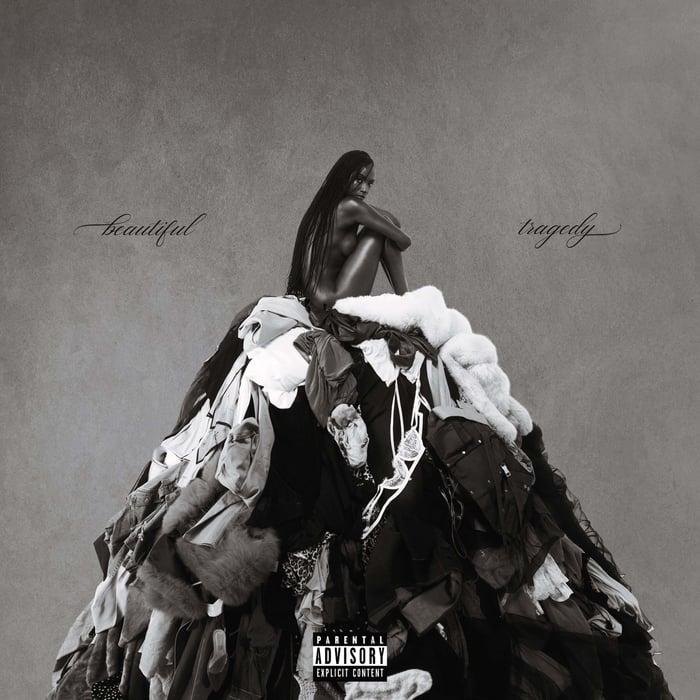
Beautiful Tragedy Review: Ebony Riley Turns R&B Into a Mirror (Ouch)


 See more Architeg Prints stories on Google.
Beautiful Tragedy Review: Ebony Riley Turns R&B Into a Mirror (Ouch)
Ebony Riley’s Beautiful Tragedy sounds like pleasure, shame, faith, and ego all fighting for the same microphone.
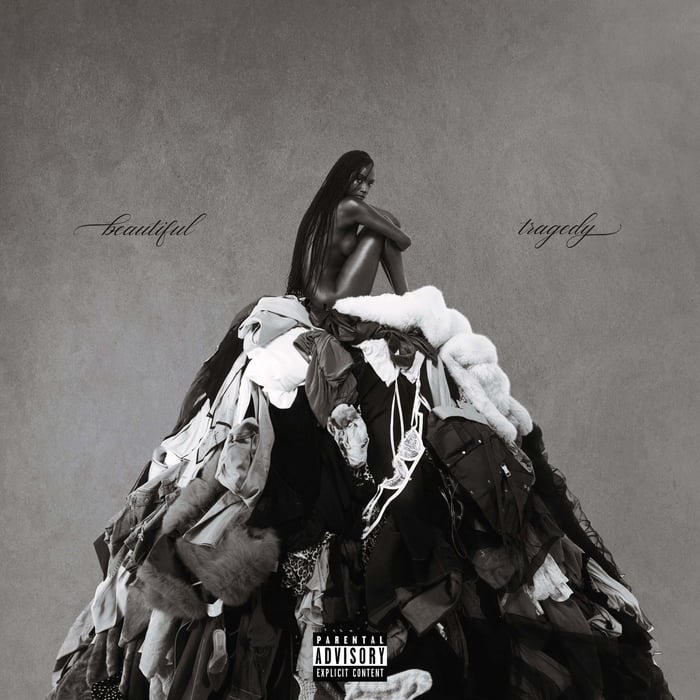
A hook before the hook: this album doesn’t want your comfort
Some albums want to be understood. Beautiful Tragedy mostly wants to be felt—and not in the cute way people mean when they’re trying to sell you “vulnerability.” It’s more like Ebony Riley is daring you to keep up while she changes emotional outfits mid-sentence.
And yeah, it’s messy on purpose. That’s the point.
Who Ebony Riley is (and why the backstory actually matters here)
Here’s what you can hear underneath the production choices: this is someone who learned early how to keep her balance in chaos, then turned that skill into an identity.
Riley’s story sits in the record whether you read a bio or not. She started singing in church as a kid. She lost her mother young. She moved through Michigan’s Department of Human Services system. She earned a nursing degree. Then she built a serious modeling career—runways like Marc Jacobs and Givenchy, and even a major fashion tie-in orbiting Beyoncé’s Renaissance era via Balmain. For that modeling world, she used the name Riley Montana.
But Beautiful Tragedy doesn’t sound like somebody who was fulfilled by being photographed. It sounds like somebody who got good at being “fine” in public and got sick of it in private.
She’d been writing songs since 2015 as Ebony Riley, but kept them unreleased while living that other life. During the COVID-19 pandemic, she quietly signed with Interscope Records, then dropped a seven-track EP, Ebony, in early 2023. After that: first tour with Jazmine Sullivan, a BET Awards performance, and the sessions that eventually became Beautiful Tragedy.
If all of that sounds like “a lot,” good. The album sounds like “a lot,” too.
The sex songs aren’t one storyline—they’re three different engines
This record is nearly half about sex, but it refuses to present sex as one consistent mood. The wild part is the sexual tracks don’t even agree with each other. They aren’t chapters in one erotic diary; they’re competing philosophies.
“Otherside” is not flirting—it’s logistics
“Otherside” is basically a semi-instructional video with a beat. Riley calls herself “Miss Jackson, nasty,” asks for domination, talks choking, and even floats the idea of letting a friend join after a couple drinks. Then she starts naming locations like she’s planning a small event: bathroom, balcony, bedroom floor. She maps out what happens where, and she’s not coy about positions, either.
Nothing in “Otherside” is hazy. There’s no tasteful fog machine. It’s direct to the point of being slightly absurd—like she’s daring R&B to stop pretending it doesn’t know what bodies do.
My first impression was that it might be shock-for-shock’s sake… but the more I replayed it, the clearer it got: the control is the fantasy. The explicitness is just the evidence.
“You Better Know” treats sex like a performance review
Then “You Better Know” (featuring Skilla Baby) slides into a different lane. Same topic, totally different posture. Here, sex is transactional challenge—she basically frames him like entertainment she can approve or reject. She made him wait on purpose. He better perform.
Skilla Baby responds with exactly the kind of crude confidence you think is going to be funny until it’s in your headphones: he calls her his “lil’ shit” and asks for “the splat.” The collision is hilarious, a little gross, and way more blunt than most R&B duets are willing to be.
I’m not totally sure the song will age well, though. It’s entertaining in the moment, but it feels built for impact more than replay value—like it’s trying to win the scene instead of live in your life.
“Why Pt. 2” is what happens when confidence evaporates
And then “Why Pt. 2” pulls the rug. No flexing. No bargaining. Riley is scared even when she’s ready. She rips his clothes off and still can’t stop asking “why, why, why, why.”
The song repeats the question and refuses to answer it, which is kind of the whole emotional thesis: sometimes the confusion is the truth. This isn’t a neat arc from desire to regret. It’s a loop.
These three tracks are powered by totally different engines—total control, performance challenge, genuine confusion—and Riley sings each one like it’s the only truth she has. That contradiction isn’t a flaw here. It’s the tell.
When she talks about men broadly, she’s not heartbroken—she’s disgusted
After the bedroom material, Riley zooms out and starts treating men as a demographic problem.
“Who Raised Y’all” puts the whole room on trial
“Who Raised Y’all” sounds like she’s scrolling through the same tired behaviors and finally deciding to prosecute. Ten men sharing one bottle. Always at the club. Never with their babies. Commenting on her posts, but too cheap for dinner. She even says she kept receipts from their texts.
The anger has already passed disappointment. It lands in that specific place of bemused disgust, where you’re not even surprised anymore—just offended you had to witness it.
The song’s question (“Who raised y’all…?”) isn’t really a question. It’s rhetorical, and Riley knows nobody’s coming forward to claim responsibility.
“Too Grown” gets quieter—and more dangerous
Then “Too Grown” pulls the camera close: one man, one conversation. Her voice goes almost parental. She’s too spiritually grounded for on-and-off games, and she tells him he’s safe with her—but only if he’s serious.
“If you ain’t in, tell me now / ’Cause I would rather be without.” That’s not romance. That’s a boundary with teeth.
And I’ll say it: this track is more intimidating than the explicit ones. “Otherside” is a scenario. “Too Grown” is a standard. Standards change your life.
Her sharpest writing is when she turns on herself
If Beautiful Tragedy has a center of gravity, it’s the self-incrimination. That’s where Riley stops performing and starts bleeding in public.
“Honest” is the moment the album stops posing
On “Honest,” she admits she used to say yes to men she didn’t even want. She faked it to avoid sleeping alone. She ignored her friend warning her that the man was turning everything into her fault.
The line that actually matters is simple and expensive:
“I’d rather be real and rejected / Than fake for acceptance.”
You can hear the cost when she hits “rejected”—her voice thins like she’s spending emotional money in real time. This isn’t a clean empowerment slogan. It’s somebody choosing loneliness over self-betrayal and not pretending that choice feels good.
“Sick of Me” can’t land the pivot… and that’s why it works
“Sick of Me” starts as an attack: “Oh, you sick of me? Yeah, bitch, I’m sick of you.” Then halfway through it flips into self-questioning: “Am I my own worst enemy?”
She doesn’t pivot gracefully. It kind of stumbles.
And honestly? Good. That stumble sounds like a real thought ambushing her mid-verse, not a clever structure she planned on a whiteboard. The mess is the proof.
“Through the Motions” is the only time someone talks to her
Most of the record is Riley speaking outward—at lovers, at men as a group, at herself. “Through the Motions” is different because it includes a voicemail from Aunty Renee, and suddenly the album has a second voice.
“The Lord didn’t bring you this far just to let you go,” Aunty Renee says.
It sounds like a message left on a phone that’s been ringing unanswered all week. Not dramatic—just tired, faithful insistence. And it changes the air in the room.
Then “Healing” (produced by Fauntleroy) picks up that mood and stretches it. Riley sings about searching, about finding healing once while staring at someone’s ceiling—“I don’t know how you did it, spiritual feeling”—and about that nagging sense that something inside still isn’t right.
And then “SOS” arrives, and she waves a white flag.
I know that I wanted this
And I’m not sorry, but I hate that I’m stuck here.
That couplet is a brutal knot: desire, consent, pride, regret, and consequence tangled together. The production (Agape Woodlyn and Seige Monstracity) floats beneath it so gently it feels almost rude—like it won’t let her hide behind drama. She has to stand there and mean it.
The last stretch stops being about her—and that’s the real flex
Riley has described the album title as coming from turning the camera on herself, but the final stretch swings that camera toward other people entirely. And I think that’s where Beautiful Tragedy quietly wins.
“Blossom Up” comforts someone who can’t admit they’re drowning
“Blossom Up” (co-written by RAYE, produced by Mr. Franks and Tommy Brown) is aimed at someone suffering in silence.
“How you keep your tears so dry?” Riley asks, then follows with: “The monsters are all in your head.”
That reassurance lands because it doesn’t sound like a motivational quote. It sounds like someone who learned silence as survival—someone who knows what it costs to look “fine.”
“Bloom” is the album’s moral center, whether it wants to be or not
“Bloom,” produced by Shea Taylor, speaks directly to young Black girls, and Riley gets specific—household-specific.
Mama gone. Big sister making sure they eat. A teenage girl carrying rage at a father who couldn’t be a father. A grandmother who called her ungodly.
This is where the album’s self-reflection stops being just self-reflection and becomes outreach—like she’s reaching back through time for girls still trapped in the same story.
And here’s the contradiction that makes the album hit harder: Riley places “Bloom” (Black girlhood, absent parents) on the same tracklist as “Otherside” (choking, threesomes) and doesn’t bother reconciling them. That refusal is the point. Real people don’t file their lives into neat folders.
The voice is the through-line, and the production doesn’t mess it up
Riley’s voice is what holds the whole thing together. She can go full chest on “Only You” and then dial down to a conversational half-whisper on “Too Grown,” and both feel like choices, not limitations. The church training shows up in how she manages volume—she knows how to lift a line without oversinging it to death.
Rance Dopson’s executive production keeps everything in the same universe without flattening the personality out of each track. Camper’s snap-heavy “Who Raised Y’all” can sit next to the Fauntleroy-produced material and not feel like a playlist accident.
If I have a complaint, it’s this: “Only You” is a solid devotion song, but it doesn’t really push her. It feels like a safe room in an album that otherwise prefers sharp corners. And the Skilla Baby collaboration, while fun, feels more like a moment than a foundation.
Still, when this album hits, it hits hard. For me, the best run is:
- “Honest”
- “Bloom”
- “Otherside”
- “Why Pt. 2”
Those are the songs where she stops “making a statement” and starts making you sit in it.
Riley also has a clean way of summarizing the relationship at the center of all this:
“It started off beautiful. Then it got real bad.”
That line describes the relationship. The album describes the woman who outlasted it.
Conclusion: Beautiful Tragedy is chaos with a spine
Beautiful Tragedy doesn’t try to harmonize its contradictions; it stacks them and walks away. Sex can be control, sport, and panic—sometimes in the same week. Faith can be a lifeline and a pressure. Self-respect can sound like loneliness. And “healing” doesn’t arrive like a movie ending; it arrives like a voicemail you finally let yourself hear.
Our verdict: People who like R&B that’s blunt, emotionally inconsistent in a human way, and unafraid of ugly details will eat this up. If you need your albums to pick one persona and stick to it—saint or sinner, soft or savage—you’re going to get annoyed and call it “all over the place.” And honestly, that might be your problem, not hers.
FAQ
- Is Beautiful Tragedy more about sex or healing?
It’s about both, and the album refuses to pretend those topics don’t live in the same body. - What’s the most explicit track on the album?
“Otherside,” easily—she’s not implying anything; she’s scheduling it. - Which song feels the most emotionally exposed?
“Honest,” because the vulnerability isn’t polished. You can hear her pay for what she admits. - Does the feature with Skilla Baby fit the album?
It fits the album’s boldness, but it feels more like a wild snapshot than a timeless scene. - Where should I start if I’m new to Ebony Riley?
Start with “Bloom” for the emotional core, then “Otherside” to understand how fearless she’s being.
If this album lodged an image in your head, you might as well make it literal—album-cover posters are a fun way to keep the obsession on the wall instead of in your group chat. You can browse prints at our store here.
 | DISCOUNTGET 30% OFF*Use code on your next order:
|
* This post may contain affiliate links, meaning we earn a commission if you make a purchase through these links, at no additional cost to you.