VINSON’s Raw Honey Review: Sexy, Sad, and Weirdly Proud of It


 See more Architeg Prints stories on Google.
VINSON’s Raw Honey Review: Sexy, Sad, and Weirdly Proud of It
Raw Honey is VINSON flirting through pain—sex as small talk, confession as background noise, and one voicemail that says the quiet part out loud.
The album starts by pretending it’s casual—then it snitches on itself
The funniest thing about Raw Honey is how hard it tries to sound unbothered while obviously being bothered. VINSON slides into this record like it’s just another night, another body, another “you up?” text—then he keeps accidentally revealing the kind of thoughts you don’t say out loud unless you want the room to get quiet.
“On the Low” is the moment where the mask slips and then gets yanked off. After he runs through reckless sex, crying alone, and shutting out anyone close enough to hurt him, a woman leaves a voicemail that basically summarizes the whole album better than he ever would. She sounds exhausted, like she’s been forced to become emotionally bilingual—speaking both “I miss you” and “I’m not playing this game” in the same breath:
“I am not one of these artsy ass niggas you be fucking with… Man, I just miss you.” — Voicemail on “On the Low”
That voicemail doesn’t just add flavor. It confirms the entire strategy: VINSON says difficult things like they’re nothing, and the people around him are left doing the emotional math.
Sex isn’t the topic—it’s the camouflage
From the first stretch of the album, VINSON talks about sex the way some people talk about grabbing food or catching a late flight. Not romance. Not conquest. Just texture. Activity. Weather.
On “Liquor Brown,” he sketches a woman with the kind of casual specificity that’s almost insulting in its confidence—tall like Lisa Leslie, skin like brown liquor. The chorus leans into the metaphor until it’s basically a routine: sip it, put it down, lick it, cuddle, stick around. It’s playful, sure, but it’s also the sound of someone trying to keep everything at the level of sensation so it can’t demand anything heavier.
“Forth N’ Back” does that slippery VINSON thing: a first verse that opens with “you fuck the way you dance,” then a hook that tries to turn tenderness into something noncommittal—asking to hold her hand without holding her back. And “Body Misses U” barely exists as a track, more like a heat flash: it’s under a minute, and it basically reduces language to one request—come make me say your name again.
If you’re looking for the album to slow down and “respectfully explore intimacy,” no. Raw Honey doesn’t explore intimacy. It uses sex talk as a decoy while the real story keeps bleeding through the seams.
Then the confessions hit—and he refuses to stop the song
The wild part is how VINSON drops heavy admissions the same way he drops pickup lines: mid-verse, no pause, moving right along like he didn’t just toss a brick through the window.
“Bout 2 Flourish” is the clearest example. It starts in sweat-and-curtains territory—mutual worship, the sensual details, even the image of spreading cheese on a baguette in Europe. And then, without changing his tone, he lands on a line that should’ve changed the entire temperature of the room:
“Was fucking on a socialite while contemplating suicide.” — VINSON, “Bout 2 Flourish”
That’s the tell. The album’s not “about sex.” It’s about using motion—sex, travel, nights out, jokes—as a way to avoid sitting still long enough for the sadness to become undeniable.
He keeps the same blunt momentum elsewhere too. He mentions an ex calling eighty times and spreading eighty lies, then hints at the kind of grief that doesn’t fit inside a normal rhyme scheme: was it because they made a baby and then it died? It’s dropped like a passing thought, which is either emotional detachment or a very deliberate choice to show how trauma gets filed under “miscellaneous” when you don’t have time to process it.
On “Killian Hayes,” he confesses abusing substances, and the comparison he uses is pointed—like he’s checking himself against a very public cautionary tale. “On the Low” returns to isolation: crying, shaking, withdrawing, and the scary part is the timeline—those impulses last for so long.
And “U Want Me to Be Myself???” is where the everyday details start sounding like warning signs. He’s ironing his apron before work, noticing bald tires, wondering if he crashed would it even hurt. That’s not a dramatic monologue. That’s the quiet, bored voice of someone thinking about harm the way other people think about errands.
I’ll admit: on my first pass, I thought this album was just trying to be smooth—another late-night hybrid of rap and R&B with a flirtatious coating. On second listen, the “smoothness” starts reading like denial with good timing.
Two producers, two realities—and VINSON keeps switching worlds
A lot of Raw Honey works because the production is split between two very different instincts, and VINSON uses that contrast like lighting in a movie.
.Coffee brings the low-slung, late-night pull—beats that feel like they’ve been awake too long but aren’t ready to go home. The title track shuffles forward at what I can only describe as “2 a.m. speed,” that slow crawl where everything feels a little sticky and a little brave. And “Killian Hayes” has drums that stutter and skip on an unpredictable grid, like the rhythm itself is dissociating.
AshTreJinkins, on the other hand, runs tighter—more insistent, more structured, like a hand on your shoulder keeping you from drifting too far. That difference matters because VINSON’s writing is already slippery. With .Coffee, he gets to melt. With AshTreJinkins, he gets pinned in place long enough for the lines to land.
If there’s a drawback, it’s that the album sometimes feels like it’s changing outfits mid-conversation. I’m not saying genre-hopping is a crime—VINSON pulls it off more often than not—but a couple transitions are abrupt in a way that feels less like intention and more like restlessness.
“Never or Now” is the father song—and it refuses to stay contained
The album lets VINSON’s father appear only once, on “Never or Now,” and the track can’t shake him. It’s not a neat catharsis song. It’s a loop.
He raps about growing up hearing status-symbol mythology—Beamer, Benz, “many, many wins”—and never hearing anything else. Not vulnerability. Not reflection. Not the stuff that actually raises a kid. The lines hit because they aren’t shouted; they’re stated like a fact he’s tired of carrying:
“Coming up, said my daddy had a Beamer… / Never heard him talk about anything else.” — VINSON, “Never or Now”
The chorus turns time into a pressure system. He sounds like he’s running but not moving—on a treadmill under a shadow of doubt, feet that can’t hit the ground. He admits nobody told him they were proud, and now pride only shows up as suspicion: questioning everything he feels inside. That’s a nasty inheritance—emotion replaced by self-interrogation.
Then Nappy Nina comes in on the third verse and doesn’t mirror his exact story, but she matches the fatigue in a way that makes the song feel bigger than VINSON’s biography:
“Growing bitter in winter, said this was just enough / Times I couldn’t eat much.” — Nappy Nina, “Never or Now”
That feature works because it doesn’t “support” VINSON like a cameo. It widens the lens. It says: this kind of weariness isn’t unique, it’s just personalized.
The political lines show up sideways—like he can’t help himself
The sharpest political moments on Raw Honey don’t arrive with fanfare. They slip in where you don’t expect them, which honestly makes them hit harder.
“Feel Crazy” opens with a spoken-word sample framing anger at racist transgressions as sanity, not insanity. VINSON answers by refusing the polite, dead-end demand to “see both sides.” He says he sees with both eyes and isn’t trying to do that performance. Then he drops a line that sits there like an accusation you can’t scrub off:
“You ain’t innocent, you’re standin’ by.”
And AshTreJinkins keeps the beat in this lazy, faded sway, like the track refuses to “gear up” into anthem mode. That restraint feels intentional: VINSON isn’t giving you a rallying cry. He’s giving you a stare.
“Bout 2 Flourish” swerves again in its second verse, leaving the bedroom to call out a broader machine—contempt for the poor, a nation that crushes bones and destroys, consumption decided the moment you left the womb:
“From the moment you walk out your door, you hate the poor…” — VINSON, “Bout 2 Flourish”
I’m not totally sure the album knows how to hold these political lines next to all the erotic blur. Sometimes it clicks like contrast; other times it feels like he’s changing the channel because staying in one emotional lane would be too honest. But even that mismatch reads like a real personality: complicated, inconsistent, and allergic to being pinned down.
Yes, it could lose a few tracks—and you wouldn’t hear the missing bolts
Here’s where Raw Honey trips itself up: not every idea deserves a full spot on the record.
“Tell Me If You Like That?” is basically a sketch built around one question about sex asked four ways, and the answer never arrives anywhere worth revisiting. It’s not offensively bad—it’s just slight, like an unfinished thought that accidentally made the final cut.
“Covid Tales” is a skit about someone dodging COVID test questions with jokes about alkaline water and strong immune systems. Maybe it landed harder when everybody was still bathing groceries in anxiety. Hearing it now, it feels timestamped in a way the rest of the album avoids.
The album honestly could drop a few songs and you wouldn’t notice the seams. And I don’t say that to be cruel—I say it because the best moments here are strong enough to survive a tighter edit.
The Bruiser Wolf moment is fun… and kind of the point
“On the Low” features Bruiser Wolf, and he shows up like a friend barging into your emotional breakdown with a drink and a smirk. His verse is bravado, no snitching, Remy Martin energy—pure fun—tonally miles away from VINSON’s loneliness spiral.
It’s a Detroit connection that makes sense on paper. Musically, it only makes clean sense if you squint.
But the clash also reveals what VINSON’s doing: he keeps trying to interrupt his own vulnerability. He’ll confess to shaking alone, then hand the mic to a guy who sounds like he never shakes, ever, not even in winter. That contradiction isn’t a flaw; it’s character.
“Time 4 Jazz” is the closer—and the only time the title becomes a metaphor
Only one song on Raw Honey really talks about music itself, and VINSON saves it for last like an afterthought he couldn’t swallow.
On “Time 4 Jazz,” he tells the 33-year-olds doing TikTok dances in the club that it might be time for jazz. It’s half lecture, half wink, and he’s clearly enjoying himself. He name-drops his musical lineage—his mom coming up on MC Lyte and Grandmaster Flash—then puts Thelonious Monk and Rakim in the same sentence like that’s normal (it kind of is, if you grew up listening with open ears).
He warns against throwing inventive new artists into the laundry cycle and letting them spin—an image that’s both funny and accurate. Then he turns grim in a way that lands because he doesn’t overplay it:
“No health plan, no insurance / Rappers don’t have to get shot to die early,”
…and he names Ecstasy and Biz Markie.
Then the hook: he calls himself a bee caught in a honey trap. Finally, the album title stops being a compliment for someone’s body and turns into a self-description—sweetness as bait, sweetness as danger, sweetness as the thing that keeps you stuck.
The “Good Company” brain is all over this—even when the album won’t announce it
VINSON clearly moves through music like someone who curates, not just someone who records. He’s been running a quarterly alternative showcase in LA called Good Company, booking artists who don’t fold neatly into algorithm categories. And you can hear that mindset in how Raw Honey jumps from house shuffles to hip-hop to bedroom R&B without warning signs.
It’s not trying to be seamless. It’s trying to be honest about having too many influences and not caring if that confuses somebody.
He comes from a family line where music isn’t a hobby: great-uncles in Motown-era groups, an uncle and cousin connected to Public Enemy. And the record feels like someone who grew up hearing everything and refusing to pick just one outfit.
That refusal shows up lyrically too. On “Liquor Brown,” he declares love is strong and nothing can break the bond, then immediately cradles her and says freedom to go alone—both things in the same breath, no comma between them. That’s VINSON in a nutshell: devotion and escape fantasies sharing the same sentence like awkward roommates.
Where Raw Honey hits hardest (and where it doesn’t)
If I’m picking the tracks that actually expose the album’s spine, it’s these:
- “Never or Now” — the father-shadow song that turns pride into suspicion
- “On the Low” — the confessional spiral capped by that brutal voicemail
- “Bout 2 Flourish” — sex, travel, dread, and politics crammed into one moving car
And if I’m being honest, the parts that lose me are mostly the skit-like detours. They don’t ruin the album, but they dilute the pressure that makes the best songs stick.
Conclusion
Raw Honey is VINSON acting like he’s just vibing, when he’s clearly trying to outrun his own head. The sex talk is real, but it’s also a smoke screen; the funniest moments are the ones that accidentally reveal how tired everyone is—especially him. When the album tightens its grip (“Never or Now,” “On the Low,” “Bout 2 Flourish”), it doesn’t just sound good—it sounds exposed, like somebody left the emotional mic on.
Our verdict: If you like albums where the singer flirts while quietly unraveling—and you don’t need every track to be “necessary”—you’ll like Raw Honey. If you want clean genre lanes, neat resolutions, and skits that age well, this album will test your patience like a 2 a.m. text thread you should’ve muted.
FAQ
- Is Raw Honey more rap or R&B?
It keeps switching lanes—hip-hop, bedroom R&B, and house-leaning shuffles—sometimes so fast it feels like VINSON is dodging a fixed identity on purpose. - What’s the most emotionally direct song on Raw Honey?
“Never or Now.” It pins family baggage to the wall and doesn’t let it turn into a stylish mood piece. - Does the album have political themes?
Yes, but they show up sideways—especially on “Feel Crazy” and in the second verse of “Bout 2 Flourish”—more like interruptions than speeches. - Are the skits essential?
Not really. “Tell Me If You Like That?” and “Covid Tales” feel like ideas that didn’t fully ripen, and the album would survive without them. - What’s the point of ending with “Time 4 Jazz”?
It’s VINSON finally talking about music, lineage, and mortality—and it’s where the “honey trap” idea becomes about him, not just the women he’s describing.
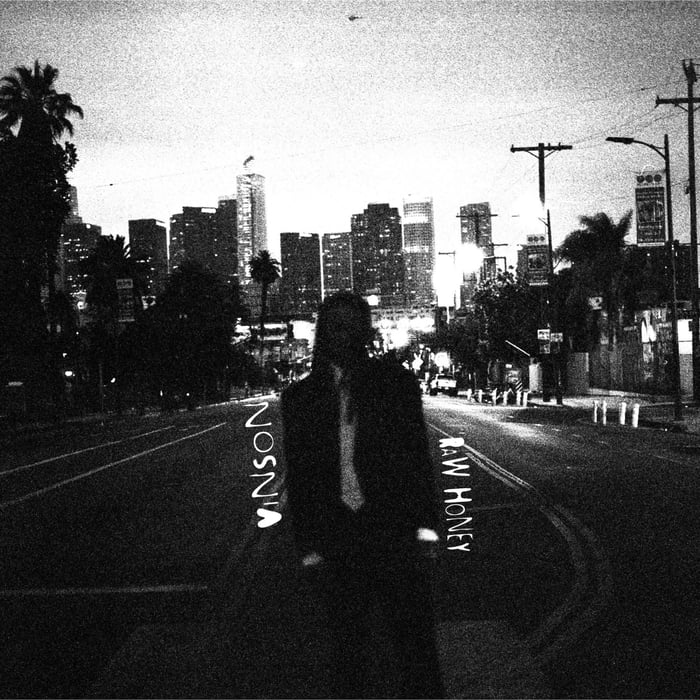
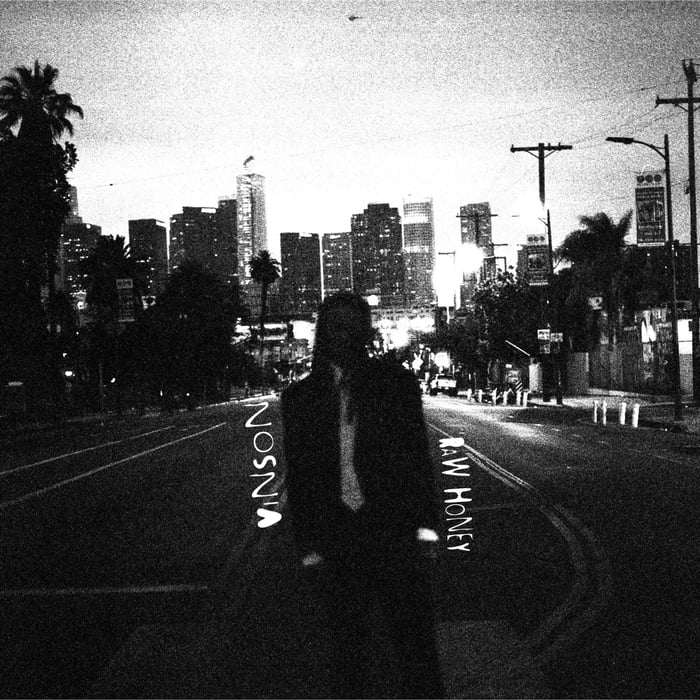
If this album’s cover is living in your head the way the hook from “On the Low” probably will, a poster version makes a nice, quiet souvenir. You can grab one at our shop: https://www.architeg-prints.com
 | DISCOUNTGET 30% OFF*Use code on your next order:
|
* This post may contain affiliate links, meaning we earn a commission if you make a purchase through these links, at no additional cost to you.