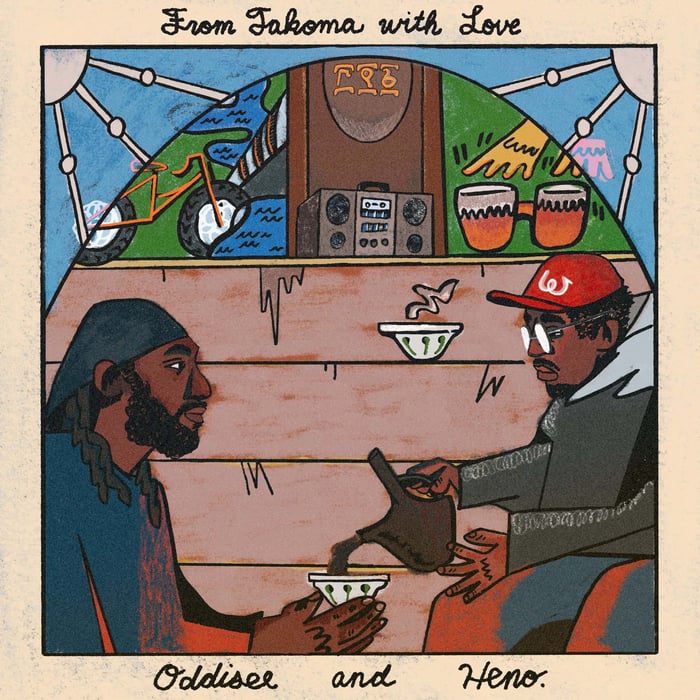
From Takoma With Love Album Review: Suburban Rap That Refuses to Behave


 See more Architeg Prints stories on Google.
From Takoma With Love Album Review: Suburban Rap That Refuses to Behave
From Takoma turns neighborhood specifics into a whole worldview—two rappers mapping identity, politics, and survival without asking permission.
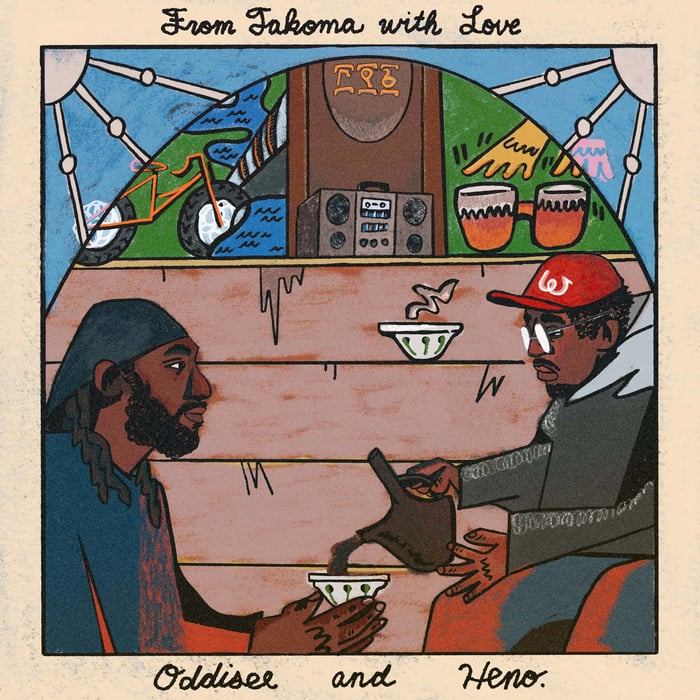
This album isn’t “about a place”—it’s a place that talks back
Some records use geography like a hoodie: a look, a vibe, a convenient brand. From Takoma With Love uses geography like a court transcript. You don’t just hear From Takoma as a setting—you hear it as a force that keeps interrupting the story whenever the narrators try to turn their lives into something neat and inspirational.
And yeah, the title sounds friendly. The music isn’t. Not because it’s aggressive all the time, but because it’s stubborn. It refuses to sand down the weirdness of being from the Maryland suburbs of DC—an in-between zone that gets misread from every direction. This is music for people who grew up being mislabeled, then learned to weaponize accuracy.
The “in-between” suburb is the whole point, not background detail
Here’s what From Takoma keeps insisting: the Maryland side of DC breeds artists who don’t fit cleanly into anybody’s mental map. Too “North” for the South, too “South” for the North. People can quote every block in Bed-Stuy and Compton, but try getting them to picture Takoma Park without a GPS and a prayer.
Oddisee has been arguing this for basically his whole career, and he argues it here with the calm of someone who’s tired of explaining himself. His approach as a producer feels almost parental—he builds the beat like he’s setting the table, then backs off and lets the conversation happen. That patience isn’t softness; it’s control. It’s the sound of someone who learned that if you talk loud enough, people assume you’re deep—but if you talk clearly, you actually get heard.
Heno., a generation younger, comes in like someone who’s had to rename himself just to exist in public. Even the punctuation matters: “Heno.” with the period reads like a door shutting. Not dramatic, just final. The name “Yihenew” carrying that blunt meaning—this is what you see is what you get—makes the whole record feel like a refusal to perform palatability.
This is their first full record together, co-credited, and it plays like two timelines stacked on top of the same streets. Corners and intersections show up not as nostalgia bait, but as evidence.
“Woe Is Me” starts as a memory and turns into a permanent bruise
The first real gut-punch is “Woe Is Me,” and it doesn’t bother warming up. Heno. pins the opening to Maple and Lee—specific enough that it feels like he’s daring you to fact-check him. He talks about first fights, first games on the pavement, and then the moment the world breaks: getting mistaken for a drug dealer and cuffed at six years old.
That’s not a “trauma backstory.” That’s a system glitching in real time. The question he asks—how do you cuff a child?—hangs there because the track knows there’s no satisfying answer. And the bitterness he admits to isn’t performative. It sounds practical, like a tool he kept because it worked.
Oddisee’s verse doesn’t “respond” so much as parallel park beside it. He raps his own childhood with the same matter-of-fact precision: immigration, disengagement, food stamps, visas—then that line that lands like a rule he had to teach himself: don’t define me by what’s behind me.
The punch of the track is that neither man tries to out-suffer the other. They just lay two childhoods next to each other inside one beat and let you notice how the same suburb can generate different versions of pressure—same air, different weight.
“Right Steps” pulls off the slickest trick: a beat switch that’s actually moral
“Right Steps” is where the album exposes its real hobby: baiting you with something familiar, then yanking it sideways.
At first, it plays like a standard success-story cut—soul-leaning chords, the “alignment” talk, the fine print of building a life, the memory of being broke in a Visa line. I’ll admit it: on my first pass, I thought, okay, here comes the motivational chapter.
Then the beat changes, and suddenly the song changes its posture. It stops selling “progress” and starts interrogating what progress even means in a country built on theft and control. The contrast isn’t subtle: the “land of the free” line lands right next to the “land that was seized” reality, and the lyric pairing of a Black man with a few shots versus a white cop in blue turns the track into a cold diagram.
That beat switch feels like the difference between:
- the version of your life you present in daylight, when you’re trying to be employable
- the version that spills out at 2 AM, when you stop lying to yourself
A lot of artists do beat switches like outfit changes. This one feels like switching languages mid-sentence because the first language can’t tell the truth.
Oddisee raps from the “after,” and that’s a weirder place than the come-up
The album’s tension is simple: Heno. writes like someone still sprinting out of the fire, and Oddisee writes like someone who already escaped and is now dealing with the quieter damage.
On “MIMS,” Oddisee sounds worn down by the very success he chased. He’s on DND just to catch a breath. Kids crying while he’s driving. His mother calls and he can’t even answer—he texts. He almost runs a stop sign. That’s not “flexing stress.” That’s the sound of someone realizing adulthood isn’t a reward; it’s a second job you can’t quit.
And when he says “your top five is not mine,” it doesn’t come off like petty ranking discourse. It sounds like a boundary. Like he’s refusing to be drafted into somebody else’s idea of taste. The part about people wanting something from him without taking notes—hand out, no pen—hits like a personal pet peeve turned into philosophy: if you didn’t study, don’t ask for the cheat sheet.
Then “Guiding Me” flips the emotional camera again. Oddisee remembers being alone and happy—not lonely, not lost, just self-contained. And then he realizes there’s a hole only family can fill. That’s the kind of admission you don’t make if you’re trying to look invincible. It’s not melodrama; it’s recognition arriving late.
If Heno. is narrating the scramble—trapping, robbing, getting out—Oddisee is narrating the confusion that shows up after the escape route worked. That’s the more uncomfortable story, honestly, because it ruins the fantasy that “making it” will make you coherent.
“Round the Way” turns into a roll call, and it’s not just for clout
“Round the Way” is the album’s big outward-breath moment, and it functions like a map that refuses to stay folded. It’s a roll call, but not the cheap kind where names are accessories. The names feel like proof of life.
Heno. names himself in layers—Amar, Roma, Tedraz, Eritrean too—like he’s refusing to let one label do the job. And then he swings immediately into politics—free Palestine, land being rooted up—because on this record, identity and geopolitics share the same lung. There’s family in the Bay, ghosts riding. LA split across sides. Women in Virginia who go both ways. It’s messy, alive, and weirdly tender.
Oddisee matches the reach by naming his own coordinates—Largo High, Sago Creek, brothers in Berlin, family in Toronto, a father in Sudan surviving janjaweed—and then he drops the line that ties the whole sprawl back to a feeling: he never feels alone.
A reasonable listener could argue this is too much for one song—too many places, too many claims, too many flags planted. But I think that’s exactly the point. This is what happens when you’re raised in a suburb that teaches you the world is already inside your neighborhood, whether you asked for that or not.
The album keeps putting the personal and political in the same sentence—on purpose
I kept noticing how From Takoma With Love refuses to separate “my story” from “the world.” On “Woe Is Me,” Heno. can mention Zionists debating while he’s still stuck on the memory of being cuffed as a child. That’s not a debate prompt; it’s a psychological snapshot. The outside world doesn’t politely wait until your inside world is healed.
This is the record’s real honesty: it doesn’t pretend politics is an intellectual hobby. It shows politics as something that leaks into childhood, into policing, into who gets treated like a threat before they’ve even learned long division.
At the same time, I’m not fully sure everyone will like how quickly the album pivots between the hyper-local and the global. Sometimes the transitions feel like your brain switching tabs too fast. But that jittery overlap also feels true to the environment they’re describing—news, street, family, ideology, survival, all stacked in one day.
“Guiding Me” names self-hate plainly, then tries to build a ladder out of it
“Guiding Me” is where the album stops moving and actually sits down with itself. Heno. calls out self-hate like it’s a program installed early: not an accident, not a random mood. Then he goes concrete—minimum wage offered like it’s mercy, respect rationed, memories of kitchens and bath holders, headaches from thinking about the tenth grade robbery logic.
The question underneath isn’t “why did I do it?” It’s “did it ever occur to anyone I shouldn’t have had to fight this hard to matter?”
Zaïna’s chorus changes the air in the room. It’s got the cadence of a prayer without getting corny about it—head too loud, anxiety, blame society, angels at all angles guiding me. After so much grinding, justifying, counting receipts, it’s the first time the album lets faith and exhaustion share the same breath.
If someone told me this is the emotional center of the album, I wouldn’t argue. It’s the moment where the record stops proving and starts admitting.
Where the album stumbles: momentum without the microscopic detail
Not every track carries the same sharpness. “Trish Status” has movement—food stamps, pawning jewelry, moving units, the bando imagery—but it feels like it’s running on familiar fuel. Compared to the Maple and Lee specificity of “Woe Is Me” or the structural surprise of “Right Steps,” this one recycles the hustle language without cutting as deep.
“Can’t Look Back” does what the title says: don’t look back, you’ll crash, karma is real. It’s not wrong. It just feels like the writing sprints ahead of the details. These are the moments where the “I made it” voice starts to outrun the storytelling, where the songs talk about outlasting the beginnings without naming which winter, which block, which exact kind of cold.
And that’s my mild gripe with the album: when it goes generic, you notice, because the record is so good at being specific that the vague parts stick out like a blank street sign.
“Good Habits” quietly explains the whole album’s social code
“Good Habits” brings the lens back to the odd humor of being far from home with a name people still can’t pronounce. There’s something almost deadpan about the scene: Aurelius Street in Germany, herbal tea, a set nobody expected. Nobody’s heard of him—until he performs, and suddenly people urgently want to work with him. He earns a fee. He lets purpose feed from him.
That’s the story of this whole album in miniature: a kid from Takoma Park learning codes around the same time he was told to eat his vegetables, now halfway across the world, still rapping about the same core pressures to strangers who don’t have the reference points.
On second listen, this track hit me harder than I expected. The first time, I filed it as a “tour life” moment. Then I realized it’s actually about translation—how you carry your origin into rooms that don’t have the language for it, and how you still insist on speaking clearly anyway.
The real achievement: two perspectives that don’t cancel each other
The smartest thing From Takoma With Love does is refuse to force unity. Oddisee and Heno. don’t sound identical, and the record doesn’t try to sand them into one voice. It lets the generational gap show. It lets the different immigrant histories sit side by side. It lets “scramble” and “after” coexist.
If you want a record where every track ties into a neat moral, this will frustrate you. But if you’ve ever felt like your life doesn’t fit the standard rap narratives—too suburban for the city myth, too global for the local box—this album feels like someone finally wrote with the correct address.
Conclusion
From Takoma With Love doesn’t romanticize Takoma Park—it documents what it does to you. The best songs don’t just report trauma or celebrate survival; they show how memory, politics, and identity collide in the same breath, and how “making it out” doesn’t stop the argument in your head.
Our verdict: People who like rap that names real intersections and then picks a fight with history will actually love this. People who want clean, universal “hustle inspiration” with no complications will bounce off it—and honestly, the album won’t miss them.
FAQ
- What is the core keyword for this review?
From Takoma. - Is this album more about storytelling or punchlines?
Storytelling—especially the kind anchored to specific places like Maple and Lee, not abstract grind slogans. - Does the production distract from the lyrics?
No. The beats feel intentionally patient, like they’re built to hold heavy verses without crowding them. - Are there weak spots?
A couple tracks lean more generic (“we made it” energy) and lose the surgical detail that makes the best songs hit. - Who shines more: Oddisee or Heno.?
Depends on what you’re listening for. Heno. brings the raw scramble; Oddisee brings the unsettling “after.” The tension is the feature.
If this record made you miss album covers that feel like real artifacts, you can always shop a favorite album cover poster at our store—tastefully, quietly—at https://www.architeg-prints.com.
 | DISCOUNTGET 30% OFF*Use code on your next order:
|
* This post may contain affiliate links, meaning we earn a commission if you make a purchase through these links, at no additional cost to you.