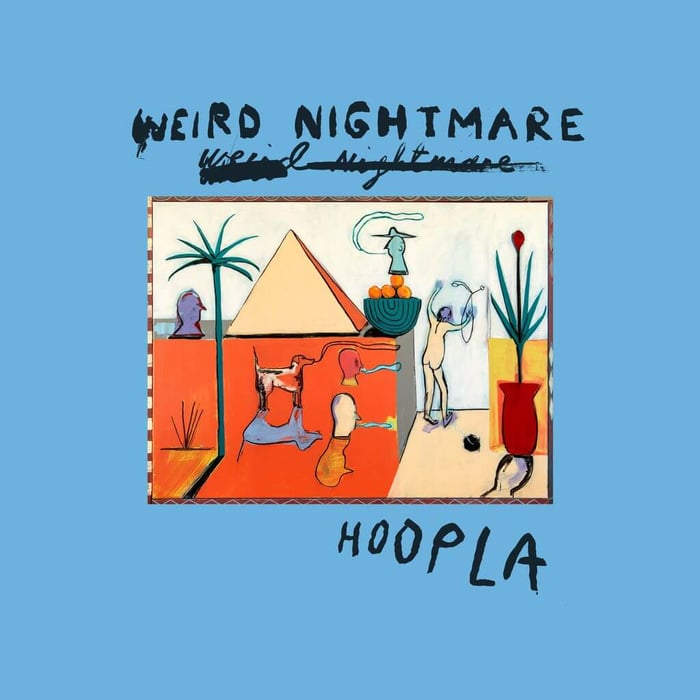
Hoopla Album Review: Weird Nightmare’s Sunny Pop with a Stubborn Hangover


 See more Architeg Prints stories on Google.
Hoopla Album Review: Weird Nightmare’s Sunny Pop with a Stubborn Hangover
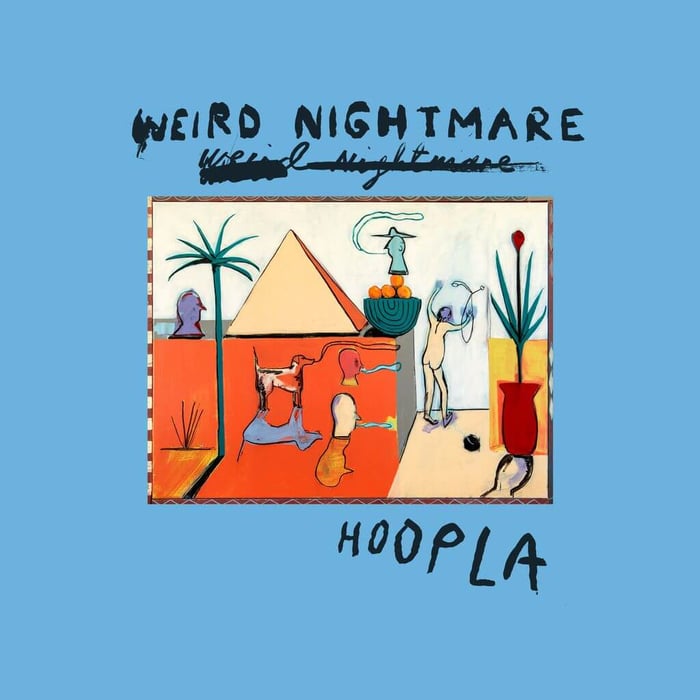
Hoopla album feels like sunshine engineered in a basement—catchy, loud, and weirdly samey on purpose. Here’s what it’s really doing.
A record that smiles a little too hard
If you’ve ever heard an album and thought, “This is trying to fix my mood whether I asked or not,” that’s Hoopla album in a nutshell. It comes in waving, already halfway through the handshake, already insisting you’re having a good time.
This is WEIRD NIGHTMARE’s newest record, built around Alex Edkins—the same guy who fronts METZ—and it lands as the first thing out since that band hit pause in 2024. And you can hear that context in the choices. This doesn’t sound like someone casually tossing off pop songs; it sounds like someone deliberately stepping out of a heavier room and flicking on every bright light in the house just to see what happens.
The vibe is power-pop, sure, but not the polite kind. It’s power-pop with glue on its fingers: 60s pop-rock psychedelia running into DIY underground instincts from the 80s and 90s. The end result is catchy, upbeat, and so positivity-charged it almost feels like a creative dare.
And yeah, I’m already suspicious of it. Not because it’s fake—because it’s committed.
“Headful Of Rain” kicks the door in, then pretends it didn’t
The opener, “Headful Of Rain,” sets the terms immediately: energy first, reflection later, if at all. The first thing that hits is an alternative-leaning guitar melody—clean enough to grab your ear—then it snaps into pop-rock motion like it’s late for something fun.
What’s doing a lot of work here is the production. It’s slightly rough around the edges, and that’s not an accident; it gives the track a worn-in, vintage tinge, like someone ran the mix through an old favorite shirt just to soften it up. It “ages” the sound by a few years on purpose, which is a clever trick: it makes the hooks feel familiar faster.
Then the chorus shows up big and anthemic, and the vocal tone sits in that Bryan Adams-adjacent zone—raspy, earnest, built for shouting without sounding like it’s trying to impress you with technique. It’s pleasant. It’s nostalgic. It’s also a blueprint the album keeps coming back to.
At first I took that as confidence—like, “Here’s the sound, get on board.” But later, I wasn’t so sure. The more tracks that roll by, the more that same reliable engine starts feeling like a loop you can’t quite exit.
The album’s biggest flex is also its biggest tell
Here’s the thing I can’t un-hear: a lot of these songs share the same underlying skeleton. Not just “cohesive,” but borderline repetitive—as in, you can predict the emotional posture before the next chorus even arrives.
That’s my main hang-up with Hoopla album: it’s lovely sounding, but it keeps falling into a trap where the individual songs blur together because the core tone rarely budges. It’s like being served five different sodas that all taste like “sweet.”
And I’m not saying that ruins it. If anything, it clarifies the intent. This record seems designed to keep you afloat, not to pull you into the deep end. It picks a bright lane and stays there, which is either admirable discipline or a refusal to risk awkwardness. I kept waiting for the moment it would get genuinely uncomfortable—and it mostly doesn’t.
Still, there are track-to-track details that try to carve out personality, and when those details hit, the album suddenly feels like it’s winking at you: “Yeah, I know I’m doing the same trick. Watch me do it again, better.”
Pay No Mind video embed
When it works, it’s basically mood control
Even with that sameness, the album still has those little beautiful moments that tilt your day upward. This is the kind of record that tries to drag you toward summer plans—whether you have any or not. It’s “windows open” music, and it knows it.
Tracks like “Baby Don’t” and “Forever Elsewhere” lean into bright pop melody with doo-wop touches baked in. Not doo-wop as cosplay, more like doo-wop as an ingredient: a harmonic sweetness that makes you grin even if you’re trying to stay cynical. I can’t pretend I didn’t smile—annoyingly, I did. These songs feel built to soundtrack a party, the kind where nobody’s listening closely but everyone keeps singing the chorus anyway.
Then you’ve got “If You Should Turn Away,” which pulls the same overall sound into a smoother production space. It’s more lowkey, less “hands in the air,” more “sit down and let the afternoon happen.” I can picture it as background to a relaxed family lunch outside—something playing while plates clink and nobody argues. That’s not an insult. That’s a specific kind of success: functional warmth without turning into beige.
A reasonable person could argue that’s exactly the problem—that the album aims for pleasantness so hard it avoids sharper edges. But I don’t think it’s avoidance. I think it’s a deliberate limit, like Edkins set a rule: keep it upbeat, keep it moving, don’t linger too long on the bruise.
The 60s influence isn’t subtle—it’s basically part of the paint
A lot of Hoopla album pulls from 60s sounds, especially the psychedelic movement, and it shows up in ways that feel structural, not decorative. “Where I Belong” is a good example: there’s a psychedelic-infused guitar flavor threaded into a high-energy pop-rock frame, like a lava lamp installed inside a go-kart. The song doesn’t slow down to “be trippy”; it stays punchy, but the guitar coloration makes the whole thing shimmer and wobble at the edges.
“Little Strange” points toward 60s beach rock energy—sunny, slightly windswept, the kind of rhythm that makes you instinctively picture coastline even if you’re nowhere near water. And here’s where I had to correct my own first impression: I thought the retro references were going to feel like a gimmick, like a costume rack. On second listen, it didn’t feel like dress-up. It felt like Edkins is using those older pop shapes as containers—familiar jars—so he can pour his own restless energy into them.
That said, the album sometimes confuses “retro glue” for “variety.” If two songs share the same tempo attitude and the same kind of chorus lift, swapping a guitar tone doesn’t always make them feel different. It’s still the same smile, just with a different hat.
The 80s/90s underground influence shows up when the mood dips—slightly
This isn’t an album that gets dark, exactly. When it gets “moody,” it’s moody the way a bright room gets moody when a cloud passes over the window. But those brief dips matter because they reveal a second set of influences: DIY underground sounds from the 80s and 90s.
“Never In Style” is the track that brings that out most clearly. There’s a different posture to it—still within the album’s overall pop-rock friendliness, but with more bite at the edges. It’s the kind of song that hints at a scruffier scene history without dropping the hook. If anything, it feels like a reminder that the person steering this project comes from louder, harsher spaces and still knows how to scuff up a song when it needs texture.
I’m a little torn here. Part of me wanted more of that tension—more moments where the album risks being less agreeable. But another part of me respects the restraint. The record is committed to its own lane, and “Never In Style” works because it doesn’t suddenly become a different band; it just lets a bit of grit show through the polish.
If you want a hot take: the album’s “moody” songs are often more interesting than the pure sugar rush ones, because they hint at conflict. The problem is they don’t stay in that space long enough to really complicate the picture.
So what is Hoopla actually doing? Keeping the weather stable
By the time the record wraps, the big impression isn’t any single twist—it’s the steadiness. Hoopla album keeps presenting the same emotional temperature: upbeat, catchy, nostalgia-tinged, and lightly roughened so it doesn’t feel too glossy. That’s either a limitation or a strategy.
I think it’s a strategy. This album feels like it was built to be replayed while you live your life—not while you sit still and analyze it. The hooks are friendly, the choruses land reliably, and the references (60s psychedelia, beach rock, underground DIY) act like familiar signposts. You don’t get lost. You also don’t get challenged much.
And yes, the repetitiveness is real. I don’t think I’m imagining it. Still, I can’t deny the upside: the record is good at putting you in a better mood, and that’s not nothing. Some albums want to be your therapist. This one wants to be your bright friend who shows up early and starts setting up folding chairs.
Release notes that matter (because timing is part of the point)
The timing is part of the album’s personality. Hoopla is set for release on May 1st via Sub Pop. That date makes sense: it’s basically arriving with a calendar in its hand, pointing toward warmer months.
And if you want to keep up with the project directly: WEIRD NIGHTMARE is on Facebook.
Where I landed: enjoyment with a small side-eye
I ended up enjoying this more than I expected to, which is mildly inconvenient for my inner skeptic. The album repeats itself, sure—but it repeats itself in a way that’s engineered to feel good. Whether that’s a strength or a cop-out depends on what you want from pop-rock: transformation, or just a clean hit of melody with a little grit under the nails.
Hoopla doesn’t reinvent anything; it just uses old pop instincts like a practical tool, sanding them down with DIY roughness until they feel lived-in again. If you can tolerate repetition in exchange for immediate, sunny payoff, this one will do its job.
Our verdict: People who like power-pop that acts like a portable mood lamp will actually like Hoopla album—especially if you enjoy 60s-flavored melody without needing the band to spiral into misery. If you need every track to sharply change shape or you’re allergic to “pleasant,” you’ll get bored and start checking how many songs are left.
FAQ
- Is Hoopla album more pop than METZ?
Yes. It’s built around power-pop momentum and melodic payoff, not heaviness. - Does the album sound vintage on purpose?
That slightly rough production feels intentional—like it’s trying to “age” the songs into instant familiarity. - Which tracks lean most into doo-wop-style melody?
“Baby Don’t” and “Forever Elsewhere” carry the sweetest pop melodies with that influence mixed in. - Where does the 60s psychedelic influence show up most?
“Where I Belong” pushes psychedelic guitar texture inside a high-energy pop-rock frame. - What’s the main drawback while listening front-to-back?
A lot of songs share a similar core sound, so the album can feel repetitive even when it’s enjoyable.
If you’re the kind of person who gets weirdly attached to album artwork, you can always shop a favorite album cover poster at our store—something about hanging it up makes the listening feel more “real.” Here’s the link: https://www.architeg-prints.com
 | DISCOUNTGET 30% OFF*Use code on your next order:
|
* This post may contain affiliate links, meaning we earn a commission if you make a purchase through these links, at no additional cost to you.