Junkie in the Sun Review: Deante’ Hitchcock’s Warm Mess (On Purpose)

 See more Architeg Prints stories on Google.
Junkie in the Sun Review: Deante’ Hitchcock’s Warm Mess (On Purpose)
Junkie in the Sun is a wants-and-needs rap album where Deante’ Hitchcock makes anxiety sound cozy—and sometimes that’s the problem.
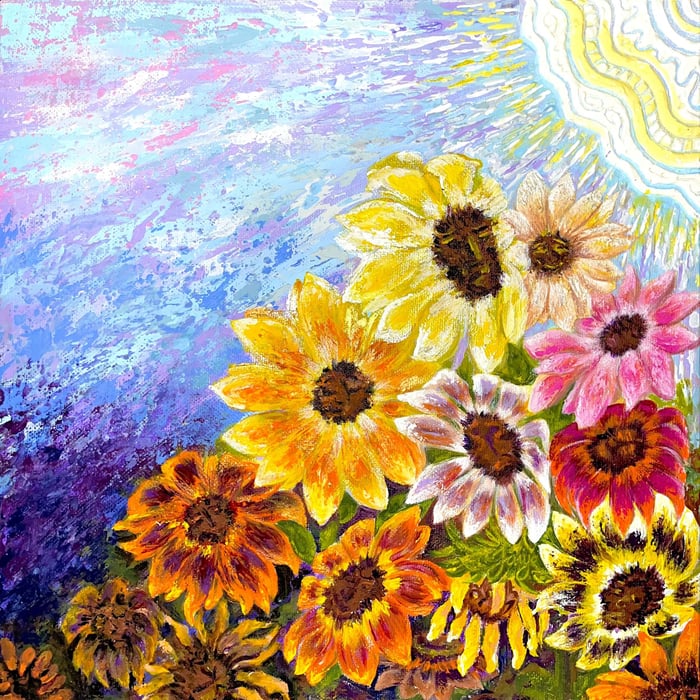
A record about wanting, not winning
This album doesn’t “open” so much as it starts talking at you—like Deante’ Hitchcock has been holding a bunch of thoughts in his mouth and finally spits them out in rhythm.
And that’s the real spine of Junkie in the Sun: not ambition, not trauma, not romance—wanting. The kind that doesn’t sort itself into neat categories. One minute he wants his mother to stay alive, the next he wants a J. Cole collaboration, the next he wants side sex, the next he wants to be a better big brother, and yeah, he even wants new Rihanna music. The point is: none of these desires get ranked as “serious” or “trivial.” They all sit at the same table, eating off the same plate.
A lot of artists would try to make you feel bad for laughing at the petty stuff. Hitchcock doesn’t. He basically shrugs and admits it all counts because it’s all his.
He’s from Riverdale, Georgia—Clayton County, south of Atlanta—and he’s thirty-three, which matters here because this doesn’t sound like youthful chaos. It sounds like grown chaos: the kind where you know better, but your brain keeps producing new cravings like it’s a factory that can’t shut down.
The “one producer” comfort blanket—and what it costs
Here’s the thing you notice fast: almost everything is produced by Brandon Phillips Taylor, and it’s all tuned to the same emotional temperature—warm. Not “sunny,” not “bright,” more like that cozy late-afternoon glow where you feel safe enough to confess something stupid.
The production keeps pulling from the same root system:
- soul-leaning vocal samples
- jazz-touched percussion
- that soft, lived-in feeling like the drums were dusted with velvet
- and by the time the closer hits, even gospel harmonies show up like the album’s trying to bless itself on the way out
This warmth is a gift for Hitchcock’s style because his delivery is conversational in a way that doesn’t feel lazy. He’s not doing that hyper-performed “Listen, I have bars!” thing. He’s talking, letting the lines land like thoughts he’s had before.
But the tradeoff is brutal: with one producer across almost the whole record, the writing has to create the album’s range. When the writing locks in, the warmth feels like gravity. When the writing coasts, the warmth turns into a blanket that smothers the song. And yeah—some of the party joints and love songs start bleeding together until you’re not sure where one mood ends and another begins.
There’s also one outside beat, and what’s funny is it barely registers as a left turn. That tells you how committed this album is to its chosen atmosphere… and how stubborn it can be about staying there.
The title track basically admits the whole concept
The title track, “Junkie in the Sun,” doesn’t try to hide the album’s engine. It just revs it in place. Hitchcock runs “I just wanna…” lines for what feels like forever, and the range is wild—wanting life in his eyes, wanting people to stop calling him Dante, wanting to prove himself, then swerving into a third-person aside about his brother.
It’s like he’s flipping through mental TV channels too fast for any one scene to settle.
And then there’s this moment that flips the whole “want list” into something sharper: the idea that people assumed he wanted to travel far, so they got him a car—only for him to suggest maybe he’s already been “here before,” and now he’s tired of chasing. That line lands like a quiet refusal. The album’s not just about desire; it’s about the exhaustion of other people projecting their idea of desire onto you.
If you came here expecting some triumphant self-actualization arc, the record basically says: no, I’m still stuck wanting things, and I’m not going to pretend I solved that.
“Funny Thing” turns cynicism into a hook you can’t shake
The bridge from personal wants into bigger statements happens cleanest on “Funny Thing.” The hook stacks ironies with that blunt, repeatable logic that’s almost irritating in how true it sounds: truth and lies, life and death, everybody doing the same human nonsense on repeat.
What I like is how deadpan the verses stay under that hook. He moves through moments that should be “movie scenes”—money in hand, fighting his brother in the street, shaking hands after, praising God for good lungs… and then smoking anyway. That’s the album in miniature: gratitude and self-sabotage sharing a cigarette.
Then he runs a sequence of “not supposed to” lines—about people, governments, even hummingbirds—until it lands on his granddad not being “supposed to” die. The logic he draws from that is both stupid and airtight: if the world breaks rules, why can’t he? It’s a childish conclusion, and that’s why it works. Pain makes philosophers out of toddlers all the time.
A reasonable listener could argue that Hitchcock leans too hard on these rhetorical patterns. I get that. But to me, the repetition isn’t a gimmick—it’s compulsion. The man is writing like someone pacing.
“Smile You’re on Camera” crams the world into one hook
If the title track is about private wanting, “Smile You’re on Camera” drags that wanting into public space. The hook alone tries to hold way too much—cancer, psychosis, grandma’s dinner, war, famine. It’s like he’s scrolling headlines while trying to keep a straight face at the function.
And then he drops a question mid-verse that makes the whole thing feel less like commentary and more like panic: does he matter outside his work? That’s not a rhetorical question dressed up for streaming. It sounds like a real fear: that without output, without productivity, he disappears.
I’m not totally sure the song balances all its topics cleanly—part of me kept waiting for one thread to take over and it never quite does. But the messiness also feels intentional, like the point is that modern life doesn’t let you think about one crisis at a time.
“Almost There” is where the album stops being polite
Here’s where I had to adjust my first impression. Early on, I thought this was going to be a smooth, warm record that stays in the “grown man rap” lane—competent, tasteful, maybe a little too comfortable.
Then “Almost There” shows up and reminds you comfort isn’t the same as safety.
The writing starts with the kind of stress that sounds normal because it is normal: cracked phones, IRS problems, arguing with his girlfriend about money. The stuff you can laugh off until you can’t. And then it escalates into a moment that isn’t dramatic in an entertaining way—it’s just alarming. The song turns into a room where Hitchcock argues with himself, catching his reflection in the mirror, the voice splitting into two sides:
one side calling him useless, stupid
the other side calling him selfish for not spending time with his son
and neither side “wins,” because the point isn’t victory—it’s survival
What hits is that he writes both voices with equal force. No heroic narrator steps in to tidy it up. The song just sits there with you, and that takes nerve.
If someone told me this is the best-written moment on Junkie in the Sun, I wouldn’t fight them.
“The Cycle” is the sickest song here—and the most necessary
If “Almost There” is internal crisis, “The Cycle” is crisis turned outward.
Verse one is narrated from the perspective of someone getting shot walking to the store—bleeding out, unsure if he’s already dead. Then verse two flips to the shooter: high on a pill, ignoring his mother’s call, squeezing the trigger at everything in sight.
Both verses end with essentially the same question—did the other person die? Did I die? And the punchline is horrifying because it’s not even a punchline: either way, how would I know?
That’s what makes this track feel “sicker” than the rest, in the specific sense of being morally nauseating. Hitchcock isn’t giving you a clean lesson. He’s showing you a closed loop where nobody gets full information, nobody gets closure, and nobody even gets the dignity of certainty.
This is the kind of writing that doesn’t need fancy production tricks. It just needs a pen and the willingness to stay in the room after you’ve said the worst part out loud.
When the writing slips, the warmth turns into blur
After songs like “Almost There” and “The Cycle,” the album sets a standard for itself. And that’s where the weaker moments get exposed.
A few tracks feel like Hitchcock reaching for lines he knows work on paper—but they land soft here:
- “U-N-I” leans on an Eve/apple bar that’s been done a hundred times, and the beat is so pleasant it practically evaporates.
- “Dance with Me” opens with “Ladies and pimps, naysayers and simps,” and I’ll be honest: that sounds like it wandered in from a different album wearing the wrong outfit.
- “Grass Greener” has one genuinely sharp line—“Hakuna matata don’t mean you outta the race”—but it gets buried under piñata metaphors that don’t hit hard enough to earn the space.
- “Heaven On Earth” leans into affirmations so general you can picture them cross-stitched onto a throw pillow at a big-box home store.
That’s my mild complaint with Junkie in the Sun: sometimes it confuses “pleasant” with “finished.” The production can be so consistently warm that it lets a few undercooked ideas slide by without consequences—until you put the whole tracklist together and realize certain songs are coasting on vibes they didn’t pay for.
And yeah, an “identity list” moment shows up later that mostly just repeats what the album already proved earlier, especially after the record has already dragged you through the inside of a shooting. At that point, simple declarations of self feel redundant.
Fatherhood shows up in waves—then “Reminders” tightens the focus
A thread that keeps returning is fatherhood—enough times that it starts to thin out from repetition. Not because it’s unimportant, but because saying “I’m thinking about being a father” over and over doesn’t automatically create new angles.
But “Reminders” pulls the fatherhood theme into a sharper frame by bringing in Childish Major and 6LACK. The feature chemistry matters here because it makes the song feel like a conversation rather than a solo confession.
Major’s verse, especially, sticks out because he’s juggling aspiration and domestic reality at the same time—rapping about a Grammy off “NISSAN ALTIMA” while pushing his partner’s whip. That detail lands because it’s specific, not inspirational wallpaper.
And honestly, the fatherhood songs that hit hardest are the ones that imply things without spelling them out. The record’s most meaningful moments aren’t always what Hitchcock says directly—they’re what he oddly doesn’t mention, the gaps where you feel him choosing not to say the most painful line.
Conclusion: the album wants everything, and that’s the point
Junkie in the Sun doesn’t sound like a man presenting a thesis. It sounds like a man making room for contradictions—existential dread next to petty cravings, family trauma next to horny side quests—because that’s what a real mind looks like when it’s honest.
The best songs (“Almost There,” “The Cycle,” “Funny Thing”) prove Hitchcock can write with serious bite when he stops trying to be broadly relatable and gets brutally specific. The weaker cuts aren’t disasters; they’re just moments where the album’s warm sonic glue can’t disguise that the writing didn’t fully show up.
Our verdict: This will hit people who like rap that thinks out loud, especially listeners who want emotional weight without melodrama. If you need every track to have a big sonic switch-up—or you can’t stand a few “wrong album” moments slipping into the sequence—you’ll get annoyed and wander off by the middle.
FAQ
- What is the core theme of Junkie in the Sun?
Wanting—everything from survival-level fear to everyday cravings—treated like it all belongs in the same messy brain. - Does the production change much across the album?
Not really. Brandon Phillips Taylor keeps it consistently warm, which helps the voice but can make some tracks blend together. - Which songs feel most intense lyrically?
“Almost There” and “The Cycle” go for the throat, with writing that doesn’t flinch or tie itself up neatly. - Are there weaker moments?
Yes—some lines and concepts feel familiar or too general, and a couple intros/metaphors don’t match the album’s strongest emotional register. - Who are the guest artists mentioned on the album?
Childish Major and 6LACK show up on “Reminders,” strengthening the fatherhood angle by making it feel lived-in instead of stated.
If this album’s cover stuck in your head the way the best lines do, you can always grab a favorite album-cover poster from our shop—tasteful ink for your wall, not a hard sell: https://www.architeg-prints.com/
 | DISCOUNTGET 30% OFF*Use code on your next order:
|
* This post may contain affiliate links, meaning we earn a commission if you make a purchase through these links, at no additional cost to you.