Train on the Island Review: Aldous Harding’s “Escape Route” That Isn’t One


 See more Architeg Prints stories on Google.
Train on the Island Review: Aldous Harding’s “Escape Route” That Isn’t One
Train on the Island sounds inviting until you realize it’s trapping you on purpose—and that’s the point.
Welcome In—But Don’t Expect a Map
Aldous Harding doesn’t “set a scene” on Train on the Island so much as lock you in a room with a mirror and call it tourism. It’s friendly in that unsettling way certain people are friendly—warm tone, sharp edges, and zero interest in making you comfortable for longer than a chorus.
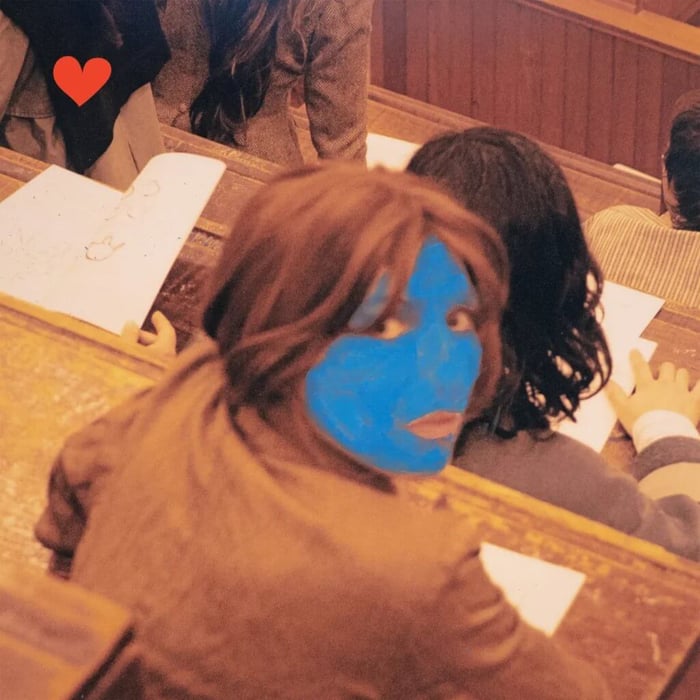
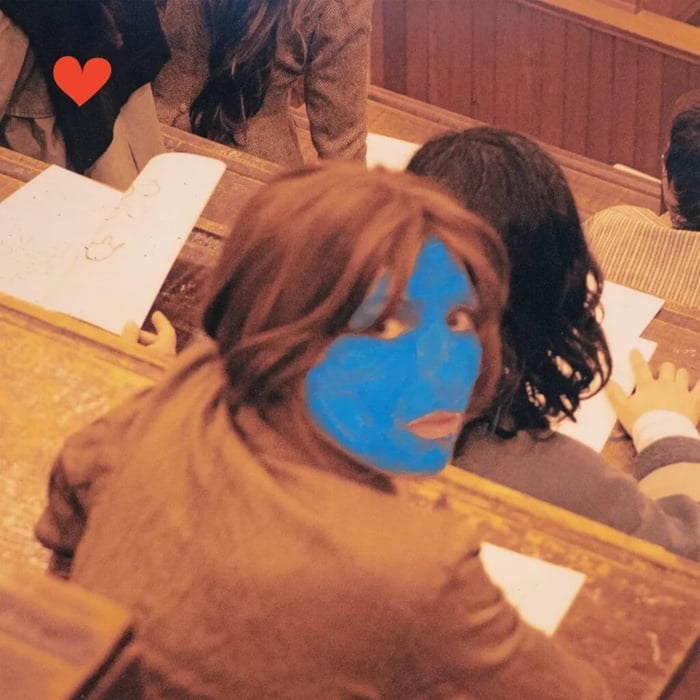
The album frames an island as a place you can supposedly leave anytime. Sure. But the second it starts, the island feels like a mental habit, not geography—more inner weather than palm trees. Harding keeps tossing out lines that sound like riddles you weren’t asked to solve, like: when she hits the ocean she’s “only a spark,” dragged upward by someone “with no love in their heart.” It’s not escapist; it’s forensic.
And the title Train on the Island matters because the “train” is thought—obvious symbol, almost too obvious—except Harding doesn’t use it as a clever metaphor. She uses it like an actual vehicle: she rides it straight into the unconscious, curls up there, and reports back in fragments. If you keep waiting for the album to translate itself into tidy meaning, you’ll miss what it’s doing: it’s making the confusion feel exact.
There’s also this recurring idea of being alone with your reflection—friends show up, sure, but they don’t stay. Near the end, Harding sings about meeting her “sleeping self,” hoping she’s “more than” what she thinks about. That’s the quiet horror here: the mind as both roommate and landlord.
1) “I Ate the Most”: Childhood as a Permanent Side Effect
The first track opens like an origin story for disembodiment. Harding sings, “I was nine when I left my body,” and that line doesn’t feel like memoir so much as diagnosis. Then she drops a couplet that’s almost too clean to be trusted: “No regrets, just things that will haunt me / Maybe I’ll bury them.” That’s the album in miniature—she pretends she’s joking, then immediately shows you she isn’t.
This is where the record makes its first big claim: childhood isn’t backstory, it’s infrastructure. The insecurities aren’t “themes,” they’re the beams holding the ceiling up. Harding’s writing doesn’t chase wordplay; it chases the way a mind pokes the same bruise from different angles to check if it still hurts.
Musically, Thomas Poli and H. Hawkline give her synths that slither instead of glow. People love calling her music ethereal, but that’s not what I hear. It’s grounded, it just wants to levitate. The production feels like someone lifting her heels off the floor—enough to make you uneasy, not enough to make you fly.
If I’m nitpicking, this is also where the album’s private language risks shutting a listener out. I get the intent—trauma rarely speaks in neat sentences—but the first minute can feel like being handed someone else’s dream journal and being told to care.
2) “One Stop”: The Album’s Comedy Fake-Out
The piano motif in “One Stop” loops like a nervous thought you can’t drop. Layers stack—acoustic guitar, bass, harp, little electronic flickers—and it creates this sensation of rising. Harding even admits her own unreliability: “So the lies I tell send me up.” It’s a perfect line because it’s both funny and bleak, like she’s confessing that self-mythology is her cardio.
There’s a moment involving John Cale that she treats like a casual anecdote—delivered with that deadpan oddness that makes her funny without trying. The opening run of the album almost plays like an impulsive comedy set: setup, punchline, abrupt pivot into sincerity before you can clap.
And here’s the arguable part: the humor isn’t decoration. It’s her way of getting you to swallow the darker stuff without gagging. If you don’t laugh a little here, you’re missing a major technique she’s using.
3) “Train on the Island”: When the Punchlines Stop Working
The title track is where the doorway-slash-joke turns into an actual corridor. The same approachability that pulled you in starts messing with your head instead. Harding drops a line like “Mommy said my inception was like eating a pearl,” and it lands less like poetry and more like an intrusive thought wearing lipstick.
She gets diaristic again, but the delivery feels less affected—like she stopped performing “Aldous Harding Voice” for a second and just… spoke from the inside of it. The observation “I hate my perception, but the medication slows my mind” doesn’t feel played for entertainment. It feels like a note left on the kitchen counter.
Hawkline’s bassline is hypnotic—almost a metronome for spiraling—while the electric guitar prods rather than leads. The band’s restraint is the hook. They’re not trying to dazzle; they’re trying to keep the room lit while she says uncomfortable things.
I’ll admit, on first pass I thought the title track was going to be the album’s big “statement” moment. On second listen, it’s more like a hinge: it quietly changes how you hear everything after it.
4) “Worm”: A Hook That Doesn’t Ask Permission
“Worm” drifts into a more languorous pace, and the pedal steel (Joe Harvey-Whyte) makes it feel like the air got thicker. The hook is unassuming, but it crawls in anyway—one of those melodies that shows up later while you’re doing dishes, like it paid rent.
This is where the album lets heaviness sit in the chair instead of pacing. Harding offers a contradiction—“Great things inside have sat long enough”—and it’s the kind of line that sounds hopeful until you realize “sitting” might be rotting, not resting.
I’m not entirely sure what she means here, and I think that’s intentional. The album keeps presenting feelings before interpretations, like it’s daring you to over-explain it.
5) “Venus in the Zinnia”: Social Music for People Who Don’t Socialize
“Venus in the Zinnia” is the rare moment where the album acts like it wants company. It’s a duet with Hawkline, and it’s got a Wurlitzer solo from Parish that’s genuinely delightful—the kind of musical wink that doesn’t feel smug.
It might be the most sociable track on the record, which is funny because Harding’s “breezy” songs usually hide a knife somewhere. Here, the knife is either missing or tucked away so well it barely matters. Honestly? It’s hard to tell what it’s about—and that ends up feeling weirdly accurate to actual friend gatherings, where the talking is constant and the meaning is optional.
Arguable claim: this track works because it refuses to clarify itself. If it got more explicit, it would get smaller.
6) “If Lady Does It”: The Full-Band Flex (and a Threat in Disguise)
The drums jump out immediately—Seb Rochford gives the record a pulse it mostly avoids. Parish handles bass, Mali Llywelyn brings harp, and there’s piano trading lines with Hawkline. It’s the closest the album gets to a “band” sounding like a band, and it changes the oxygen in the room.
Structurally, it’s more conventional than the surrounding songs, but Harding doesn’t sound interested in conventional payoff. She sounds interested in staging her own murder mystery—less whodunit, more what-part-of-me-did-it.
“If I am a gun then I’m loaded,” she declares, and for once the abstraction barely covers the threat.
The outro melody repeats like a protest chant—sinewy, damning, impossible to unhear once it’s lodged.
If I have a complaint, it’s that the track’s energy spike can feel like it belongs to a slightly different album. It’s effective, but it’s also a little jarring—like someone turned on the overhead lights mid-dream.
7) “San Francisco”: The Reprise That Messes With Your Timeline
“San Francisco” is the track that makes you start asking how the songs are stitched together. It reprises a hook from “One Stop” right when you think it’s winding down, like the album is looping back on itself to prove it can.
The music feels sedated again. Harding narrates like she just woke up and doesn’t fully trust what she remembers. Then her Fender Rhodes turns baleful—dark, weighted—and suddenly the story feels less like a postcard and more like a warning.
“I’ve never been a believer, I don’t cry when I’m told”
There’s a line delivered so gently it nearly undoes you. And then, right as emotion starts to gather, the moment evaporates. That vanishing act is one of Harding’s main tricks: she lets you feel something and then removes the chair before you can sit down.
Arguable claim: this is the album’s emotional center, even though it refuses to “resolve” emotionally. Especially because it refuses.
8) “What Am I Gonna Do?”: Hope, Served With Bechamel
Over a roiling rhythm section, Harding drops into her lower register and sounds almost grounded—until the lyrics swerve into the bizarre. “Bechamel on my face” shouldn’t work. It sounds ridiculous on paper. But she pairs it with a strangely hopeful refrain:
“I know things ain’t working out / But they may come good later.”
That refrain matters because it’s not triumphant. It’s pragmatic hope, the kind you say through your teeth while you keep moving.
Mali Llywelyn’s harp keeps nudging the track forward, and the solo at the end is wonderfully off-kilter—like the song itself is trying to walk straight and keeps leaning into the wind.
9) “Riding That Symbol”: The Loneliest Song Always Shows Up
Every Harding record seems to need one disarmingly lonely, existential ballad. Here it’s “Riding That Symbol,” an acoustic cut that feels like it’s been left out in the cold on purpose.
The earlier “things that will haunt me” have shifted into something more immediate: “haunts [that] band and it’s no accident.” There’s no future tense now. The haunting has moved in.
The instrumentation stays spare, matching her disconnected headspace: “No one knows what I’m into / I’m only riding that symbol.” That’s the album admitting its own barrier between internal experience and outward explanation. Even Thomas Poli’s electronics feel like fog rolling in at floor level—subtle, claustrophobic.
I kept waiting for some lyrical key to unlock what the “symbol” is, but the more I listened, the more I realized the refusal is the point. The symbol is whatever she can’t—or won’t—name.
10) “Coats”: Summer Light With No Salvation Attached
Harding doesn’t do neat resolution, so “Coats” doesn’t wrap things up. It just changes the lighting. It closes with a summery tune in the same neighborhood as “Venus in the Zinnia,” and Hawkline joins her again. It sounds almost companionable, like the island briefly allows visitors.
One line lands hard:
“Can’t buy the remedy but I’ll eat if you’re next to me.”
It feels like a full-circle nod back to the opening track’s coded fixation on eating—except Harding doesn’t underline it. She just lets it sit there, plain and loaded.
And that’s the final gut-punch of the album: realizing where you came from, tracing the dots, doesn’t automatically save you. Earlier she sings, “What my God is thinking I get lost in that place,” and by the end it’s clear the train isn’t taking her off the island. It’s how she moves around on it.
Public transportation, at least. Thank God it’s public.
The album Train on the Island by Aldous Harding is available for listening and purchase.
Conclusion: The Island Isn’t the Setting—it’s the Method
Train on the Island uses sweetness as misdirection and symbolism as a treadmill. It lets you think you’re taking a scenic ride, then quietly reveals you’ve been circling the same private ache the whole time. The best moments don’t “explain” anything; they make a specific emotional temperature feel unavoidable. Even when I don’t fully understand what Harding is pointing at, I can tell she’s pointing on purpose.
Our verdict: People who like music that stares back—folk-adjacent songs that feel like therapy notes sung through a curtain—will love Train on the Island. If you need choruses to behave, narratives to be clear, or metaphors to stop wiggling, you’re going to feel stranded here and start asking for a refund at the pier.
FAQ
- Is Train on the Island easy to understand lyrically?
No, and it doesn’t want to be. The album prefers emotional accuracy over clear explanations. - What’s the core vibe of Train on the Island?
Intimate, slightly surreal, and quietly funny—like overhearing someone make jokes while processing something heavy. - Which track feels the most “accessible”?
“Venus in the Zinnia” comes off as the most outward-facing, partly because it’s breezier and less confrontational. - Does the album have any big energy shifts?
Yes—“If Lady Does It” snaps the record into a fuller-band mode and briefly changes the whole room’s temperature. - Where should I start if I’m new to Aldous Harding?
Start at track 1 anyway. This album is sequenced like a guided walk—confusing if you jump in mid-trail.
If this album made you want something tangible from all that beautiful unease, a favorite album-cover poster on your wall weirdly helps. You can browse options at our store: https://www.architeg-prints.com
 | DISCOUNTGET 30% OFF*Use code on your next order:
|
* This post may contain affiliate links, meaning we earn a commission if you make a purchase through these links, at no additional cost to you.