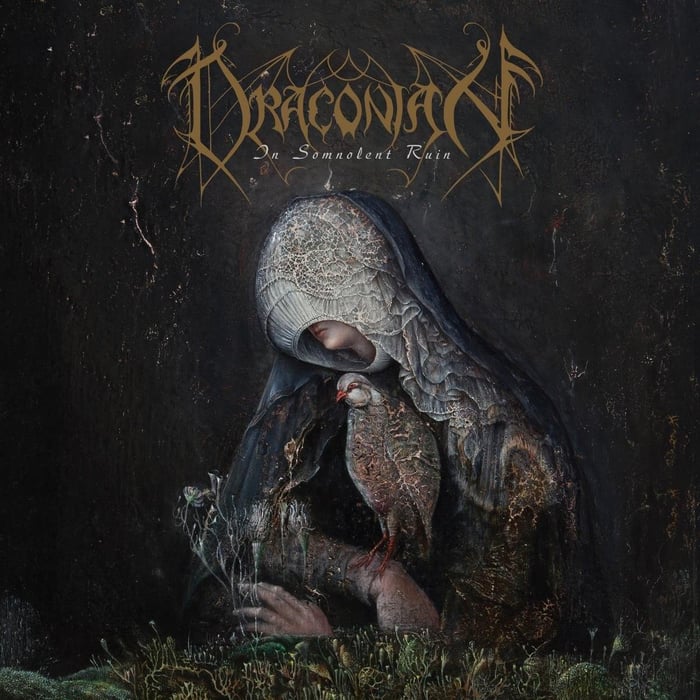
In Somnolent Ruin Review: Draconian Still Drowns You (On Purpose)


 See more Architeg Prints stories on Google.
In Somnolent Ruin Review: Draconian Still Drowns You (On Purpose)
In Somnolent Ruin is Draconian’s latest gothic doom ritual—bells, growls, and fragile beauty stacked into something you don’t just “play” once.
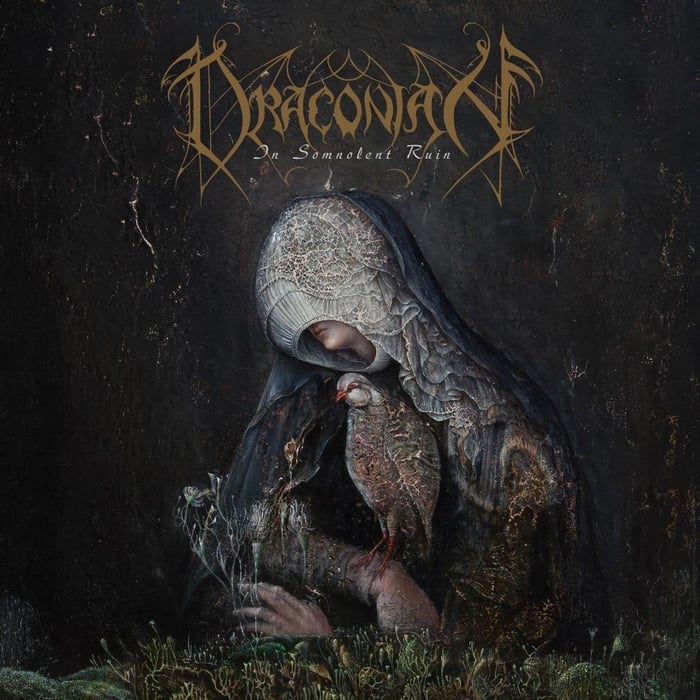
Let’s not pretend this is background music
Draconian doesn’t make albums so you can “have something on.” In Somnolent Ruin is the kind of record that sits down across from you, folds its hands, and calmly explains how small your optimism is. And yeah, I mean that as a compliment—mostly.
They’ve always been spoken about like some secret among gothic doom lifers, but the truth is simpler: the band has been doing the “epic” end of doom for so long that newer bands still sound like they’re borrowing Draconian’s coat and hoping nobody notices.
A veteran band returning with a very specific kind of confidence
This is their first full release since 2020’s Under A Godless Veil, and the bigger headline—at least in the way the album behaves—is the return of original vocalist Lisa Johansson after stepping away in 2011 for personal reasons.
You can hear the album leaning into that return without making it a victory lap. It doesn’t show up with fireworks. It shows up with fog, slow-moving dread, and that old Draconian specialty: music that’s “beautiful” in the same way a storm over black water is beautiful. You’re not meant to feel safe.
And the record is absolutely built from the band’s core ingredients:
- bleak, imposing atmosphere that feels architectural, like a ruin you can walk around in
- vocals that deliberately smash “ethereal” into “demonic”
- emotions that swing from full despair to a weird shimmer of hope that never quite turns into comfort
If you came here for reinvention, you’re listening to the wrong band. If you came here for doom that acts like doom—slow, heavy, and emotionally nosediving—welcome home.
“I Welcome Thy Arrow” opens like a funeral that’s proud of itself
The opener “I Welcome Thy Arrow” doesn’t ease you in. It announces the album with a carnival of tolling bells and gongs, and right away there’s that sinister keyboard line hanging behind it like a shadow you can’t shake.
Then Johansson comes in: dreamy, mournful, fragile. The vocal tone isn’t trying to seduce you; it’s trying to make you admit you’re already defeated. And just as the calm starts to feel hypnotic, the rest of the band drops a mountainous riff, and Anders Jacobsson answers with those beastly growls that don’t “contrast” so much as interrupt. It’s like someone smashing an anvil through stained glass—loud, blunt, and kind of sacred in its own ugly way.
I thought the intro might be a little theatrical the first time—like, “okay, yes, we get it, doom bells”—but on second listen the dramatics feel intentional in a better way. It’s not set dressing. It’s the album telling you the rules.
The real trick: tranquil and violent, without sounding like a gimmick
This tranquil/violent interplay is an old doom playbook. Plenty of bands do it and still manage to sound exhausted. Here, it doesn’t feel tired, and a lot of that is down to two things:
- the musicianship is sharp enough to keep the slow parts from sagging
- the production is clean enough to make the heavy parts feel massive without turning into mud
The vocal contrast is doing real work too. When Jacobsson’s more brutal voice takes over, the music doesn’t just keep chugging; it adds weight so the growls don’t feel pasted on top. That’s a choice—Draconian is constantly adjusting the “ceiling height” of the sound depending on who’s speaking.
“The Monochrome Blade” and “The Face Of God” aren’t just heavy— they’re accusatory
The more traditionally metal-leaning “The Monochrome Blade” and the doomier standout “The Face Of God” are where the album’s balance really flexes. They don’t just sound immersive; they sound like they want you to stop pretending you’re okay.
Johansson’s performance across these moments is the kind of “beautiful” that still feels desperate. Not floaty. Not ornamental. It’s beauty with cracked nails. And lyrically, the record keeps circling a dark theme: trying to locate yourself in a world that feels increasingly lost. The line in “The Face Of God”—about seeing God weeping and the fate of man provoking screaming—lands because the music doesn’t treat it like poetry. It treats it like evidence.
Here’s my mild complaint, though: sometimes the grandeur threatens to become a default setting. A couple passages lean so hard into “epic” that I caught myself wanting one uglier, simpler moment—something that feels less composed. The album is bleak, yes, but it’s also immaculately presented bleakness, and that can create a tiny bit of distance.
“Cold Heavens” speeds up, but it’s not relief— it’s panic with posture
“Cold Heavens” pushes the tempo more, but it doesn’t brighten the room. If anything, the extra motion feels like the mind racing at 3 a.m.—the body moving, the spirit stuck.
“What is life but to learn how to die?”
Jacobsson’s line isn’t delivered like a philosophical thought. It’s barked like a verdict. Then Johansson rises in the chorus with pleading power that turns the track into something close to an anthem… except it’s an anthem for people who aren’t expecting to win.
The music flashes familiar shapes—at moments I catch shades that remind me of certain gothic doom and progressive heaviness—but the comparisons don’t really matter because the band’s internal chemistry is too specific. Draconian doesn’t sound like a collage of influences here. It sounds like Draconian tightening its own screws.
The closers are “beautiful in desolation,” which sounds fake until you hear it
The album closes with “Misanthrope River” and “Lethe,” and they slow the camera down into something cinematic. These tracks feel like doom ballads—if doom ballads are allowed to exist. (And no, the obvious classic-rock example doesn’t count; that’s a different kind of sadness with better lighting.)
What surprised me is how these closers don’t feel like an exhausted comedown. They feel like the point. The pacing is patient, the atmosphere is slow and wide, and the emotional punch isn’t in a “big moment” so much as in the refusal to resolve. They don’t wrap things up. They let things rot gracefully.
I’ll admit I’m not completely sure which closer hits harder—part of me leans toward the one that feels more like drifting, but the other has a kind of resigned gravity that sneaks up later. Either way, the album’s final stretch is where it fully commits to that “shimmering hope” idea… except the hope is faint, distant, and never in charge.
The musicians have the chops, and the album knows it
Epic doom only works when the band can actually carry the weight. Draconian can.
The guitar work from Johan Ericson and Niklas Nord is the record’s backbone: they leave space for Johansson’s voice to breathe, then pivot into hammer-blow riffs and monstrous solo lines when the songs demand it. There’s a confidence in how the guitars wait. They don’t fill every gap just because they can.
Drummer Daniel Johansson keeps the foundation solid by mixing classic sparse doom grooves with more technical double-kick work when the intensity needs a shove. The shifts don’t feel like “look what I can do.” They feel like structural support—like adding extra beams before the ceiling collapses.
Production: huge, organic, and thankfully not overcooked
A lot of doom lives or dies on sound, because the genre asks you to sit inside tones for a long time. If the mix is cramped, you suffocate. If it’s too polished, the grief starts sounding like a showroom.
Here, the production is largely handled by guitarist Johan Ericson, with mixing and mastering support from Karl Daniel Liden, and the result is big without feeling plastic. Ethereal soundscapes sit next to colossal heavy sections, and somehow nothing feels overcrowded. That balance is the album’s real luxury: it’s enormous, but it still breathes.
If anything, the “perfectly framed” nature of the production might be the one thing that some listeners bounce off. This isn’t a grimy basement-recorded doom slab. It’s a cathedral built out of sorrow—measured, intentional, and tall.
So what is In Somnolent Ruin actually doing?
It’s not reinventing anything, and it doesn’t need to. Draconian practically helped build this particular wheel, and In Somnolent Ruin doesn’t act like it owes anyone novelty. Instead, it doubles down on spellbinding atmosphere—the kind that makes you replay it not because you “missed details,” but because the album leaves a residue you want to feel again.
It’s powerful in a way that’s almost rude: it assumes you have the patience to sit with it, and it’s correct to assume that—at least if you’re the target audience.
And if I’m being honest, I can’t imagine listening to this only once. Not because it’s complicated. Because it’s adhesive.
Release details (for anyone planning their next gloom appointment)
In Somnolent Ruin is set for release on May 8th, 2026 via Napalm Records.
The band’s official Facebook exists if that’s your chosen method of keeping up with doom bands, announcements, and the slow march of time.
My rating, since people always ask anyway
If I’m forced to turn this experience into a number: 8/10. Not because it’s “almost perfect,” but because it’s extremely effective at what it’s trying to do—and it knows exactly what it’s trying to do.
Conclusion
In Somnolent Ruin doesn’t chase new tricks; it sharpens old knives. Draconian builds a world out of bells, riffs, and dueling voices, then locks the door behind you and calls it comfort.
Our verdict: People who actually like gothic doom—slow, grand, emotionally punishing—will love this album and probably pretend they’re “fine” afterward. If you need constant movement, bright hooks, or any proof that the universe is not indifferent, you’re going to find this record exhausting in the least fun way.
FAQ
- Is In Somnolent Ruin a big stylistic change for Draconian?
No. It leans into the band’s established epic gothic doom approach rather than trying to pivot into something unfamiliar. - What’s the most immediate track on first listen?
“I Welcome Thy Arrow” grabs you fast with bells, gongs, and a hard switch from fragile calm to crushing heaviness. - How do the vocals function across the album?
The record lives on contrast: Lisa Johansson’s ethereal, mournful lines against Anders Jacobsson’s brutal growls, with the music shifting weight to match. - Are the slower closing tracks worth sticking around for?
Yes—“Misanthrope River” and “Lethe” feel like the emotional landing point, not an afterthought. - Will the production appeal to people who like rawer doom?
Maybe not. The sound is enormous and organic, but it’s also carefully sculpted rather than grimy or rough-edged.
If you’re the type who bonds with album artwork as much as riffs, you can always shop a favorite album cover poster at our store—tastefully, quietly—over at https://www.architeg-prints.com.
 | DISCOUNTGET 30% OFF*Use code on your next order:
|
* This post may contain affiliate links, meaning we earn a commission if you make a purchase through these links, at no additional cost to you.