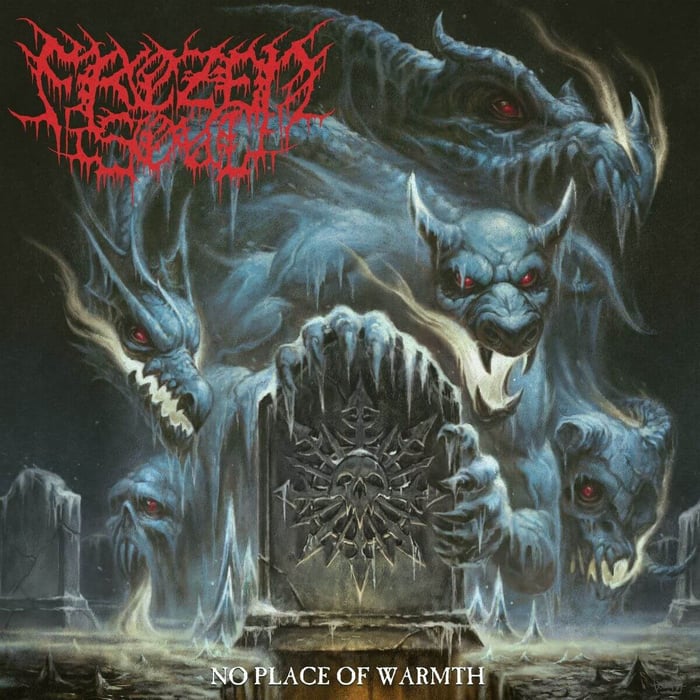
No Place Album: Frozen Soul Turns Texas Into a Walk-In Freezer


 See more Architeg Prints stories on Google.
No Place Album: Frozen Soul Turns Texas Into a Walk-In Freezer
No Place album thoughts: Frozen Soul weaponizes groove, guests, and icy death metal—then dares you to call it “just” brutal.
Let’s get one thing straight: this record wants you uncomfortable
Fort Worth averages around thirty degrees a lot of the time—pretty normal for the American South. But No Place (yeah, I’m calling it that because it acts like a blunt object) behaves like Frozen Soul decided weather is a personality and “below freezing” is the only acceptable mood. This is death metal that doesn’t just flirt with cold imagery; it leans on it like a crutch and then somehow makes the crutch look sharp.
And honestly? It works more often than it has any right to.
Frozen Soul’s whole “ice cold” thing isn’t a gimmick anymore
Frozen Soul have been pushing this frostbitten identity for a while, but on album number three, No Place Of Warmth, the band sounds like they’ve stopped “trying to be the cold death metal band” and started writing like it’s the only environment they can survive in.
That’s the real flex here: the band feels like it’s at the front of modern death metal because it commits. Not in a poetic way. In a practical way—tight structures, blunt-force grooves, and riffs that show up to do a job and clock out.
I’m not saying this is subtle. I’m saying subtlety would be the wrong tool.
The title track opens like a slasher movie—and that’s not an accident
The album starts with the title track, “No Place Of Warmth,” and the first thing it does is set a scene with chilling, horror-leaning strains that wouldn’t feel out of place in a classic ’80s slasher flick. Then the floor drops: a razor-sharp groove locks in, the drums start pounding like they’re trying to dent steel, and Chad Green steps forward sounding like he’s there to take over the room, not “perform.”
Here’s the wildcard move: Gerard Way shows up on vocals.
On paper, that sounds like a “marketing department” idea. In the actual mix, it’s a smart texture choice—his voice cuts through differently than the usual death metal register, and that contrast makes the hookier edges of the track feel even nastier. It’s the kind of feature that could’ve turned into a novelty, but it doesn’t. It kickstarts the record as another slab of the ice-cold, frostbitten death metal Frozen Soul have basically branded into their name.
I’ll admit, I wasn’t sure it would land the first time. I kept waiting for the moment where it would feel forced. It didn’t.
After the intro, the album starts swinging at anything that moves
Once the atmosphere is established, the record doesn’t “develop.” It advances. That’s an important distinction. No Place Of Warmth isn’t trying to gently guide you through a journey; it’s trying to flatten you with groove-laden brutality and make that feel fun.
The second big punch is “Invoke War,” and it’s exactly what the title promises: vulgar, stomping, and pointed directly at your speakers. And then, because Frozen Soul apparently enjoy chaos in their guest list, Robb Flynn (Machine Head) roars alongside Chad Green.
That pairing works because it’s not polite. Flynn’s presence doesn’t “blend,” it shoves. The track becomes less about technical showing-off and more about mass—like the band intentionally chose a voice that sounds like it can carry a boulder uphill.
This is also where the album starts proving a slightly annoying point: Frozen Soul are at their best when they don’t overthink the violence. When they commit to groove, everything snaps into focus.
The short tracks are basically grenades—and one of them is almost too brief
A few songs here are brief, and the band clearly means it as a strength: no wasted motion, no scenic routes.
- “Absolute Zero” hits in under a minute, and it’s pummeling enough to feel like a cold slap.
- “Dreadnought” is titanium-heavy, bass-forward, and built to crush.
“Dreadnought” also brings in Devin Swank (Sanguisugabogg), and the feature choice makes perfect sense—newer death metal orbiting newer death metal. The song’s low-end groove is the kind that makes your headphones feel guilty. Then the guitars soar up and suddenly it’s “game over,” like the band decided the only mercy is ending the track before the walls cave in.
If I’m nitpicking, sometimes the shortness feels like Frozen Soul cutting away right when the riff is getting truly addictive. I thought that would bug me more than it does, but it still leaves a couple moments where I wanted another 30 seconds of punishment.
“Chaos Will Reign” is where hardcore starts bleeding through the ice
The ferocity doesn’t fade—if anything it gets more direct. “Chaos Will Reign” comes in with a definite hardcore influence welded onto savage death metal, and the combination is the point: this isn’t death metal that wants to feel ancient or ceremonial. It wants to feel physical, like a room full of bodies moving in one ugly rhythm.
A reasonable listener could argue the hardcore edge is just seasoning, not a real fusion. I’d argue it changes how the riffs land. The punches are timed differently. The grooves aren’t just heavy—they’re arranged to make you react.
That’s a creative decision, not an accident.
The middle stretch doesn’t “experiment”—it tightens the noose
From there, “Eyes Of Despair” hits with a mesmerizing kind of heaviness—the sort that feels slow even when it’s not, because the weight is doing the tempo’s job. “Ethereal Dreams” swirls viciously, like the band is trying to make something dreamlike without ever letting it soften.
This is where my first impression shifted a bit. Initially I thought the album might be one-note—cold, brutal, done. But the more time I spent in this middle section, the more it felt like Frozen Soul are playing with how brutality is presented: sometimes it’s a straight stomp, sometimes it’s a nauseating spin, sometimes it’s a sustained, staring pressure.
It’s not a wide emotional palette. It’s a controlled one.
“Skinned By The Wind” is a quick hit that knows it’s a quick hit
“Skinned By The Wind” opens with a killer sample—one of those moments that sets you up like, “Okay, something nasty is about to happen,” and then it delivers with a low-slung groove.
It’s brief, like a few tracks here, but it makes its mark because it doesn’t pretend to be bigger than it is. It’s basically Frozen Soul saying: here’s the riff, here’s the damage, next.
You could claim that’s not “album craft,” that it’s just a playlist of violence. But I think the sequencing is doing more than people will give it credit for—these short tracks act like punctuation. They keep the bigger stomps from getting too comfortable.
“DEATHWEAVER” goes majestic—and it’s a weirdly smart pivot
Then “DEATHWEAVER” shows up with what I can only call majestic heaviness. Not pretty. Not uplifting. Just… larger. Like the band zoomed out for a second to show you the scale of the machine they’ve built.
This track, more than most here, sells the idea that Frozen Soul aren’t trapped by the standard constraints of the genre—even though they’re absolutely using the genre’s classic weapons. They’re not reinventing death metal. They’re making death metal feel bigger without polishing it into something harmless.
And that’s a hard balance. Plenty of bands “go big” and accidentally go soft.
The ending run is where the album decides to be fun about the violence
The album moves through “Frost Forged” and then closes with the fantastically titled “Killin Time (Until It’s Time To Kill)”, which ends things on a stomp that’s actually—brace yourself—fun.
That title alone tells you the band isn’t treating their own intensity like sacred scripture. They know exactly what kind of album this is, and they’re willing to smirk while swinging the hammer. It’s a smart way to end: instead of fading out or turning “epic,” Frozen Soul double down on the bluntness and make it feel like a victory lap.
The guest list looks chaotic, but the intent is obvious
The guest appearances on No Place Of Warmth are legitimately impressive, and they fall into two categories:
- Logical: Devin Swank (Sanguisugabogg) — same ecosystem, same rot-and-rumble energy.
- Wildcard: Gerard Way and Robb Flynn — choices that could’ve felt like stunts.
What matters is they all work. Not in a “nice crossover moment” way—more like Frozen Soul are widening the frame around their sound without sanding it down. If Way and Flynn open the band up to a wider audience (and maybe death metal itself to people who’d never normally step near it), that’s a net positive. Purists can complain, but purists complain when a band changes guitar strings.
I’m still a tiny bit unsure whether Gerard Way’s feature will age as “bold” or “of its moment,” but right now it hits like a cold shock, which is exactly what this album is selling.
Where this album lands: a new level, not a new genre
No Place Of Warmth sounds like the Texans leveling up—less like they’ve escaped death metal and more like they’ve found a way to push past its usual ceiling without betraying the core of what makes it murderous in the first place.
If you want the tidy takeaway: the future of death metal is in safe, frostbitten hands. And yes, that’s a dramatic sentence. This is a dramatic record.
Also, if you forced me to put a number on it, I’d land around an 8/10—not because it’s flawless, but because it knows exactly what it’s doing and rarely wastes your time doing it.
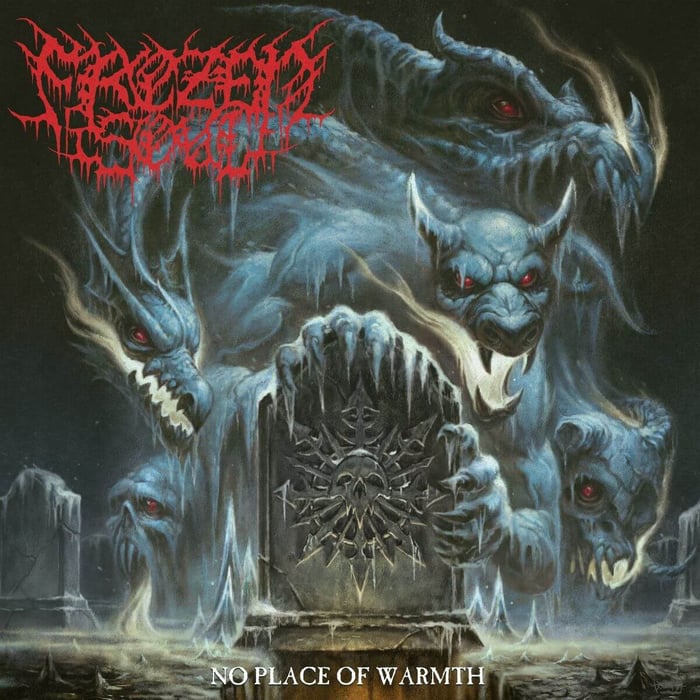
No Place Of Warmth is out now via Century Media Records.
Conclusion
Frozen Soul made No Place feel like standing too close to industrial machinery in a freezer: relentless, loud, and weirdly clean in its intent. It doesn’t ask permission, it doesn’t explain itself, and it doesn’t care if you wanted warmth—because the whole point is that there isn’t any.
People who like death metal with real groove—and don’t flinch at big-name guest swings—will love this. If you need your heaviness “pure,” “serious,” and allergic to wildcard features, this album will irritate you like frostbite in a tuxedo.
FAQ
- Is the core keyword “No Place” actually central to the album’s vibe?
No. The whole record acts like warmth is a weakness and “No Place” is the mission statement. - Do the guest vocals feel like gimmicks?
Not really. Gerard Way adds contrast, Robb Flynn adds force, and neither one turns the songs into novelty tracks. - Are the short songs filler or intentional?
Intentional. A couple end just as they’re getting addictive, but they keep the pacing vicious. - What’s the album’s strongest musical trait?
The groove. The riffs don’t just crush—they move, which is why the heaviness actually sticks. - Is this album trying to reinvent death metal?
No, and that’s the point. It’s trying to dominate a modern lane by making the fundamentals feel huge.
If this record’s frozen mood is your kind of interior decorating, you might want to hang it up too—shop your favorite album cover poster at our store.
 | DISCOUNTGET 30% OFF*Use code on your next order:
|
* This post may contain affiliate links, meaning we earn a commission if you make a purchase through these links, at no additional cost to you.