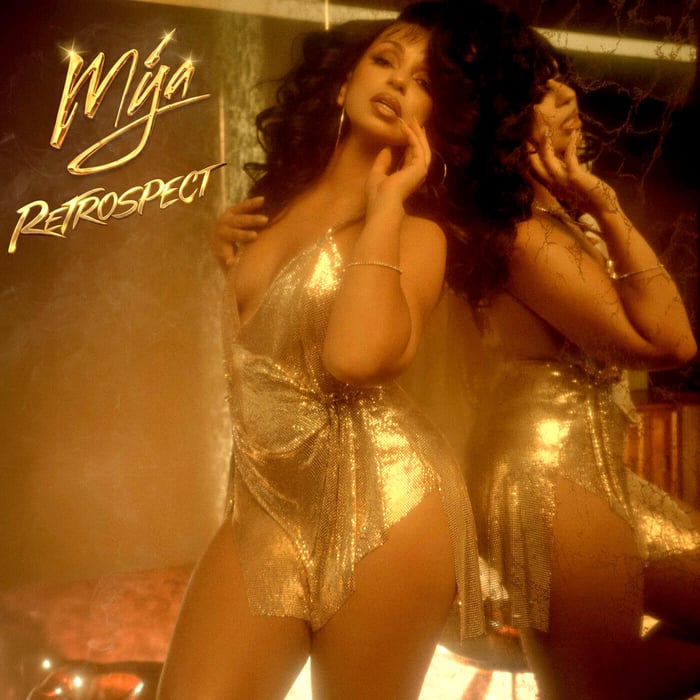
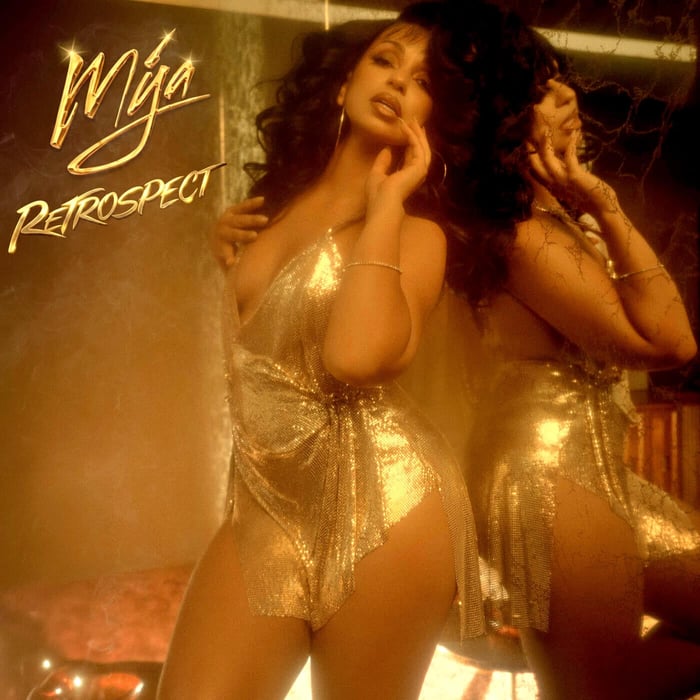
Mýa Retrospect Review: A “Throwback” Album That Refuses to Look Back


 See more Architeg Prints stories on Google.
Album Review: Retrospect by Mýa
A detailed review exploring the vintage synth-funk sound, original compositions, and present-tense attitude of Mýa’s album Retrospect.
First, this album isn’t nostalgia—it's cosplay with a pulse
If you hit play expecting a scrapbook of past hits, Retrospect will politely ignore you. It doesn’t try to “return” to anything. It tries to sound like a certain era while acting like it’s happening in real time—which is a cocky move, and mostly the point.
And yeah, I noticed the little details immediately: the roller-rink framing, the phone-number chant vibe, the synth bass that smells like 1985. But the bigger tell is this: Mýa’s not using the past to remember—she’s using it to control the room temperature. This record is built like mood lighting.
Courtesy of Planet 9.
Mýa’s origin story matters here, because the music moves like a body
Here’s what you can hear in the way this album carries itself: Mýa learned rhythm through motion before she learned it through vocal theatrics. Ballet at two years old isn’t trivia; it’s an explanation. The phrasing across this album doesn’t scream “big singer proving something.” It’s physical. It’s steps, not speeches.
Even when the melodies are simple, she places them like a dancer placing weight—clean, intentional, a little seductive without making a mess of it. Her background sits under everything: the sense that the beat is the boss, and the voice is the part of the body that knows when to lean in.
And I’ll go further (arguable, sure): a lot of R&B artists say they’re about groove, but they chase hooks like they’re chasing rent. Mýa on Retrospect sounds like someone who’s fine letting the groove carry the flirting.
That “202-8464” chorus isn’t a cute joke—it’s a timestamp weapon
The album opens with the voice of D-Nice setting the scene, and it lands like a door opening into a specific party: not “retro” as an aesthetic, but “retro” as a location. When that D.C.-area phone-number detail gets sung like a communal chant, it doesn’t feel random. It feels like Mýa intentionally planting a flag: this is a place, not a vibe board.
The synth bass hits, the funk whistles slice the air, and suddenly you’re not “listening to an album,” you’re in a rink with sticky floors and dramatic lighting. The whistles are so sharp they practically date the air around them.
One of the boldest rules on the project is also one of the clearest: no samples at all. Every sound is built from original compositions, and you can hear the discipline in that. Producer LaMar “My Guy Mars” Edwards doesn’t just imitate old gear—he commits to it like it’s a religion. And Mýa clearly wants that constraint. It’s not accidental purism; it’s a boundary that shapes the whole record.
I’m not totally sure everyone will care about the “no samples” flex, but I do think you can feel it: the songs don’t wink at you with recognizable fragments. They make their own little world and insist you live in it.
The production does regional cosplay on purpose—and it mostly works
Edwards and Mýa basically run a three-city tour inside the tracklist:
- go-go drumming from the DMV on “Face to Face”
- West Coast bounce on “No Pressure”
- Bay Area slap on “Just a Little Bit”
And I’m going to say something that might annoy purists: it’s not about “authentic replication.” It’s about choosing accents that flatter Mýa’s voice and keep the album from freezing into one flavor.
The album’s stronger when it leans into movement—anything that suggests bodies in a room. When it slows down too long, the concept starts to show its seams.
She’s been famous forever, but this album acts like she doesn’t need you
By the time Mýa had nine songs land in the Billboard Hot 100 before she was 22, she’d already done the thing pop culture keeps pretending is the endgame. Then she moved from Universal Motown to Planet 9 in 2007, with J. Prince mentoring her, kept releasing music (including Sugar and Spice for Japan), and later Smoove Jones in 2016—an album that earned a Grammy nomination for Best R&B Album.
And here’s the uncomfortable truth you can hear behind Retrospect: even with all that, a lot of listeners stopped checking. Not because she can’t sing, not because she can’t write, but because the culture moved the goalposts. Hooks stopped being for radio. They became private—music for cars with the windows up, not singles begging for daylight.
So Mýa took her time. She spent a decade finishing Retrospect without a label clock nagging her, and that freedom is all over the arrangements. They’re patient. They’re relaxed. Sometimes they’re so relaxed that the song seems to stare at you like, “Are you done rushing me?”
That patience is a strength—and, honestly, once or twice it’s also a problem.
The slow songs aren’t chasing hits—they’re testing your attention span
This is where the album makes its first real demand.
“Good to You” settles into warm Rhodes chords and a slow backbeat, and Mýa’s voice goes breathy and low like she’s trying not to wake somebody up in the next room. It’s devotion music, mutual-pleasure music, candle-burn music—and it refuses to do the obvious thing by forcing a big hook.
“Let me show you / Tonight I’ll be the freak you need” — Mýa
That line isn’t tossed off; it’s delivered with the kind of control that implies she’s steering the whole scene. Four minutes of that kind of commitment is either hypnotic or a little too steady, depending on your tolerance for slow heat.
“Anytime” and “Just Call My Name” live in a similar neighborhood: electric piano, soft percussion, vocals that prioritize tone over range. If you’re waiting for vocal fireworks, you’ll wait a long time. This album isn’t built to impress your aunt who loves belting. It’s built to keep a room from talking over it.
My mild criticism: a couple of these slower stretches feel like they’re so devoted to vibe that they forget to give the song a second act. It’s not boring, exactly—it’s more like being served an excellent dessert in a single, very consistent bite.
“Saturday Night” is where the album stops whispering and actually struts
After all that hush, “Saturday Night” snaps the lights brighter. Horn stabs crack over a four-on-the-floor kick drum, and Edwards chops a muted rhythmic guitar through tight sixteenth notes that clearly borrow from Nile Rodgers’ Chic playbook.
And the bass—this is key—walks faster and louder than anything on the slower tracks. It pins the brass to a disco-funk groove that feels like 1979 reanimated with modern posture. The groove pushes Mýa into a different vocal space, too. She jumps from the quiet low end she used on “Good to You” into something that fills a bigger room.
Same singer. Different room.
Here’s my revised first impression: on my first pass, I thought the album might be too locked into one mellow gear. Then “Saturday Night” hit, and I realized the project isn’t short on energy—it’s selective with it. It wants the high points to feel earned, not constant.
Arguable take: “Saturday Night” is the album’s real thesis statement, not the opener—because it proves the retro palette isn’t a limitation, it’s a launchpad.
She’s touring on old hits—and releasing new music to people who didn’t ask
There’s a funny tension around Retrospect when you remember where Mýa is performing right now. On The Boy Is Mine Tour with Brandy and Monica, the crowd shows up for memory: “Case of the Ex,” “Ghetto Supastar,” the late-’90s and early-’00s highlight reel.
And while that tour runs on catalog heat, Mýa did something slightly ungrateful (in a good way): she came with new music. She released T.K.O. in 2020 as a twentieth-anniversary commemoration—new vocals over Edwards’ vintage-gear production—and she finished Retrospect across those same years she was out there singing the old hits.
Brandy and Monica came back for the tour. Mýa came back and brought an album.
On a bill named after someone else’s duet, she’s the act with fresh material, playing it for a room that didn’t request it. That’s either brave or mildly chaotic, depending on your patience.
The album’s tight concept is also its trap: one style per song
Edwards matches every song to a single production lane. It’s like each track picks a costume and refuses to change clothes mid-scene. The upside: the funk holds, the songs don’t sprawl, and the sonic identity stays intact.
The downside (and here’s an arguable claim): sometimes that “one style per song” approach makes a track feel finished too early. Like the arrangement decided, “That’s enough; we’ve made the point.”
Still, the record knows what it wants: a controlled set of environments rather than a chaotic playlist.
The remixes with featured rappers feel like padding, not expansion
Here’s where Retrospect gets a little too comfortable.
“ASAP,” “Face to Face,” and “Just a Little Bit” each show up twice—once as solo tracks and once with featured rappers—turning thirteen songs into sixteen. That math isn’t complicated. It’s padding.
Dizzy Wright drops an inspirational verse on “Games With My Love” that mostly repeats what Mýa already communicated on her own. Too $hort and Phil Adé show up on songs that already sounded complete as solo recordings. The “ASAP” remix with 21 Savage continues his streak of adding basically nothing—present, recognizable, but not particularly useful. Snoop Dogg slides in casually, like he didn’t notice the decade changed, and somehow still has less impact than you’d expect because the verse doesn’t open up new perspective.
These guest spots don’t ruin the album. They just expose a truth: Retrospect doesn’t actually need help. The features don’t bring new ideas; they mostly bring names.
If you like the original versions, the remixes feel like someone taped extra flyers onto a finished poster.
Mýa borrows the past so deeply it stops being “reference”
The best kind of retro isn’t quotation—it’s absorption. And Mýa does that more often than she shows off about it.
On “elated,” the plosives and vowel stretches carry that wide-mouthed joy you hear in early-’80s funk records—Rick James energy, not in imitation but in posture. There’s also a Teena Marie-style “whoo!” ad-lib planted right at the start before the guest verse drops, and Mýa delivers it with the audacity of someone acting like she invented the move. It’s not disrespect. It’s confidence.
“Just Call My Name” gets Prince-style guitars—clean tone, wet reverb—turning the ballad heavier than the Rhodes underneath. That guitar choice is not subtle; it’s the kind of texture that changes how you hold your shoulders while listening.
And on “Masterpiece,” she takes a “Remember the Time”-type ad-lib and runs it through her own phrasing until it stops feeling like a nod and starts feeling like a personal habit. That’s the difference between cosplay and lived-in style.
Arguable take: this is the album’s smartest trick—Retrospect doesn’t rely on your recognition. It doesn’t need you to point and say, “I get it.” It just uses the language fluently.
The title is the joke—and the album knows it
So what does an album called Retrospect actually look backward at?
Because song after song faces tonight. “Saturday Night” is about tonight’s plans. “Masterpiece” is aimed at someone in the room right now, not a ghost from the past. Even the slow songs feel like present-tense intimacy, not diary rereads.
That contradiction isn’t an accident—it’s the thesis. When Mýa sings about the present over instruments built to sound forty years old, she’s facing one direction while the production faces the other. And the title names the gap.
Mýa spent ten years making an album about right now, and she called it Retrospect. That’s either irony or honesty—I’m not 100% sure which she intended—but either way it frames the listening experience: you’re hearing the present speak through old machines.
Conclusion: it’s not a time machine—it’s a control room
Retrospect succeeds when you treat it like a deliberately lit space: a roller-rink intro, bedroom-slow grooves, then sudden disco-funk that pushes her voice into a bigger room. The “no samples” rule gives it backbone. The decade-long patience gives it calm. The remixes, unfortunately, give it a little bloat. But the core statement lands: Mýa isn’t looking back—she’s using the past as equipment to make the present feel better engineered.
Our verdict: If you like R&B that prioritizes groove, tone, and grown-up restraint, you’ll actually like this album—especially if “Saturday Night” is your kind of pulse. If you need big modern hooks, feature verses that change the song, or anything that screams for attention, you’ll get restless and start checking your phone around the second remix.
FAQ
- What is the core sound of Mýa Retrospect?
It lives in vintage-leaning funk and R&B: synth bass, Rhodes keys, disco-funk touches, and roller-rink atmosphere—built from original compositions. - Does Retrospect use any samples?
No. The album’s production is built without samples, leaning on original compositions shaped to sound like older gear. - Why are there duplicate tracks on the album?
“ASAP,” “Face to Face,” and “Just a Little Bit” appear as solo versions and again as remixes with featured rappers, stretching the tracklist from thirteen songs to sixteen. - Which track best shows the album’s higher-energy side?
“Saturday Night” is the clearest gear shift—four-on-the-floor drive, sharp horns, tight guitar, and a bigger vocal room. - Is this album mainly about nostalgia?
Not really. The sound points backward, but the lyrics and scenarios keep aiming at the present—“tonight” energy wrapped in older textures.
If this album’s whole thing is “old-school design, present-tense attitude,” you might want to hang that energy on your wall too. If you’re into album-cover posters, you can browse favorites at our store: https://www.architeg-prints.com
 | DISCOUNTGET 30% OFF*Use code on your next order:
|
* This post may contain affiliate links, meaning we earn a commission if you make a purchase through these links, at no additional cost to you.