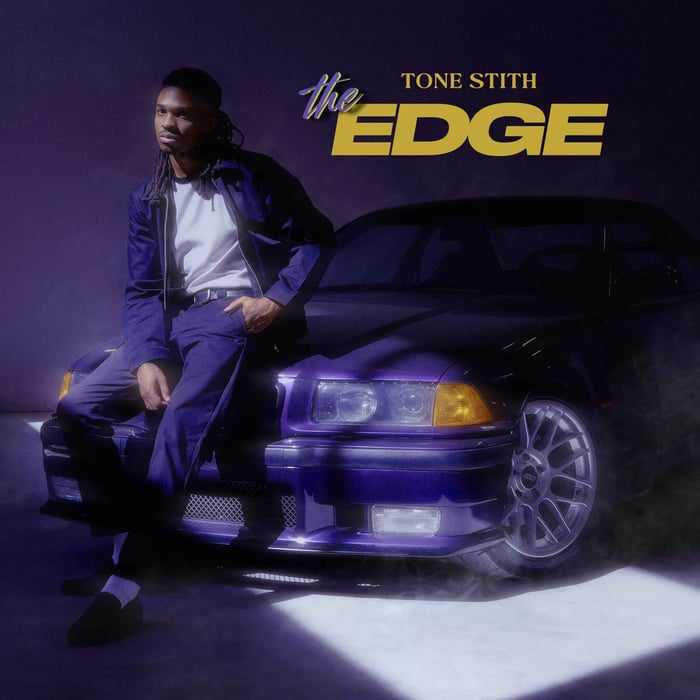
Album Review: Tone Stith’s The Edge—Risk-Taking With the Seatbelt On


 See more Architeg Prints stories on Google.
Album Review: Tone Stith’s The Edge—Risk-Taking With the Seatbelt On
Tone Stith’s The Edge wants danger and devotion in the same breath—sometimes it jumps, sometimes it just stares down.
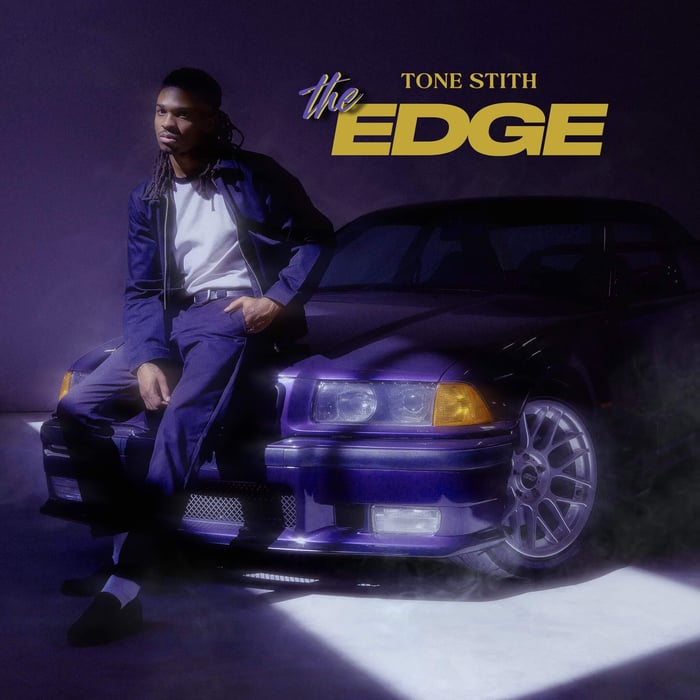
The weirdest flex: going No. 1 before the album even shows up
Some albums arrive like a grand entrance. The Edge kind of… wins a trophy in the lobby first.
On May 2, “Fly” hit the top of Billboard’s Adult R&B Airplay chart with 1,894 Mediabase spins—the kind of rotation that screams “weekday commute music for adults with a job and an opinion.” What’s funny is the timing: the single had been climbing for three months, while the album itself just sat there unreleased, still 13 days away. That gap matters. It makes the whole project feel like it’s been engineered to prove a point before it even gets a chance to speak.
Tone Stith (Antonio Stith), a New Jersey songwriter and former RCA artist now releasing through MNRK, has been sitting on these songs for a while—two years of work by the time you hear them. And you can tell. Not because it sounds overcooked, but because it sounds decided. Like the choices were argued over, won, and locked.
Arguable take: the chart win doesn’t feel like a victory lap—it feels like the album’s opening argument, delivered early, with receipts.
The sound is controlled on purpose—and that’s the whole point
Right after that opening context, you start noticing how The Edge is built: not as a chaotic moodboard, but as a single room with different lighting setups.
Almost every track runs on the same internal wiring:
- pulsing bass that acts like the album’s heartbeat
- drum programming that snaps into place instead of swinging loosely
- synth pads that smooth the corners
- a quiet guitar lingering behind the main action
The production is handled entirely by Kenneth Paige (“KP”) and Christopher Brown (“Brody”), who shape all ten tracks with a mix that leans R&B, touches funk, flirts with pop, and occasionally borrows the posture of rock. Stith co-produces on four of them. Brandon Hamlin (“B. Ham”) contributes on “Fly,” and that’s basically it—no parade of extra names, no “special guest producer” detours.
And honestly? That limited team is the album’s spine. The palette stays consistent enough that when Stith shifts tone—when he turns sharp, or spiritual, or openly bitter—it actually registers. The sound doesn’t distract you from the pivot. It frames it.
Arguable take: the production is “future-soul” in the same way a modern apartment is “industrial”—it’s not gritty, it just borrowed the aesthetic and kept it clean.
Stith’s real superpower: intimacy without a backstory
Here’s what The Edge is really doing: it refuses to give you a full relationship movie. It gives you scenes. Doorways. Bedsides. The emotional camera stays close enough that you can hear the breath, but it doesn’t pan out to show the whole neighborhood.
Across the seduction-heavy material, Stith keeps the lyrics rooted in the room—the threshold, the immediate moment, the private negotiation. He doesn’t overload things with names, timelines, or grand romantic lore. It’s less “this is my love story” and more “this is what I’m asking for right now.”
But late in the album, something slips. The focus turns inward, like the performance stops being about persuasion and starts being about confession. In “Better Days,” there’s a line that lands like an accidental truth:
“Why do you lie to you.”It’s phrased in second person, but it’s obviously self-directed—one of those mirror sentences you don’t say out loud unless you’re cornered.
What throws me is the way the shift is basically unmarked. No big transition, no “now we get serious” signpost. It’s just there, suddenly, like the album got tired of flirting and started praying.
I’m not totally sure if that stealthy turn is bravery or avoidance. Maybe it’s both.
Arguable take: the album’s intimacy works because it withholds context; the mystery isn’t a gap, it’s the seduction.
The backstory you can hear: a writer who’s spent years in other people’s voices
Before you even get to the title track, it’s clear Stith is one of those artists who sounds most comfortable when the music feels like a job well done—which makes sense, because writing has literally been his job.
He turned 18 in 2013, the year his trio SJ3 posted a YouTube cover of Justin Bieber’s “Heartbreaker” that Bieber reposted. That moment pulled him into the industry pipeline fast: Jas Prince flew him to Los Angeles after seeing it. Two years later, Stith was writing for Chris Brown—songs like “Liquor” and “Make Love” on Royalty (2015), then “Undecided” on Indigo (2019).
Meanwhile, his own solo arc—Can We Talk (2017) through P.O.V. (2023) on RCA—never caught the same mass attention. Then he went quiet on his own catalog for about two years, popping up instead in the background of other people’s records.
You can hear that history in how he sings on The Edge. This is the voice of someone who knows how to deliver the exact emotional temperature a track requires—because he’s been paid to do it. The best moments feel like he’s back in the “writing room” headspace, except now he’s the one who has to live with the words afterward.
Arguable take: this album sounds like a songwriter reclaiming his own face—slowly, carefully, and with a little suspicion that fame might not be worth the noise.
“The Edge” (title track): a leap of faith that refuses to name the ground
The album opens with the title track, and it tells you immediately what kind of risk Stith is interested in: not danger for its own sake, but danger as a loyalty test.
It starts on synth pads and that pulsing bass, and the first verse feels loose and curious—like he’s circling a conversation. Then the chorus drops a clean, almost comforting line:
“It’s OK to jump off the ledge.”The post-chorus goes further:
if you jump, I’m jumping too. He promises to fall alongside you, like devotion is proven through shared recklessness.
The thing is… the song never specifies what the jump costs. The lyrics stack up big words—“bet it all,” “edge,” “impossible”—but they stay abstract. No obstacle gets named. No stakes get defined. The only concrete image the song really hands over is bedroom-coded:
“I’ll be getting you high enough.”
On first listen I thought, okay, this is going to be the album’s bold manifesto. But on second listen, it hit me differently: it isn’t a manifesto. It’s a sales pitch dressed like bravery. And that might be the whole concept—romantic risk as a vibe, not a literal plan.
Arguable take: the title track wants credit for jumping, but it mostly wants you to admire the ledge.
When Stith snaps: “Shut Up” and “I Quit” are the real edge
Here’s where The Edge stops being polite background excellence and starts showing teeth.
“Shut Up” kicks in with aggressive drum programming and distorted vocal samples, and Stith sharpens his delivery to match. When the pre-chorus hits, the polite pose drops completely as he spits out a dismissal so blunt it’s basically a door slam:
forget what you thought you heard; everyone’s getting on my nerves; you can all suck my—(he cuts himself off, but the intention doesn’t need subtitles).
Then “I Quit” takes the confrontation and builds an entire metaphor out of it. About a minute in, he’s staging a workplace resignation—two weeks’ notice, paycheck in cash—keeping the whole thing inside “job” language like it’s safer that way. But by the end, the breakdown strips the metaphor off like it was never protecting him at all. He’s not negotiating anymore; he’s burning the bridge while staring straight at the camera.
And the wild part: once he goes there, his singing doesn’t bother trying to be polite again for the rest of that stretch. It’s like he needed to break his own “nice voice” spell. That’s the edge the album promised—less “jump with me,” more “I’m done pretending.”
Mild criticism, though: the shock of the explicitness is doing some heavy lifting. The attitude is real, but part of the impact comes from how controlled everything else has been.
Arguable take: “Shut Up” and “I Quit” aren’t detours—they’re the album’s most honest thesis statements.
“Come to Me”: the album’s spiritual flex, then a sudden human apology
After the confrontation, the album pivots into something riskier than anger: sincerity with religious imagery.
“Come to Me” opens with a chain of biblical-style lines before it even bothers with a chorus: crossing a river, being born again, climbing a mountain. It’s grand language. But the production under it is soft—muted electric guitar, slow tempo, the kind of ballad arrangement that could’ve closed any number of classic pop-R&B heartbreak moments.
Aaron Camper co-writes here, and the bridge is where the song stops floating and finally lands on the floor. Stith shifts from vineyard imagery into a specific memory: being drunk in December, making someone cry. That move matters. He folds the cosmic frame back into a real-life admission, like he’s embarrassed by how huge his metaphors were getting.
Arguable take: the religious language isn’t about God—it’s about giving romance the weight of salvation, which is either beautiful or an emotional exaggeration depending on your tolerance for drama.
Two kinds of lift: “Fly” vs “Pageant Stage”
The album likes upward motion. It just can’t decide whether “up” means peace or chaos.
“Fly” is one of the project’s clearest ascent songs. You hear it in the airy harmonies and the way the bridge opens the skyline: breaking above clouds, clearer air. It’s engineered to feel like relief—like you rolled the windows down after holding your breath too long. No wonder it performed the way it did on Adult R&B radio; it’s designed for repeat listens without emotional bruising.
“Pageant Stage,” though, lifts differently. It’s theatrical—bold brass, runway-walk percussion, the chorus flattering its subject like it’s narrating a slow-motion entrance. And then the second verse drops a gun simile that goes so over-the-top it turns borderline cartoonish: taking it off safety, firing it, dying in it. Same producers, same sonic universe—totally different ceilings.
I kept waiting for “Pageant Stage” to either go fully camp or pull back into elegance, and it kind of does neither. That tension might be intentional… or it might be a moment where the writing tries to sound dangerous without doing the hard work of being specific.
Arguable take: “Fly” is actual elevation; “Pageant Stage” is the album putting on heels and insisting it’s the same thing.
“Better Days”: the one moment the album finally opens its lungs
After so much controlled seduction and curated edge, “Better Days” lands like the first time someone raises their voice in a quiet house.
It starts with steady piano chords, and then a beat comes in with more force than anything earlier. Stith holds back until the bridge, and when he finally asks for “better days” and a “better way,” he sings it at a volume he simply hasn’t used before on this record. The arrangement widens to meet him, like KP and Brody finally let the walls move outward after twenty-eight minutes of keeping everything at basically the same emotional distance.
This is the point where the album stops sounding like a collection of late-night scenes and starts sounding like a person asking for something that won’t fit in a bedroom.
Arguable take: the seduction songs are the album’s surface, but “Better Days” is the album’s actual need.
So what is this album really doing? Three modes, one commitment
By the end, The Edge reveals three main modes that keep swapping masks:
- Polite seductions that stay intentionally close-range
- Confrontational cuts where the voice sharpens and the persona drops
- A spiritual turn that reaches beyond romance, then folds back into it
The interesting part is how unevenly those modes are treated. The polite tracks stay polite—almost stubbornly. The confrontational tracks hit higher peaks. And the spiritual reach shows up, pushes past the album’s design, and then retreats like it said too much.
There’s also an obvious “next step” energy hovering over everything. Stith has talked about dream collaborators for whatever comes next—Bruno Mars, RAYE, Leon Thomas, and Kevin Ross—and even mentioned K-pop work in development. You can hear that ambition here: this album is partly a statement, partly a resume, partly a self-dare.
And that brings it back to the title track’s central question—what does it mean to actually live on the edge, instead of flirting with it? By the final stretch, the album answers in the only way it can: not with bigger metaphors, but with commitment. After years of staying comfortable, Tone Stith finally sounds like he’s willing to risk being disliked.
Arguable take: The Edge isn’t about danger—it’s about finally picking a lane and accepting the consequences.
Conclusion
The Edge is Tone Stith stepping out of “professional songwriter who can do anything” mode and into “artist who will do this” mode. It doesn’t always jump—but it does stop pretending the ledge isn’t there.
Our verdict: If you like R&B that keeps its suit jacket on while quietly slipping a knife into the dialogue, you’ll get along with The Edge. If you want messier storytelling, louder risks, or hooks that kick the door off the hinges, you’ll probably feel like the album kept checking its reflection instead of starting the fight.
FAQ
- What is the core vibe of The Edge?
Close-range R&B that toggles between seduction, defiance, and a late-album reach for something spiritual and honest. - Who produced The Edge?
Kenneth Paige (“KP”) and Christopher Brown (“Brody”) produced all ten tracks, with Tone Stith co-producing on four and Brandon Hamlin contributing on “Fly.” - What’s the significance of “Fly” charting early?
“Fly” hit No. 1 on Billboard’s Adult R&B Airplay chart on May 2 with 1,894 Mediabase spins—before the album was even released, which makes the rollout feel deliberate and strategic. - Which tracks best show Stith’s confrontational side?
“Shut Up” and “I Quit” are where the polite tone drops and the edge actually shows up. - Does the album lean more romantic or reflective?
Mostly romantic and immediate—until “Better Days” cracks the frame and turns inward in a way the rest of the album only hints at.
If you’re the type who treats album artwork like part of the listening experience, you can always shop a favorite album cover poster at our store—tastefully, quietly—over at https://www.architeg-prints.com/.
 | DISCOUNTGET 30% OFF*Use code on your next order:
|
* This post may contain affiliate links, meaning we earn a commission if you make a purchase through these links, at no additional cost to you.