Super Sometimes “Show The World What’s Underneath”: Pop-Punk With No Filter


 See more Architeg Prints stories on Google.
Super Sometimes “Show The World What’s Underneath”: Pop-Punk With No Filter
Super Sometimes deliver raw, unfiltered pop-punk energy on Show The World What’s Underneath, blending classic skateboard-punk vibes with modern emotional honesty and catchy hooks.
Let’s be honest: pop-punk never died, it just changed its clothes
People love giving genres a funeral every few years. Pop-punk supposedly “died,” then “came back,” then “got ruined,” then “got saved,” like it’s a soap opera with power chords. Listening to Super Sometimes, I don’t hear a band trying to resurrect anything. I hear a band acting like the genre is still alive—because to them, it is.
And that’s the point. Show The World What’s Underneath doesn’t plead its case. It just shows up from San Diego with that familiar skateboard-punk snap, then drags newer, angrier edges into the room like they belong there. I’d argue that’s the only way pop-punk stays believable: not by “evolving,” but by refusing to apologize for feeling too much in public.
This album’s real agenda: make private feelings loud enough to be communal
Here’s what this record is actually doing: it’s taking inner stuff—rejection, mismatch, isolation—and forcing it into a singable shape. That’s not subtle. It’s not trying to.
There’s a certain kind of modern writing that hides behind clever metaphors, like emotional camouflage. Super Sometimes go the opposite direction: plain language, direct punches, no poetry degree required. On my first pass, I almost mistook that for simplicity. On second listen, it felt more like a decision: don’t decorate the wound, just show it.
That choice won’t impress people who equate “depth” with cryptic lines. But in pop-punk, vagueness is usually just fear wearing eyeliner. This band is at least brave enough to be obvious.
“Afterthought” starts the album by lighting the fuse
The opener, “Afterthought,” comes out energetic in that classic way—fast enough to feel like motion, not so fast it loses its grip. It’s basically an anthem for being pushed out by friends, family, and the whole vague blob called “society,” but the important part is how it turns wallowing into release.
It doesn’t sit in sadness. It uses sadness like fuel.
The track keeps snapping back to short, blunt lines—
“give it up and go”and
“you said I’m wrong, who said I’m right?”—and those lines hit because they aren’t dressed up. They land in the exact spot where that kind of doubt lives: not philosophical doubt, just the day-to-day “am I the problem or are you all full of it?” kind.
If you’re expecting an inventive narrative, you won’t get one. This is oneself against the world, the pop-punk oldest story. But I’ll take an old story told with conviction over a new story told like the singer doesn’t mean it. And “Afterthought” sounds like they mean it.
“Always You” is the love song… and it’s kind of a red flag on purpose
“Always You” is positioned like the record’s love song, but it’s not the roses-and-movie-montage version. Lyrically, it leans into mismatch—so far that it outright says
“you don’t care at all”about the main character’s thoughts and feelings. That’s not romance; that’s a relationship where the emotional labor has a shifting schedule and only one person shows up.
At first, I thought the song might be trying to sell that dysfunction as devotion. I’m still not completely sure it isn’t—there’s a fine line between “this is toxic” and “this is my personality now.” But the more I listened, the more it read like a deliberate pop-punk tradition: singing about a relationship that’s clearly not healthy, while making it sound like the time of your life. That contradiction is basically the genre’s unofficial hobby.
Musically, though, the track knows exactly what it’s doing. It’s built to become a crowd moment:
- a catchy, chant-worthy chorus that practically begs for sweaty room participation
- a bouncy riff that keeps the song moving even when the lyrics are grim
- a relationship theme that nods toward that BLINK-182-style “love is hilarious and painful” lane
If you’re judging the song as a romance story, it’s a bit rough. If you’re judging it as a live set weapon, it’s absolutely going to work.
And yes—this is where I’ll offer a mild complaint: the lyrical framing is so blunt that it risks flattening the emotional nuance. There’s a version of “Always You” that could’ve made the mismatch feel more specific, more personal, less like a slogan. The music does a lot of heavy lifting.
The middle of the record quietly reveals the real theme: exposure
As the album runs, it starts making sense minute by minute. Not because there’s some grand concept twist—but because the emotional logic stacks up. It feels like Super Sometimes are channeling whatever they’ve been holding in, then forcing it outward in the most resonant way they can manage: simple language, big energy, and a refusal to hide behind cleverness.
There’s also something kind of unavoidable about it. This band isn’t pretending they invented the road—they’re walking the road that’s already there. You can hear it in the structure, the pacing, and the way the songs aim for release instead of mystery.
That’s an arguable choice. Some listeners will call it safe. I call it honest—at least for where they are right now. If you’re still new enough that you’re just trying to say what happened to you without flinching, “safe” might actually be the most authentic move.
They’ve found a formula—now they need to decide what to do with it
Here’s the catch: the album also makes it obvious they’ve found a formula that works. The sound and style are dialed in; the emotional delivery lands; the overall approach is clear. And while that’s a win, it’s also a ceiling if they never push past it.
I kept waiting for a moment that swerved—something that felt like the band choosing the weird option instead of the effective one. Maybe that’s unfair, because the whole point here is effectiveness. Still, I can’t shake the thought that the next record needs to start diverting the road, not just traveling it confidently.
That said, the chemistry comes through—especially with co-vocalists Dylan Guzman and Gabriel Munoz. The dual-voice dynamic gives the songs a lived-in push-and-pull, like different parts of the same argument taking turns at the mic. If they keep building on that interplay, that’s where their “own way” could start emerging without abandoning what already works.
Release details, artwork, and the blunt reality of timing
The album Show The World What’s Underneath is set for release on May 15th via Pure Noise Records. That date matters because records like this live or die on momentum—songs that hit hard, fast, and in the moment. This one is built for that kind of immediate impact.
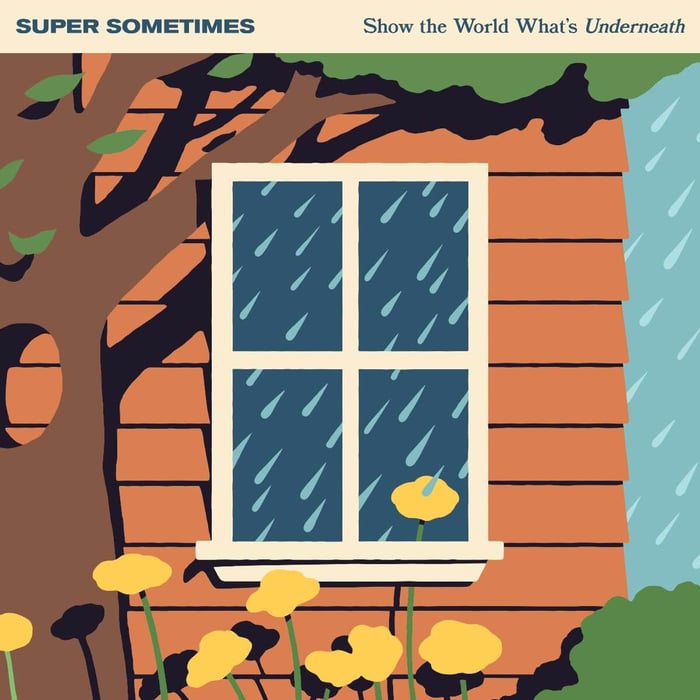
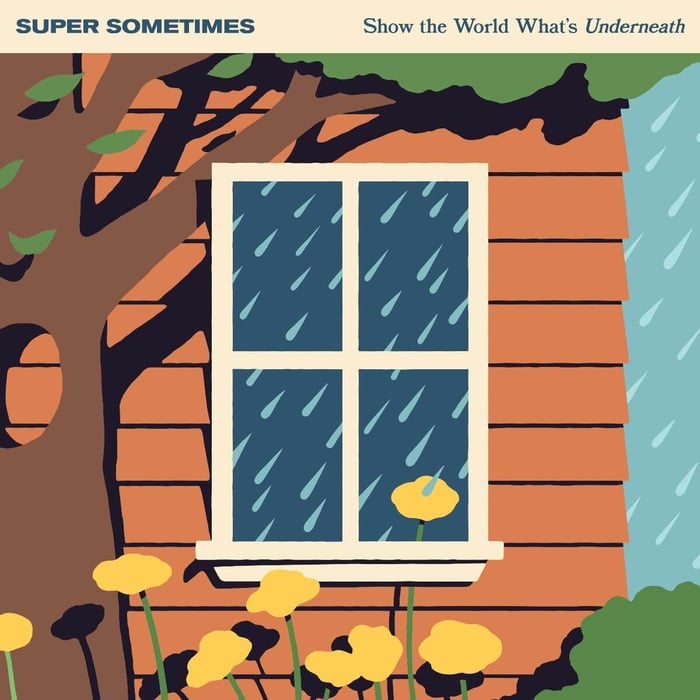
And the cover doesn’t hide what it is either—clean, direct, and genre-native, like it’s not asking for permission to be a pop-punk record in 2026.
If you want to keep up with Super Sometimes, they’re on Facebook.
So what’s actually underneath? Not mystery—maintenance
The title Show The World What’s Underneath sounds like a grand reveal, like we’re about to get some hidden, shocking truth. What you actually get is more grounded: a band taking emotional bruises and turning them into songs you can yell without thinking.
That might disappoint anyone hunting for reinvention. But I’d argue this record’s real flex is that it doesn’t pretend pain is sophisticated. It treats it like a fact. And pop-punk, at its best, has always been real reactions to real events—not abstract art, not elegant metaphors, just the messy human stuff with the volume turned up.
If I had to put a number on how well it pulls that off, I land around a 7/10 kind of effectiveness—not because it’s lacking heart, but because the next step is going to be individuality, not intensity.
Conclusion
Show The World What’s Underneath works when it stops trying to sound profound and just lets the feelings be loud. Super Sometimes don’t reinvent pop-punk; they remind you why the basics still hit when they’re delivered with actual conviction.
Our verdict: People who like pop-punk that’s blunt, hooky, and emotionally unguarded will eat this up—especially if you care about singalong choruses more than “originality points.” If you need every record to rewrite the genre rulebook, you’ll roll your eyes and call it familiar… then accidentally memorize the chorus anyway.
FAQ
- Is Super Sometimes trying to bring “classic” pop-punk back?
It doesn’t feel like cosplay. It feels like they grew up on that sound and are using it as a working language, not a museum exhibit. - What’s the best entry point track on the album?
“Afterthought” makes the mission obvious fast: rejection, release, and momentum. - Is “Always You” actually romantic?
Not really. It’s more like a love song written from inside a mismatch—catchy enough to sing, uncomfortable enough to recognize. - Does the album do anything new?
The structures are genre-faithful. The “new” part is the modern bite in the angst and the refusal to dress up the lyrics. - Who’s going to love this most—headphones people or show people?
Show people. The choruses are built to be shouted back, not quietly analyzed.
If you’re the kind of listener who wants to live with an album’s visual world too, you can grab a favorite album-cover poster from our shop—tastefully printed, no dramatic hard sell.
 | DISCOUNTGET 30% OFF*Use code on your next order:
|
* This post may contain affiliate links, meaning we earn a commission if you make a purchase through these links, at no additional cost to you.