Orchid Sound System: A Speaker for Shared City Sound Without Damage


 See more Architeg Prints stories on Google.
Orchid Sound System: A Speaker for Shared City Sound Without Damage
Orchid Sound System brings temporary communal music to city streets by clipping onto existing poles without drilling, permits, or permanent marks.
A Quieter Problem Beneath the City’s Noise
Walk through almost any American city without headphones, and you quickly realize that very little of the soundscape belongs to you. Traffic rumbles past, storefronts spill out carefully chosen playlists, and communal music usually requires a ticket, a bar, or a permitted block party.
Public space may be loud, but it isn’t often shared. When sound does become communal, there’s usually a price attached.
That tension sits at the heart of designer Mariami Kurtishvili’s graduate thesis at Berlin’s Universität der Künste. Her project, the Orchid Sound System, asks a deceptively simple question: how can a city host shared sound without requiring a permanent structure, a rented venue, or damage to the infrastructure already in place?
Who Gets to Listen in Public?
The question reaches back much further than modern street festivals. Public sound has long been shaped by access, status, and ownership. Ancient amphitheaters separated audiences according to social position, while Renaissance opera houses placed privilege directly into their tiered balconies.
The architecture itself told people where they belonged and, just as importantly, how close they were allowed to get to the performance.
Today, the setting has changed, but the basic arrangement remains familiar. Shared sound often happens inside private venues, behind ticket barriers, or through events that require permits and considerable planning. Even a modest permanent installation on a city street can involve approval processes, drilled holes, hired labor, and money that students, emerging artists, and small community groups may not have.
So the practical challenge becomes surprisingly radical: how do you give a city communal sound without owning a wall, renting a stage, or putting a single permanent mark on a streetlamp?
A Speaker That Borrows What the City Already Has
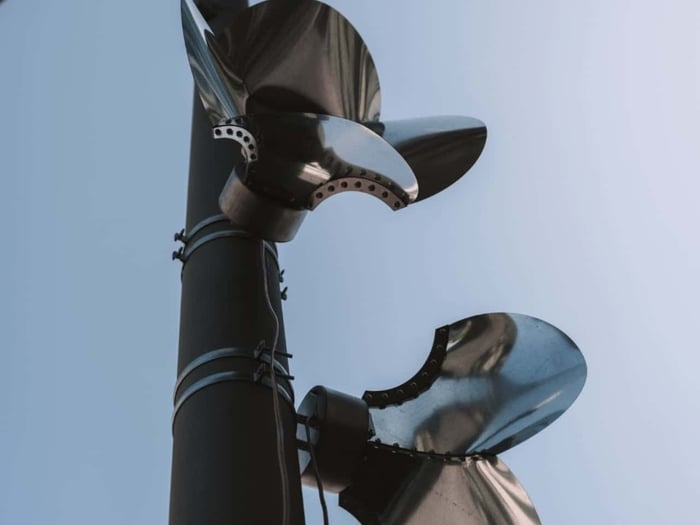
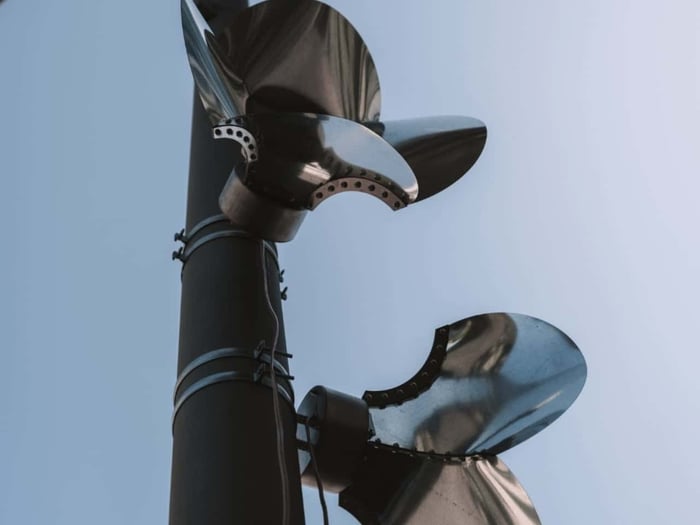
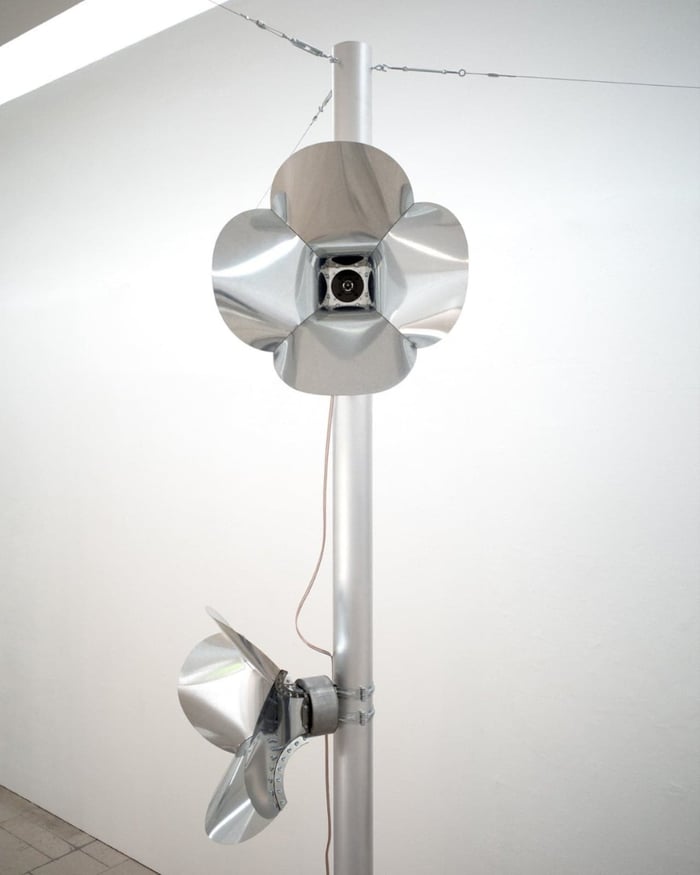
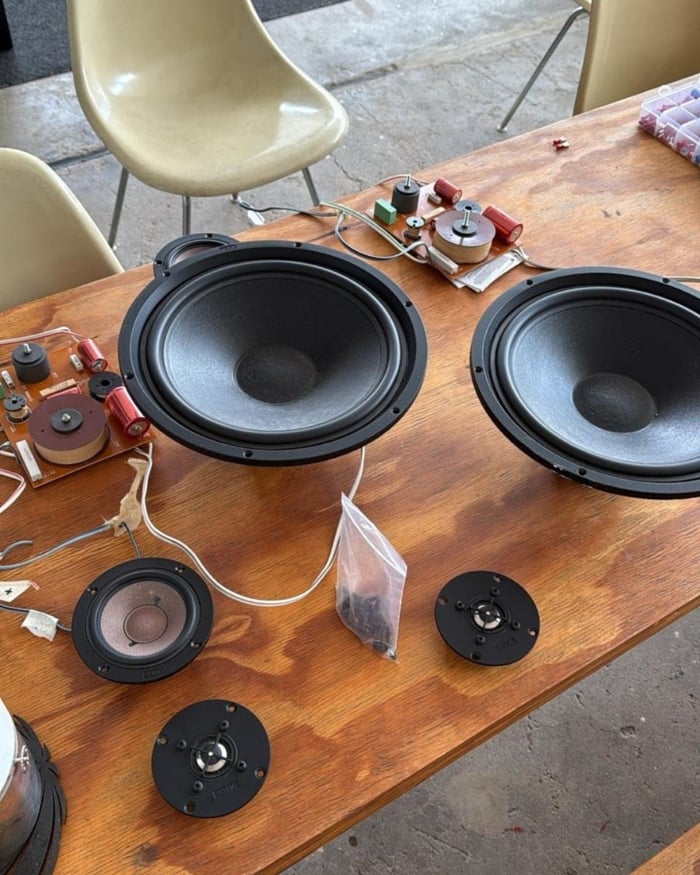
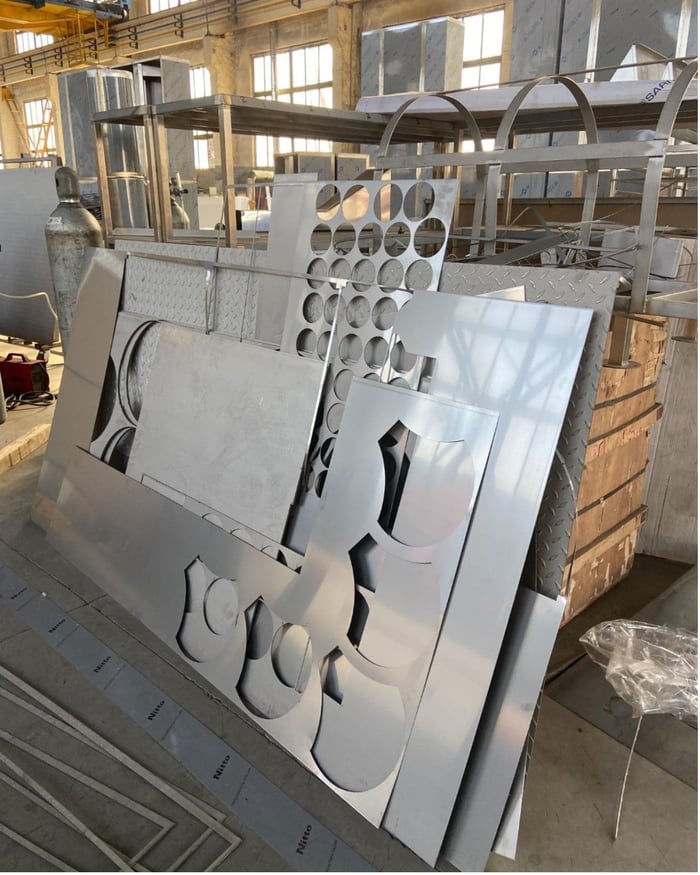
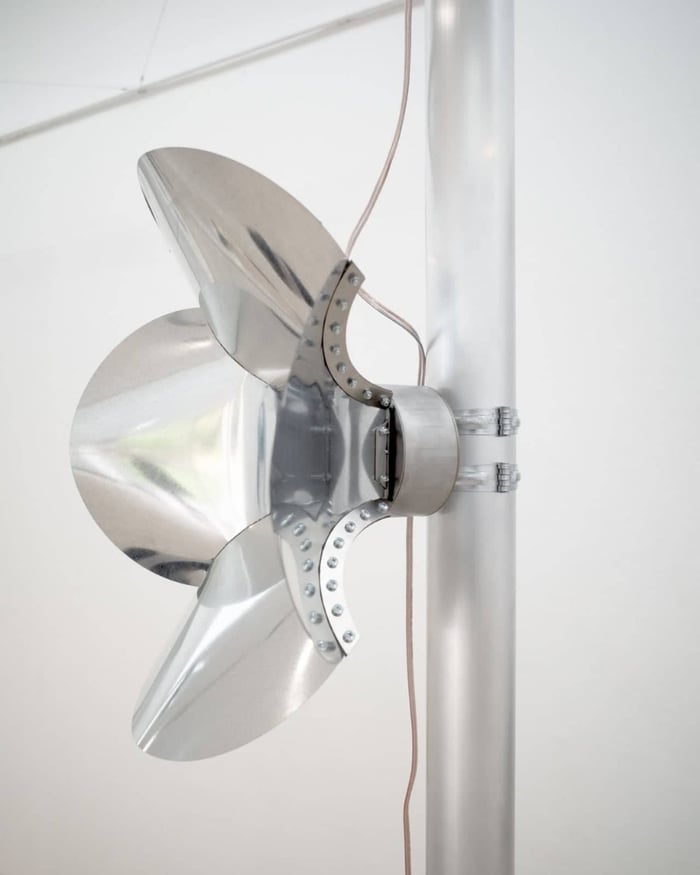
Kurtishvili’s answer was developed under architect Gustav Düsing at UdK Berlin. The Orchid Sound System uses stainless steel high-frequency horns attached to galvanized steel buckles—the same broad family of fastening hardware used with scaffolding and shipping crates.
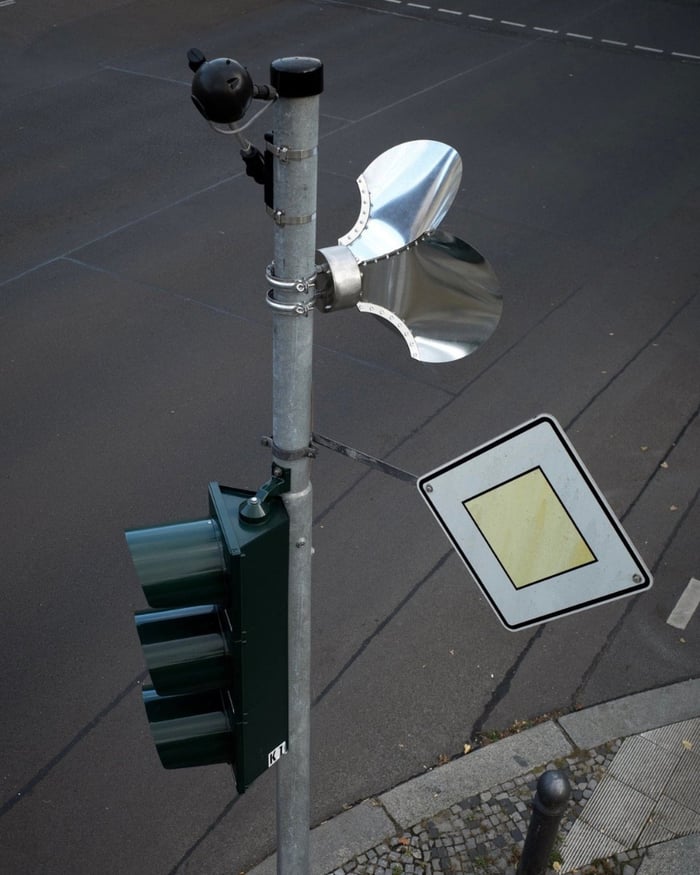
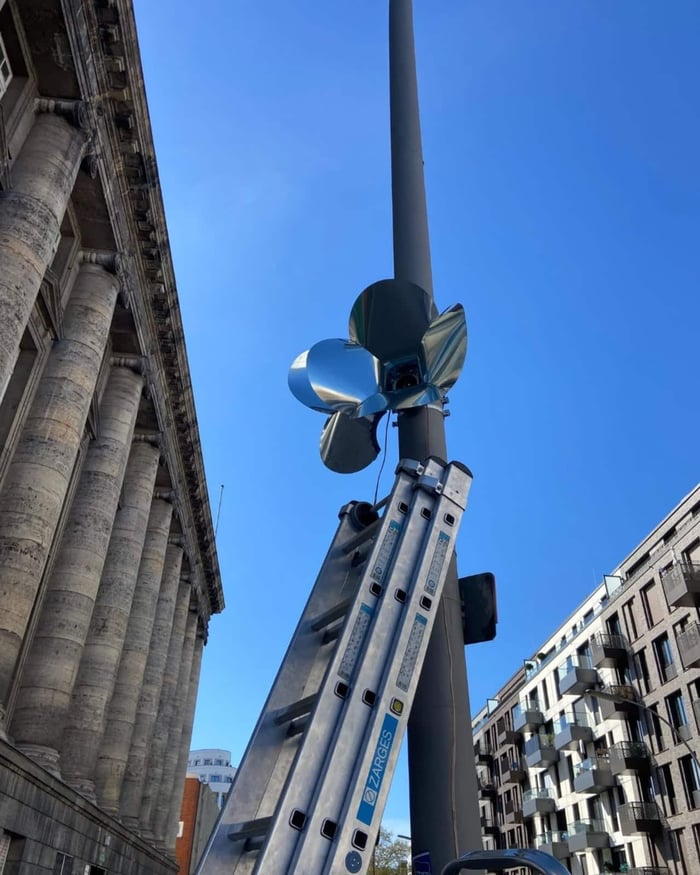
Rather than bolting speakers into masonry or drilling into poles, the horns wrap around the infrastructure already standing in the street. They can be fitted to light poles, traffic signal posts, and exposed pipes, using the height and stability of those objects without permanently altering them.
The system was presented as Kurtishvili’s master’s thesis, titled “Sound Systems: Building Sonic Territories,” within the design-build track. The project was advised by Düsing alongside Dr. Susanne Hauser and Julian Schubert.
Its physical approach is wonderfully direct. Attach the horns, play the session, then remove them. Once the installation is gone, the pole looks much as it did before anyone arrived. There are no screw holes to patch, no heavy structure left behind, and no monument demanding attention after the music stops.
Why the Name Orchid Matters
The project’s name isn’t simply a stylish flourish. It refers to epiphytic orchids, plants that grow on trees without taking nutrients from them like parasites. The tree provides a place to exist, while the orchid uses that position without destroying its host.
Kurtishvili’s horns operate according to a similar relationship with urban infrastructure. They borrow a pole’s height and stability for a limited period, then give something back in the form of sound, communication, and temporary meaning.
That exchange changes how an ordinary piece of street furniture is perceived. A light pole normally fades into the background. It’s something we walk past without a second thought. Add a speaker, however, and the same pole becomes a gathering point—a small, temporary territory shaped by listening.
The Power of Not Looking Like a Monument
What makes the concept especially appealing is its refusal to become monumental. The obvious route for an art and design project might have been a permanent sculpture: something large, polished, and instantly recognizable as an installation.
Instead, the Orchid Sound System is designed to disappear when the event is over.
That restraint matters. The listening sessions Kurtishvili staged around Berlin were not primarily about admiring an object. People gathered because sound had briefly become public again, attached to a pole near which a few dozen strangers happened to be standing.
There’s something wonderfully unforced about that. The hardware doesn’t shout, “Come look at this sculpture.” It simply changes the atmosphere of a familiar place. One moment, the pole is part of the city’s visual clutter. The next, it becomes the source of a shared soundtrack.

From Boomboxes to Designed Public Listening
Americans already know the informal version of this idea. Think of a boombox on a stoop, a car stereo carrying across a cookout, or the friend who brings a portable speaker to the park and suddenly becomes the evening’s unofficial DJ.
Those moments create shared sound without much ceremony. They can make a block feel more social, turning a routine gathering into something with a pulse.
The difference is that Kurtishvili adds intention and a practical design solution. Informal speakers work beautifully at a small scale, but organizing something more deliberate can introduce the very obstacles the project is trying to avoid: venue costs, ownership questions, equipment placement, and the risk of damaging public property.
The Orchid Sound System addresses those issues through temporary attachment. Nobody needs to own the pole. Nobody needs to rent a hall. The horns can be installed for an evening, used as part of a listening session, and removed without leaving the city worse for wear.
A Small Design Gesture With a Larger Argument
The project also makes a broader claim about how cities can support culture. Urban infrastructure is usually treated as fixed and functional. Poles carry lights, signals, and cables; sidewalks move people; walls separate spaces.
But these existing elements can host temporary cultural activity without being permanently redesigned. The city’s “bones,” as it were, already provide the height, position, and visibility needed for a new kind of public event.
That idea feels especially relevant as public spaces become increasingly commercialized and monitored. More areas are shaped by private businesses, branded experiences, ticketed events, or rules that quietly determine who can gather and what can happen there.
The Orchid Sound System doesn’t solve all of those tensions. A speaker alone can’t make a city automatically inclusive. It can, however, offer a modest alternative to the assumption that public culture must begin with construction, ownership, or a large budget.
Will the Orchid Sound System Leave the Thesis Studio?
Whether the project will move from graduate thesis to actual manufacturing remains uncertain. Design-build projects don’t always make that transition easily, and turning a thoughtful prototype into a widely usable system involves practical questions that the thesis stage may not answer.
Still, the central idea has value even if this particular system never becomes commercially available. A city can host music, messages, and gatherings through temporary interventions that use what is already there.
That’s the hopeful part. The project doesn’t ask for a new plaza or an expensive permanent structure. It imagines a speaker that clips onto a lamppost, plays for a night, gives strangers a reason to pause together, and disappears before morning.
Conclusion: Can a City Sound Like It Belongs to Everyone?
The Orchid Sound System turns a simple fastening method into a thoughtful argument about public life. By borrowing existing infrastructure without damaging it, the project creates a temporary space for shared listening—one that feels less like a monument and more like a brief, unexpected gift from the city to itself.
Would you stop and listen if your usual street suddenly became a tiny outdoor concert space?
FAQ
- What is the Orchid Sound System?
The Orchid Sound System is a temporary public speaker concept created by designer Mariami Kurtishvili. It uses stainless steel high-frequency horns attached to galvanized steel buckles so the system can be mounted without drilling or permanent fixtures. - Where was the Orchid Sound System developed?
The project was developed at Berlin’s Universität der Künste under architect Gustav Düsing. It was presented as Kurtishvili’s master’s thesis in the design-build track. - Why is the project called Orchid?
The name refers to epiphytic orchids, which grow on trees without drawing nutrients from them as parasites do. The speaker system similarly uses city infrastructure for support without permanently altering it. - What kinds of places can hold the speaker system?
The horns are designed to wrap around existing structures such as light poles, traffic signal posts, and exposed pipes. The project’s central idea is to use infrastructure that is already present in public space. - Is the Orchid Sound System available to buy?
The project’s future manufacturing plans remain uncertain. It currently stands as a graduate design-build thesis and a proposal for temporary, communal sound in urban environments.
Bring the spirit of shared listening home with a favorite album cover poster from Architeg Prints. It’s a warm, visual reminder of the music and public moments that stay with us long after the speakers go quiet.
 | DISCOUNTGET 30% OFF*Use code on your next order:
|
* This post may contain affiliate links, meaning we earn a commission if you make a purchase through these links, at no additional cost to you.