Patti Smith Memoir: Gratitude, Grief and Dua Lipa in London



Patti Smith Memoir: Gratitude, Grief and Dua Lipa in London
Patti Smith memoir Bread Of Angels becomes the heart of an emotional London conversation with Dua Lipa, touching on love, loss, creativity and kindness.
A Meeting of Two Generations
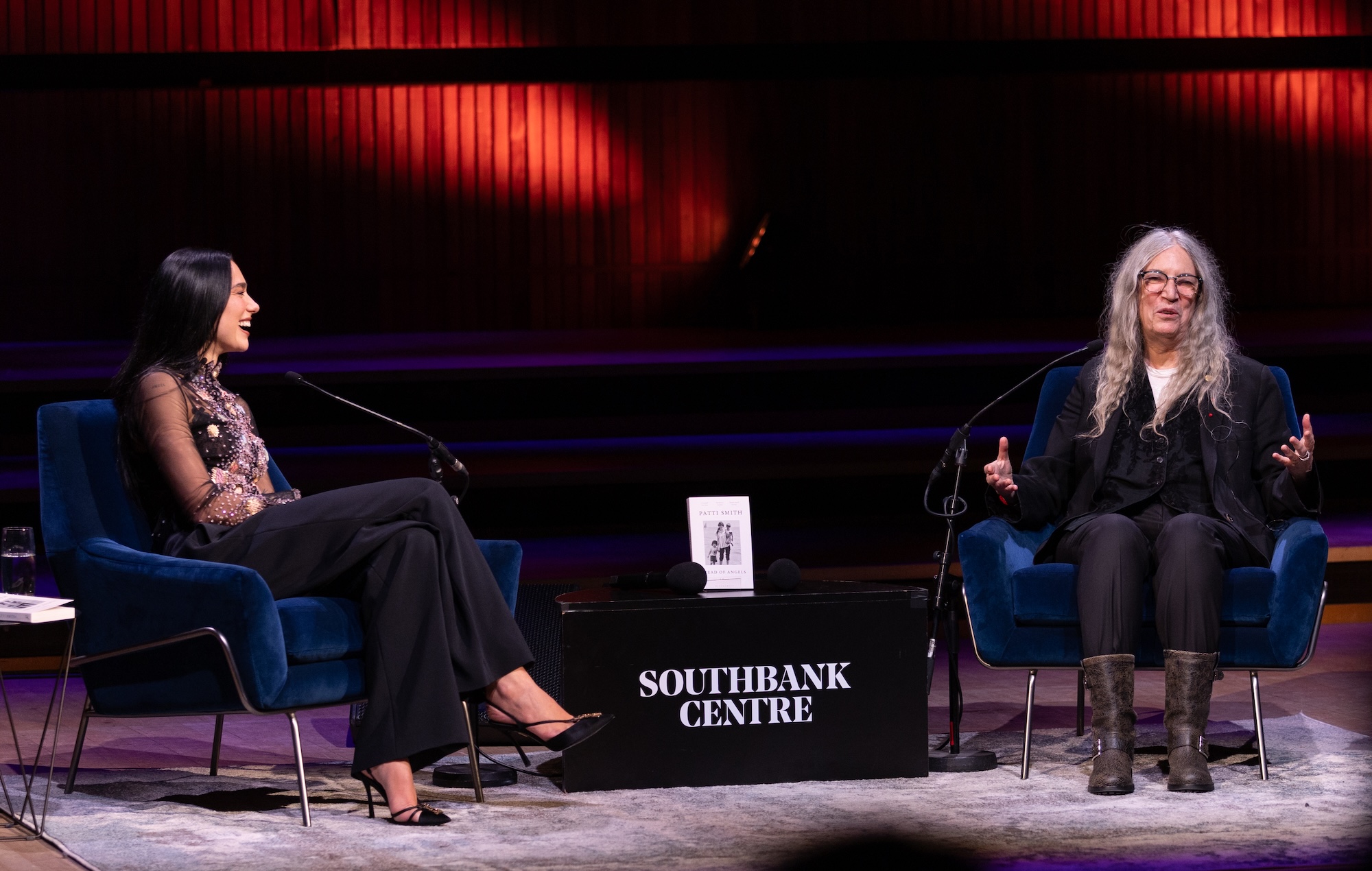
Some literary evenings feel less like a formal interview and more like being invited into a living room filled with stories. That was the mood when Patti Smith joined Dua Lipa at London’s Royal Festival Hall for a heartfelt conversation about Bread Of Angels, Smith’s latest memoir.
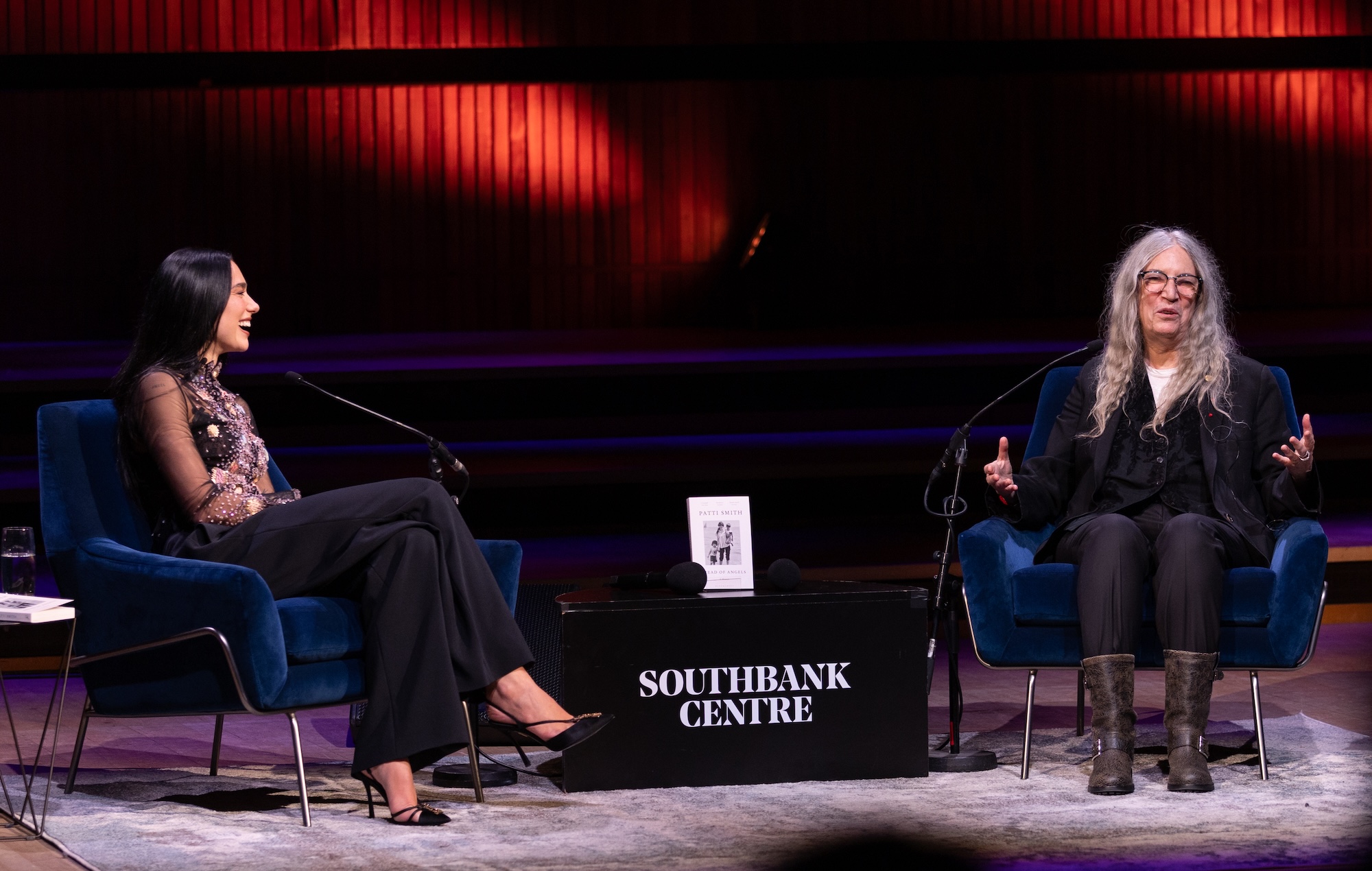
The appearance took place during the London Literature Festival, which Lipa curated alongside her Service95 Book Club. Rather than treating the evening as a standard author interview, Lipa guided Smith through the memories, relationships and questions that shape Bread Of Angels. The result was intimate, thoughtful and, at several points, visibly moving.
Published the previous year, Bread Of Angels follows Smith’s earlier nonfiction books Just Kids, M Train, Devotion and The Year Of The Monkey, along with her poetry collections. The memoir begins with her childhood in Philadelphia before widening into a portrait of the life she has built through music, writing, friendship and artistic rebellion.
One of the book’s most distinctive threads is its use of four dresses. Each garment was given to Smith by someone meaningful, including her late husband Fred Sonic Smith, her brother Todd and her friend and photographer Robert Mapplethorpe. The dresses act almost like stitched bookmarks, guiding the reader through different chapters of her life.
A Memoir Built From Gratitude
The heart of Smith’s book is not simply her own story. It’s the story of the people who helped make that life possible.
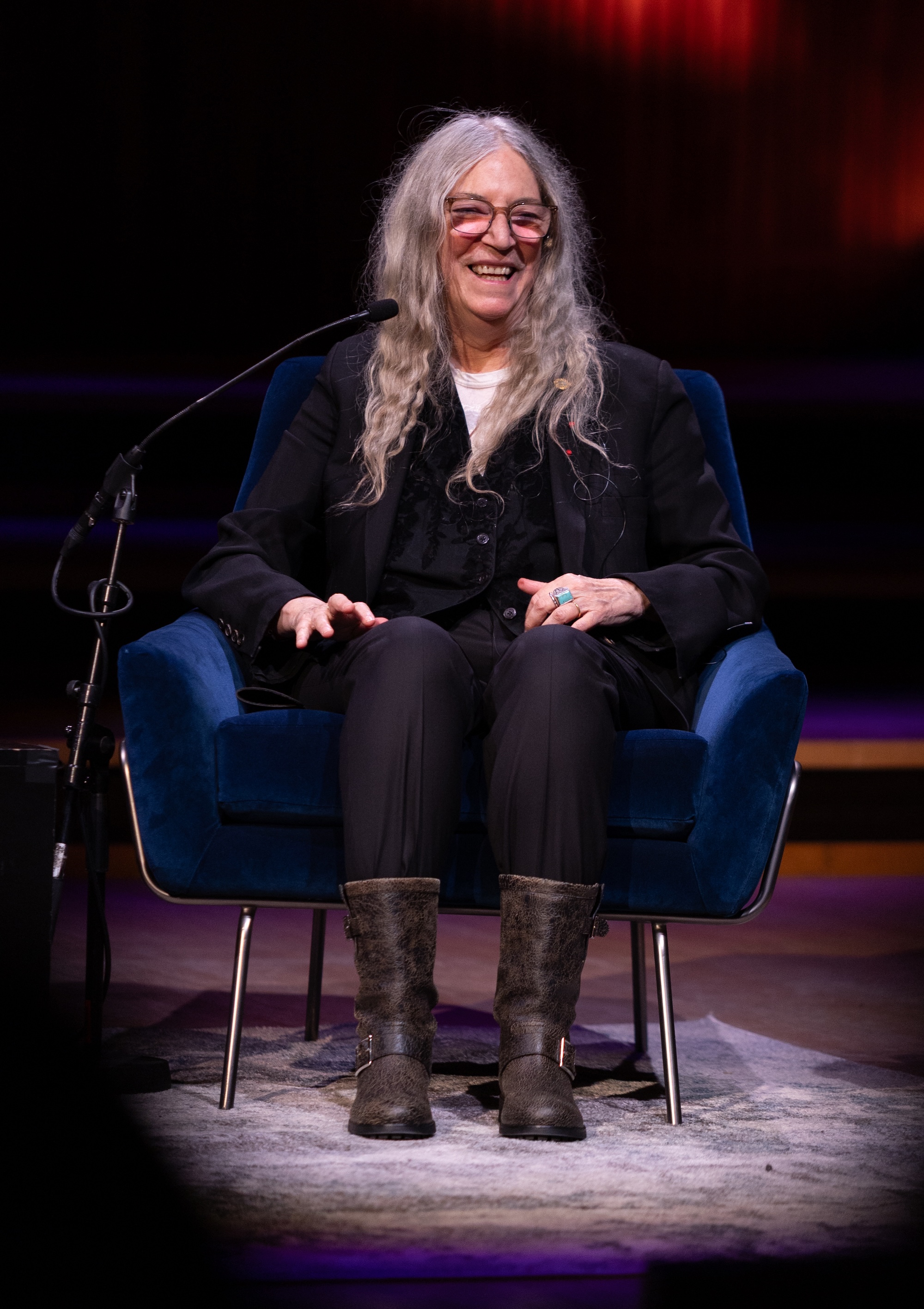
Smith explained that writing the memoir gave her a chance to recognize “all the people that helped form me,” including the people she rebelled against. Her parents, siblings, teachers, mentors, loves and chance encounters all became part of the emotional architecture of the book.
“Even though it’s my own story, it shows that we are also a product of all the wisdom and all the experience that we have with others.”
— Patti Smith
That idea separates Bread Of Angels from Just Kids. Smith described Just Kids as a book centered on Robert Mapplethorpe, written after he asked her to tell their story shortly before his death. The newer memoir, by contrast, opens the door much wider.
“I wanted to give the people Robert in Just Kids,” Smith said, “but in this book, I wanted to give them all of the people that helped me along the way.”
Why Smith Returned to Memoir
Smith admitted that she never expected to write another memoir. After the demands of Just Kids, she had promised herself she was finished with the form.
“I swore I’d never write another memoir,” she recalled.
Then came a dream. In it, a messenger arrived at her home carrying a white book. When Smith opened it, she found a complete account of her life, divided into sections by different dresses.
The dream stayed with her because it felt like a summons. Smith imagined the people in her life calling out, asking not to be forgotten. Their stories, she suggested, were waiting alongside her own.
That makes the memoir’s structure feel almost magical without losing its human grounding. The dresses aren’t just objects; they become emotional signposts. They mark time, memory and the invisible ties between a person and the people who leave an imprint.
The Meaning Behind Bread Of Angels
The title itself arrived through a little creative mischief. Smith initially wanted to call the book Dancing Barefoot, after the song from her 1979 album Wave. But someone else claimed the title before she could use it.
So she returned to the manuscript and found a phrase connected to small, unexpected acts of kindness. These are the gestures that remain in the mind precisely because nobody planned them or asked for credit.
Smith realized that gratitude was one of the book’s central themes. The title Bread Of Angels grew from that realization.
“I stole it from myself,” she joked.
When Lipa asked what her own “bread of angels” might be today, Smith recalled a powerful experience in Spain just days earlier. Around 3,000 people gathered in choirs to sing “People Have The Power,” the 1988 song she co-wrote with Fred Sonic Smith.
The moment carried special weight because Fred had hoped the song would one day become useful to people searching for strength, words and an anthem of their own. He died before witnessing that transformation.
Smith said she could only imagine how much he would have loved to see the song reach that point.
She also described Lipa’s care in preparing for their conversation as one of her current acts of kindness. Other examples included a recent conversation with Pope Leo XIV, her bass player repairing something before a show, strangers greeting her on the street and a hotel housekeeper quietly helping during her travels.
That’s the charm of the idea: gratitude doesn’t always arrive wearing a cape. Sometimes it fixes a cable, says hello or makes a difficult day slightly easier.
Questioning Everything
Another important idea in Bread Of Angels is Smith’s motto: “question everything.”
She traced that habit back to her father, who enjoyed playing devil’s advocate. He would argue about the Old Testament, debate whether UFOs were real and compare Plato with Aristotle. For Smith, those arguments became an informal education.
She explained that questioning can begin as curiosity, arrogance or rebellion. Eventually, though, it becomes a search for answers, wisdom and a small kernel of truth that might help someone grow into a better person.
Lipa prompted Smith to remember the first time she truly challenged her father. It happened when she was 12 during a visit to the Philadelphia Museum of Art.
Her father admired Salvador Dalí, while Smith was more drawn to Picasso. He was appalled by her preference, which surprised her because she had always viewed him as open-minded. His resistance to Cubism became their first real argument.
The second argument was over the Rolling Stones. Even family debates, it seems, can have a soundtrack.
Dylan, CBGB and Finding Her People
Music naturally fills the pages of Bread Of Angels. Smith writes about figures including Richard Hell, Tom Verlaine and Bob Dylan, who supported her early work.
During the conversation, Lipa highlighted a passage about Smith meeting Dylan and people in his circle before leaving for CBGB, the New York home of emerging artists and the unknown.
Smith clarified that turning toward her own scene didn’t mean she was ungrateful for the people she had encountered elsewhere. She had learned a great deal from Dylan and remained appreciative of those lessons.
That tension—between honoring an influence and still needing to find your own people—is familiar to anyone who has ever stepped away from a room that helped shape them. Sometimes independence isn’t rejection. It’s simply the next verse.
Love, Loss and an Unexpected Valentine
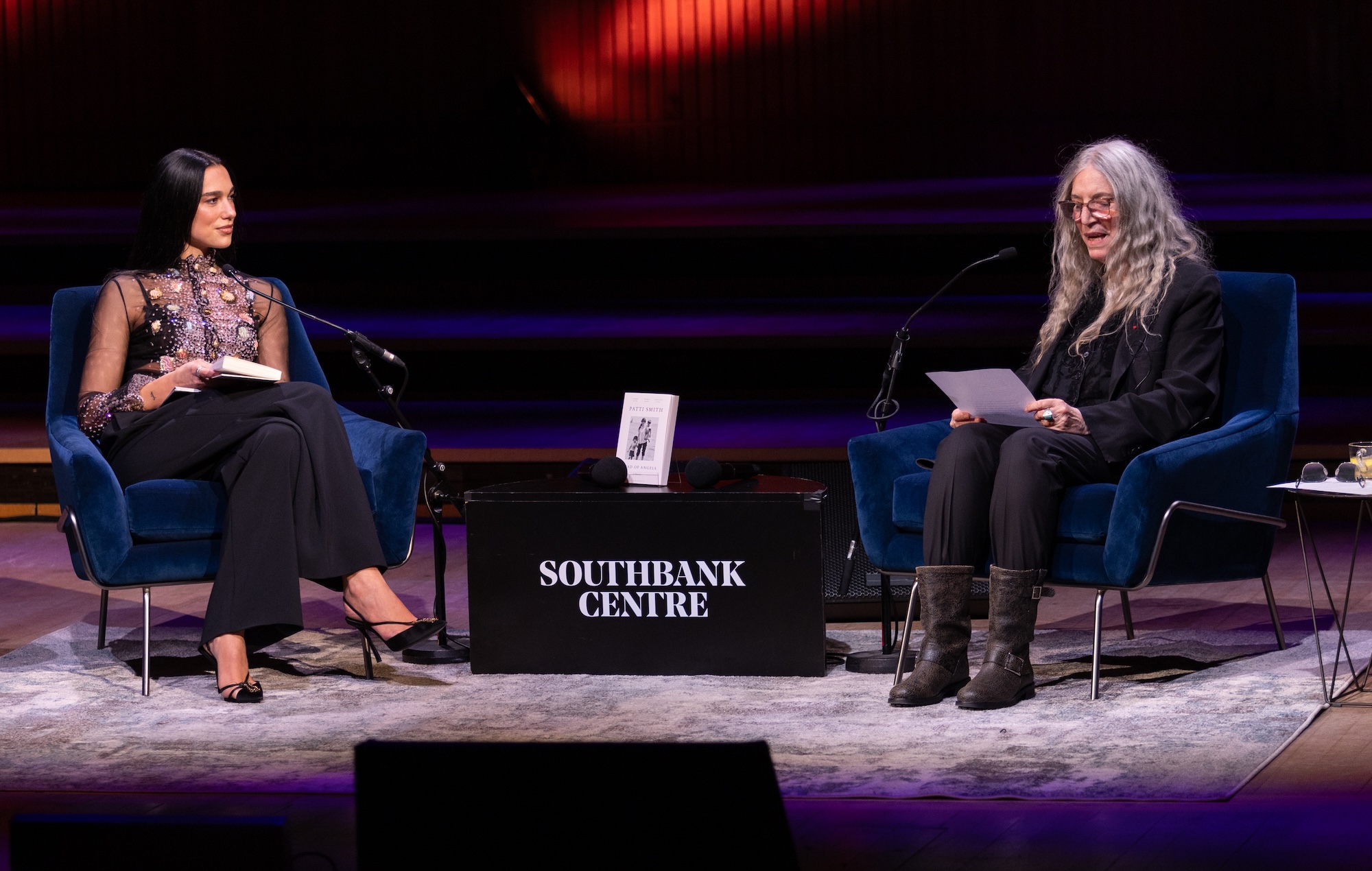
Smith also shared a story about Michael Stipe, who called her unexpectedly on Valentine’s Day soon after Fred’s death. At the time, Smith and Stipe had not yet met.
Stipe was in San Sebastián, Spain, and was intoxicated when he phoned. He told Smith that he had been thinking about her and knew that her husband had died. She didn’t need a Valentine, she explained, but the gesture touched her deeply. Over time, Stipe became one of her closest friends.
The evening grew especially emotional when Lipa spoke about Fred and described the memoir as divided into “before Fred and after Fred.”
Smith became tearful while remembering the first time she met him. She said it felt like one of those cinematic moments when time stops. She immediately knew he was the person she would marry—even though, as she smilingly admitted, she had never wanted to get married.
Creative Freedom in a Faster World
As the main conversation ended, broadcaster and writer Zakia Sewell joined Lipa and Smith to ask questions submitted by the audience.
One attendee asked how the two artists viewed their different paths through the music industry and whether artists still have the same freedom to develop creatively.
Smith’s answer was direct: freedom has not disappeared. She rejected the idea that some artists are more “organic” than others, suggesting instead that people simply find different ways to communicate.
She mentioned seeing Rosalía perform and praised the discipline and training behind the show. Smith also said she had watched videos of Lipa, though she had not yet seen her perform live. When Smith was beginning her own career, she didn’t have a fully formed plan beyond making poetry more exciting.
Lipa offered a different perspective. Creativity itself hasn’t changed, she said, but the environment has become faster, with shorter attention spans and pressure to constantly produce and share more.
She also felt that young artists now receive less grace while they are still learning. In earlier eras, an artist could make mistakes privately and develop over time. Today, those mistakes can be scrutinized, recorded and posted almost immediately.
Smith agreed. “You have to make all your mistakes in front of everyone now,” she said.
The Songs They Would Cover
Lipa asked Smith which of her songs she would choose to perform. Smith answered with enthusiasm: “Houdini.”
Lipa selected “Dancing Barefoot,” describing it as sensual and visceral, with a feeling of love for something larger than ourselves. It was a fitting choice, given the song’s connection to the memoir’s original working title.
One can’t help imagining the wonderfully eccentric rehearsal that combination might produce: Smith’s raw poetic force meeting Lipa’s polished pop instinct. Honestly, someone should probably start a petition.
Smith’s Advice to Writers
The evening closed with Smith offering advice to the version of herself who was 30 years old.
She said imagination came naturally to her, but grammar, writing and sentence structure were difficult. She had to keep reading, studying other writers and developing a disciplined daily practice.
Her advice was simple: write every day.
Smith compared writing to running. Someone wouldn’t call themselves a runner while only running a few times a month, she suggested. The writing muscle needs regular use, even when the result feels awkward or disappointing.
“If you want to be a writer, then write every day. It’s like a muscle.”
— Patti Smith
The Festival Continues
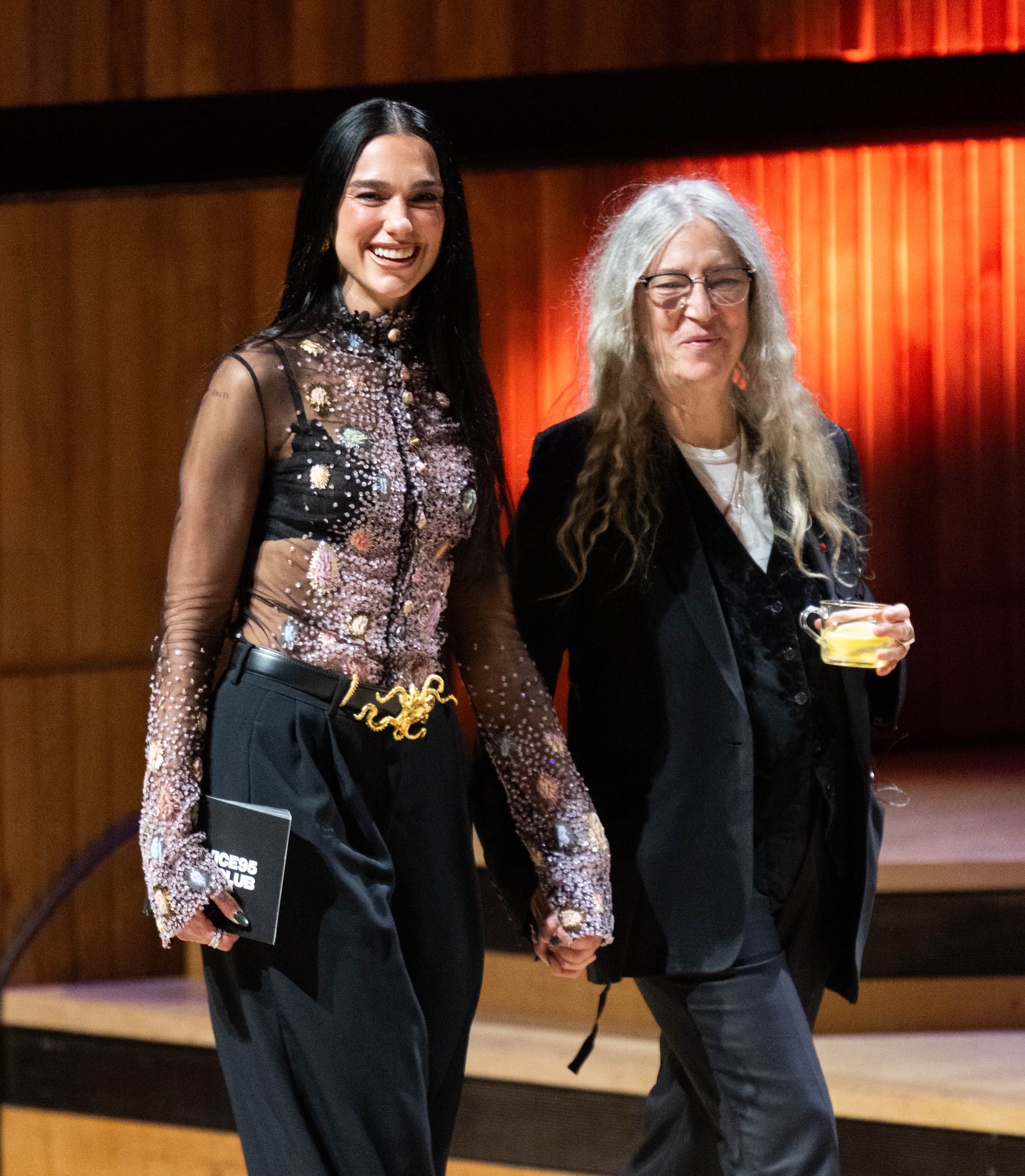
The London Literature Festival continues at the Southbank Centre through November 1. Its program includes Kae Tempest, Malorie Blackman, Ta-Nehisi Coates and other writers, poets and thinkers.
Lipa previously described curating the lineup with her Service95 Book Club as a genuine joy. She wanted to bring together established icons and emerging voices, giving audiences the chance to reconnect with familiar names while meeting artists who might be new to them.
She also looked forward to experiencing the festival from both sides: taking part in conversations and sitting among the audience at the celebrated venue.
Smith’s own schedule will continue beyond London. She has been confirmed for two European festivals the following summer, where she and her quartet are set to perform at Denmark’s Roskilde and Poland’s Open’er.
Conclusion
Patti Smith’s conversation with Dua Lipa showed why stories of music and literature continue to overlap so beautifully. Bread Of Angels isn’t only a record of one artist’s life; it’s a thank-you note to the people, arguments, accidents and acts of kindness that shaped her. Which small gesture from your own life still feels like a piece of “bread of angels”?
FAQ
- What is Patti Smith’s Bread Of Angels about?
It is a memoir about Smith’s upbringing, artistic life and relationships, organized in part around four meaningful dresses given to her by important people. - Why did Patti Smith write another memoir after Just Kids?
Smith said she had sworn never to write another memoir, but a dream about a book divided by dresses convinced her that the stories of many people who shaped her life still needed to be told. - What does the title Bread Of Angels mean?
The title refers to small, unplanned acts of kindness that remain memorable. Smith chose it after realizing that gratitude was one of the memoir’s central themes. - What song would Patti Smith cover by Dua Lipa?
Smith chose “Houdini,” while Lipa selected Smith’s “Dancing Barefoot” as the song she would perform. - What writing advice did Patti Smith share?
Smith advised aspiring writers to write every day, comparing regular practice to training a muscle or maintaining the discipline of a runner.
Bring the spirit of Patti Smith’s music, poetry and visual world into your space with a favorite album cover poster from Architeg Prints. It’s a warm, lasting way to keep that creative energy close.
 | DISCOUNTGET 30% OFF*Use code on your next order:
|
* This post may contain affiliate links, meaning we earn a commission if you make a purchase through these links, at no additional cost to you.