Philharmonic BMR Tower Speaker Review: Unraveling the Unique BMR Audio Experience



Philharmonic BMR Tower Speaker Review: Unraveling the Unique BMR Audio Experience
Explore the remarkable Philharmonic BMR Tower speaker known for its balanced-mode radiation technology and exceptional sound clarity.
When I first laid eyes on the Philharmonic BMR Tower, I thought, “Here comes another three-way floorstanding speaker.” But peeling back the grille revealed a fascinating secret: those midrange drivers were tiny, barely bigger than tweeters with a flat radiating surface. These aren’t your run-of-the-mill drivers—they’re BMR (balanced-mode radiation) drivers, the heart of this speaker's unique identity.
This technical wizardry translates into some immediately striking qualities: ultra-low distortion, bass that dives deep yet stays crisp, extended dynamic range, and a refreshing absence of that “boxy” sound many floorstanders suffer from. But—and here’s the kicker—the Philharmonic BMR Tower is like a rare breed that demands a little extra TLC to shine. It’s sensitive to room acoustics and benefits greatly from some thoughtful equalization. So buckle up; this is no quick, casual listen, but a rich, rewarding journey into sound.
The Physical Beauty and Design of the Philharmonic BMR Tower
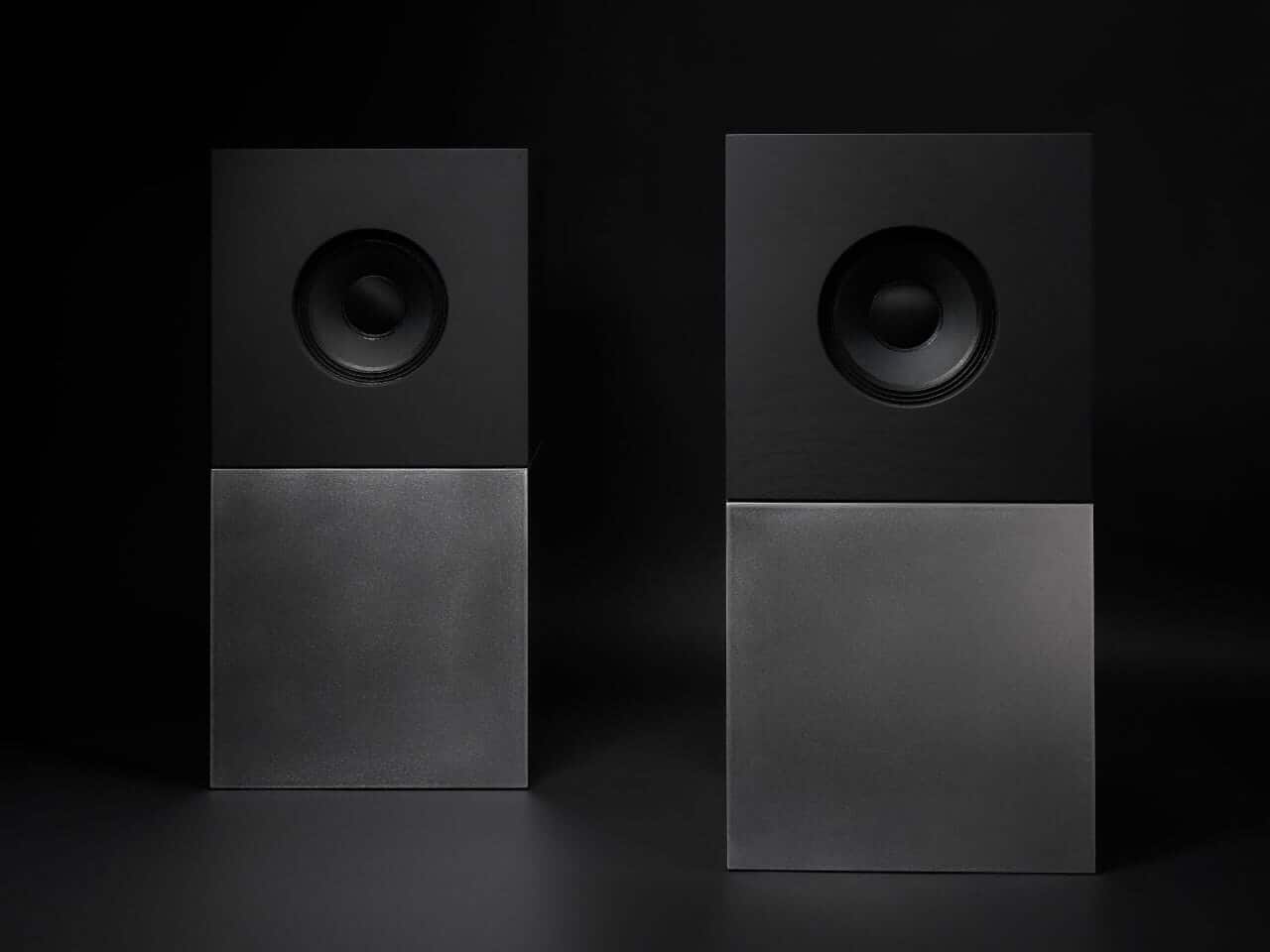
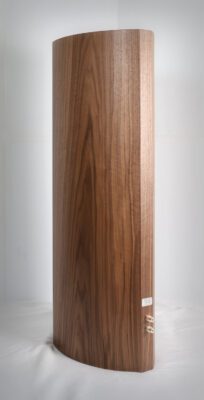
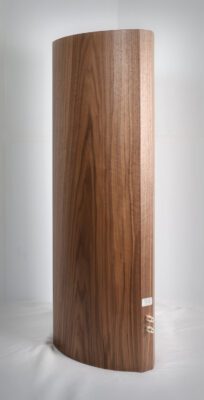
At $4,400 a pair, the BMR Tower is a moderately sized floorstanding marvel. It flaunts an elegantly finished cabinet with a unique silhouette—the front curves smoothly into the sides, and the sides curve inward almost to a sharp point at the back. This shape is a clever nod to the legendary Lafleur X1, crafted to reduce diffraction and smooth out off-axis sound.
Inside, the BMR Tower sports a three-way lineup:
- An 8-inch “Revelator” woofer from Scan-Speak in a transmission-line setup,
- A 4-inch RAAL ribbon tweeter,
- Two tiny midrange BMR drivers arranged in an MTM (midrange-tweeter-midrange) configuration near the top,
- Woofer positioned halfway up the cabinet,
- And a spacious front port for the transmission line.
The grilles, magnetically attached, are best left off when you’re really diving into music. They cause some irregularities in response, especially around the tweeter and midrange.
Crossover points sit at 850 Hz (second-order Linkwitz-Riley between woofer and midrange) and 3.5 kHz (fourth-order Linkwitz-Riley between midrange and tweeter).
Although not visually related, the BMR’s approach to driver size and crossover reminds me of the classic Acoustic Research AR 3a’s design philosophy, especially its goal for wide dispersion. And my ears agree—these speakers beam their sound widely, nearly spanning 180º horizontally, which is rare for a floorstander.
Why Room Acoustics Are Make-or-Break
Wide dispersion speakers like the BMR Tower flourish only in the right room environment. You need listening spaces with “soft” acoustic character and well-damped sidewalls, especially at the first reflection points.
Some audiophiles argue that strong early sidewall reflections create a sense of “spaciousness” and “immersion,” but that really applies only to lower frequencies. At high frequencies—say around 10 kHz—early reflections introduce grain and noise, muddying the sound rather than enhancing it. I’ve heard this in poorly designed concert halls where the treble is harsh and grating, not something you want in your intimate listening room either.
Dennis Murphy, the designer and a semi-pro orchestral string player, aimed to mimic the immersive sound of being in an orchestra. But the real orchestra experience doesn’t come from early high-frequency reflections off close walls; the halls are simply too large with far-off surfaces creating diffuse sound fields instead.
This means in your living room, early high-frequency reflections typically arrive too soon unless you tame them with acoustic treatment. If your speakers throw too much high-frequency energy far off-axis, you’ll need to soften those reflection points or risk a harsh listening experience.
The bottom line? A wide dispersion speaker demands patience and care in room setup. But it’s worth it, because that dispersion leads to a natural, non-boxy sound—a sound that your brain perceives as coming from nowhere in particular, not just a speaker cabinet.
Fine-Tuning the Philharmonic BMR Tower for Optimal Sound
Low distortion and minimal diffraction mean that the BMR Tower can sound gorgeous—if you get the frequency balance right. Philharmonic’s own measurements show a smooth, flat response, but closer inspection and measurements of their HT Tower sibling suggest a little dip below 300 Hz that might result in a thin or midrange-forward sound in some rooms.
Floorstanders often suffer a “floor dip” in bass response depending on placement, and the BMR Tower was no exception in my room, even when positioned far from walls. Placing the speakers closer to corners can naturally fill some of this dip, reducing the need for equalization.
With some careful EQ—boosting the sub-300 Hz area and tweaking the upper frequencies—the BMR’s thinness fades away, revealing a sound that’s natural, balanced, and smooth. You might also want to dial down the treble a bit, a trick that dates back to the days of Acoustic Research, who found reducing top-end levels essential for their wide-dispersion designs.
Another fascinating tweak, suggested by audio guru Siegfried Linkwitz, is introducing a dip around 3-4 kHz. This compensates for differences between frontal and diffuse field ear response, especially with orchestral recordings.
One caveat is the tweeter’s vertical beaminess, which means listening height matters a lot. Sitting right at the midrange/tweeter level helps the sound blend beautifully; otherwise, the tweeter can sound like a separate “voice” jumping out.
So, to get the most from the BMR Tower:
- Sit about 20 degrees off-axis horizontally,
- Listen at mid-tweeter height,
- Apply some EQ to fill the bass dip and tame the treble.
It’s a bit of work, but worth every minute.
What Does the Philharmonic BMR Tower Sound Like?
Enough theory—how does it actually perform? When properly dialed in, the BMR Tower delivers a sound that’s genuinely impressive.
Bass is deep and well-defined thanks to Paul Kittinger’s expert transmission line design, coaxing full extension from a modest driver size.
The soundstage is wide and airy, with that elusive quality of “unboxiness.” Detail reproduction is startlingly clear, and the speakers don’t draw attention to themselves as distinct sources, at least up until the very highest frequencies.
Some standout listening moments:
- Reference Recordings’ Reveries with the Minnesota Orchestra captures the sublime scale and spaciousness of a live orchestra. The “Swan of Tuonela” particularly felt wide and immersive.
- Esa-Pekka Salonen’s Mahler 4th with the Los Angeles Philharmonic, recorded in UCLA’s Royce Hall, balances delicacy and power without distortion, sailing through dynamic spikes effortlessly.
- Chamber music, like Peter McGrath’s Carpenter Violin and Piano Sonata, sounded realistic and detailed—though the RAAL ribbon tweeter demands volume moderation to avoid harshness.
- Freddy Kempf’s Rachmaninov piano performances on BIS come through with grand scale, texture, and the authentic presence of a concert grand piano.
- Even spoken word shines: The Adventures of Sherlock Holmes, Part 1, felt dramatic and vivid, with voice reproduction that, while not as natural as some speakers specialized for vocals, was compelling and detailed.
Bear in mind, all these sonic delights depend on careful setup, positioning, and a bit of EQ magic. But the payoff is substantial.
Wrapping It Up: The Philharmonic BMR Tower in Perspective
As Paul Seydor wisely put it,
“the critic must grant the artist his premises.”Let’s honor Dennis Murphy’s vision of ultra-wide horizontal dispersion, which though ambitious, does come with trade-offs. The speaker sacrifices some coherence around the midrange-tweeter assembly, and the extreme dispersion might not suit every taste.
Still, at this price point, the Philharmonic BMR Tower is an impressive achievement. It shines in low distortion, bass extension, clarity, and spatial scale—offering a taste of what premium, price-no-object systems strive for.
Amplifier-wise, the BMR Towers loved the power and poise of the Schiit Tyr monoblock power amplifiers I used, but less costly amps, including Class D designs, can also do the job well—especially when paired with a streaming DAC that includes DSP EQ for room tuning.
All in all, this speaker asks a bit from you—some effort, some adjustment—but rewards you with an extraordinary listening experience that touches the soul of the music.
Philharmonic BMR Tower Specifications & Pricing
- Type: Floorstanding three-way, four-driver speaker with transmission-line bass loading
- Drivers: One 8" Scan-Speak Revelator woofer, two 2.5" BMR drivers, one RAAL 64-10X ribbon tweeter
- Frequency Range: 25 Hz–20 kHz (+1.5 dB, –3 dB)
- Sensitivity: 86 dB (2.83 volts, 1 meter)
- Impedance: 6 ohms
- Dimensions: 12" x 44" x 15.5"
- Crossovers: 850 Hz (2nd order Linkwitz-Riley), 3,800 Hz (4th order Linkwitz-Riley)
- Price: $4,400 per pair
FAQ
- What makes BMR drivers different from traditional drivers?
BMR drivers use balanced-mode radiation, where the cone oscillates in a way that provides a flat radiating surface, yielding wide dispersion and exceptionally low distortion. - Is room treatment necessary with the Philharmonic BMR Tower?
Yes, to tame high-frequency reflections and get the most natural sound, acoustic treatment, especially on sidewalls, is highly recommended. - Can I use any amplifier with these speakers?
While powerful amplifiers enhance performance, these speakers can be driven well by moderate power amps, including certain Class D models, especially when paired with DSP EQ. - Do the speakers require EQ for best sound?
Some EQ is helpful to compensate for bass floor dips and treble brightness, ensuring a balanced, natural sound in most rooms. - How important is listener positioning?
Very important—optimal height around the tweeter and about 20 degrees off-axis horizontally will yield the most coherent and smooth sound.
If this deep dive into the Philharmonic BMR Tower’s fascinating technology and sound has you inspired, consider enhancing your listening space with stunning album cover posters available at Architeg Prints. They’re the perfect visual companion to your music experience.
 | DISCOUNTGET 30% OFF*Use code on your next order:
|
* This post may contain affiliate links, meaning we earn a commission if you make a purchase through these links, at no additional cost to you.