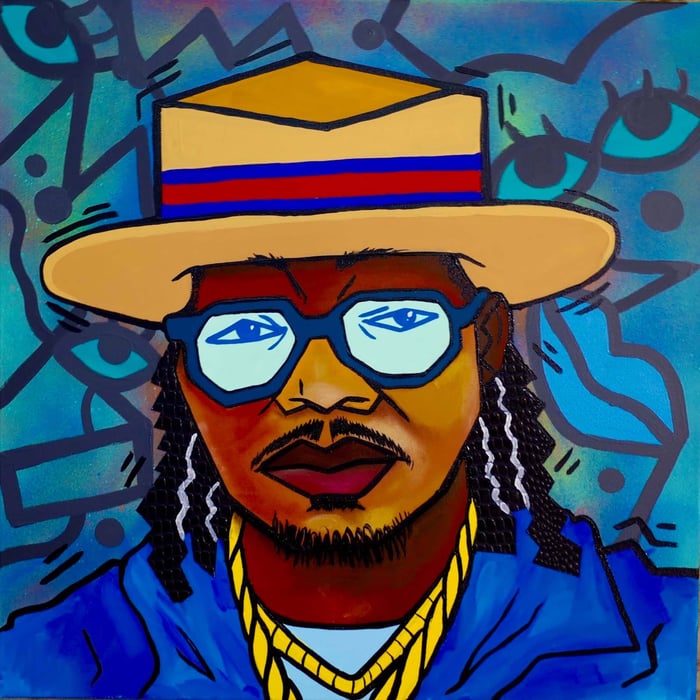
Push & Paint Review: Detroit Wordplay That Trips and Still Lands


 See more Architeg Prints stories on Google.
Push & Paint Review: Detroit Wordplay That Trips and Still Lands
Push & Paint turns rap into a weird magic trick—Bruiser Wolf and Sheefy McFly make punchlines feel accidental, then dare you to keep up.
The first thing this album does is mess with your timing
Some rap albums want to impress you. Push & Paint wants to make you blink at the wrong moment.
I went in expecting the usual “wordplay guy” routine—two or three insane lines, then a long back half of reheated leftovers. That’s normally how it goes when an MC’s whole personality is “I’m clever.” But Bruiser Wolf doesn’t really rap like a guy building jokes. He raps like someone whose brain refuses to drive in a straight line. The punchlines don’t arrive politely at the end of a sentence. They swerve into the bar late, like he’s tossing a banana peel behind him and letting you do the slipping.
And the production choice is the real tell here: Sheefy McFly keeps the beats spare, bass-heavy, and functional, like he’s actively refusing to decorate the room. That’s not laziness—it’s strategy. The record keeps insisting the main event is Bruiser Wolf’s mouth, not the scenery.
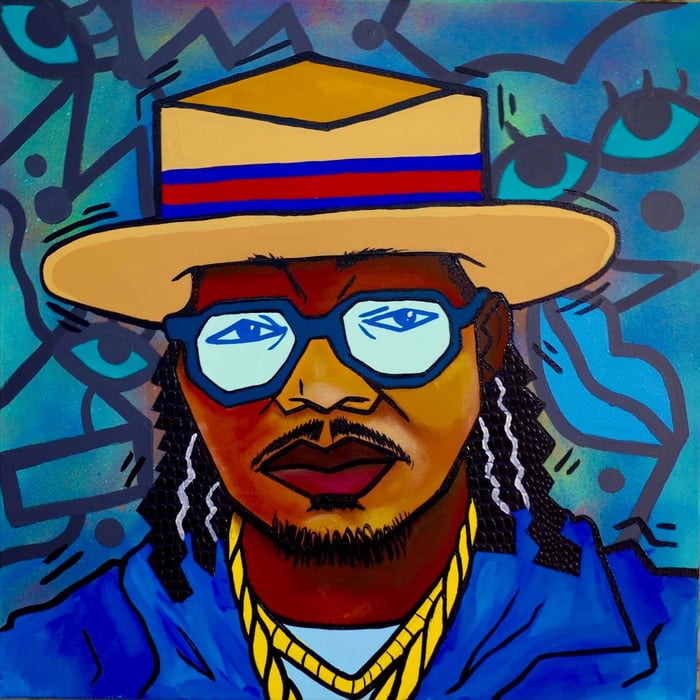
Courtesy of Fake Shore Drive / SHEEFY LLC / Bruiser House.
Sheefy’s beats aren’t “minimal”—they’re deliberately out of the way
Here’s the bridge from that first impression into the real experience: once the album starts rolling, you notice how often the instrumental doesn’t try to rescue the rapper.
Sheefy McFly’s production on Push & Paint feels like it was built to never interrupt a sentence. The low end sits heavy, the rhythms stay usable, and the overall effect is “don’t trip the comedian while he’s juggling knives.” You can call that basic if you want. I’d call it confident—because the beats don’t beg for credit.
That said, I’m not totally sure every listener will hear it as intentional. At first I wondered if the record was going to feel too bare over a full run, like it’d play more like a demo than a finished album. On second listen, it clicked: the emptiness is the frame. Bruiser Wolf is the loud painting, not the wallpaper.
Arguable claim: if these beats were any flashier, Bruiser Wolf’s whole timing trick would fall apart.
Bruiser Wolf’s punchlines aren’t “setups”—they’re little accidents
Now we get to the main mechanic. Bruiser Wolf doesn’t build tension toward a neat payoff. His lines tend to skid into the funny part. You can hear it on “Ask Yourself,” when he describes a woman as “always dressed to kill, natural causes.” That’s exactly his thing: the logic bends just enough to stay standing, and the laugh comes a half-step late because your brain needs a second to accept the math.
On “Hater Not an Opp,” he reduces a threat to a budget line item—“Price on your head, that’s the cost of living.” It’s not just a punchline; it’s a shrug. He says it like he’s commenting on the weather.
And “Ole Girl” is where he really shows what he’s doing: he turns cocaine into a wife, a girlfriend, and a family asset all at once. He’s not writing “drug metaphors.” He’s writing relationship bars and swapping the partner with a substance so smoothly you almost miss the switch. He even pushes it into inheritance talk—loving “the white girl” so much he put her in the will—then flips that into the resentment you catch when you’re hustling and everybody suddenly hates your “marriage,” and even your kids aren’t “biracial.” It’s ridiculous on purpose, but it’s also kind of nasty in the way gossip is nasty: casual, confident, and said like it’s obviously true.
Arguable claim: Bruiser Wolf’s best jokes aren’t the cleverest ones—they’re the ones that arrive so sideways you can’t prepare your reaction.
Payroll Giovanni briefly drags the album into real life
Here’s where the record stops smirking for a second—whether it meant to or not.
Payroll Giovanni’s guest verse on “Hater Not an Opp” hits like a short film spliced into a cartoon. He starts from a half track and a bad batch, no cash stack, and he doesn’t decorate it. He walks it forward: cooking, counting, serving, watching for undercovers. The detail that sticks—because it’s too specific to be invented in the moment—is his father hiding a platinum chain in the kitty litter when the raid van is coming. That’s such a weird domestic image: expensive status jewelry buried in something dumb and ordinary because panic makes you practical.
Then the neighbors watching the family get cleaned out—again, not “crime story aesthetics,” but the humiliating theater of it. And the line about not wanting to see an ounce again until going broke and seeing the rock… that’s the addiction-to-economics pipeline laid out without a single inspirational speech.
It’s the one stretch on Push & Paint where drug talk stops being funny and becomes something that clearly happened to someone. Bruiser Wolf’s cleverness is a skill; Payroll’s specificity feels like a bruise.
Arguable claim: Payroll Giovanni doesn’t “steal the song”—he changes what the whole album allows itself to be for about 30 seconds.
The album’s women bars are the point, not a side effect
Let’s not pretend this is a record where women are treated like fully rounded characters. On Push & Paint, women show up as currency, spectacle, cocaine, and bills—sometimes all within the same track. That’s not me “reading into it.” The album says it with its chest.
“Common Goal” basically states the mission in the hook: getting rich and sleeping with a lot of women. Not romantic. Not conflicted. More like a business plan scribbled on the back of a receipt.
“Toxic” turns into a straight-up shouting match: a call-and-response hook of “Fuck you, nigga / Nah, fuck you, bitch.” The weird part is how evenly miserable both sides sound. It’s not catharsis; it’s two people trying to win a fight they already lost.
“She a Bill” is Bruiser Wolf going full accountant-poet for three verses, turning a woman into a financial instrument: she “fits the bill like a wallet,” the due date is coming, and the payment options are basically cash/credit/debit—like intimacy is a checkout counter.
“Ole Girl” makes cocaine the love interest, and “Ask Yourself” frames a woman with her own home and walk-in closets getting questioned about whether she can handle a man who won’t put his name on a lease and disappears for weeks.
Do I love every second of this perspective? No. The part that lost me a little is how easily the album slips from funny wordplay into transactional talk without blinking—as if emotional vacancy is just another flex. But that’s also the album being honest about its world, and whether it bothers you depends entirely on what you came here for.
Arguable claim: the album isn’t “problematic by accident”—it’s using coldness as a form of swagger, and it dares you to mistake that for charm.
Features work because everyone brings a different speed
Next, the record starts rotating guest energy like a DJ who knows attention spans are real.
Every feature on Push & Paint changes the pacing:
- BabyTron on “Why They Play Me?” fits Bruiser Wolf’s lateral style but cranks the absurdity. He admits he skipped arm day, yet still rocks the beater because it’s Chrome Hearts—like the brand name itself is supposed to function as muscle.
- Sada Baby on “Toxic” does exactly what you’d want: chaos. He’s the guy who shows up loud, knocks over a chair, and somehow makes the room more honest. The Lamborghini spokes spinning like an oldie is such a stupidly vivid flex it almost becomes visual.
- P-Lo on “Ole Girl” flips the hook into something warmer—more flirtatious, more California—going vintage and retro, “throw it back” energy, like four flats on a Cadillac. It’s a tonal pivot that proves the song’s idea is flexible enough to survive a different accent.
- G.T. on “Ask Yourself” goes full flex: fur Gators in the closet, Rolls Royce with a driver. It’s blunt luxury talk, which plays well against Bruiser Wolf’s bent logic.
- Sheefy McFly raps once—third verse on “She a Bill”—and honestly, that’s the correct amount. The bars are the plainest here: slept with your baby mama, needs bread and dough, calls himself a baker. The line works because it’s uncomplicated, but it also confirms what you already suspected: Sheefy’s real value on Push & Paint is as the guy building the floor, not the guy tap dancing on it.
Arguable claim: the features don’t exist to “add star power”—they’re pacing tools, like switching camera lenses mid-scene.
One track briefly stalls the album, then the jokes get even looser
Here’s the stretch where the album shows a tiny crack.
“Numbers” leans so hard on its hook—“You a quick cummer, that’s a bummer / I don’t call hoes, I ain’t good with numbers”—that it runs six times with almost no rapping underneath. In a tight 28-minute album, one hollow uptempo track is a noticeable tax. It’s not unlistenable, but it does interrupt the momentum right when the record should be chaining knockout moments.
Then “Wannabees” snaps it back into place with Bruiser Wolf sounding playful again—bragging he was talking about buds before Colorado legalized anything, calling Chicago the only other “ill” person he knows because it’s the Windy City, and tossing in that the semi costs a pretty penny. The wordplay here is looser and goofier—less surgical than his best lines—but the fun is obvious. It’s him being amused with himself, and you can hear it.
And “Why They Play Me?” lands one of the album’s stickiest images: it’s ten degrees, he’s serving fiends, wiping his nose with his sleeves, and washing down “sleep for dinner” with spit to energize his grit. That last bit flashes by so fast it almost feels accidental—the closest the album gets to saying something that isn’t a joke before the next punchline eats it alive.
I thought I wanted more of those “real” flashes at first. Now I’m less sure. The album’s whole identity is that it refuses to sit still long enough for sincerity to get comfortable.
Arguable claim: “Numbers” is the only time the album sounds like it’s filling space instead of weaponizing it.
Conclusion: this record is a frame job, and the mouth is the painting
Push & Paint succeeds because it commits to a single idea: let Bruiser Wolf’s brain be the main instrument, and keep everything else sturdy, spare, and loud enough to hold him up. When it dips—mostly on “Numbers”—you feel it immediately because the rest of the album is built like a highlight reel that somehow doesn’t run out of tricks. The features add different temperatures without stealing the room, and Payroll Giovanni’s verse is the one moment that stops the wisecracks from floating away like balloons.
Our verdict: People who like rap where the punchlines come from weird angles—and don’t need emotional hand-holding—will replay Push & Paint like it’s a pocket-size dictionary of bad decisions. If you need songs to “open up” and be vulnerable, you’re going to feel like this album keeps changing the subject on purpose… because it does.
FAQ
- What is the core vibe of Push & Paint?
It’s bass-heavy and stripped down so the wordplay can do all the heavy lifting—like a stage with one spotlight and no excuses. - Is Push & Paint more funny or more serious?
Mostly funny, but not in a goofy way—more like humor as a defense mechanism. Payroll Giovanni’s verse briefly turns the lights on. - Which track shows Bruiser Wolf’s style best?
“Ask Yourself” and “Ole Girl” are prime examples of him pivoting meanings mid-line and landing casually. - Does the album have any weak points?
“Numbers” leans too hard on its hook and stalls the momentum. It’s the one moment that feels less intentional. - Do the guest features fit the album’s tone?
Yes, because they change the speed without changing the mission—BabyTron amplifies absurdity, Sada Baby adds chaos, and P-Lo warms up “Ole Girl” without breaking it.
If this album’s cover is stuck in your head the way its one-liners are, you can always grab a favorite album cover poster for your wall at our store. It’s a cleaner commitment than getting “Ole Girl” in your will.
 | DISCOUNTGET 30% OFF*Use code on your next order:
|
* This post may contain affiliate links, meaning we earn a commission if you make a purchase through these links, at no additional cost to you.