Kim Gordon PLAY ME Review: Chill Playlists Get Mugged in Broad Daylight


 See more Architeg Prints stories on Google.
Kim Gordon PLAY ME Review: Chill Playlists Get Mugged in Broad Daylight
Kim Gordon PLAY ME turns “relaxing music” into a stress test—doomscroll beats, clanging jokes, and basslines that refuse to behave.
The hook: this album isn’t for your commute—it’s for your brain fog
Some albums ask you to lean in. Kim Gordon PLAY ME basically grabs your wrist, shoves your phone screen in your face, and says:
keep scrolling then—see what it does to you.
What hit me first wasn’t “songs,” exactly—it was pressure. Not the dramatic, cinematic kind. The everyday kind: the low-grade demand to be calm, productive, hot, informed, and vaguely “well.” And right in the middle of that mess, a line on “BUSY BEE” hangs in the air:
“The pressure to relax, it was just too much for her.”That’s not a lyric that wants to inspire you. It’s a diagnosis.
This record feels like it was made specifically to reject the idea of background listening. It even mocks the playlists it knows it’ll get stuffed into—then makes sure it doesn’t actually fit. And I’ll admit, I thought the whole “anti-chill” thing might get old fast… but the more it jitters and swerves, the more it starts sounding like an honest portrait of being awake in the modern world.
What PLAY ME is really doing: it’s weaponizing “vibes”
Here’s my read: Kim Gordon PLAY ME isn’t trying to be chaotic for art points. It’s trying to sound like the inside of a day where you never fully arrive anywhere—just tab to tab, thought to thought, alert to alert.
A big part of the trick is how it handles pleasure. The grooves show up—sometimes they’re even seductive—and then Gordon undercuts them with a deadpan line or a rhythm that refuses to settle. It’s not “anti-pop.” It’s worse than that. It’s pop being forced to look at itself in fluorescent lighting.
And compared to the previous solo record’s sprawl, this one moves like it was recorded with less patience and more instinct. That could read as “slighter,” sure. But it also makes the album feel like it’s happening in real time—like she’s responding to the feed as it refreshes.
Track-by-track: the moments where the album tells on itself
Each section here is a different way the album admits what it’s obsessed with: control, tech language, status, and the ridiculous performance of being fine.
1) PLAY ME
The title track slides in on a cavernous bassline, and right away it feels like a trap: it’s just smooth enough to get mislabeled as “sexy” or “late night,” but the whole thing is basically heckling that idea from across the room.
Gordon starts dropping playlist bait—stuff like “Rich Popular Girl,” “Villain Mode,” “Jazz in the Background,” “Ready for Spring”—and it comes off like she’s reading tags off a glossy package. The horns flirt with assimilation, like the song is almost willing to behave.
Almost.
What surprised me on a second listen is how funny it is without doing “comedy.” It’s not trying to make you laugh. It’s trying to make you notice how often you’re being sold a mood.
And no, you can’t “chill” to it in the way those playlists promise. You can sit still while it plays, I guess, but the track doesn’t relax—it glares.
2) GIRL WITH A LOOK
This one floats in on drifting synths over a motorik pulse, and it plays out a gender dynamic so blunt it feels intentional: a girl with a look, a boy with a look. Like everyone’s been reduced to aesthetic roles.
Then Gordon drops the human want underneath it—
“Swingin’ me around / Dance with me”—and the song suddenly feels less ironic than it first appears.
I didn’t expect this track to land emotionally, but it does, mostly because the sound is a little bleary. And I’ll stake a mildly annoying claim here: the messier this album sounds, the more sincere it gets. Clean production would’ve turned this into fashion.
3) NO HANDS
Here Gordon snaps back to a clanging rhythm that she controls like it’s second nature. The abstraction ramps up, but not so much that you can’t smell the target.
“No hands on the wheel, it’s a steal”isn’t exactly subtle, and it doesn’t need to be.
The key is how brisk it stays. Nothing drifts. Nothing “vibes out.” Even when the sound threatens to smear, it keeps a pointed shape.
If anything, the song feels like it’s daring you to pretend you don’t know what it’s talking about.
4) BLACK OUT
This track feels like a lurching prologue to the tech-rot that follows. Gordon intones like she’s reciting a spell she doesn’t believe in:
“I’m the queen of your heart / Ace of your spade / You don’t trump me / I trump you.”
It’s urgent in a present-day way—not “end times,” more like “right now, in your pocket.” And it cuts itself short, which I read as the point: no resolution, no catharsis, just the drop-off.
A reasonable listener could say it ends too soon. I think it ends exactly where it should—like a screen going dark mid-thought.
5) DIRTY TECH
This is the catchiest beat here, and that’s precisely why it works as a trap. Gordon leans into the phrase
“Talk dirty tech to me”and somehow flattens the allure by naming it. It’s hard to keep worshipping the gadget when someone says the quiet part out loud.
I’ll admit: part of me worries some people won’t hear the smirk. The track counts on you catching the “subplot,” the little wink that says the song isn’t flirting—it’s mocking flirtation itself.
And honestly? That risk is part of Gordon’s whole move. She’d rather be misunderstood than comforting.
6) NOT TODAY
After “GIRL WITH A LOOK,” this is the other track that feels genuinely less online—not because it avoids modern life, but because it zooms into the body.
She repeats:
“There’s a hole in my heart.”It could’ve been corny. It isn’t, mostly because the guitars arrive thick and coated, pushing through a new-wave haze that keeps trying to gum up the forward motion.
This is the album’s most affecting moment for me. It holds ache, distraction, and a weird little flash of euphoria all at once, and it never sorts them out. When she sings
“Never mind the mess,”it doesn’t sound like denial—it sounds like triage.
If you think this record is only sarcasm, this track is where that theory breaks.
7) BUSY BEE
This is the engine. The best song here doesn’t just “go hard”—it multitasks like it’s trying to outrun its own thoughts.
The rhythm section is thunderous, with Dave Grohl on drums, and the whole track keeps piling on: the sample of an interview with Julia Cafritz (her Free Kitten bandmate), the clatter, the hook that’s absurd enough to keep the song from turning into a standard banger.
And that’s the important part: Gordon lets it be catchy, then makes sure it’s too weird to be consumed cleanly. It’s like she’s saying: you want a hook? Fine. But you’re swallowing the whole mess with it.
That “pressure to relax” line reverberating through the noise is the album handing you its mission statement without printing one.
8) SQUARE JAW
“BUSY BEE” seems to energize her, because she comes back sharper here—more abrasive vocally, less willing to coast into the obvious talk-sing cadence.
And then: she threatens to
“sucker punch” Elon Musk, with a kind of emasculating precision that doesn’t feel like a throwaway jab. It lands hard because she doesn’t overperform it. She just says it like it’s a reasonable errand.
Hot take, but I stand by it: this is protest music that refuses to sound noble. It sounds petty, specific, and bodily. Which is why it works.
9) SUBCON
This one is the most online track on the record—name-dropping everything from 3D printing to Substack—and it feels intentionally scattered, like a mind flicking between apps without choosing one.
It’s basically the sonic version of subtweeting while scrolling through the Everything app, and the satire gets smeared by speed. If you want Gordon to make one clean argument, this track will annoy you.
I’m not fully sure it holds together as a “song,” though. The mess is the point, but it also means the impact depends on your tolerance for fragmentation.
10) POST EMPIRE
This track aims for cryptic messaging but doesn’t really commit to subtlety. The line
“Love what you’ve done with the empire”sticks—no question.
But as it rolls on, I kept waiting for a turn, some extra twist of the knife, and it never quite arrives. This is where the album briefly shows its limits: a pointed idea that doesn’t deepen enough before it’s over.
It’s not terrible. It’s just… the first moment where the record feels like it’s circling something it already said better elsewhere.
11) NAIL BITER
Here the bass gets even more rattling, like it’s been held back until now on purpose. And the synths go nightmarish—distorted samples, ugly textures, the kind of sound that makes you feel slightly poisoned.
Lyrically, Gordon zooms out from tech-speak into a more classic anti-consumerist angle, but the feeling is the same horror. The track nails a particular sensation: wanting more as a brief out-of-body rush… followed by the come-down where you realize you’re still you.
Arguable claim: this is the album’s most physically uncomfortable mix, and that’s why it’s effective. It doesn’t want to soothe you. It wants to itch.
12) BYEBYE25!
As a standalone bonus track, this reworking would land fine. As the closer to Kim Gordon PLAY ME, it does something a bit strange: it frames the album as a more politically charged update when the rest of the record is actually its own (slightly slighter) body of work.
This version repurposes a list of words banned from federal websites by the Trump administration, which makes it less weirdly personal than the original “BYE BYE.” And that shift comes with a cost: it’s clumsier, less sharp in that chaotic diaristic way the earlier track had.
Still, it also makes something unavoidable: these two albums came from the same restless headspace. Gordon and Justin Raisen aren’t running out of ideas—they’re just absorbing more of what’s directly in front of them, even when it makes the songs uglier.
And maybe that’s the point. Closure is a lie. The feed keeps loading.
Why the album works anyway: it refuses to be “content”
The sneaky achievement of Kim Gordon PLAY ME is that it uses the language of modern cool—beats, hooks, mood-marketing—and then makes that language sound contaminated. It’s not just railing against tech. It’s showing what tech does to desire, attention, even flirting.
I’m not convinced every track hits with the same force. But I also don’t think the misses are accidental. This album would rather be restless than refined, and it would rather sound a little unfinished than pretend the world feels finished.
Conclusion
Kim Gordon PLAY ME doesn’t offer an escape hatch. It offers recognition: the scroll-brain, the pressure to relax, the synthetic swagger, the impulse to punch a billionaire and then keep walking. It’s shorter, twitchier, and sometimes thinner than you might expect—but it turns that into a feature, like it’s documenting a nervous system instead of “making a statement.”
Our verdict: People who like their music jagged, funny, and slightly hostile to “good vibes” will love this—especially if you’ve ever hated a playlist for smiling at you. If you want warm songs, big choruses, or anything resembling emotional closure, you’ll bounce off Kim Gordon PLAY ME fast and call it annoying (and you won’t be entirely wrong).
FAQ
- What is the core vibe of Kim Gordon PLAY ME?
It sounds like dance music that read your group chat and decided you don’t deserve peace. - Is PLAY ME more political or more personal?
It’s mostly personal in a poisoned-by-the-world way, though the closer leans overtly political. - Which track hits the hardest?
“BUSY BEE” feels like the record’s most complete punch—groove, noise, humor, and pressure all at once. - What’s the most emotional moment on the album?
“NOT TODAY,” especially the repeated “There’s a hole in my heart,” because it doesn’t dress the feeling up. - Is there a weak point?
“POST EMPIRE” has a great line, but it doesn’t build enough around it to justify its spot as more than a sketch.
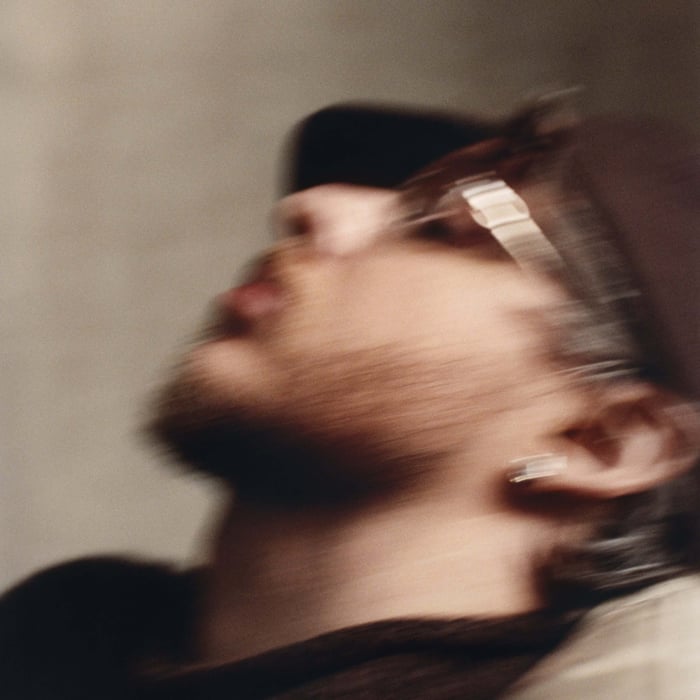
If this album lodged in your head the way album art tends to, you can grab a favorite cover poster for your wall at our store: https://www.architeg-prints.com. It’s a nice way to keep the noise visible, even when the speakers are off.
 | DISCOUNTGET 30% OFF*Use code on your next order:
|
* This post may contain affiliate links, meaning we earn a commission if you make a purchase through these links, at no additional cost to you.