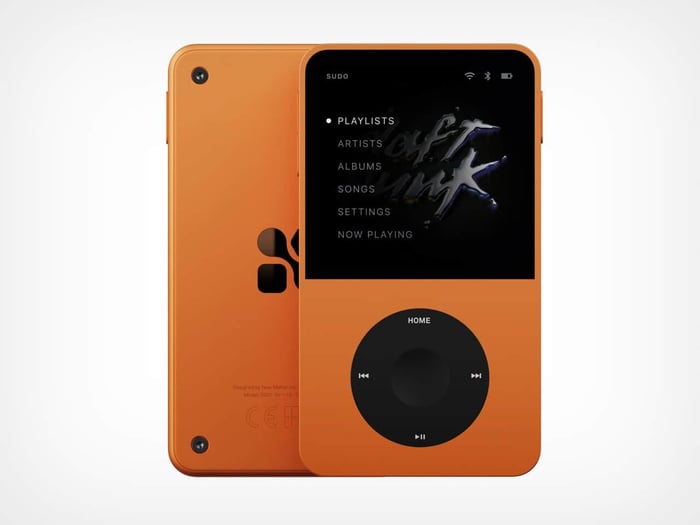
Sudo Music Player Revives the iPod Wheel and the Lost Art of Ownership


 See more Architeg Prints stories on Google.
Sudo Music Player Revives the iPod Wheel and the Lost Art of Ownership
The $249 Sudo music player brings back tactile navigation, offline listening, and the satisfying feeling of owning your music.
A Familiar Kind of Digital Rebellion
Vinyl returned. Film cameras found new life. Flip phones made a surprise comeback, and wired earbuds—despite everything—never really disappeared. Each revival points to the same quiet frustration: we’re tired of devices that try to do absolutely everything.
Sometimes, a product feels better when it has fewer ambitions.
That’s the idea behind the Sudo music player from New Matter, a compact device designed to play your music and leave the rest of your life alone. No social feeds. No workplace notifications. No incoming messages demanding attention at the exact moment a favorite song reaches its best part.
There’s something deeply appealing about returning to a music library you actually keep. Streaming services are wonderfully convenient, but they can also make music feel temporary—more like access granted by a monthly subscription than a collection that belongs to you. Sudo’s pitch is refreshingly straightforward: load your music, carry the player, and listen without the noise.
New Matter appears to be positioning itself in the same design-minded corner occupied by companies known for playful hardware, bold colors, and a strong sense of visual identity. Even the company’s carefully curated social presence suggests that Sudo isn’t trying to look like another anonymous electronics product. It wants to feel like an object with a point of view.
A Player That Knows Its Job
Sudo’s entire personality is built around restraint. It plays music, and that’s essentially it.
That simplicity matters more than it might seem. A modern smartphone can play a song, of course, but it can also deliver a work alert, a message, a calendar reminder, a social notification, and several other tiny interruptions before the chorus arrives. The phone is a Swiss Army knife. Sudo is the one good blade you reach for when you only need to cut something.
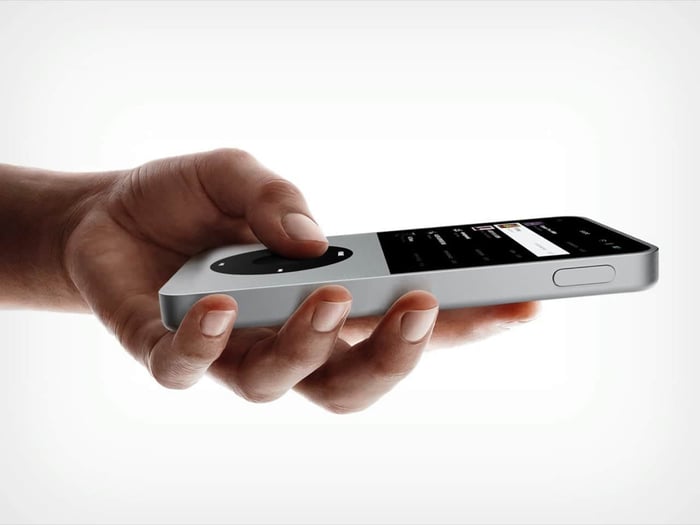
The hardware combines a small touchscreen with a tactile wheel beneath it. There’s also a 3.5mm headphone jack for listeners who still prefer a direct wired connection, along with USB-C charging. Those details give the player a curious blend of old and new: familiar physical controls paired with a current charging standard.
That combination is part of the charm. Sudo isn’t trying to cosplay as a gadget from another era. It borrows the parts that felt natural, then updates the basics that shouldn’t have remained stuck in the past.
The designer behind the player is New Matter, the company responsible for the Sudo concept and its visual language.
The Click Wheel Feeling Comes Rushing Back
I didn’t realize how much muscle memory remained in my hands until I saw Sudo’s wheel. There it was: a ring under the thumb, ready to move through a library with the kind of confidence that touchscreen menus rarely provide.
That’s the magic of physical controls. You don’t necessarily need to look down. Skip, go back, play, and browse all feel like actions your fingers already understand. Once the movement becomes familiar, navigating music starts to feel less like operating software and more like handling an instrument.
Apple’s old click-wheel iPod design worked because it made an invisible digital library feel physical. You could scroll through hundreds of albums while barely thinking about the interface. The wheel became a quiet extension of the hand, and that kind of interaction is difficult to recreate with a flat pane of glass.
Sudo clearly understands the appeal. A touchscreen is flexible and easy to explain, but a wheel offers something more instinctive. It has resistance. It has direction. It gives the user a little tactile feedback instead of asking for another tap and a moment of visual confirmation.
“I was today years old when I realized how much of my brain was still fluent in click wheel.”
The inclusion of a touchscreen above the wheel does make the design feel slightly undecided. Is Sudo reaching backward, moving forward, or trying to stand with one foot in both eras? Still, the important point is that it’s willing to argue for a dial in a world where nearly every device has replaced buttons with glass.
That alone makes it interesting.
A Back Panel That Invites Curiosity
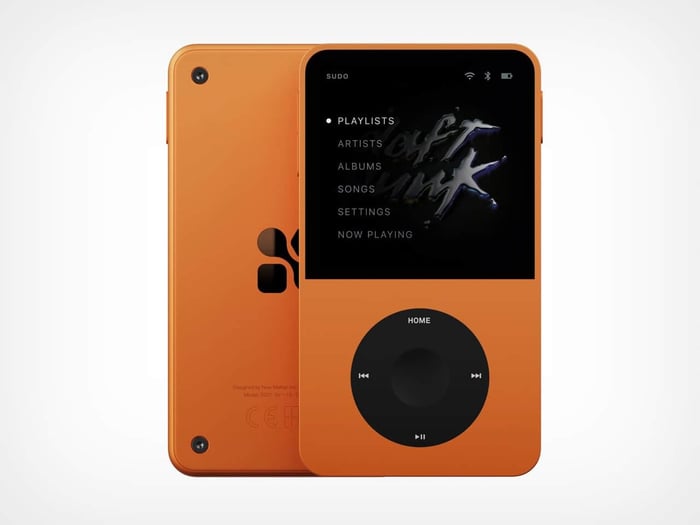
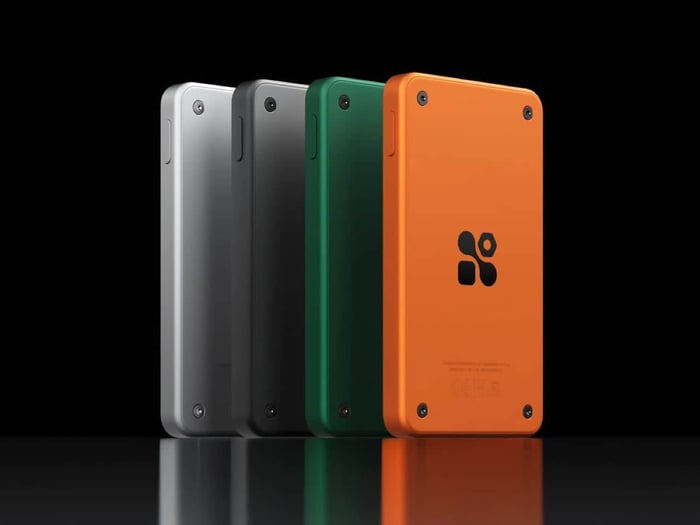
Turn Sudo around and the design language becomes even more deliberate. Visible hex screws sit at the corners, and that small decision says quite a lot.
Exposed screws suggest access rather than secrecy. They imply that the player might be treated as something serviceable instead of something sealed shut until its useful life ends. Of course, the screws alone can’t guarantee how easy the device will be to repair, but visually, they communicate a clear intention: this is hardware meant to look like hardware.
The back logo is equally restrained. It’s a compact glyph placed slightly off center, with enough confidence to avoid shouting for attention. That kind of detail can make a small device feel considered rather than overdecorated.
Sudo is shown in four colorways: Silver, Basalt, Forest, and Tangerine. The Tangerine version is the obvious statement piece, with a bright finish that turns the music player into something closer to a pocket accessory than a slab of electronics.
Personally, that shade reminds me of the recent wave of deliberately playful tech products that use color to make gadgets feel less disposable. It’s a bold choice, though perhaps one that will divide people. Some listeners will want the understated Silver or Basalt model. Others will happily carry the Tangerine version like a tiny orange exclamation point.
Software Without the Algorithmic Elbow
The software appears just as focused as the hardware. Instead of filling the screen with recommendations, trends, or algorithmic prompts, Sudo presents the basics: playlists, artists, albums, and songs.
That may sound almost too simple, but simplicity is the feature here. The player isn’t trying to persuade you to listen to something else. It isn’t nudging you toward a mood, a playlist, or a promotional carousel. It gives you a library and lets you make the choice.
There’s a certain pleasure in that kind of browsing. You remember an album, scroll to the artist, find the record, and press play. No detour required. No platform deciding that your own collection needs editorial assistance.
The now-playing screen also appears to display a lossless tag on a Radiohead track, a small but pointed detail for listeners who care about file quality and audio formats. It’s the sort of feature that will mean very little to one person and become an immediate conversation starter for another—the exact kind of tiny design choice that tells you who the product is speaking to.
Album artwork can also bleed and blur behind the menus, adding a little visual atmosphere. The original iPod era was more utilitarian; it didn’t need to turn every screen into a mood board. Sudo seems more comfortable allowing the interface to have a bit of personality while keeping the navigation simple.
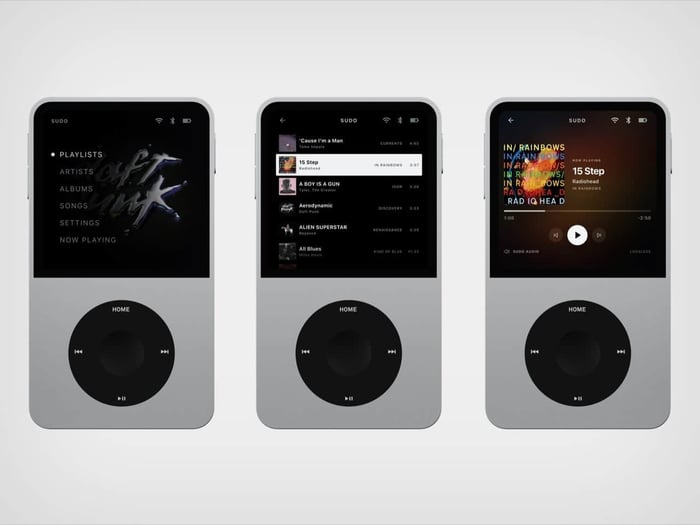
The big question, naturally, is how much of that polish will survive beyond the renders. Concept images can make nearly any object look flawless. The real test is whether the physical player feels responsive, whether the wheel is satisfying to use, and whether the software remains as clear when it’s in your hand rather than floating in a presentation.
Why Owning Music Still Feels Different
Sudo’s most compelling idea isn’t actually the wheel, the colors, or even the headphone jack. It’s the suggestion that a personal music collection can still feel like a personal possession.
Streaming changed listening forever, and the convenience is hard to argue with. But convenience and ownership aren’t the same thing. A rented catalog can be enormous while still feeling strangely weightless. You don’t necessarily remember where anything lives, what you saved, or whether a favorite release will remain available next year.
A dedicated player changes the relationship. It asks you to choose what comes with you. That limitation can feel liberating. Instead of carrying access to an endless catalog, you carry a smaller, more intentional library—the albums you know you’ll return to, the songs that have survived every shuffle, and the tracks that somehow still sound best when heard from beginning to end.
There’s also the simple relief of being unreachable. Music becomes a room with the door closed. No vibration in your pocket. No glowing banner across the screen. No temptation to leave the song halfway through because something else demanded your attention.
That feeling is nostalgic, but it isn’t merely nostalgia. It’s a response to how crowded our digital lives have become.
A Promising Idea With One Important Caveat
Nothing about a polished presentation guarantees that Sudo will deliver exactly as promised. Hardware concepts have a long history of looking perfect before real-world details—manufacturing, durability, software behavior, and everyday usability—enter the picture.
Still, the instinct behind the player feels right. We’ve spent years building multipurpose devices that interrupt us constantly, and Sudo responds with a machine that simply can’t do most of those distracting things.
That narrow purpose is its strongest argument.
Whether Sudo becomes the dedicated music player people have been waiting for remains to be seen. But it is asking a timely question: what if listening to music felt like an activity again, rather than just another function buried inside a phone?
At $249, the Sudo music player is positioning itself as a considered object rather than a disposable accessory. Its success will depend on execution, but the idea already has something many modern gadgets lack—a clear reason to exist.
Conclusion: Is Less Really More for Music?
Sudo brings together a tactile wheel, a focused interface, wired listening, USB-C charging, and the promise of a music library that belongs to the listener. It doesn’t try to replace the phone. It tries to give music a quieter, more deliberate place in everyday life.
Would you trade a little convenience for a device that lets you listen without interruption?
FAQ
- What is the Sudo music player?
Sudo is a dedicated music device from New Matter designed to play stored music without the extra apps, notifications, and distractions found on a smartphone. - How does Sudo navigate music?
The player combines a small touchscreen with a tactile wheel beneath it. The wheel is intended to make browsing, skipping, and returning to songs feel more physical and familiar. - Does Sudo include a headphone jack?
Yes. The device features a 3.5mm headphone jack for wired headphones and earbuds. - How does Sudo charge?
Sudo uses USB-C charging, pairing its retro-inspired controls with a current connection standard. - What colors is Sudo available in?
The player is shown in four colorways: Silver, Basalt, Forest, and Tangerine.
If Sudo’s blend of tactile controls and music nostalgia speaks to you, browse our favorite album cover posters and bring that same love of physical music culture to your walls.
 | DISCOUNTGET 30% OFF*Use code on your next order:
|
* This post may contain affiliate links, meaning we earn a commission if you make a purchase through these links, at no additional cost to you.