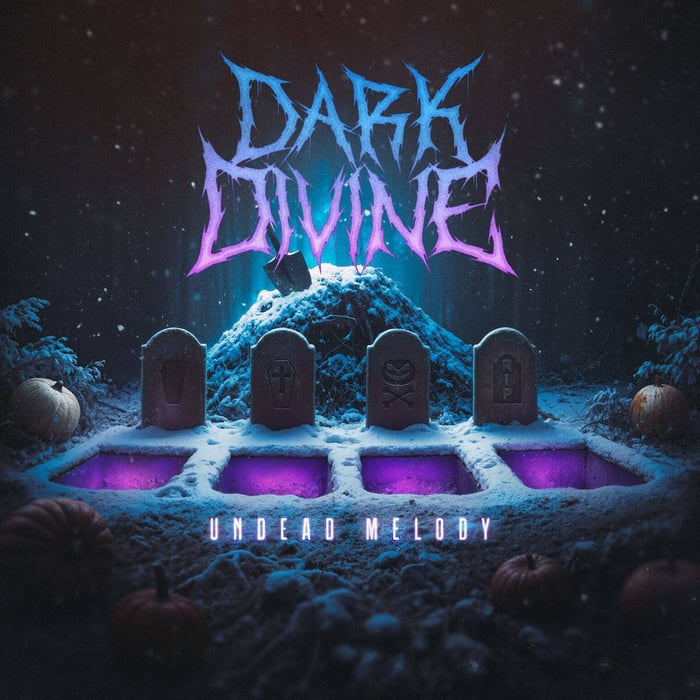
Undead Melody Review: Dark Divine’s spooky glow-up (and it’s not subtle)


 See more Architeg Prints stories on Google.
Undead Melody Review: Dark Divine’s spooky glow-up (and it’s not subtle)
Undead Melody turns metalcore into a haunted funhouse—sometimes profound, sometimes crowded. Here’s what Dark Divine is really pulling off on Undead Melody.
Come for the ghosts, stay for the control
Dark Divine doesn’t make “dark” music in the vague, eyeliner-adjacent way. Undead Melody feels like a band staging a full production: fog machine, strobe lights, velvet curtains, and an insistence that you take the drama seriously. And somehow, it mostly works.
My first impression was that this album would be a simple extension of their spooky brand—more costumes, more hooks, more “boo.” But a few tracks in, it clicked: they’re not just dressing up heavy songs. They’re trying to expand their range without breaking the pact with the day-one crowd, and that’s a harder trick than it sounds.
Still, the record isn’t flawless. A couple songs blur together in the midsection like they’re jostling for the same spotlight. But even when it gets crowded, there’s a clear hand on the wheel—dark, theatrical, weirdly poetic, and arranged with more care than most bands in this lane bother with.
The album’s real theme is whiplash (and that’s the point)
Here’s the thing: Undead Melody refuses to sit in one mood for long. That’s not an accident—it feels like a deliberate decision to dodge the “thirteen versions of the same track” trap. Some listeners will call it unfocused. I think it’s closer to restless.
The emotional center is Anthony Martinez’s performance. His delivery doesn’t just “fit” the songs; it pressurizes them. The record keeps swinging between frustration and heartache, and it’s not the performative kind either—it stings, then weirdly soothes. The melodies lean heavy and melancholic, but they never fully surrender to hopelessness, which is honestly a bold move for an album with this title. A lesser band would’ve drowned everything in gray reverb and called it depth.
There’s a track like “Fading Away” where the emotional language stays broad enough for you to project your own mess onto it. That’s not laziness—that’s strategy. It creates a shared feeling without spelling out every detail, like the band is handing you a mask and letting you decide what monster you’re playing.
And yet… I’m not totally sure every lyrical moment lands the way they think it does. Sometimes the feelings are so big they start to feel like stage directions. But maybe that’s the point: this album isn’t trying to be subtle; it’s trying to be felt.
Video moment: “Half Past Dead (Unbury Me)” sets the tone
This is where the album’s theatrical instincts stop being an idea and start being a posture. The presentation matters here, and the song choice says a lot about what they want Undead Melody to represent.
When the back half hits, “The Void” reminds you why you showed up
After a run of songs that can feel like they’re sharing the same oxygen, “The Void” shows up and basically kicks the door off its hinges. It’s one of the heaviest moments on Undead Melody, and it sounds like the band intentionally overpacked it: blistering riffs, drums that feel like they’re trying to dent the floor, bass lines that don’t just support the track—they threaten it.
This is also where Martinez’s range becomes more than a flex. The way he moves between harsh screams and clean vocals feels less like “look what I can do” and more like the song demanding different weather systems. And frankly, the record needs this jolt right here in the sequencing. Without it, the back half risks drifting into aesthetic repetition.
That’s the part some fans might argue with me on: I don’t think the album’s softer or more atmospheric moments are the main event. I think Undead Melody works best when it remembers to be physical—when it hits your chest, not just your mood.
“Half Past Dead (Unbury Me)” is fine… and that’s the problem
Placed right before “The Void,” “Half Past Dead (Unbury Me)” has a tough job. Nothing about it is broken. It’s an easy listen. The lyrics are clever enough, the synths do that haunted shimmer, and it feeds the album’s spooky charm without straining.
But it sits in the shadow of the songs around it. I kept waiting for it to leap out—some sharper hook, some left turn, some moment where it stops being “good Dark Divine” and becomes necessary Dark Divine. It never quite gets there for me. And that’s my mild gripe with parts of this album: a few tracks sound like they’re competently fulfilling the concept instead of expanding it.
To be clear, competence isn’t an insult. It’s just not what you remember.
The macabre charm isn’t decoration—it’s their entire business plan
Dark Divine’s “macabre” thing isn’t a side flavor. It’s structural. No album of theirs would feel complete without that staple darkness with a smirk. And honestly? Theatrics are finding a home in heavy music again, and that’s a win. There’s a whole corner of the scene where the goal is to build a world, not just stack breakdowns.
You can hear Undead Melody angling toward that upper shelf—the lane where bands like Motionless In White and Ice Nine Kills have made theatrical metalcore feel like a headline event. Dark Divine doesn’t sound like they’re timidly borrowing the vibe. They sound like they want a seat at the table, and they’re willing to lean into spectacle to get it.
That’s an arguable move. Plenty of people hate when heavy music “acts.” But I’d argue the opposite: the acting is the honesty. This album is basically saying,
yes, it’s dramatic—so what?
The fun tracks aren’t filler—they’re recruitment
The playful side of Undead Melody shows up loudest in “Midnight Masquerade,” “Freakshow,” and “Halloweentown II: Welcome Home.” These tracks feel built to entertain, not just impress. They’ve got that mischievous energy that practically begs for a live crowd—singing, shouting, pointing at the ceiling like the ceiling deserves it.
“Midnight Masquerade” in particular feels like Martinez poking at the “curious underbelly” of people at the top—the elusive, untouchable types, the ones who run the party but never really join it. It’s not subtle commentary, and it doesn’t need to be. The song treats power like a costume: shiny, dramatic, and probably hiding something ugly underneath.
Meanwhile, “Freakshow” and “Halloweentown II: Welcome Home” go full playful menace. If you don’t like your heavy music with a wink, these will probably annoy you. But if you do, they’re the kind of tracks that can turn a casual listener into someone checking tour dates.
They end it like they’re out of breath—because they want you to be, too
The closer, “This Is Not The End (It Just Feels Like It),” seals the record with a sense of frantic momentum. It genuinely feels like the song is gasping for air—in the best way. The rhythm is easy to lock onto, and the build has that “hands tightening on the steering wheel” energy, like the band is determined to leave you somewhere slightly wrecked.
And I’ll say it: this closing stretch is where my opinion improved on second listen. At first, I thought the album was front-loaded with its strongest moments and then just coasted on vibe. But the way the ending commits to urgency—without dropping the spooky aesthetic—made the whole arc feel more intentional than I gave it credit for.
One more thought I couldn’t shake: the only obvious missing ingredient is a feature from Chris Motionless. Not because Dark Divine needs saving—more because his voice would fit this world like a chandelier in a haunted ballroom. This album is already speaking that language.
So where does that leave Undead Melody?
If I had to put a number on it, Undead Melody lands around a 7/10 experience for me—not because it’s lacking ambition, but because a few tracks get swallowed by the album’s own crowd of ideas. The vision is strong. The execution is often sharp. The weaker moments aren’t bad; they’re just less vivid than the best ones.
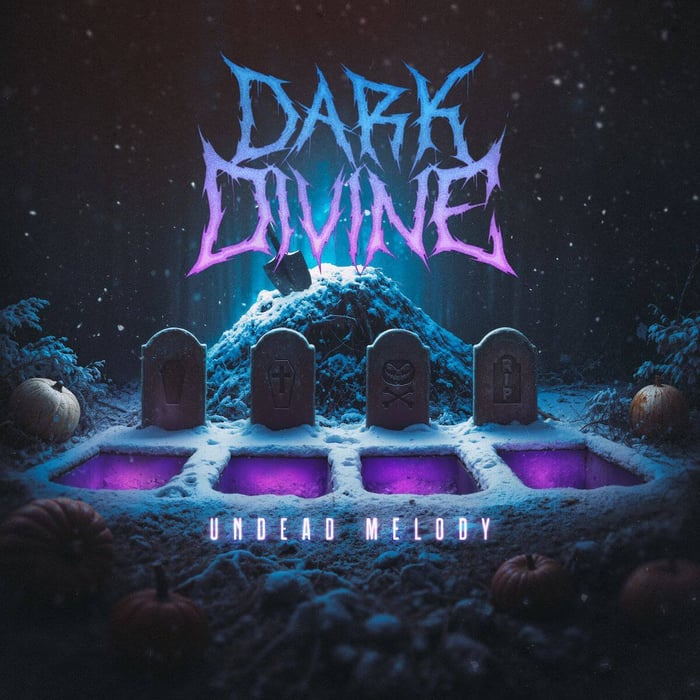
Undead Melody is out now via Thriller Records.
If you want to keep up with the band directly: Dark Divine are on Facebook at https://www.facebook.com/Darkdivinemusic
Undead Melody doesn’t reinvent metalcore—it dresses it up, lights it dramatically, and insists you look it in the eye. The best songs hit because they balance heaviness with intention, like the band is using horror as a way to say something personal without turning it into a diary entry. The few that miss don’t fail loudly; they just fade into the fog.
Our verdict: People who like theatrical heavy music with hooks, synth-haunt polish, and big feelings will actually like this album—and probably defend it in group chats. If you want your metalcore stripped-down, “no costumes allowed,” you’ll roll your eyes and wait for the lights to come back on.
FAQ
- Is Undead Melody more heavy or more theatrical?
It’s both, but the theatrics are the glue. When it gets heaviest (like “The Void”), it still feels staged on purpose, not accidental rage. - Does the album sound repetitive across thirteen tracks?
Not really—its moods change quickly. The risk is the opposite: a few songs compete for the same space and can blend if you’re half-listening. - What’s the standout moment on the back half?
“The Void,” easily. It’s the track that stops the album from drifting and reminds you how hard this band can hit. - Are the fun tracks actually important?
Yes. “Freakshow” and “Halloweentown II: Welcome Home” feel engineered for live chaos, and that’s part of the album’s real mission. - Is “Half Past Dead (Unbury Me)” worth your time?
Absolutely—haunting synths, solid writing. It just doesn’t jump as high as the songs around it, which makes it feel smaller than it is.
If you’re the type who judges an era by its artwork as much as its breakdowns, you might want to shop a favorite album cover poster at our store—tastefully dramatic options live here: https://www.architeg-prints.com
 | DISCOUNTGET 30% OFF*Use code on your next order:
|
* This post may contain affiliate links, meaning we earn a commission if you make a purchase through these links, at no additional cost to you.