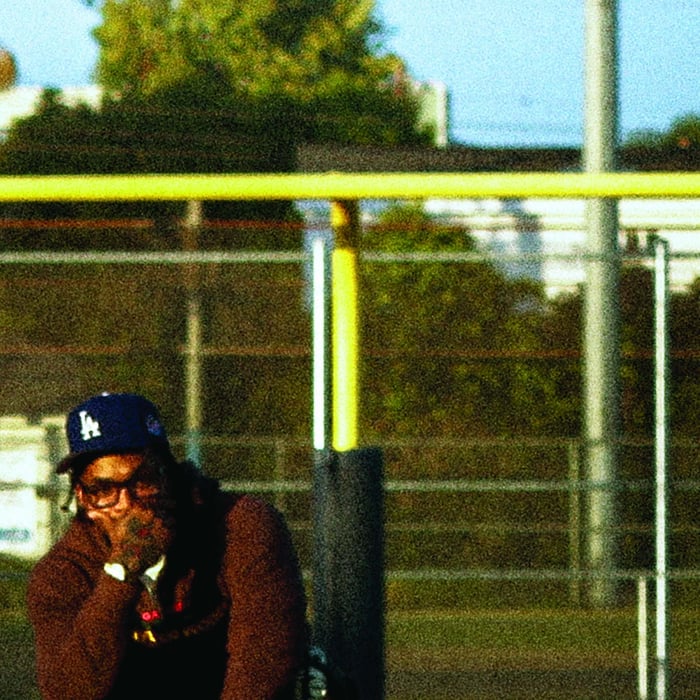
Monday Night’s Football Album Review: Rap So Fast It Trips Over Itself


 See more Architeg Prints stories on Google.
Monday Night’s Football Album Review: Rap So Fast It Trips Over Itself
Monday Night and Evidence turn the Football album into a sprint through ego, grief, and rent money—sometimes brilliant, sometimes just breathless.
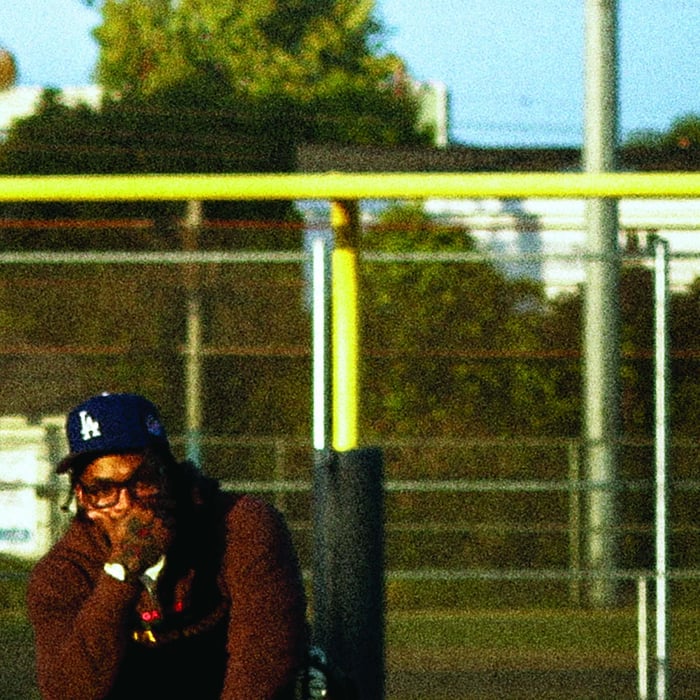
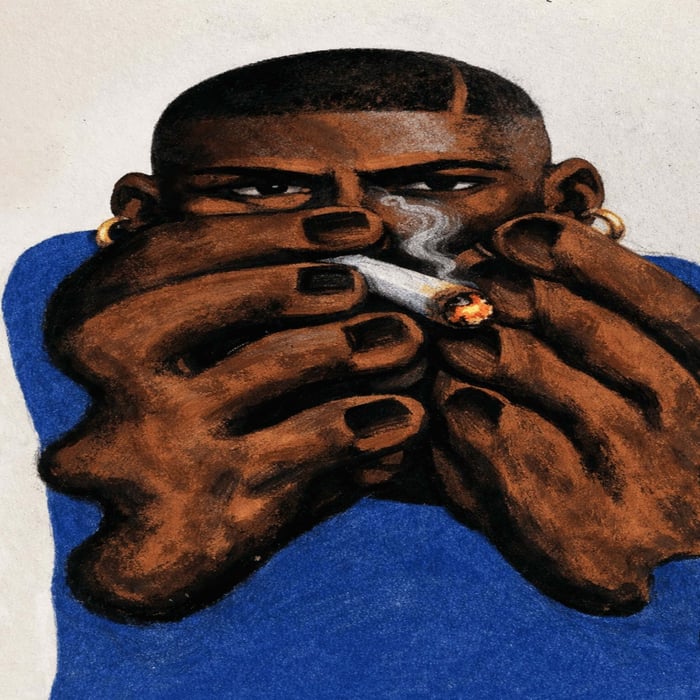
Courtesy of Bigger Picture Records.
This record doesn’t “arrive”—it rushes you
Some albums walk into the room and make eye contact. Football kicks the door, yells a few perfect insults, then keeps running like it’s late to its own release date.
Monday Night has always sounded like somebody who already booked the next studio session before finishing the verse he’s currently rapping. That’s not just productivity—on Football, it becomes the whole aesthetic. Ten tracks, all built on Evidence’s sample-first loops, and Evidence never grabs the mic. That decision matters: it forces Monday Night to carry everything with language, breath control, and panic-energy alone. And he does—almost to a fault.
The thing is, I expected this to feel like “rapper meets legendary producer, everyone behaves.” On first listen I even thought, okay, this might be a clean, comfortable collab tape. But the more time I spent with it, the more it felt like the exact opposite: a speed-run through pride, survival, and private dread—rapped so densely you can miss the point while still being hit by it.
Arguable claim: the album’s main gimmick isn’t football imagery—it’s the refusal to let any emotion finish a sentence.
Evidence’s loops aren’t polite; they’re trapdoors
Here’s what Evidence does on this: he doesn’t give Monday Night wide open space. The beats loop like they’re circling something, not resolving it. They’re sample-based, repeating with the kind of insistence that makes a rapper either simplify or overload.
Monday Night chooses overload.
The result is this constant feeling of acceleration. He packs lines past the point of easy clarity, like he’s trying to outpace his own thoughts. And weirdly, the rapping often gets fastest exactly when the feelings underneath get heaviest—which is backwards from how most people handle vulnerability. Most artists slow down to make sure you “get it.” Monday Night speeds up like he’s trying not to.
Arguable claim: Evidence doesn’t “support” Monday Night here—he pressures him. These beats are a treadmill, not a couch.
“Street Racing” and “Overdrive” reveal the real sport: momentum
The football theme pops up early and keeps recurring, but it’s not cute or decorative. On “Street Racing,” he runs football language through the verse—calling audibles, throwing a Hail Mary he insists can’t fail—then ties it to the same restlessness that has him cutting records nonstop. He even flips the idea of weekly movement into consumer motion: shopping, roster swaps, always changing, always proving.
And he doesn’t just compete—he floats above the field. There’s a line of thought running through these songs where rivals aren’t simply worse; they’re not even starters. Not worth scouting. That’s the kind of confidence that sounds corny in weaker hands, but Monday Night’s delivery sells it because it’s moving so fast it barely has time to brag.
“Overdrive” is where the flexing starts to feel like a physics experiment. He pulls up to Venice with “a couple minutes to spare,” then stacks boast on boast—calling his flow omnipotent, comparing himself to Icarus, threatening to sit you in fire. It’s outrageous, but it’s also motion for its own sake, like he’s revving an engine in neutral.
Then he snaps into something rawer in the second verse—suddenly it’s “years and tears,” and “over-cried,” and the mood shifts from dominance to defense. He shuts the door on analysis with:
“You can’t research me / I’m an anomaly.”
I’m not totally sure he’s right about that—part of him is extremely readable, honestly—but I get why he needs to say it. He’s not trying to be understood. He’s trying to stay uncatchable.
Arguable claim: the album’s bragging isn’t confidence—it’s evasive driving.
Money shows up as rent money, not champagne money
A lot of rappers talk about cash like it’s proof of peace. Monday Night talks about it like it’s proof he’s still alive.
On “Akinyele,” a spoken voice lays down the rule before he even raps: “Nobody ask you where you got your dollar, they ask you do you have it?” That line basically explains the whole record’s economy. It isn’t about taste. It’s about possession. About survival math.
Then the song turns domestic for a second—his girl asks if he’s coming home. He says he wants the house poppin’, wants to live large—and immediately undercuts it with the memory of sleeping in cars and sleeping alone. That whiplash is the point. He won’t let luxury stay fantasy; he drags it back into need.
The hunger under all of it isn’t just “get rich.” It’s “don’t be nobody.” He even spits a cold line at the people who swear dreams fail—especially when the dreamer doesn’t have a name yet, doesn’t have an alias. That’s the fear: being a person nobody has to remember.
“You Name It” opens with him spending someone’s deposit, brushing off another rapper’s bars as outdated and sloppy. Domo Genesis shows up and matches him bar-for-bar, and the two of them talk like mob bosses, like a next chapter of Tha Carter mythology, signing off with the kind of “we’re in a league you’re not involved with” talk that’s obnoxious in theory and effective in practice.
But even here, the money stays practical: rent, deposits, dollars people ask about. There’s no victory lap. There’s a ledger.
Arguable claim: the album treats money like a haunted object—useful, necessary, and never romantic.
“Derryclare” is menace with shaky hands
This is where the record’s toughness starts sweating a little, and that’s why it works.
Fly Anakin takes the first verse like it’s block-politics 101—feeding people who don’t even like him, recounting a stickup in flat, almost bored past tense. The calmness is its own threat.
Then Monday Night comes in and doesn’t just threaten—he psychoanalyzes. He reads a man before the man opens his mouth: he knows your heart, your traits, like sharks know the dark. He claims he met the worst early—“before I knew I was a god, I already knew Satan”—and for a second it sounds like mythology-building.
But the bravado thins in real time. He doesn’t want fame to steer him off from Gary. He doesn’t want to cry like Mary. He talks about getting raided once the sun’s down, then immediately insists he’s “dangerous in the clutch now.”
That’s not contradiction—that’s nerves pretending to be a plan.
Arguable claim: “Derryclare” isn’t a tough-guy track; it’s a track about how hard it is to keep acting tough.
When the album stalls, it stalls in the most predictable place
Not every song here survives the “density” approach. A couple tracks get stuck in posture.
“Doubletree” parks itself in a hotel suite and refuses to leave. There’s ashing on the drapes, sizing up a threesome, and a dragged-out section about a rapper who knew him before he was anyone. The writing flattens into pure swagger—still technically agile, but emotionally idle. The speed becomes wheel-spinning.
“Nina Sky” runs a similar lane: rising blood pressure, sex-as-cardio, flex-as-plot. And then right near the end, he finally lands a turn that means something—he slips into a line about the first time she held him down, and suddenly the whole song briefly becomes about trust instead of conquest.
That moment basically proves the issue: when Monday Night is only flexing, the same density that thrills elsewhere just turns into fog. It’s impressive fog, sure, but still fog.
Arguable claim: these songs don’t fail because they’re explicit—they fail because the writing stops aiming.
When he points the speed at the craft, “1st & 3rd” clicks into place
“1st & 3rd” is what happens when he uses velocity like a blade instead of a smoke machine.
He starts by calling out a liar before even hearing the guy out—paranoia as efficiency. Then he drops one of the record’s best practical flexes: keeping savings where he can watch them, with a line about Wells Fargo under the mattress while interest rises. It’s funny, but it’s also revealing: even “success” still requires hiding.
The second verse is where the song turns. He admits, plain, “I’m the one—I ain’t always believe it.” That’s a real confession, and he doesn’t dramatize it. He pivots into something like purpose: gospels for nonbelievers, rhymes as a vessel to teach. Not preachy—more like he’s surprised he has anything to offer besides survival tactics.
Then the football imagery closes it out again—people on first and third, driving home, income tax handled, the only appropriate verb being “servin’.” It sounds like he’s trying to turn responsibility into a highlight reel. And honestly? It kind of works.
Arguable claim: “1st & 3rd” is the album’s actual mission statement, even though it pretends to be just another flex.
Grief shows up mid-verse because he can’t stand to stay with it
The most lasting thing on Football isn’t the bragging. It’s the grief—and how aggressively it refuses to take center stage.
On “Muscle Memory,” he’s mid-flex when a text from his big cousin cuts in: “I knew it was something heavy.” Then he drops it blunt: “RIP Aunt Elsie.” No buildup, no pause for you to wipe your hands. It’s just there, like real loss is: interruptive, inconvenient, permanent.
He talks about thinking of his mom whenever he’s tested. He admits to a fake relationship with God—fake, but maybe still useful. And only near the end does he say the quiet part: he was thinking about Aunt Elsie the whole time, eyes under pressure, riding blind.
The last words hit hardest because they’re so unadorned: showing up like his auntie, knowing his role. That’s the closest he gets to saying it straight.
“Lighthouse” handles a different loss with the same strategy. There’s an inheritance from his dad—already spent—folded into a verse about wanting a sunroof and a hook about swapping his life out for one that rhymes. It’s almost absurd, the way consumer desire and mourning share the same breath. But that’s exactly the point: he can’t afford to sit in grief. He has to keep moving, even if movement looks like distraction.
I kept waiting for a full stop—a song that just sits down and lets the sadness talk. It never comes. And when he does slow down, it doesn’t feel therapeutic. It feels like devastation.
Arguable claim: the album’s fastest moments aren’t confidence—they’re a method of avoiding the rooms grief wants to lock him inside.
Conclusion: Football is a sprint where the wounds keep pace
Football doesn’t try to be elegant. It tries to be unavoidable. Evidence gives Monday Night loops that circle like vultures, and Monday Night answers by rapping like stopping would mean letting something catch him.
It’s not flawless—when he drifts into pure hotel-suite swagger, the words lose their bite. But when he aims that speed at fear, money anxiety, and grief that won’t wait its turn, the record turns into something sharper than a “collab tape.” It’s a person refusing to slow down long enough to be measured.
Our verdict: This will hit hard for listeners who like rap that feels overstuffed on purpose—bars piled like a duffel bag you can barely zip, with flashes of real loss poking through. If you need clean hooks, spacious beats, or tidy emotional arcs, you’re going to feel like this album keeps talking over itself—because it does, and it thinks that’s the point.
FAQ
- Is Football a Monday Night solo album or a true collaboration?
It plays like a true pairing: Monday Night raps the whole thing, but Evidence’s sample loops shape the entire mood and pacing. - Does Evidence rap on the album?
No—he stays behind the boards, and that absence makes the record feel more focused and more pressurized. - Which tracks feel the most emotionally direct?
“Muscle Memory” and “Lighthouse” let grief leak through mid-verse, and that casual honesty hits harder than a full-on ballad. - What’s the best “pure rapping” track here?
“1st & 3rd” sharpens the album’s speed into something purposeful, with lines about belief, work, and responsibility that actually stick. - Are there any skips?
If you’re not in the mood for extended flexing, “Doubletree” can drag, and “Nina Sky” takes too long to find its one meaningful turn.
If this album’s cover art lodged itself in your brain the way the best loops do, you can grab a favorite album-cover poster vibe for your wall at our store: https://www.architeg-prints.com/
 | DISCOUNTGET 30% OFF*Use code on your next order:
|
* This post may contain affiliate links, meaning we earn a commission if you make a purchase through these links, at no additional cost to you.