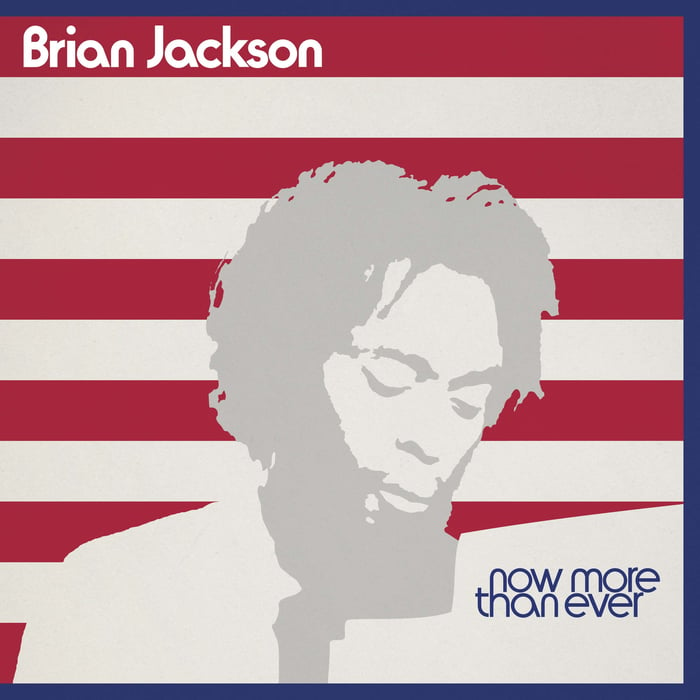
Brian Jackson’s “Now More Than Ever”: Protest Music That Won’t Stop Dancing


 See more Architeg Prints stories on Google.
Brian Jackson’s “Now More Than Ever”: Protest Music That Won’t Stop Dancing
Now More Than lures you onto the floor, then quietly asks if you’re okay with the world burning—while the hi-hats keep smiling.
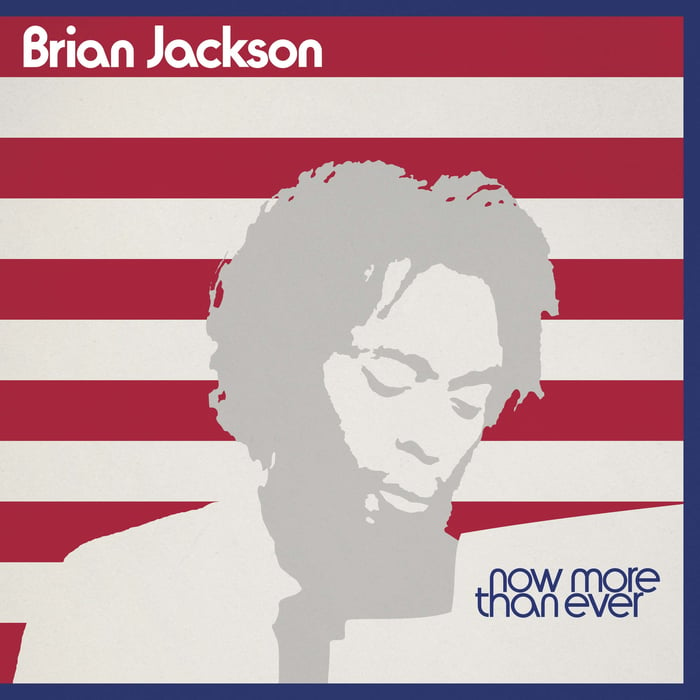
A record that seduces first… then corners you
This album doesn’t walk up and explain itself. It grabs you by the waist with house grooves, then slips a terrible thought into your drink like it’s doing you a favor. Now More Than Ever keeps acting like a party—until you realize the party is the disguise.
And yeah, I worried going in that this whole idea would collapse under its own seriousness. Protest songs can turn into museum pieces fast: polished, reverent, dead behind the eyes. That’s the classic trap. This one mostly dodges it by doing something almost rude: it insists on motion.
Moodymann’s “We Almost Lost Detroit” is the album’s quiet threat
The first real chill comes from “We Almost Lost Detroit.” The story behind it is already a nightmare—Fermi 1 sitting seconds from annihilation while a whole sleeping town has no clue—but the way it’s set here is the real trick. Moodymann drops that horror onto a heavy, swinging loop and lets smoky electric piano smear the edges until your body starts agreeing with something your brain absolutely shouldn’t.
That’s the point, I think. The track doesn’t ask for permission to be danceable. It just is. And in that decision, it accidentally becomes crueler than a straight-faced protest performance. It’s basically saying: money wins every time, and everyone upstream will keep quiet if the risk only falls on “some town.”
Halfway through, the groove is still pretty—too pretty—when the line arrives that messes up everything:
How are we going to get over losing our motherfucking minds?
No other moment on the record hits quite that mean. It’s not just anger. It’s the sound of someone realizing the damage is already inside the house. And the beat keeps moving anyway, like it’s daring you to stop.
Arguable take: this is the most effective use of “dance music” on the album because it refuses to comfort you.
“The Bottle” and the album’s obsession with need
“The Bottle” doesn’t float above suffering; it sits right in it. Omar voices a scared Black boy with a father pawned down to desperation—a wedding ring gone—and then flips perspective to the wife who’s been drinking since her man went away. It’s not melodrama. It’s the daily math of people trying to survive themselves.
And the closing thought—everybody needing something—doesn’t land like a moral. It lands like a confession. This album keeps doing that: it presents social damage not as a headline, but as appetite. The need is the point, and once someone sings about it out loud, they’re stuck owning it.
Arguable take: “The Bottle” works better than it should because it doesn’t try to “fix” anyone; it just lets the thirst talk.
Lisa Fischer turns “Home Is Where the Hatred Is” into calm devastation
I didn’t expect “Home Is Where the Hatred Is” to hit me the way it did, mostly because I thought I already knew the emotional shape of it. Then Lisa Fischer comes in low and even—almost eerily steady—on “I left three days ago, but no one seems to know I’m gone,” and suddenly the lyric stops being theater and turns into a room you can’t leave.
The real twist is how she handles the needle-mark admission: her voice doesn’t beg, doesn’t perform collapse. It stays calm against what’s clearly a wrecked-up plea. That contrast makes it worse in the best way—like the song has already passed the point where panic helps.
Brian Jackson built this melody under Gil Scott-Heron’s words half a century back, but it doesn’t behave like a relic here. It’s weirdly present tense, like the track is proving that time doesn’t heal anything if the system keeps handing out the same injuries.
Arguable take: Fischer’s restraint is more brutal than any “big vocal” version would’ve been.
Rahsaan Patterson reaches for rescue on “Lady Day & John Coltrane”
Where Fischer stays level, Rahsaan Patterson does the opposite on “Lady Day & John Coltrane.” He reaches upward—like the song is physically trying to climb out of its own sadness. The idea is almost naïve on paper: summon Billie Holiday or Coltrane and let them wash your troubles away. But he sells it by making the longing sound temporarily reasonable.
For a minute, rescue almost feels available. Almost.
That’s the album’s recurring move: it gives you just enough light to show you what you’re missing. And once a singer opens their mouth around the need, they end up owning it—whether they want to or not.
Arguable take: this track flirts with sentimentality, but the performance keeps it from turning into a greeting card.
“Beautiful Dame” stops the dancefloor with two words
Raquel Ra Brown’s “Beautiful Dame” is where the album tightens its fist. Her father lies cold on the L train, and she’s walking a man home through Philly streets carrying a saxophone. The music underneath—garage house with jazzy piano—could’ve been used as cozy nostalgia. Instead, it becomes a moving sidewalk for grief.
She names music itself as the woman the title is about. She moves through Billie Holiday, and that old truth—God bless the child that’s got his own—and then she drops the simplest command that suddenly feels enormous:
Just listen.
And weirdly, that’s where the floor stops moving. Not because the beat disappears, but because the story puts weight on it. One person’s inheritance fills the quiet. Taking care of family presses up against what she calls the actual sound of life. And the saxophone she carried her father’s friend home with turns out to be the “dame” all along.
Arguable take: “Beautiful Dame” is the album’s emotional center because it doesn’t try to be inspiring—it just refuses to look away.
The real glue is the one sound that keeps coming back
One sound holds almost the whole record together, and it’s doing more work than any single guest performance. The steadiness is the secret weapon.
You can hear how the styles shift without breaking the spell:
- deep house carries “Peace Go With You, Brother”
- afro-house drives “The Bottle”
- a garage groove pushes “Is That Jazz?”
- and across it all, Jackson’s flute keeps returning
That flute is the breadcrumb trail. It keeps pulling an early-’80s composition toward a 2026 club without begging for relevance. It just slides into the pocket and dares you to notice.
Arguable take: the flute isn’t decoration—it’s the album’s way of insisting the past can still sweat.
Where the album stumbles a little: the back stretch gets thin
The cost of that steadiness shows up later. Not disastrously—nothing here fully crashes—but you can feel the energy thin.
A vocal-free remix of “Home Is Where the Hatred Is” lands after the definitive vocal version already played, which is a tough spot. It’s like being handed a sketch right after you’ve seen the painting. I kept waiting for it to reveal some new angle—some hidden menace in the rhythm—but it mostly reads as a functional extension, not a necessary one.
Then the title cut, “Now More Than Ever,” arrives as newer material written during the sessions. It leans on a chanted hook and a communal feeling. That sounds nice, and it is nice, but the older material had a sharper habit: it named people and put you inside their specific stories. The title track goes for togetherness where other tracks went for detail.
Neither choice sinks the album. But they do stretch out a back half that’s clearly asking for a long time on the dancefloor—and once the thinning starts, you notice it.
Arguable take: the album is strongest when it’s personal and specific, not when it tries to be “unifying.”
Black Thought turns “The Revolution Will Not Be Televised” into a modern trapdoor
The original “The Revolution Will Not Be Televised” was built against TV jingles back in 1970. Here, Black Thought rebuilds it for the feed, and he doesn’t soften the argument. He makes the modern world sound even more pathetic in its distractions.
You won’t be able to block, unfollow, mute, or swipe left to disengage.
The link is in the bio.
There’s no discount QR code waiting in junk email with coupons for a President’s Day sale.
Every laugh he sets up gets paid back as dread. And the delivery matters: where the hosts of other tracks sing, Black Thought talks. That choice turns the verse into a stare-down, not a performance. The moment he drops the joke and shifts into mortality—battling human nature, ending “posted at the station,” waiting for something he can almost taste—you can hear the difference between youthful certainty and lived-time patience.
The original sounded like a young man promising something was coming. This version sounds like someone who’s watched a lot arrive, and a lot not arrive, and still has to stand there anyway—aware the body might run out of time first.
I wasn’t sure this update would work; modern references can date themselves instantly. But on second listen, the specificity is the whole point: it’s not trying to be timeless. It’s trying to be un-ignorable.
Arguable take: this might be the album’s most unsettling track because it refuses melody as an escape hatch.
The album avoids reverence by staying weirdly alive
The danger with a record built from protest songs is reverence—the move where a singer treats the source like scripture and forgets to stay human inside it. That almost never happens here, and the album earns credit for that.
Rich Medina speaks “Winter in America” like a late-night story, not a recitation. The conceit barely holds together, honestly, but it keeps its grip anyway: the seasons rotate until one gets mad and decides to stay. The constitution turns into a noble piece of paper. Democracy becomes ragtime on the corners. Nobody fights, and nobody knows what to save. It’s messy in the way real fear is messy—half metaphor, half exhausted observation.
Then J. Ivy goes loud on “Racetrack in France,” narrating the Midnight Band’s 1976 flight to a French festival like living history. He even frames it like: before Soul Plane, this was the soul plane—city boys leaving the country to play a race track. And he rattles off who was aboard: Eddie Palmieri, Ray Barretto, Larry Coryell. The name-dropping could’ve felt like homework, but the way he delivers it turns the list into proof: this happened, these people moved, history had a body.
Arguable take: the spoken-word cuts work here because they’re imperfect; perfection would’ve turned them into monuments.
“New York City” dances through its own contradiction
“New York City,” sung by Cindy Mizelle, Dawn Tallman, and Ramona Dunlap, is built on a contradiction it doesn’t bother hiding. It’s a playground for the super wealthy where the middle class need not apply. Old blocks get scraped into foundations for penthouses. And still—still—the song hangs onto that line: as long as we’re living in it, it can never die.
Over a bouncy bassline and thick upbeat percussion, Jackson pushes the keys out front. The singers grieve the place and refuse to stop dancing in it. That’s not optimism. That’s survival with rhythm.
At first, I took it as a simple love-hate postcard. Then it clicked: the track isn’t praising the city; it’s describing what it feels like to be unable to quit it, even when it’s clearly trying to price you out of your own memories.
Arguable take: “New York City” is less a tribute than a shrug—because sometimes shrugging is all you’ve got.
Where I land: the “favorites” are the ones that don’t let you off easy
If I’m picking the tracks that actually show the album’s teeth, I keep coming back to the same trio:
- “The Revolution Will Not Be Televised”
- “Home Is Where the Hatred Is”
- “Racetrack in France”
Not because they’re the “best” in some abstract sense, but because they don’t let you treat the message like décor. They force a reaction—unease, recognition, discomfort, maybe even a guilty little head-nod.
Arguable take: the album’s most effective moments are the ones that risk making you feel implicated, not merely informed.
Conclusion
Now More Than Ever gets its power from a blunt trick: it puts bodies on the dancefloor and refuses to pretend that motion equals joy. Even when the pacing thins a bit late in the run, the record still lands its main blow—these songs aren’t history lessons, they’re mirrors, and the mirror is standing under club lights.
Our verdict: People who like house music with teeth—and don’t mind their grooves coming with a side of dread—will love this. If you want protest music that behaves politely in the background, this album will annoy you on purpose (and then you’ll catch yourself dancing anyway).
FAQ
- Is “Now More Than Ever” more of a dance album or a protest album?
It’s a dance record wearing protest songs like a second skin. The beats pull you in; the words make sure you don’t stay comfortable. - Does the album feel dated because it draws from older material?
No—the older songs feel weirdly current, mostly because the performances don’t treat them like antiques and the production keeps the pulse modern. - What’s the most emotionally direct track?
“Home Is Where the Hatred Is.” Lisa Fischer’s calm delivery makes the pain feel lived-in instead of dramatized. - Any weak spot I should expect?
The back stretch loses some punch: the vocal-free remix of “Home Is Where the Hatred Is” arrives after the definitive version, and the title track leans more communal than specific. - What should I play first if I’m unsure?
Start with “The Revolution Will Not Be Televised.” If Black Thought’s version doesn’t grab you, the album’s whole angle might not be your thing.
If you’re the type who cares about album art as part of the experience, it’s not a bad time to grab a favorite album cover poster for your wall—our shop’s over at https://www.architeg-prints.com, and it pairs nicely with records that insist on being heard.
 | DISCOUNTGET 30% OFF*Use code on your next order:
|
* This post may contain affiliate links, meaning we earn a commission if you make a purchase through these links, at no additional cost to you.