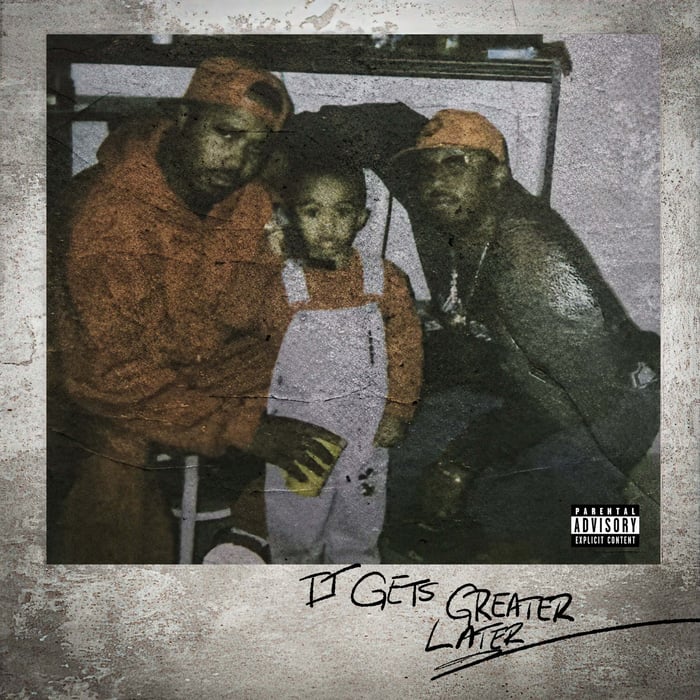
It Gets Greater: Courtney Bell’s Prayer-Rap With a Checklist Problem


 See more Architeg Prints stories on Google.
It Gets Greater: Courtney Bell’s Prayer-Rap With a Checklist Problem
It Gets Greater isn’t “inspirational rap.” It’s faith used like a seatbelt while life keeps trying to eject Courtney Bell through the windshield.
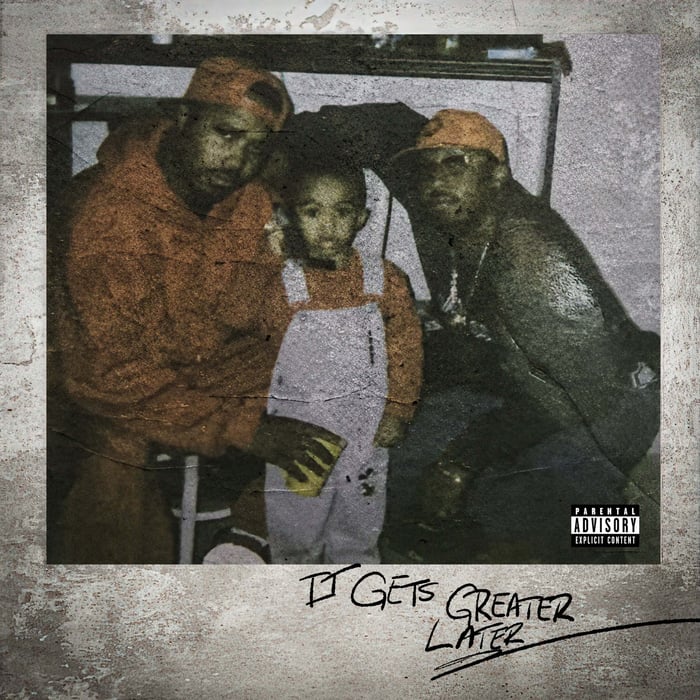
This album doesn’t want to preach—it wants to survive
The first thing I noticed about It Gets Greater is how hard it works to avoid the corny part of “God rap.” You can feel Bell circling the pulpit and refusing to step up on it, like he knows the second he sounds “uplifting,” the whole thing turns into wallpaper.
And instead of converting every bar into a tidy lesson, he keeps letting the ugliest impulses breathe right next to the spiritual language. That’s the real move here: not “I found God,” but “I found God and I’m still capable of thinking something reckless before breakfast.”
That tension is the album’s engine—and it’s why it’s compelling even when it’s messy.
“Wounded Healer (Book of Eli)” kicks the door in, then refuses the altar call
This opener basically dares you to misread the record. Bell sets up the promise—turning verses into “the word of God”—then immediately swerves away from anything that sounds like a sermon recital. He gives you scripture-flavored framing, sure, but he doesn’t use it as decoration. He uses it like a restraint.
The real punch is how fast he moves from the expected “holy” posture into a line that sounds like it belongs in a police report:
“Plannin’ to make my exit, headshots on my checklist.”
— Courtney Bell, “Wounded Healer (Book of Eli)”
That line isn’t tossed in for shock value. It lands like a thought he’s embarrassed to admit he can have. And then he calls it “divine protection” without changing his tone—like faith isn’t a glow, it’s a guardrail.
There’s also that early moment where somebody tells him his whole vibe doesn’t match the music—“Your image don’t match what you spittin’, you look like you slain”—and Bell’s response is basically: you have no idea what I dragged myself through to stand here. That’s not a flex. That’s resentment dressed as calm.
My arguable take: the intro isn’t about God at all—it’s about image control. God is the language he uses to keep from narrating the uglier parts like a trophy.
“Stumble” shows his best instinct… then he starts listing headlines
From there, the record gets into what Bell does best: making a “mistake” sound like a message without making it sound cute. On “Stumble,” he frames falling as a signal—like the ground was placed there on purpose just to force him onto his knees. When he says he heard “angels call,” I actually believed him for a second, which is rare. The delivery doesn’t wink. It just states it.
Then he drifts into broader collapse—planes falling, economic disaster, robots raising babies, a cheating pastor. It’s a classic temptation: when your personal story hurts, you try to widen the lens until it becomes “society,” because “society” feels less embarrassing than “me.”
And honestly, this is one of the few spots where the album loses a bit of grip. A list of problems isn’t the same thing as saying something sharp about them. Bell is more dangerous when he’s specific.
Arguable statement: Bell’s “big picture” mode is where he’s most generic—his intimacy is his real advantage.
“ISO” tries to be clever, then gets smart by getting catchy
“ISO” comes in from the other angle: concept-first. It stretches a basketball metaphor until it starts to feel like he’s using the idea as a substitute for saying the hard thing plainly. I kept waiting for the metaphor to crack open and reveal something personal underneath.
But here’s the part that surprised me: it doesn’t overstay. It finds a hook that sticks, then leaves before the concept collapses under its own weight. That’s discipline—maybe not lyrical discipline, but structural discipline. Bell knows when to stop explaining himself.
On first listen I thought “ISO” was going to be one of those tracks that tries to win an argument with the listener. On second listen, it felt more like a palate cleanser: not deep, just strategically placed.
“Problems” is where the album actually gets brave
If you want the real thesis of It Gets Greater, it’s “Problems.” Because Bell isn’t using confession like a brand here—he’s almost hiding behind other people’s pain, then accidentally admitting his own.
He steps into the lives of:
- a friend who uses drugs to outrun himself, and whose backstory turns brutal when Bell drops that he was “touched”
- an absent father and an addicted mother
- a woman chasing a model body, maybe surgery, trying to buy confidence while stuck with a man who cheats and mistreats her
What’s nasty about this track—in a good way—is the refusal to diagnose. He doesn’t tidy it up with “hurt people hurt people.” He just holds the camera steady and lets you look.
Then, when the hook swings back to him, he shrugs in a way that feels like self-defense:
“Before I seek therapy, I seek a bottle… what do I look like telling strangers my problems?”
That’s a confession pretending it’s a joke. And I’m not totally sure whether he’s rejecting therapy or just rejecting vulnerability. Either way, the line hits because it’s cowardly in a recognizable way.
Arguable take: “Problems” is the album’s most honest moment precisely because Bell refuses to sound enlightened.
“Everyday” traps him in the loop he can’t beat
After “Problems,” the album pivots into the grind—except it’s not hustle porn. It’s habit addiction with a calendar.
“Everyday” is built around a promise he can’t keep: “Said I’d go sober, but I can’t.” That’s not dramatic. That’s just the sentence you mutter when you realize you’ve been bargaining with yourself like you’re two different people.
Bell makes the week feel warped—Mondays that feel like Fridays, the ritual of “getting fresh, getting by, getting high.” The real bite is how he places paranoia right next to progress: even when things go well, he can’t relax into it. He hears the floorboards creaking.
Arguable statement: the song isn’t about drinking—it’s about mistrusting calm. Sobriety is just the most obvious battlefield.
“Virgil” turns self-care into a nervous tick
Then “Virgil” takes that anxious energy and dresses it up as a wellness routine. It’s almost funny how much he stacks into the week—Reiki, breathwork, psilocybin micro-doses, yoga instead of coffee—like he’s building a “better me” schedule the way people build a fantasy roster.
But the record refuses to let that become a redemption arc. He drops a line about back-to-back funerals and blacking out at the coffin, and suddenly all the breathwork in the world sounds like perfume sprayed on smoke.
This is one of Bell’s most pointed contradictions: he believes in spiritual practice, but he doesn’t pretend it turns him into someone untouched.
Mild criticism, if I’m being blunt: the “wellness list” risks sounding like name-dropping remedies rather than showing what they actually do to him. The funeral line saves it because it yanks the song back into reality.
Arguable take: “Virgil” isn’t about healing—it’s about trying to control the volume on grief.
“He Don’t Know” uses a love/loyalty frame to stage a trial
“He Don’t Know” is where the album turns cinematic—not because it gets bigger, but because it gets oddly specific. The setting is basically a courtroom in Wayne County in 2009: a fifteen-year-old defendant, a girl watching from the gallery. That detail anchors everything, even when Bell drifts into status talk.
Ron E’s hook reaches for upgrades and Vogue covers, and Bell answers with Teslas and front pages—but the flexing doesn’t feel like the point. It feels like scenery around the memory, like he’s talking over the trial because the trial is too heavy to narrate directly.
And the song resolves into a line that tells you what’s non-negotiable:
“Even if we don’t get back together, you still my nigga.”Flowers are optional. The year is permanent.
Arguable statement: the wealth talk on this track functions like a defense mechanism, not a celebration.
“Bang” pretends it’s pure bravado, but it’s actually grief with its fists up
On “Bang,” Bell flashes back to a time when the come-up was the whole story—before boardrooms, before polish. The track detonates past into present with loud metaphors and bigger-than-life claims, including a 9/11 image that’s meant to signal maximum impact.
That kind of line can feel like trying too hard, and I won’t pretend it didn’t make me flinch. But I get what he’s doing: he’s forcing scale onto his story because small talk won’t hold what he’s carrying.
He also drops a line calling hip-hop “this orphanage… need restorin’,” which is the kind of statement that sounds corny until you realize he’s accusing the culture of raising artists without care, then acting surprised when they grow up feral.
Then Benny the Butcher shows up like a reflection in a dirty mirror—courtrooms to boardrooms, pain converted into profit, survival turned into receipts. It plays like two men comparing the exchange rate between trauma and money and realizing it never gets fair.
Arguable take: the feature doesn’t “elevate” the track—it exposes how transactional Bell’s idea of success has become.
“Hope You Understand” finally says the quiet part out loud
If “Bang” is armor, “Hope You Understand” is the moment he opens the vest and shows the bruises. He gets blunt about cocaine residue by the money counter, money piling up, faith described as mustard-seed small. That’s not a triumph. That’s a man admitting his belief is tiny but stubborn.
The line that stayed with me is painfully plain:
“Discipline will separate you from the ones you thought would make it.”It sounds like a motivational quote until you hear it as loneliness—like separation is the tax for staying alive.
And then he collapses gun-and-God into one breath: keeping a gun near, finding God while “closing the gap.” The distance between pistol and prayer disappears. That’s not spiritual poetry. That’s a survival tactic.
Dawn C closes the song and basically mocks the title by twisting it:
“I’ll be a masterpiece soon as I master peace… I heard that it gets crazier later.”
— Dawn C, “Hope You Understand”
Greater, crazier—same word in a different outfit. Bell doesn’t answer her, which feels intentional. The album’s whole thing is unanswered questions disguised as statements.
Arguable statement: Dawn C doesn’t “add” to the track—she interrogates Bell’s entire concept.
“Costly” and “Thank You” treat consequences like receipts
By the time “Costly” hits, Bell is done pretending the price is metaphorical. He says the closest people were plotting and he had to remove them. It’s blunt enough to make you wonder how much is confession and how much is posture—but either way, he wants you to feel the loneliness of choosing survival over closeness.
Nick Grant slides in with a Pac comparison he claims he never wanted, which is exactly the sort of thing you say when you definitely know what you’re doing. It’s both humility and advertisement in one breath. That contradiction fits the album.
Then “Thank You” should not work on paper. Thanking God for DUIs? For the officer who found him on a night he “should’ve died”? For healing a family member from cancer? For major-label chances he admits he messed up when he was young?
It lands anyway, weirdly, because it plays like stand-up that accidentally becomes prayer. The list goes long enough that it starts sounding like a rap sheet read aloud by someone who’s finally stopped bargaining. It’s gratitude as accounting.
And that’s where It Gets Greater ends up: not praising God for making life pretty, but thanking God for keeping him alive long enough to remember what almost killed him.
Arguable take: “Thank You” is the only time the album feels genuinely free—because it stops trying to win and starts trying to tell the truth.
Final stretch: the tracks I actually replayed
Flowery closers aren’t the point here. The songs that stick are the ones where Bell stops listing and starts admitting.
If you want my personal anchors on It Gets Greater, it’s these:
- “Wounded Healer (Book of Eli)” for the terrifying calm of that “checklist” line
- “Virgil” for the collision between self-care language and funeral reality
- “Problems” for the steady, unromantic way it shows damage
And yeah, I could see someone disagreeing and picking the bigger, brasher moments. But I think the album’s best work happens when it speaks quietly and refuses to wrap the pain up neatly.
Conclusion
It Gets Greater isn’t trying to convert you. It’s trying to document what happens when faith and self-destruction share the same apartment and keep eating each other’s food. When Bell locks into detail—courtrooms, bottles, funerals, residue by the counter—the record stops being “about” anything and turns into something you can feel in your jaw.
Our verdict: People who like rap that treats spirituality like a bruise (not a bumper sticker) will love this. If you need your “uplift” music to actually uplift—and not mutter about guns, relapse, and paranoia—this album will irritate you fast, like a sermon that keeps interrupting itself with the truth.
FAQ
- Is It Gets Greater more motivational or more confessional?
More confessional. The “motivation” lines show up, but they usually land like somebody trying to talk themselves out of a bad decision. - What’s the core keyword I should remember about this album?
It Gets Greater—because the record keeps questioning what “greater” even means when life keeps getting “crazier later.” - Which song best represents the album’s emotional center?
“Problems,” because it refuses to preach and just lets the damage sit there without a tidy moral. - Does the album ever lean too hard on concepts or lists?
Yes. “Stumble” and parts of “Virgil” flirt with listing more than digging—but the strongest tracks pull back into specifics. - Who is this album not for?
Anyone who wants clean, uncomplicated “faith rap.” Bell’s version of belief is tangled, and he doesn’t pretend otherwise.
If this record put a particular image in your head—courtroom benches, funeral suits, neon wellness routines—turn that into something you can hang up. We keep album-cover posters for moments like this at Architeg Prints.
 | DISCOUNTGET 30% OFF*Use code on your next order:
|
* This post may contain affiliate links, meaning we earn a commission if you make a purchase through these links, at no additional cost to you.