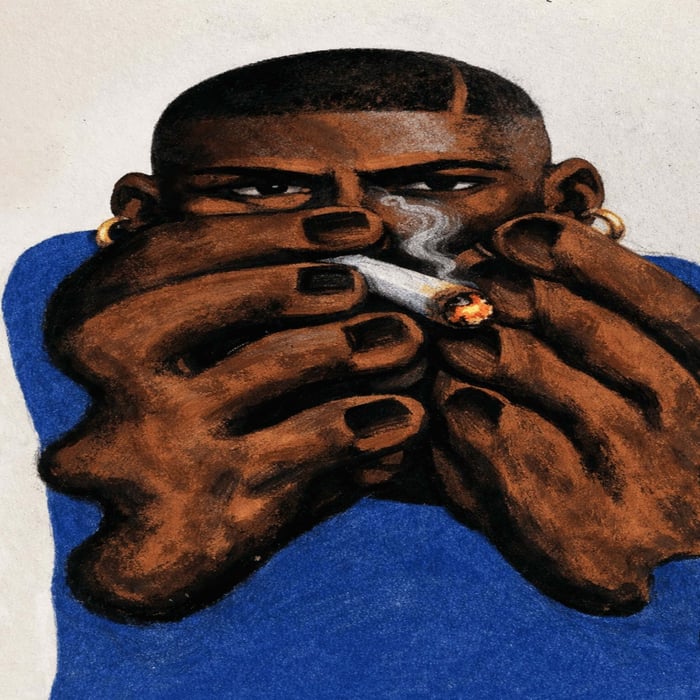
Brief Laughs Album Review: The Saddest Joke Wakai Won’t Explain


 See more Architeg Prints stories on Google.
Brief Laughs Album Review: The Saddest Joke Wakai Won’t Explain
Brief Laughs by Wakai and Luke MacKenzie transforms grief into a haunting routine, capturing the somber atmosphere of loss with unflinching honesty and emotional restraint.
Album Cover, Same Room, Same Air
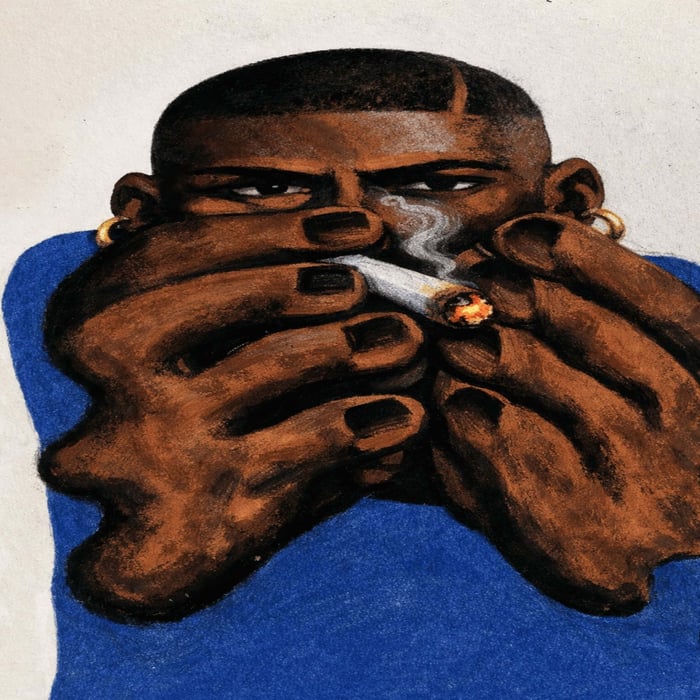
You know that specific silence after a laugh that wasn’t supposed to happen? This album lives in that silence and starts rearranging the furniture.
I’m not saying Brief Laughs is “about” death and trauma in the lazy, headline sense. I’m saying Wakai and Luke MacKenzie built the whole thing like a repast—the meal after a funeral—where everybody’s hungry, nobody’s okay, and the funniest story in the room only buys you five seconds before the weight drops back onto your shoulders.
And they’re doing it on purpose.
The Title Track Isn’t a Song Title—It’s a Rule
The bridge into the album’s real intent comes fast: the title track “Brief Laughs” plays like Wakai is standing in the corner of that post-funeral room, watching people pretend they’re functioning. He doesn’t dramatize the body count; he measures it—like the dead and living are separated by a thread so thin you stop believing there’s a separation at all.
The verse feels stretched to the point of numbness: acquaintances vanish, trauma gets compacted into something you can carry around, and violence becomes an object in the room—present, casual, ready. The scariest part is the tone: he’s not performing panic. He’s reporting the funeral the way you’d report tomorrow’s weather, because tomorrow still shows up whether you’re ready or not.
That choice is arguable, sure. Plenty of rappers use detachment as a shield. Here it reads less like a shield and more like a lifestyle infection—like the only way to stay upright is to stop reacting.
The “brief laughs” aren’t punchlines. They’re pressure valves. They work for a second, then the sadness fills the space again, like smoke.
“As a Child” Opens With Paranoia That’s Already Settled In
The next step is how the album opens on “As a Child,” where paranoia doesn’t arrive like a plot twist—it’s already a habit, already chewed into shape. When Wakai says he’s anxious around strangers, it doesn’t feel like social anxiety dressed up for relatability. It feels like the day-to-day math of survival.
Then he pivots to noticing the missing—the gone people who get “disposed of.” That word matters. It’s not “lost.” It’s not “passed.” It’s the language of trash removal, and he says it like he hates that his brain has learned to talk that way.
What surprised me is how sex and drugs show up without any victory lap. This album isn’t interested in flexing; it’s interested in explaining defense mechanisms that don’t even feel chosen anymore. That’s a bold decision, and it’s also a little risky—because if you come to music like this expecting big emotional cues, Brief Laughs will act like it doesn’t owe you any.
And honestly, at first I thought the album was going to be monotone in the worst way—like one long gray hallway. On second listen, I realized the “flatness” is the point. It’s emotional triage. He’s staying calm so he doesn’t split in half.
“Felicia” Uses a Name, Then Refuses to Give You Closure
Here’s where the album really shows its teeth: “Felicia” looks like it’s going to be a straightforward dedication—name in the title, story in the verses, easy emotional target. Instead, it veers.
Wakai slides into the story of an “in and out of prison” dude, someone people still decide to “blast on.” The images are quick and nasty: abandoned spaces, an open window, cops patrolling—details that sound like a snapshot taken right before your stomach drops.
And then he hits this sideways explanation for the album title: it’s just a chapter, a brief blast of a sad moment. Not a grand tragedy. Not a moral. Just an instant that happens and then becomes another brick in the wall.
That’s the album’s whole trick: street and death sit on the same surface like they’re roommates. Wakai never draws a bright line where one ends and the other begins. He reports the toll, but he doesn’t score it. He doesn’t label it as loss or triumph. A lot of artists try that “no judgment” posture and end up sounding evasive. Here it lands as discipline. It would be harder to pull off if he started telling you what to feel.
Features That Don’t “Lift the Mood” Because That Would Ruin the Room
The next stretch matters because the guest verses don’t come in like fireworks. They come in like other people walking into the repast with their own plates and their own damage.
On “558,” Pierce Washington shows up after a hook that warns someone “could overdose.” Instead of turning it into a PSA, the verse shifts attention to the surviving family—the people stuck holding the aftermath. Then there’s that line about love not being real if it doesn’t touch the soul, which could’ve been corny in another context. Here it sounds like a tired standard he’s still trying to believe in.
The track also holds onto the album’s central image: “Share a brief laugh whenever we get in the jam.” That’s the mission statement again—comedy as emergency medicine. And the memory of a grandmother who “kept the crease” adds this sharp domestic detail, like pressing a shirt is a form of love when you can’t fix anything else.
Then “Journal Entry 6” brings Seph Pablo, and the somber atmosphere stays intact. He’s talking about smoking to cope, about a niece with baby fever, and how he can’t give her what she wants. It’s affection that can’t fully become action, which is basically the album’s emotional core: caring trapped inside limitation.
He follows it with a hard-earned principle—never learned anything until you bring it back home. There’s no big inspirational swell. It just sits there like a truth you don’t get to celebrate.
A reasonable listener could argue the album needs a moment of sunlight—one feature that breaks the temperature, one hook that lets the room breathe. I kept waiting for that, and it never comes. Whether you call that courageous or stubborn depends on your tolerance for being held in one emotional position.
“May 11th” Shows How Politics Actually Enters Your Life: Mid-Complaint
The bridge from the personal to the political happens on “May 11th,” and it doesn’t arrive cleanly. That’s the point.
The song starts by swinging at fakers and loud savior-complex politicians—personal anger, petty anger, the kind that starts as eye-rolling and turns into something hotter. Then the verse leaps outward: babies dying in bombed cities, cops getting raises to kill people.
And the jump doesn’t get smoothed over. It just lands there.
That’s the realism. Politics doesn’t show up in your life as a well-structured essay. It shows up while you’re already mad about something else, then suddenly you’re staring at the big horror behind the smaller ones. The lack of a neat bridge isn’t sloppy writing to me—it’s a portrait of how the mind buckles under constant outrage.
If you want your protest music tidy, you might hate this track. If you want it to feel like somebody thinking in real time, it hits.
“Riley & Huey” Makes Faith and Rage Share the Same Lungs
“Riley & Huey” pulls a similar move, but through Boondocks imagery—using those characters as shorthand for a certain kind of political awakening. The desire to emulate Huey shows up alongside the idea that change only comes when we bleed.
And then it gets darker: boys dying from hangings, mothers screaming after sons get dropped from a disagreement. The song makes a brutal claim: the system doesn’t even need to invent new violence; it just keeps recycling the old methods with new timestamps.
The part that stuck with me is how Wakai holds faith and rage in the same breath. He says he knows he’s a sinner, and yet he spreads peace—no pause, no attempt to make the contradiction pretty.
That’s not a motivational slogan. It’s a real, unsupported tension. The song doesn’t solve it because life doesn’t solve it. And if you’ve ever heard an artist try too hard to sound “complex,” you know how rare it is for a contradiction to sound this unperformed.
Baton Rouge Isn’t a Backdrop—It’s the Album’s Gravity
All of this is anchored in Baton Rouge. You can feel it underneath everything, like the ground tone of the record.
Wakai sounds like someone who’s been recording since adolescence—not in a “look at my grind” way, but in the way his voice has learned how to stay steady while describing unstable things. And there’s also this other public life hovering around him—modeling and design—details that don’t really show up in the verses as facts, but they hang around the album as texture. Like: yes, other versions of him exist, but they’re not the versions running this room.
“6 Feet” hits on the daily economics of pressure: a partner in public housing, bad checks, parents out of work. And then he calls chosen happiness the only drug. That’s a provocative line because it’s half hopeful and half accusation—like he’s daring himself to believe in joy while admitting how chemically difficult that feels.
He even admits karma feels like it’s working against him, like his mental is running out. And then he drops the line that sums up the album’s philosophy in one grim little knot: light is where darkness lives.
I’m not totally sure I buy that as wisdom—I can hear someone arguing it’s romanticizing suffering. But on this album it doesn’t sound romantic. It sounds like a coping phrase he’s repeating so he doesn’t collapse.
“A.S.N” Finally Stops Hinting and Starts Naming the Damage
The bridge into the album’s most explicit writing is “A.S.N,” where he lays out the full story with less fog.
“It’s no excuse, you’re not a victim, that’s not what I label it,”
That’s a tricky stance, because it can sound like self-blame dressed up as accountability. But then the song frames the relationship through the haze of abuse—the kind you “hardly shake from,” the kind you don’t even realize is still gripping you.
Mid-song he drops the line that changes the emotional scale: he wasn’t ready for a child. Then: they reconcile, but they’re scarred.
The reason the track works is because nobody gets turned into a cartoon. She isn’t blamed. He isn’t made a saint. The reconciliation isn’t presented like a happy ending, and the scars aren’t treated like poetic accessories. They’re just left on the table at the end of the song, like: this is what happened, and it still exists.
If you came here for catharsis, this track might frustrate you. It refuses to wipe the slate clean.
“Rectify” Admits the Real Relationship Is With Grief (And With Luke)
By the end of “Rectify,” Wakai says it’s just him and Luke—an aloofness from the cradle, a list of constants that ends up circling back to the producer partnership. “Me and Luke” isn’t a brag. It sounds like the only stable structure he trusts.
Then he finally speaks plainly about what’s happening internally: processing grief, breaking old routines, trying to find somewhere to breathe. That line lands because the rest of the album has been so controlled; hearing him say it directly feels like watching somebody loosen their grip for half a second.
The driving image is the closer’s quiet gut-punch: he’s speeding, God is in the passenger seat, and when asked why he’s speeding, there’s no answer. That’s the album in miniature—movement without relief, faith without resolution, survival as momentum.
And in the simplest terms, Brief Laughs is the music you put on when you steal a few minutes for yourself from something awful that refuses to leave you alone.
What Actually Hits (And What Doesn’t)
To keep this honest: the album’s unchanging “cold temperature” is impressive, but it can also be slightly punishing. There were moments I wanted one track to crack—just a little—so the heaviness would feel earned again instead of constant.
Still, the discipline is the statement. This isn’t a record that wants to entertain you out of pain. It wants to show you how pain becomes furniture.
Favorite track moments I kept coming back to:
- “Brief Laughs” — the mission statement, delivered without theatrical lighting
- “Journal Entry 6” — Seph Pablo matching the room’s tone instead of trying to steal it
- “Riley & Huey” — faith and fury sharing one breath, contradiction left standing
Conclusion: The Laugh Is Real, and That’s the Problem
Brief Laughs doesn’t chase relief. It documents the tiny breaks people take inside ongoing damage—and it refuses to turn those breaks into a victory parade. The album’s power is that it doesn’t ask permission to be heavy; it just sits there, watching you react. If you feel trapped, congratulations: that’s the design.
Our verdict: People who like rap that sounds like an unedited journal page—cold voice, hot reality—will actually like Brief Laughs. People who need hooks to “lift” the trauma, or want every song to build toward a clean catharsis, will bounce off this fast and call it boring. They won’t be totally wrong. They’ll just be trying to open a window in a room the album locked on purpose.
FAQ
- What is the core vibe of Brief Laughs?
Brief Laughs feels like sitting at the meal after a funeral where everyone pretends they’re fine for five minutes, then stops pretending. - Does the album ever get hopeful?
It flirts with hope in lines about chosen happiness and faith, but it doesn’t let hope take over the room. - Which track is the most personal?
“A.S.N” goes into the clearest detail about relationship damage and reconciliation that still leaves scars. - Do the guest features change the mood?
Not really—and that’s intentional. Pierce Washington and Seph Pablo keep the same air instead of trying to brighten it. - If I only listen to three tracks, which ones should I pick?
“Brief Laughs,” “Journal Entry 6,” and “Riley & Huey” give you the album’s emotional rules without softening them.
If this album put a specific image in your head, you can do something useful with that: hang it on your wall. If you want a clean poster print of your favorite album cover, you can pick one up at our store: https://www.architeg-prints.com
 | DISCOUNTGET 30% OFF*Use code on your next order:
|
* This post may contain affiliate links, meaning we earn a commission if you make a purchase through these links, at no additional cost to you.