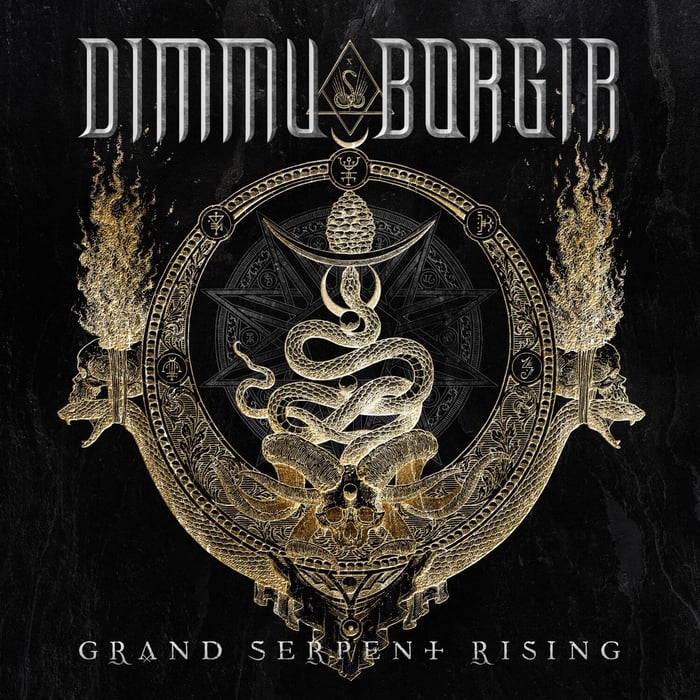
Grand Serpent Rising Review: Dimmu Borgir’s 69-Minute Spell That Dares You to Blink


 See more Architeg Prints stories on Google.
Grand Serpent Rising Review: Dimmu Borgir’s 69-Minute Spell That Dares You to Blink
Grand Serpent Rising isn’t “a comeback” so much as a calculated flex—sharp production, symphonic menace, and hooks that keep biting past the hour mark.
A record that doesn’t ask politely
Some albums knock. Grand Serpent Rising kicks the door in, rearranges the furniture, and then acts like you should thank it for the new layout. I went in expecting a familiar brand of symphonic black-metal theater—cape twirls, lightning bolts, the usual—and what I got was something more intentional: an album that sounds like it’s trying to outlast you.
Not in a sloppy way, either. In a “we built this maze on purpose” way.
The opening move: “Tridentium” sets the trap
The first thing “Tridentium” does is make a statement with orchestration that feels less like an intro and more like a warning siren. It’s dramatic, yes, but not random. The arrangement leans hard into that “storm gathering on the horizon” tension—unnerving little signals that something ugly is about to arrive.
There’s spoken word too, and honestly, my first reaction was:
here we go, the lore segment.On second listen, I realized it’s not there to “explain” anything. It’s there to slow your pulse down just enough that the next track can spike it.
That’s the trick: the album doesn’t start with violence. It starts with control.
“Ascent” is the obvious single because it’s designed to grab you
Then “Ascent” detonates. The raspy scream comes in like a brand logo stamped into metal—instantly recognizable, and clearly meant to be. The blastbeats race, the hooks don’t waste time pretending they’re above being hooks, and the lead work slides in with that slick confidence that says: yes, we know exactly what you came for.
And I’ll say it plainly: this is the album’s sales pitch track, and it works because it doesn’t act ashamed of being direct. If anything, it feels like the band is making a point that accessibility and extremity can share the same room without apologizing.
“As Seen in the Unseen” turns the theatrics into a marching weapon
Right after that rush, “As Seen in the Unseen” doesn’t try to out-sprint “Ascent.” It struts. It opens with haunting melody work—less “pretty,” more “cold hands on your neck”—and then it steps forward with this menacing theatrical gait that feels deliberate, like it’s pacing a stage.
When the aggressive riffing finally surges, it isn’t just heaviness for its own sake. It’s the moment where the symphonic layers stop being decoration and start acting like architecture. The soundscape gets wide, but it also gets busy, and that’s where the album starts showing its real obsession: it wants to overwhelm you without ever sounding out of control.
A reasonable listener could argue it’s too much layering. I get that. I’m not totally sure I’d fight them on it. But I can’t deny the momentum—this track is the album beginning to build its world instead of merely hinting at it.
“The Qryptfarer” is where the album starts playing games
If the early run is about making a big entrance, “The Qryptfarer” is where the record starts smirking. It’s infectious and intense, sure, but what actually makes it stick is the way it keeps turning corners. The tempo shifts aren’t just technical showing-off; they’re a way of keeping you slightly off-balance.
And the piano placement—yeah, that’s the detail that makes it feel sly rather than blunt. The piano doesn’t “soften” the track. It sharpens it, like someone flicking a knife open in a quiet room. The unpredictability is the point. This song doesn’t want you comfortable.
Hot take: this is more memorable than some of the “bigger” anthem moments, because it behaves like it has secrets.
“Ulvgjeld & Blodsodel” brings the native tongue back—and it matters
With “Ulvgjeld & Blodsodel,” the return of the band’s native language isn’t a novelty; it changes the texture of the vocal rhythm. Even if you don’t understand a word, the phrasing hits differently—harder consonants, sharper edges, less sing-along friendliness.
It starts gradual, building with lavish orchestration like it’s stacking candles in a cathedral, and then it pivots into vibrant riff work that feels like the “real” engine showing itself. I can hear why this was chosen as a lead single: it sells the album’s whole thesis in one piece—drama, scale, aggression, and polish, all stitched together without visible seams.
If you think that sounds too calculated, you’re not wrong. That’s also why it works.
“Repository of Divine Transmutation” fake-outs the folk mood on purpose
“Repository of Divine Transmutation” opens with a folk-like acoustic arrangement that almost feels like it’s offering you a chair. And then it yanks the chair away. The acoustic bit doesn’t get to become a “vibe.” It gets swept aside for explosive extravagance like the band is allergic to staying gentle too long.
At first, I thought the acoustic opening was just set dressing. After sitting with it, I’m convinced it’s there as a contrast mechanism—proof that the band could lean into earthier tones, but they’re choosing spectacle because that’s the mission. They’re not trying to be understated. They’re trying to be imperial.
“Slik Minnes en Alkymist” is the album’s adrenaline shot
“Slik Minnes en Alkymist” grabs you by the collar with pure energy. It’s invigorating in that way where you can feel the track pushing the tempo like it’s impatient with you. The best part is the blend of light and dark elements—because it doesn’t feel like “beauty and the beast” clichés. It feels like the band is toggling emotional lighting fast, like someone flicking switches in a haunted house.
An arguable claim: this track makes the album feel younger than it is, because it behaves like it’s trying to prove something.
“Phantom of the Nemesis” is groove in a spiked boot
Then “Phantom of the Nemesis” leans into a groove-ridden stomp that’s honestly devilishly addictive. It’s the kind of rhythm that makes you nod before you realize you’re nodding. Not everything here is about speed; this track proves the band knows when to slow down just enough to make the heaviness feel heavier.
If I had one mild gripe in this whole middle section, it’s that the album sometimes risks confusing “more parts” with “more impact.” This song avoids that trap by committing to its stomp. It’s not trying to impress you with a thousand moves. It’s trying to own the room.
“The Exonerated” and the art of not letting up
“The Exonerated” charges forward with swift drumming and vigorous riffing, like the album is refusing to let you rest. The uplifting solo flourishes are the kind that feel earned—not random shredding stapled on top, but a burst of brightness cutting through the grit.
This is where I started noticing how the album’s pacing is both its strength and its gamble. The run time is generous, and the band clearly isn’t interested in trimming anything for modern attention spans. Part of me respects that. Part of me also caught myself thinking: okay, you’ve made the point—how long are we staying in this room?
“Recognizant” and “At the Precipice of Convergence” go for the throat
“Recognizant” hits with unwavering potency. Rapid shredding is the backbone here, and it feels like the guitars are doing the job of both weapon and scaffolding. There’s not much subtlety—this is force, executed cleanly.
“At the Precipice of Convergence” keeps the velocity up, but it’s not just speed for speed’s sake. Frenetic energy trades space with cleverly constructed rhythms, the kind that make you realize the band isn’t merely stacking intensity; they’re shaping it. The rhythmic turns feel planned, like they were mapped with graph paper and a spiteful grin.
Arguable statement: these faster cuts are more convincing than the album’s “grand” moments, because they feel less like performance and more like instinct.
“Shadows of a Thousand Perceptions” casts the best kind of spell
“Shadows of a Thousand Perceptions” pivots into bewitching melodies and choral accompaniment that actually lands. The choral parts don’t feel pasted on; they feel like a second voice arguing with the riffs. The undertones are enchanting in an evil, alluring way—less cartoon villain, more “you shouldn’t be enjoying this, but you are.”
I kept waiting for it to tip into cheese. It doesn’t—at least not for me. But I’ll admit I’m not 100% sure where your tolerance line is. If you hate choir-backed metal on principle, this track won’t convert you. If you’re open to being seduced a little, this is the one.
“Gjǫll” closes the journey with atmosphere, not fireworks
Finally, “Gjǫll” uses broad instrumental swathes to bring things home. It’s satisfying because it doesn’t try to “win” with one last speed trial. It feels like the album exhaling—letting the grandeur hang in the air long enough to register.
That choice is gutsy. Some listeners will call it anticlimactic. I think it’s the band proving they don’t need to end with a punch to feel dominant. They end by looming.
So what is Grand Serpent Rising actually doing?
Grand Serpent Rising contains all the signature hallmarks that made the band matter in the first place—big symphonic scale, harsh vocal bite, theatrical confidence—but it also pushes forward into slightly newer territory by sounding more deliberate about how it paces its spectacle.
The production is razor sharp—every instrument slices through cleanly, and the orchestration doesn’t blur into mush. It’s the kind of mix that makes you notice how carefully everything is placed, from the blastbeats to the piano accents to the choral swells.
And yes, it’s long—69 minutes long. That’s not a flaw by default, but it is a dare. The album seems aware that modern listening habits are brittle, and it basically responds with: that’s your problem. Some days, I admire that attitude. Other days, I wish one or two sections had been tightened—not because the ideas are weak, but because the album occasionally insists on its own magnificence a little too hard.
Still, the bigger truth is obvious: there’s fuel left in the tank, and the band isn’t rationing it.
FAQ
- Is Grand Serpent Rising a good entry point if I’m new to the band?
It can be, mainly because “Ascent” and “Ulvgjeld & Blodsodel” make the band’s priorities obvious fast: scale, aggression, and hooks with sharp edges. - What track best represents the album’s personality?
“The Qryptfarer” feels like the record’s brain at work—tempo turns, piano precision, and an urge to keep you guessing. - Does the 69-minute runtime feel justified?
Mostly, yes—but it’s definitely a stamina test. I respected the commitment more than I “needed” all of it. - Where does the album take the biggest stylistic swing?
“Repository of Divine Transmutation” with that folk-like acoustic opening—mainly because it gets immediately flattened by the band’s appetite for spectacle. - What’s the most addictive moment on the record?
The groove-heavy stomp of “Phantom of the Nemesis.” It’s the part where the album stops sprinting and starts strutting.
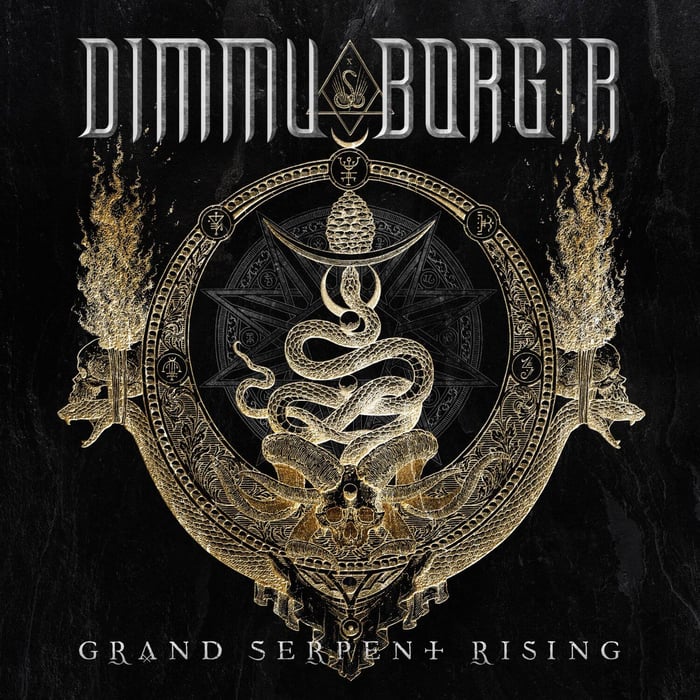
If this album’s cover (or your favorite classic album art) is the kind of thing you’d actually hang on a wall, you can shop album cover posters at https://www.architeg-prints.com.
 | DISCOUNTGET 30% OFF*Use code on your next order:
|
* This post may contain affiliate links, meaning we earn a commission if you make a purchase through these links, at no additional cost to you.