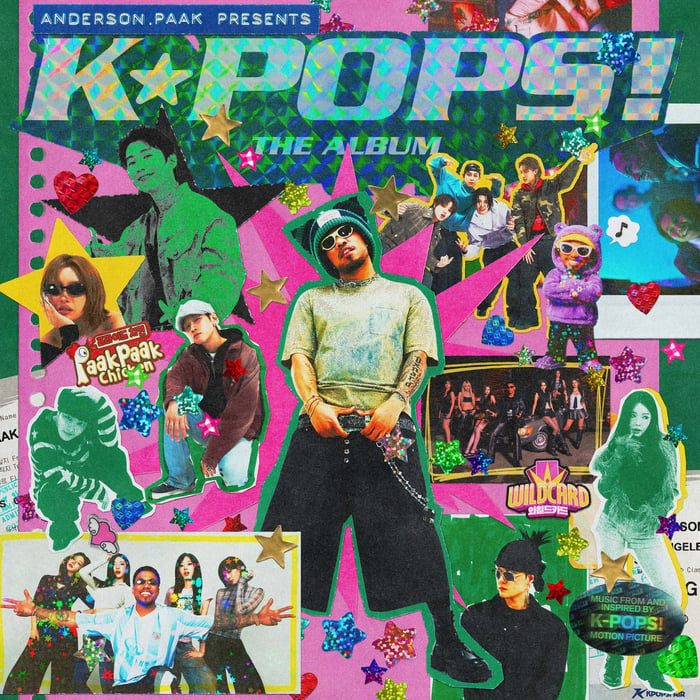
K-POPS Album Review: Anderson .Paak’s Seoul “Movie” That Won’t Star Him

 See more Architeg Prints stories on Google.
Album Review: K-POPS! by Anderson .Paak
Explore the complex interplay of ego, collaboration, and vulnerability in Anderson .Paak’s K-POPS! album, where the spotlight often shifts away from the marquee name to the powerful voices surrounding him.
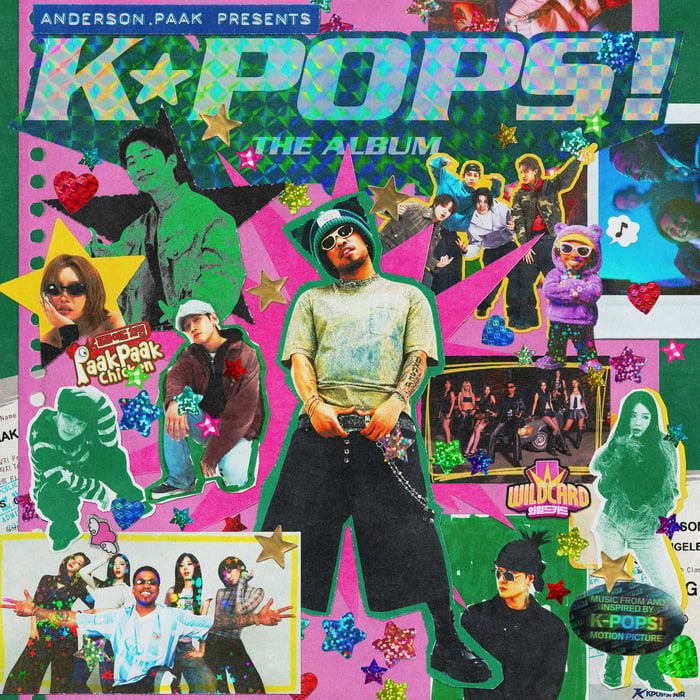
A hook: the album acts like the lead… then gives the close-ups away
This record doesn’t really want to “introduce” K-pop to Anderson .Paak or Anderson .Paak to K-pop. It wants to stage a little ego-drama where he keeps thinking he’s the main character—and then the scene calmly proves he isn’t.
At first listen, it may appear as a feature-stuffed flex: famous names, glossy production, passport stamps. But on a deeper listen, the strange, sharp truth emerges—K-POPS album is basically .Paak writing himself as a washed-up American chasing fame in Seoul, then allowing everyone around him to out-act him. This is no accident. It’s the script.
Yes, it is a flex too. But it’s a flex with a bruise beneath the surface.
He opens with CHUNG HA and immediately “loses the hand”
Here’s how you know the game he’s playing: “Bet On U” starts with .Paak talking like a high-roller, tossing out smooth lines and money metaphors, acting like he’s the one raising the stakes. He’s flirtatious in that practiced, entertainer way—like he’s charming a room that already expects him to charm it.
Then he does something almost self-sabotaging: he abandons the flirt and turns into a pilot voice, welcoming the cabin over an intercom. It’s dryly humorous but also bleak if you think about it. He’s announcing himself to a plane that’s already taken off without him. CHUNG HA takes the scene, while .Paak is left performing professionalism to an empty seat.
This choice feels deliberate: the album keeps staging moments where .Paak performs control just as control slips away. If you expected him to dominate his own record, this is your first sign that domination isn’t the plot.
“International” is SOYEON’s runway, and .Paak knows it
The transition into “International” feels like skipping baggage claim and striding straight into the terminal with a camera crew behind you. SOYEON does not merely feature on this track; she stamps her name on it.
She raps past a man who tries to place her face with a cool power. The vibe is: you can recognize me or stay confused; either way, I’m moving on. She name-checks her own status like a credential she doesn’t need to show, and every line lands like she’s already late for the next gate.
Oddly, Anderson .Paak ends up riding shotgun on his own track. This is the album’s running joke: the marquee name keeps sharing the spotlight as if it’s rented. SOYEON owns the runway, and .Paak sounds almost content being the charismatic guy in the back letting it unfold.
This could be seen as a flaw—that the album gives away its best moments—but it’s more interesting than that. It’s him admitting the chase is the point, not the win.
“Caution” is where NMIXX stops flirting and starts threatening
“Caution” sharply changes the tone. .Paak plays a traffic stop scene—he’s the guy trying to talk his way out of trouble with a grin, saying, “excuse me, officer, pardon for speeding… but NMIXX is performing tonight.”
It’s cute for a moment. Then NMIXX arrives and flips cute into something mean.
They turn “caution” into a siren—an alarm you cannot ignore. Suddenly, the flirtatious energy feels flimsy. They warn of danger: “might end up in a coffin,” “yellow tape,” “no compromising.”
The contrast is striking: most of the album’s come-ons are disposable, shiny wrappers, but NMIXX’s stance is heavy, like real consequences. They don’t just steal the scene; they change its rules. .Paak smartly steps aside and lets the warning resonate.
DEAN makes lust sound like hunger… and nobody actually eats
When DEAN takes the mic on “Aftertaste,” the album leans heavily into food as metaphor. Wanting becomes hunger. Desire turns into a menu. “Five star, three course, Michelin plate”—romance is a reservation, the goal is to be consumed.
.Paak responds crudely, promising to make a girl wetter than a weather app. Sometimes he keeps up with the tone, sometimes he seems to chase it.
The “PITC” moment—“can I bite it?”—turns people into plates. It’s bold, not subtle. “Just One Bite” reduces the night to verbs: work, drink, sweat, dance, then body parts as checkboxes.
It’s unclear whether this is clever transactional commentary or confusion between bluntness and heat. Perhaps both. Still, the hunger feels real, but unfulfilled—everyone orders, but no one is served.
“My father threw in the towel, too afraid of the heartbreak… but I can’t go out that way.” — Anderson .Paak
aespa turns “Keychain” into a contract, not a love song
“Keychain” is slick but cold beneath the surface. aespa frames desire as conditional ownership: clip me to your hip, keep me close, make me your status object—but you won’t get the combinations.
The punchline: the song stacks luxury details and hardware imagery—hip, wrist, keys, safe—while intimacy remains locked away. .Paak plays along, acting like being wanted is effortless, as if he is made of accessories and shine.
But aespa holds the power. They keep the keys. The song isn’t about love; it’s about controlled access. If you hear it as pure flirt-pop, you miss the fine print highlighted in neon.
Then his son shows up and the room finally gets oxygen
After all the sealed-room seduction, “Love Is Everywhere” feels like a window opening.
Soul Rasheed—.Paak’s son—sings with the most raw, least trained voice on the entire album, and it is the first moment the project stops posing. The line about love not being black, white, brown, or burgundy is simple, almost recital-like, and that simplicity makes it stick. No idol cameo cushions it. No flirt distracts.
The message is direct: look outside, breathe, love is everywhere. It’s almost jarring how it straightens your posture. This track is not “better” in some abstract way, but nothing else on the album sounds so unbought. No bars sit straighter than this because it is not trying to win anything.
If you think that’s corny, fair. But corny is sometimes what honesty sounds like when an album has been playing dress-up for an hour.
“The Last” is .Paak alone, and suddenly the movie is real
“The Last” responds to that window with something heavier: .Paak alone, no flirt, no features, stage lights dimmed to a single figure.
He sings about his father throwing in the towel, afraid of heartbreak, then rejects that inheritance. The line that sticks turns the album’s chase narrative into a real stake: he can’t go out that way. He confronts the fear that most earlier tracks avoided.
There’s a line about not being afraid when someone holds him because they never hold him back—simple words, but powerful because the rest of the album is full of playful control games. This is the first time control sounds costly.
My revised impression: I thought this was just a glossy crossover party. “The Last” makes the whole thing feel like it was buying time until he could say something real.
The thin spots: “Wildcard” and “One More Dance” feel like furniture
Not every moment survives the album’s concept.
Across “Wildcard” and “One More Dance,” .Paak steps out of the booth entirely, revealing deadness hidden by earlier star power. Kevin Woo’s “it should be me” hook is functional but lacks personality. It does its job but doesn’t feel alive.
JOSHUA’s “One More Dance” has a lonely-club vibe—begging for one last dance while the floor is empty. The line “as long as your hand’s in mine” tries to keep lights on center stage, but nothing moves behind it. The track feels like a set piece waiting for actors who’ve left.
My mild criticism is these songs don’t feel like scenes; they feel like placeholders. Useful like furniture, but once the album opens a window elsewhere, the stale air here becomes noticeable.
So what is K-POPS! actually doing?
The trick of the K-POPS album is that it keeps tempting you to treat it like a victory lap—international features, flirt-bangers, slick concepts—then keeps staging little losses. .Paak “hosts” and “stars,” but keeps handing the best lines to guests, reenacting the feeling of chasing relevance and watching others get applause.
It’s sharp when it’s sharp:
- When NMIXX turns a word into a siren and makes the mood grow teeth
- When aespa frames desire like a safe you’ll never open
- When Soul Rasheed sings plainly and makes the whole record blink
It’s weaker when it tries to keep the party going without enough tension.
Still, the final move—ending alone and meaning it—makes the earlier gloss feel like camouflage, not just decoration.
Where I land (and what I’m keeping)
Solid (★★★½☆)—not because every track hits, but because the album commits to its own uncomfortable idea: being the famous guy in the room and still feeling replaceable.
Favorite Track(s): “Caution,” “Bet On U,” “The Last”
Conclusion
K-POPS! works best when it stops trying to be the smoothest thing in the room and admits the room might not even be his. The features don’t just decorate the album—they challenge it, sometimes embarrass it, sometimes rescue it. When .Paak finally stands alone at the end, it’s not a victory pose. It’s a person refusing to disappear.
People who like pop collaborations when they come with ego bruises and plot twists will love this. If you want Anderson .Paak to be the undeniable center of every song, you’ll spend half the runtime asking, “Wait—where’d he go?” and not in a fun way.
FAQ
- Is K-POPS album more like a feature compilation or a .Paak album?
It plays like a .Paak album that dares its guests to upstage him—and then lets them. - What’s the most intense moment on the record?
“Caution,” because it stops flirting and starts sounding like consequences. - Does the album ever drop the glossy act?
Yes—“Love Is Everywhere” and “The Last” feel like the mask coming off. - Any tracks that feel weaker in the flow?
“Wildcard” and “One More Dance” feel thin, like the lights are on but the room’s empty. - What’s the main theme tying the songs together?
Wanting—status, bodies, attention—and the uneasy feeling that the chase can outlive the person chasing.
If this album put a specific image in your head—the runway, the siren, the keychain-safe dynamic—turning that into wall art isn’t the worst idea. You can shop favorite album cover posters at our store here: https://www.architeg-prints.com/
 | DISCOUNTGET 30% OFF*Use code on your next order:
|
* This post may contain affiliate links, meaning we earn a commission if you make a purchase through these links, at no additional cost to you.