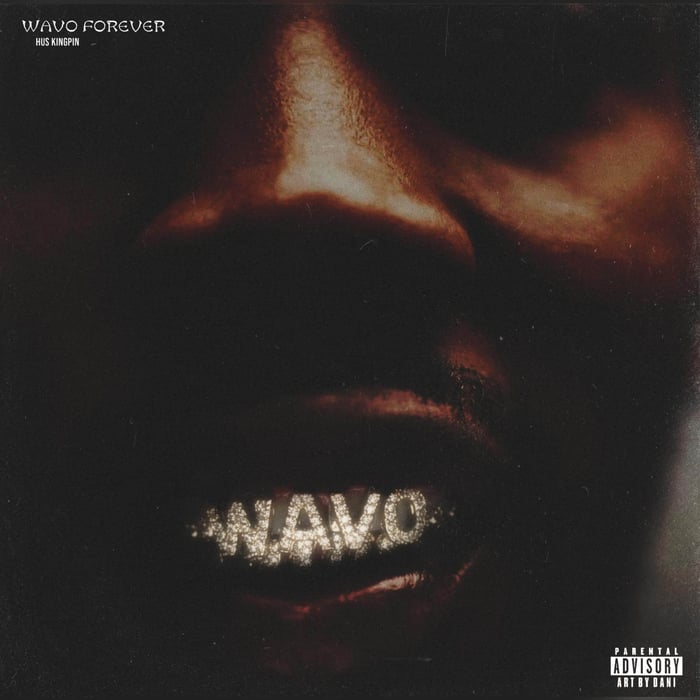
WAVO FOREVER Album Review: Hus KingPin’s Wu-Tang Collector Brain (Blessing/Curse)


 See more Architeg Prints stories on Google.
WAVO FOREVER Album Review: Hus KingPin’s Wu-Tang Collector Brain (Blessing/Curse)
WAVO FOREVER turns Hus KingPin’s Wu-Tang connections into a curated flex—part victory lap, part déjà vu, and way more intentional than it looks.
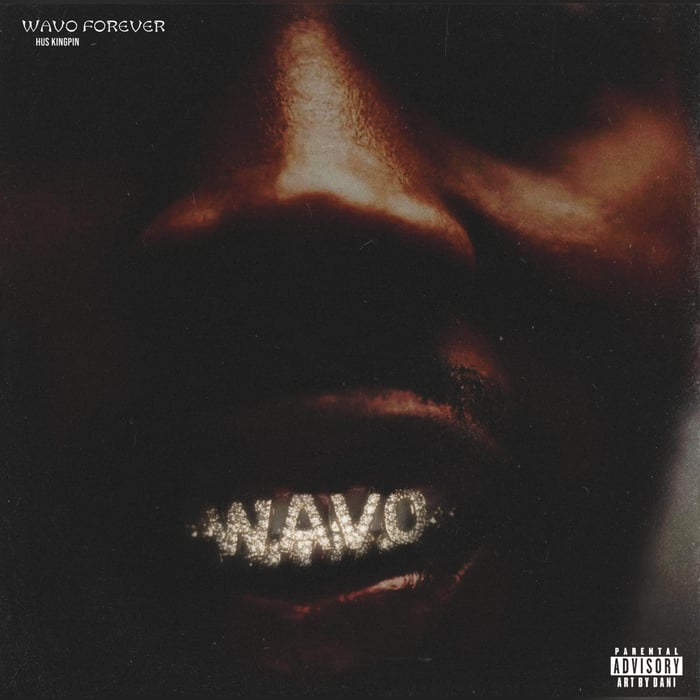
Courtesy of The Winners / DNA Music Group.
This album isn’t “new”—it’s a trophy case
You can hear it in the sequencing: WAVO FOREVER doesn’t move like an album that was “made,” it moves like an album that was assembled. And I don’t mean that as an insult—there’s an entire micro-economy of rap heads who treat Wu-Tang features like rare vinyl artifacts, and this record is basically a well-lit display shelf for that obsession.
Some rappers chase placements. Hus KingPin chases proof of contact. The vibe is: fly out, catch a legend in a room, leave with 16 bars like it’s a stamped passport. That collector instinct has clearly been his engine for a while—he’s the Hempstead-raised rapper who ran Tha Connection with SmooVth, then spent years putting out records through labels in places like Tokyo, Zurich, and Berlin before a lot of American listeners even learned the name. By now he’s 40-plus projects deep, and he’s built full releases around very specific sample/tribute ideas—flipping Portishead, pulling from Björk’s world, even circling Massive Attack co-founder Tricky like a creative north star.
On WAVO FOREVER, that same “crate-digger with a mission” mindset locks onto the Wu-Tang universe—mostly.
The catch: a chunk of this has lived other lives already
Here’s the part the album doesn’t hide, and also doesn’t apologize for: a lot of this material isn’t appearing for the first time. I kept listening with that faint “wait, haven’t I heard this?” itch, and yeah—that’s because several tracks already surfaced elsewhere.
These songs have prior homes:
- “Ghost of Camay,” “Wisewave,” and “Killers Theme” previously showed up on 2019’s Slime Wave.
- “Majestic” and a version of “Saigon Velour” appeared on Ghostface Killah’s The Lost Tapes (2018).
- “Mind Divine” landed earlier this year on Before The Album Drops Part 2.
So WAVO FOREVER works partly like a curated compilation: Hus gathering his best Wu-adjacent cuts from scattered corners and pressing them into one clean run. Whether that bothers you depends on what you already own. If you’re coming in cold, the “batting order” still makes sense—nothing feels randomly tossed. But if you’re the type who bought the vinyl when it dropped, some of these “moments” already happened years ago, and the thrill changes.
At first, I thought the recycling angle would annoy me more than it did. On second listen, I realized the bigger point isn’t novelty—it’s consolidation. This is Hus saying: here’s the Wu-connected chapter of my catalog in one place, and I want it to play like a single statement.
“RZA Fangs” opens like a portal (and Hus knows exactly why)
The opener “RZA Fangs” makes a loud claim immediately: RZA is here, and he’s not showing up politely. He produces and raps, and his verse hits with that unhinged specificity that used to make classic Wu intros feel like transmissions from a parallel dimension—silver-gray bullets, trees growing out of a man’s knees, advice to a mother to keep a weapon nearby. It’s the kind of imagery that’s so oddly concrete it feels prophetic, even when it’s totally absurd.
And Hus is smart for putting this first. He’s basically telling you: this isn’t a fan tribute, it’s a document with receipts.
This is where I’m slightly unsure, though: part of me can’t tell if Hus wants the listener to hear him as an equal in the room, or as the curator standing beside the exhibit. The album keeps toggling between those roles.
Ghostface shows up comfortable, like he never left the block
Ghostface appears twice, and both times he sounds like he’s wearing the role instead of trying it on.
- On “Majestic,” he bounces through images—Mike Tyson punches, bagged flamingos, bulletproof vests—with a cadence that hasn’t aged in twenty years. Not “aged well.” Just… hasn’t aged.
- On “Saigon Velour,” he turns into a nostalgia filmmaker, walking down the block in ’76 with a pimped-out fur hat, eighty pounds of frozen ice, cucuba cigars and Newports, and a stash house owned by El Patron.
That’s the thing about Ghost: he doesn’t summarize a world, he stages it. The detail isn’t decoration—it’s the entire engine.
And Hus doesn’t try to outrun him. He stays in his lane, which is both the album’s professionalism and its limitation.
Wu-Syndicate drags the tone somewhere uglier than the rest dares
Then “Killers Theme” hits, and Wu-Syndicate takes the record to a place nobody else here even bothers visiting. It’s two full rounds of murder content so graphic and so unbothered it makes the rest of the album’s gun bars sound like polite conversation.
It’s almost inconvenient, honestly. Because once you hear that level of menace—delivered without theatrics—it reframes a lot of the surrounding gun talk as style more than threat. You could argue that’s the point: Hus likes the iconography. Wu-Syndicate likes the blade.
Hus’s writing recipe starts to show… and then it won’t stop showing
Here’s where the album starts telling on itself. Hus KingPin holds his spot on every song without embarrassing himself—no small feat when you’re surrounded by heavy names. But his writing leans on a specific rotation that becomes easy to predict once your ear catches it:
- cocaine image
- gun image
- woman’s body
- luxury detail
- back to the gun
You hear it clearly on “Next Level”: he jumps from cocaine traffic over oceanic lines to needing a woman who’ll hide drugs in her body, then pivots into helping her lose weight when she moves weight. It’s a slick string of ideas, but it’s also the same engine revving in the same gear.
“Hang Glide Samurai” spins that blender again—sake rice and poltergeist life in the same breath as heads on ice over dice, dead bodies flying in the sky over innocent bystanders. The images come fast, and they’re vivid, but the structure underneath stays stubbornly familiar.
And “Who Made You Look Pt. 2” might be the cleanest example of Hus being both fun and formulaic at once: bullets figure-skate, the 9 becomes Nancy Kerrigan and the Thompson becomes Tonya, then he swerves into hoes hiking up dresses, forbidden fruit, peanut butter breath weed, a Hadouken reference, and a Street Fighter punchline about lying like you’re Ken.
It’s a lot. It’s entertaining. But after five or six tracks, the surprise wears off. The pattern starts feeling like a comfort blanket.
That’s my mild criticism: Hus’s imagination is loud, but his emotional range stays fenced in. Meanwhile, the MCs around him keep opening doors.
The guests keep finding new rooms while Hus redecorates the same one
When Killah Priest shows up on “Mind Divine,” he goes full cosmic pharaoh—wide-angle, spiritual, mythic. It doesn’t even feel like the same genre of thought as Hus’s more material, body-and-weapon collage.
And then Shyheim comes in quoting his mother telling him not to be weak, which is such a human-sized detail it almost stings. It’s not just “content,” it’s a real voice with a real origin.
That contrast is the album in a nutshell: Hus is skilled enough to spar beside legends, but he rarely changes shape the way they do. The features don’t just add star power—they re-tilt the gravity.
A reasonable listener could disagree and say consistency is the point, that Hus’s lane is the lane. Sure. But on this record, the guests don’t merely “feature”—they re-tilt the gravity.
“Saigon Velour” is the moment where all his worlds finally connect
If WAVO FOREVER has one track that justifies the whole concept, it’s “Saigon Velour.” And I think that’s largely because it already came from Ghostface’s The Lost Tapes—it carries that lived-in cinematic density.
Tricky’s voice sits in the mix like smoke against the glass, while Ghost runs through frozen ice and Colombian tacos, and Hus drops a stretch about ghost talkers dying under coke waters, six days and nights moving snow. Three different men from three different musical planets, and somehow the song holds all of them without forcing anyone to sand down their edges.
This is the one moment on WAVO FOREVER where Hus’s Bristol trip-hop fascination (the Portishead/Tricky tribute streak) and the Staten Island crime-poetry lineage don’t just coexist—they justify each other in the same room.
I didn’t expect that blend to feel this natural. My first impression was that it might come off like cosplay—trip-hop mood pasted onto boom-bap mythology. But here it clicks, and it makes the rest of the album feel like it’s orbiting this one perfect alignment.
“The Pleasures” hits because it’s less about flexing and more about scene-setting
Right after that, “The Pleasures” earns a similar pull, just with different ingredients. Rozewood opens with a woman in a blue dress under a streetlight, a MAC-10 in the dresser as an early lesson, and the hook nods to Nas without begging for approval.
Then SmooVth slides in with pharaoh souls and hemp smoke, bridging Detroit to Hempstead like it’s one long dusk-lit block. The track works because it’s not trying to prove anything. It’s just building a scene and letting the scene do the work.
And I’ll say an arguable thing: “The Pleasures” does more for Hus’s credibility than a big-name feature does, because it shows he can make a moment feel complete without hiding behind legacy voices.
So what is WAVO FOREVER actually doing? It’s telling you he’ll never stop
By the end, the album feels like a snapshot of Hus in a very specific position:
- respected enough to pull RZA, Ghostface, Raekwon, and Method Man onto the same tracklist
- skilled enough to rap beside them without getting exposed as an amateur
- but not always able to match the best performances his guests casually hand him
The women in his songs stay nameless. The coke stays Peruvian. The guns keep doing athletic routines—splits, figure-skating, flying through neon skies. And somewhere out there, a listener is absolutely asking which of these songs they already own on another tape.
That’s not a scandal. That’s the ecosystem. WAVO FOREVER isn’t pretending to be a clean-slate masterpiece. It’s closer to a carefully arranged shelf of prized items: some reissued, some freshly framed, all meant to say the same thing—I was there, I did this, and I’m doing it again.
Favorite tracks (the ones that actually stick)
The tracks that feel like the strongest case for the album’s existence:
- “RZA Fangs”
- “The Pleasures”
- “Saigon Velour”
And yes, the record lands in an above-average zone for me—not because it reinvents anything, but because it consistently delivers the exact niche it’s aiming for, even when it occasionally shows its seams.
Conclusion
WAVO FOREVER plays like Hus KingPin sealing Wu-related chapters of his catalog into one sequence—less a “new era” than a cleanly labeled archive box you’re supposed to admire up close.
Our verdict: This will hit for listeners who enjoy rapper-as-curator energy, who love hearing Wu voices drop into modern pockets, and who don’t mind some déjà vu if the sequencing feels right. If you need an album to evolve emotionally track by track—or you get irritated when an MC’s writing loops the same obsessions—this one’s going to feel like watching someone reorganize the same jewelry drawer for an hour.
FAQ
- Is WAVO FOREVER a new album or more of a compilation?
It listens like a curated compilation—multiple tracks have appeared on earlier releases, now sequenced to play like one statement. - Which Wu-Tang members show up on the album?
RZA (producing and rapping) and Ghostface appear prominently, and the project also includes Raekwon and Method Man on the tracklist. - What’s the main drawback of the record?
Hus’s lyrical patterns can get predictable across the runtime—his guests often sound like they’re taking bigger creative swings. - What’s the track that best justifies the concept?
“Saigon Velour,” because it’s the moment where the trip-hop influence and Wu-style street cinema actually lock together. - Where should I start if I only play three songs?
Start with “RZA Fangs,” then “The Pleasures,” then “Saigon Velour”—that run shows the range the album actually has.
If this whole write-up made you want something physical to hang on your wall, you can shop a favorite album cover poster at our store—tastefully, no pressure: https://www.architeg-prints.com
 | DISCOUNTGET 30% OFF*Use code on your next order:
|
* This post may contain affiliate links, meaning we earn a commission if you make a purchase through these links, at no additional cost to you.