AirPods Open Concept Imagines Apple’s Stem Behind Your Ear


AirPods Open Concept Imagines Apple’s Stem Behind Your Ear
AirPods Open Concept reimagines Apple’s familiar earbuds with an over-ear hook, open listening, and a signature stem tucked behind the earlobe.
A Familiar Apple Idea With a Very Different Silhouette
Apple has a curious talent for arriving late to a product category and still managing to steal the spotlight. The company wasn’t first with MP3 players, smartwatches, or truly wireless earbuds, yet each category became closely associated with Apple once it entered the conversation.
Open-ear earbuds could be next.
Brands including Nothing, Bose, Huawei, Anker, Sanag, and Baseus have already explored ear hooks and ear clips. Shokz has also reported more than doubling its shipments year over year. In other words, this isn’t an empty field waiting for Apple to plant a flag. It’s already busy, competitive, and full of designs that leave the ear canal open.
Industrial designer Anurag Sarda has imagined what Apple’s answer might look like. His concept, called AirPods Open, takes the familiar AirPods 4 form and stretches it into something more secure, more visible, and arguably more practical for everyday listening.
The AirPods Open Concept Takes the Stem Behind the Ear
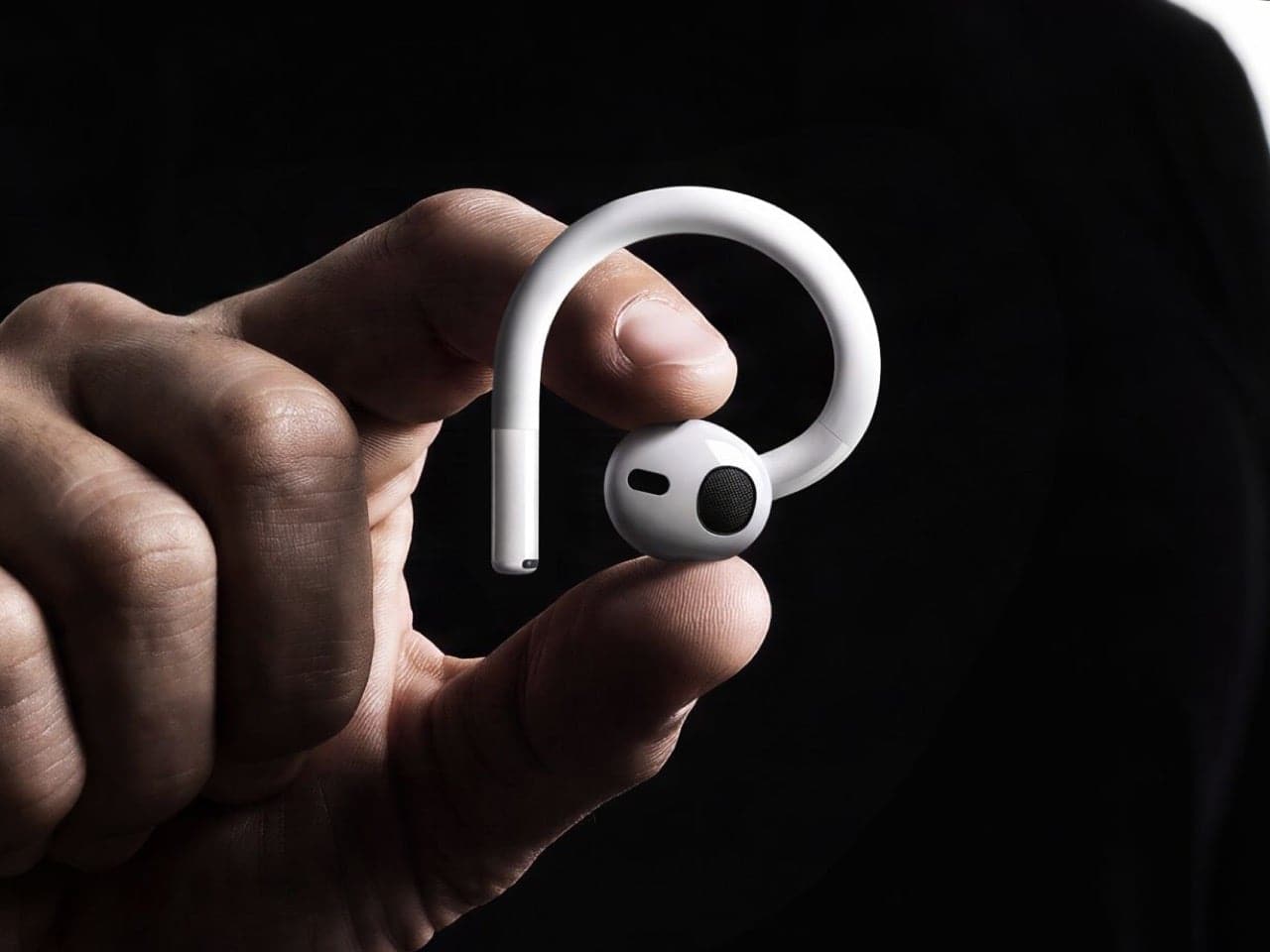
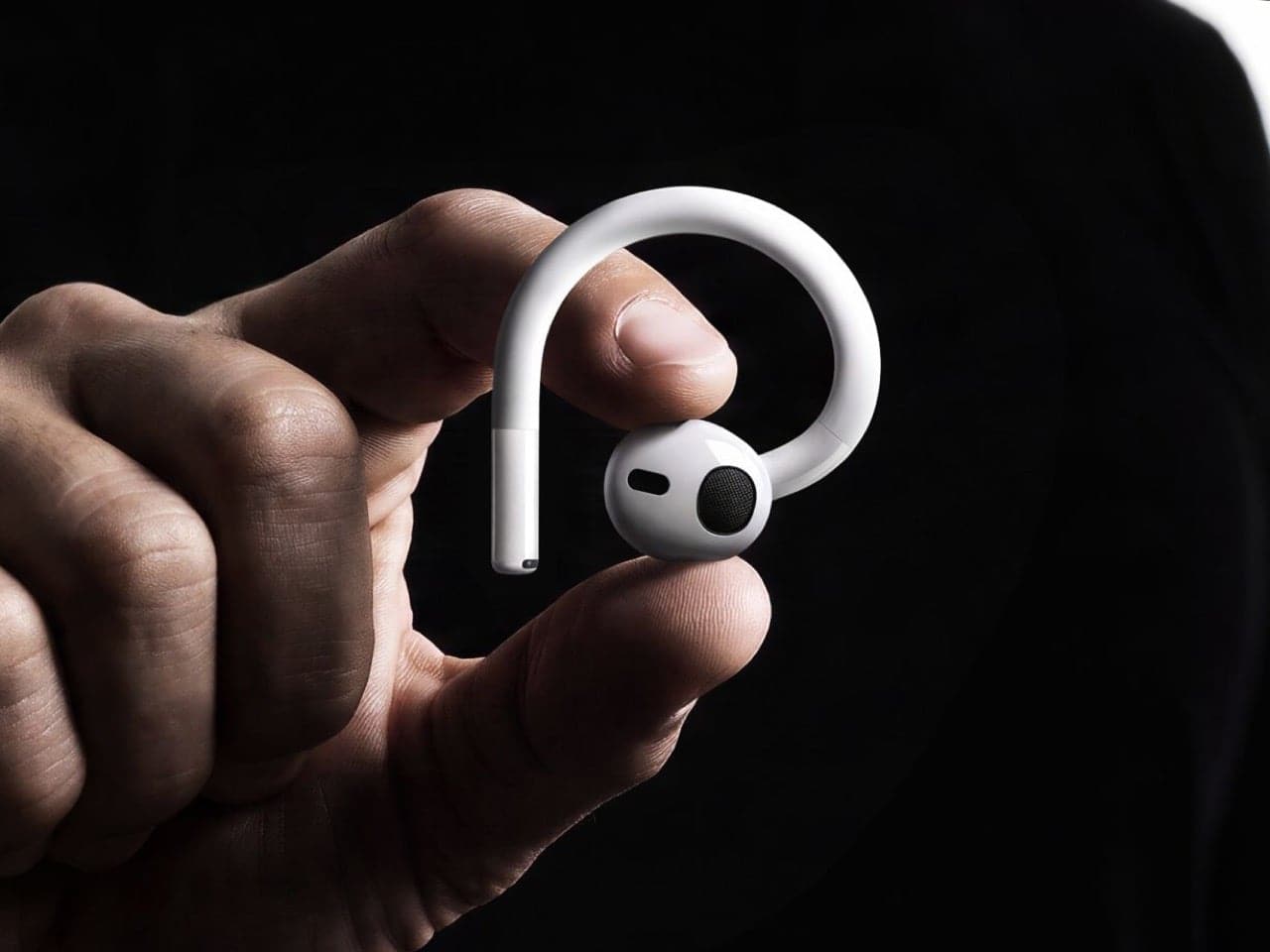
Sarda, an industrial designer based in Helsinki, starts with the recognizable AirPods 4 bud. Instead of leaving it to sit loosely in the outer ear, he adds a glossy white hook that curves over the top of the ear.
The most recognizable Apple detail hasn’t disappeared. It has simply moved.
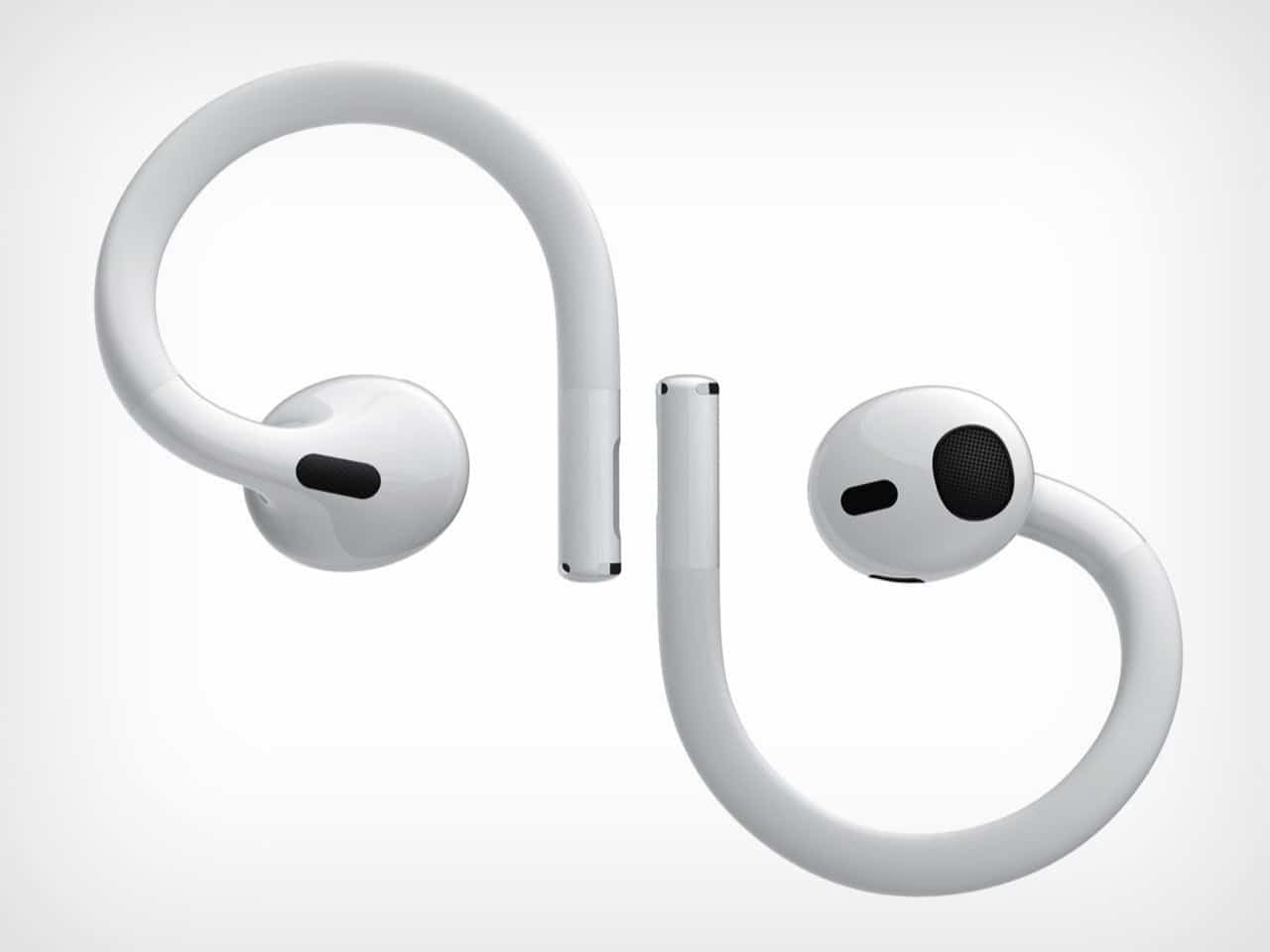
The signature stem extends from the rear end of the hook, hanging behind the earlobe like a small, carefully balanced tail. It’s an amusingly simple change, but it gives the whole product a new visual identity while keeping the shape instantly recognizable from across the room.
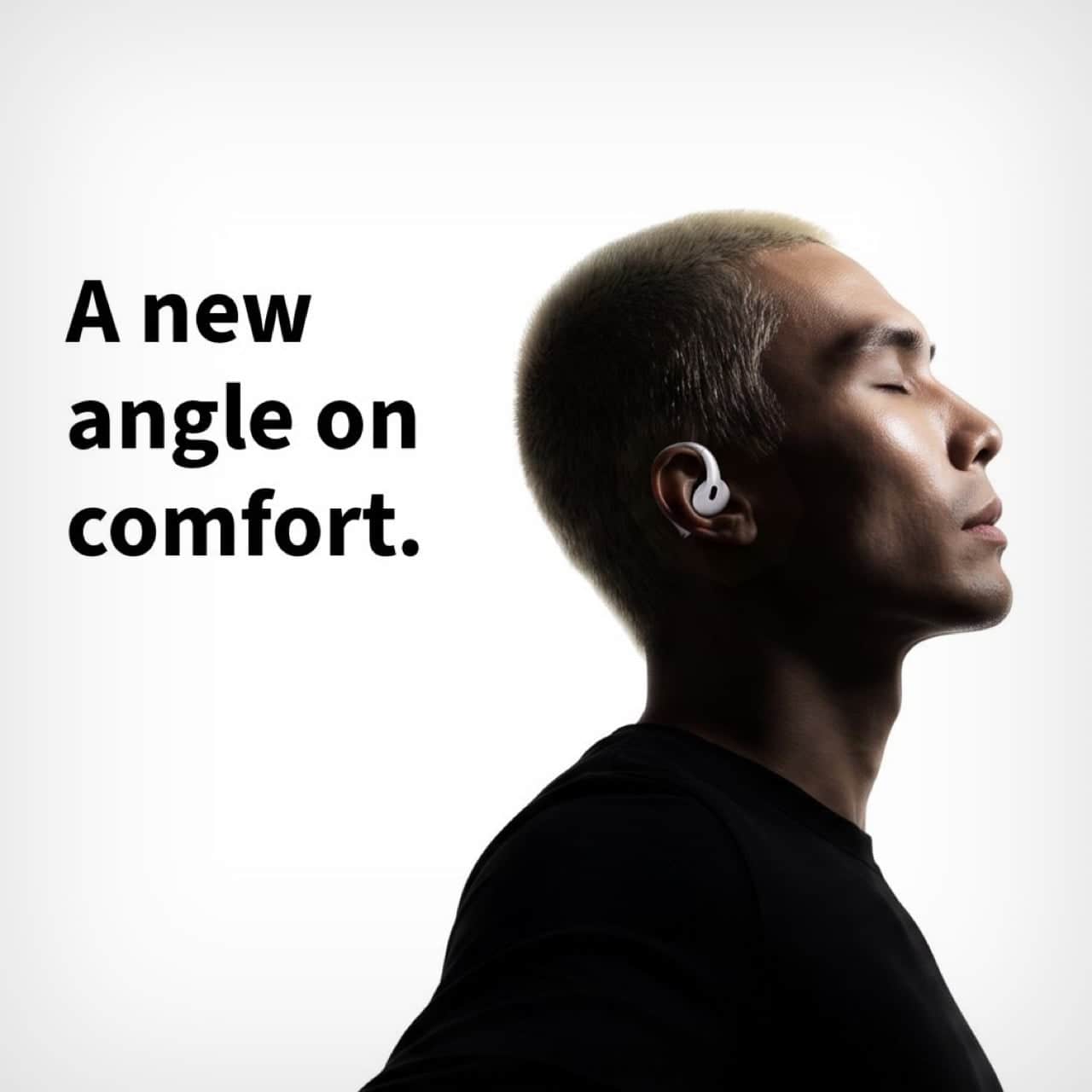
The earbud itself sits just above the ear canal. That positioning allows sound to travel inward without completely blocking outside noise. You could hear music while remaining aware of traffic, conversations, announcements, or the general commotion of daily life. For anyone who has ever worn earbuds while walking through a busy city, that balance is more than a design flourish.
Apple already uses the phrase “open-ear” for its tipless earbuds, and the AirPods 5 are presented as offering strong active noise cancellation in that style of fit. Sarda’s concept takes the phrase more literally. Rather than treating “open” as a description of the earbud tip, it turns the entire listening experience into an open-air design.
And honestly, that’s the version I’d be tempted to wear all day.
A Question-Mark Shape With Familiar Hardware Logic
The bud appears to carry over the details of AirPods 4, including the black mesh grille and the small, pill-shaped vent beside it. From there, the hook arcs over the top of the ear before descending behind it, where the stem becomes the visual finishing point.
A visible seam separates the hook from the stem. That distinction makes the stem feel like a deliberate module rather than an extra piece stuck onto the end. Hold the concept between two fingers and its outline resembles a near-perfect question mark, which feels almost cheeky for a product that invites one obvious thought: why hasn’t Apple made this already?

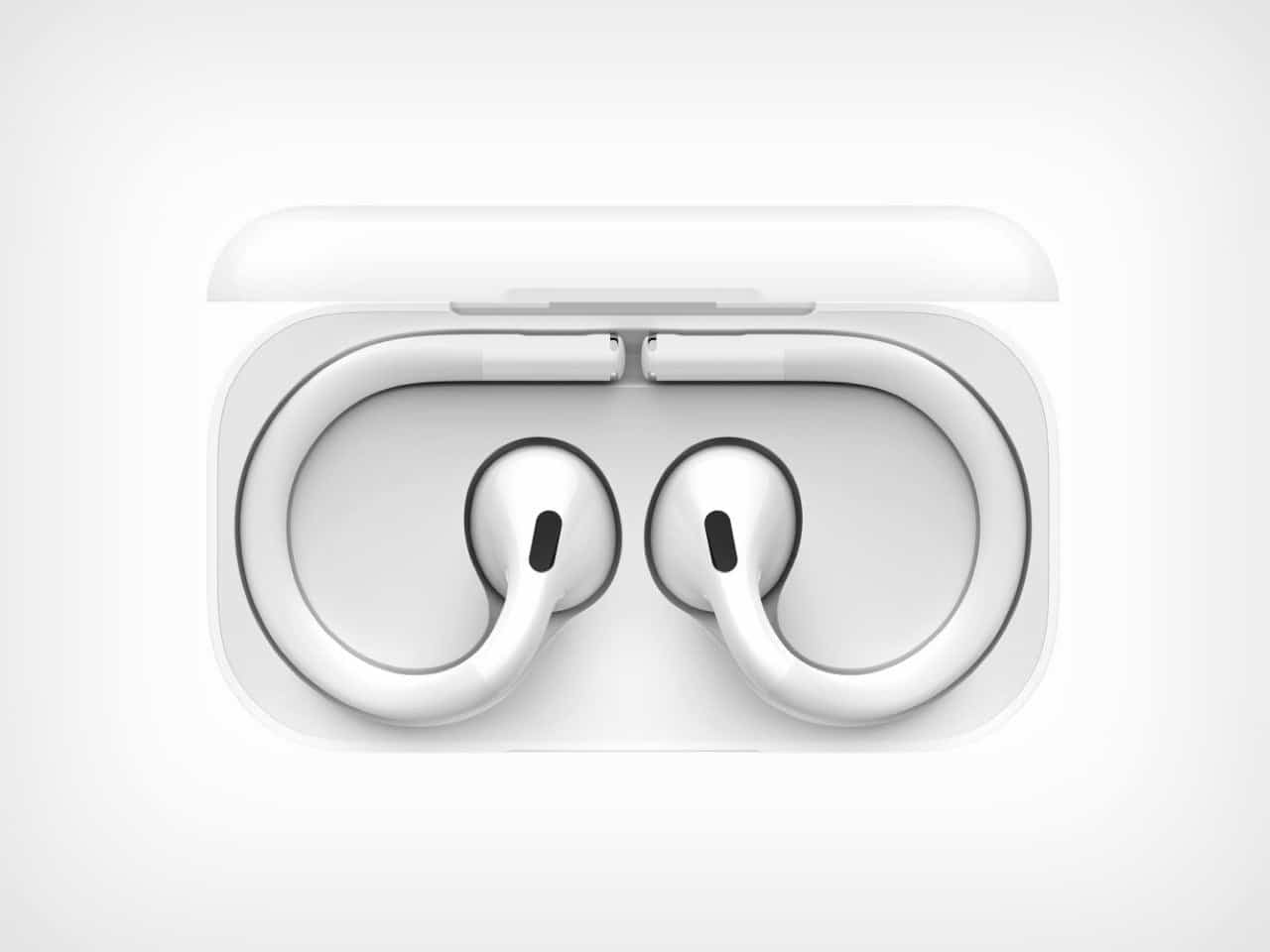
The shape also makes practical sense. Hook-style earbuds typically place a battery pod behind the ear to counterbalance the speaker and electronics positioned toward the front. This keeps the product from pulling downward or feeling unstable during movement.
Sarda’s relocated stem occupies that same rear position. Because AirPods stems already contain microphones and battery components, the idea doesn’t feel completely detached from Apple’s existing hardware language. It’s less a wild reinvention than a clever rearrangement of familiar parts.
That recognition could be a major advantage. People already identify an AirPods stem almost instinctively. It’s become one of those tiny consumer-tech shapes that everyone recognizes, whether they’re dedicated gadget fans or simply someone’s aunt wearing earbuds at the grocery store.
The charging case follows the same visual logic. Both hooks nest inside mirrored loops around the earbuds, while the stems meet at the hinge area like two curved commas facing one another. It’s a compact solution that keeps the case distinctive without abandoning the recognizable AirPods family resemblance.
Open-Ear Earbuds Are Already a Crowded Party
The AirPods Open concept wouldn’t be entering a blank market. Several companies have already experimented with ways to keep sound close to the ear while avoiding a sealed canal.
Nothing Ear (open) is the closest comparison in the original design landscape. It uses a hook format, weighs 0.29 ounces, or 8.1 grams, and includes a nickel-titanium wire inside the hook so the structure can flex and spring back into position.
Sarda is familiar with Nothing’s visual language. He previously designed the Nothing Gamepad (1) concept, a controller built around the company’s distinctive glyph lighting. That background helps explain why this AirPods Open idea feels so polished and brand-aware rather than like a generic pair of sport earbuds.
Bose has taken a different route with its Ultra Open Earbuds (2nd Gen), using a clip-style design rather than a traditional hook. Huawei occupies both sides of the market with the hook-style FreeArc and clip-style FreeClip 2. The latter is listed at £179 in the UK, roughly $240, and isn’t officially sold in the United States.
The difference between these approaches is easy to understand once you see them on someone’s ear. Clips can look more like jewelry, with a lighter and more decorative presence. Hooks tend to feel more anchored, especially during exercise or movement. Sarda clearly favors the latter.
The AirPods Open silhouette looks sporty without becoming aggressively athletic. That distinction matters. A product designed for all-day listening needs to fit more situations than a trip to the gym. It has to work on a commute, during a walk, at a desk, and perhaps even while running errands in clothes that don’t exactly scream “training session.”
Apple Already Has Most of the Ingredients
Here’s where the concept gets especially interesting: Apple already has much of the required hardware in its broader product family.
The Powerbeats Pro 2 use a nickel-titanium hook that was tested for more than 1,500 hours with nearly 1,000 athletes. That hook provides the kind of retention an open-ear AirPods design would need, particularly if Apple wanted the product to appeal to active users.

The complication is fit. Powerbeats Pro 2 earbuds seal the ear canal with silicone tips, making them better suited to workouts and focused listening than casual, all-day wear.
AirPods 5, meanwhile, offer the tipless fit associated with standard open earbuds while adding active noise cancellation. That means Apple already has experience combining a less-sealed fit with a more controlled listening environment.
Sarda’s idea effectively joins those two approaches. Take the secure hook from the Powerbeats family, remove the silicone tip, attach an AirPods-style bud, and relocate the familiar stem behind the ear. On paper, it sounds like a product assembled from pieces Apple already understands.
That’s what makes the concept feel unusually plausible. It isn’t asking Apple to develop an entirely foreign product language. It’s asking the company to combine existing ideas in a more open and visually coherent format.
A New Apple Era Could Make the Idea Feel Possible
The concept also arrives during a period when Apple is portrayed as being more willing to explore unfamiliar product shapes.
John Ternus became Apple CEO on September 1, and during his first two months the company unveiled several products outside its traditional comfort zone. These included the foldable iPhone Duo, a touchscreen MacBook Pro, and the $299 HomeView smart home hub.
Apple also co-designed the Apple Home Collection with LG and Schneider Electric. That lineup includes cameras, locks, thermostats, and a video doorbell. Apple collaborating on smart locks with LG would have sounded like fan fiction only a short time ago, yet the company is now presented as being more open to unusual hardware partnerships and new categories.
Ternus’s background as a mechanical engineer, combined with 25 years of experience working on Apple hardware, is part of that shift. The company appears more willing to test different shapes and rethink where familiar components belong.
That appetite is important because open-ear earbuds are no longer a fringe experiment. Omdia expects the category to reach 90.5 million units annually by 2030. Whether that forecast lands exactly as predicted or not, the direction is clear: people are increasingly interested in listening without feeling cut off from their surroundings.
Apple has the hook technology through Beats, the open-style bud through AirPods, and a growing reason to participate in the category. The missing ingredient is a single product that brings those elements together.
A Tiny Tail With Big Product Potential
Sarda’s renders even include campaign-ready language such as “Always on, never in.” It’s concise, memorable, and perfectly suited to a product designed to keep music close without sealing the listener away from the world.
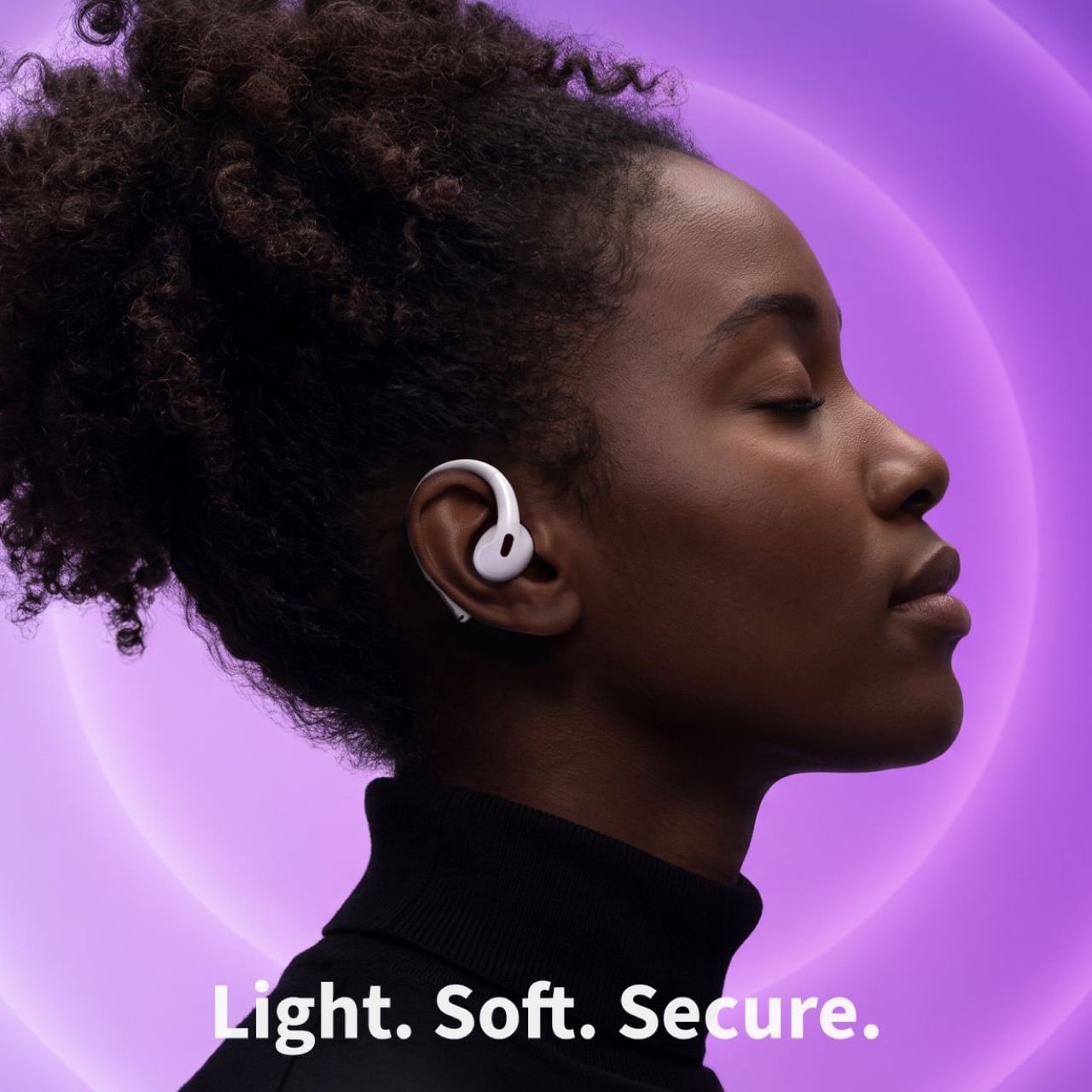
Of course, AirPods Open remains a design concept rather than a confirmed product. Still, the proposal works because the underlying idea is easy to understand. The earbuds would preserve the iconic AirPods identity while changing the balance, comfort, and use case.
Apple has often benefited from entering markets after other companies have done the experimental work. By the time Apple arrives, the category has been tested, refined, and made easier to explain. Open-ear audio may be heading toward that familiar pattern.
And if Apple does eventually walk into this particular party late, I wouldn’t be surprised if its version looked remarkably close to this: a clean white hook, an open listening position, and that unmistakable stem tucked just behind the ear.
The AirPods Open concept succeeds because it doesn’t throw away Apple’s visual language—it shifts it into a shape that feels more secure, more social, and better suited to everyday awareness. Would you wear Apple earbuds with the stem behind your ear?
FAQ
- What is the AirPods Open concept?
It is an industrial design concept by Anurag Sarda that reimagines AirPods with an over-ear hook and a stem positioned behind the earlobe. - How would the AirPods Open design stay in place?
The curved hook would secure the earbud over the ear, with the rear stem also helping balance the components behind the ear. - Would AirPods Open block the ear canal?
No. The concept places the bud above the ear canal, allowing users to listen while remaining aware of surrounding sounds. - What existing Apple products influence the concept?
The idea combines the open, tipless form of AirPods with the secure nickel-titanium hook associated with Powerbeats Pro 2. - Is AirPods Open an official Apple product?
No. It is a designer’s concept and has not been presented as a confirmed Apple product.
If this blend of music, design, and Apple nostalgia speaks to you, browse our favorite album cover posters and bring a little more character to your listening space.
 | DISCOUNTGET 30% OFF*Use code on your next order:
|
* This post may contain affiliate links, meaning we earn a commission if you make a purchase through these links, at no additional cost to you.