PP-2 Turntable Reinvents Vinyl Playback With an Upside-Down Design


PP-2 Turntable Reinvents Vinyl Playback With an Upside-Down Design
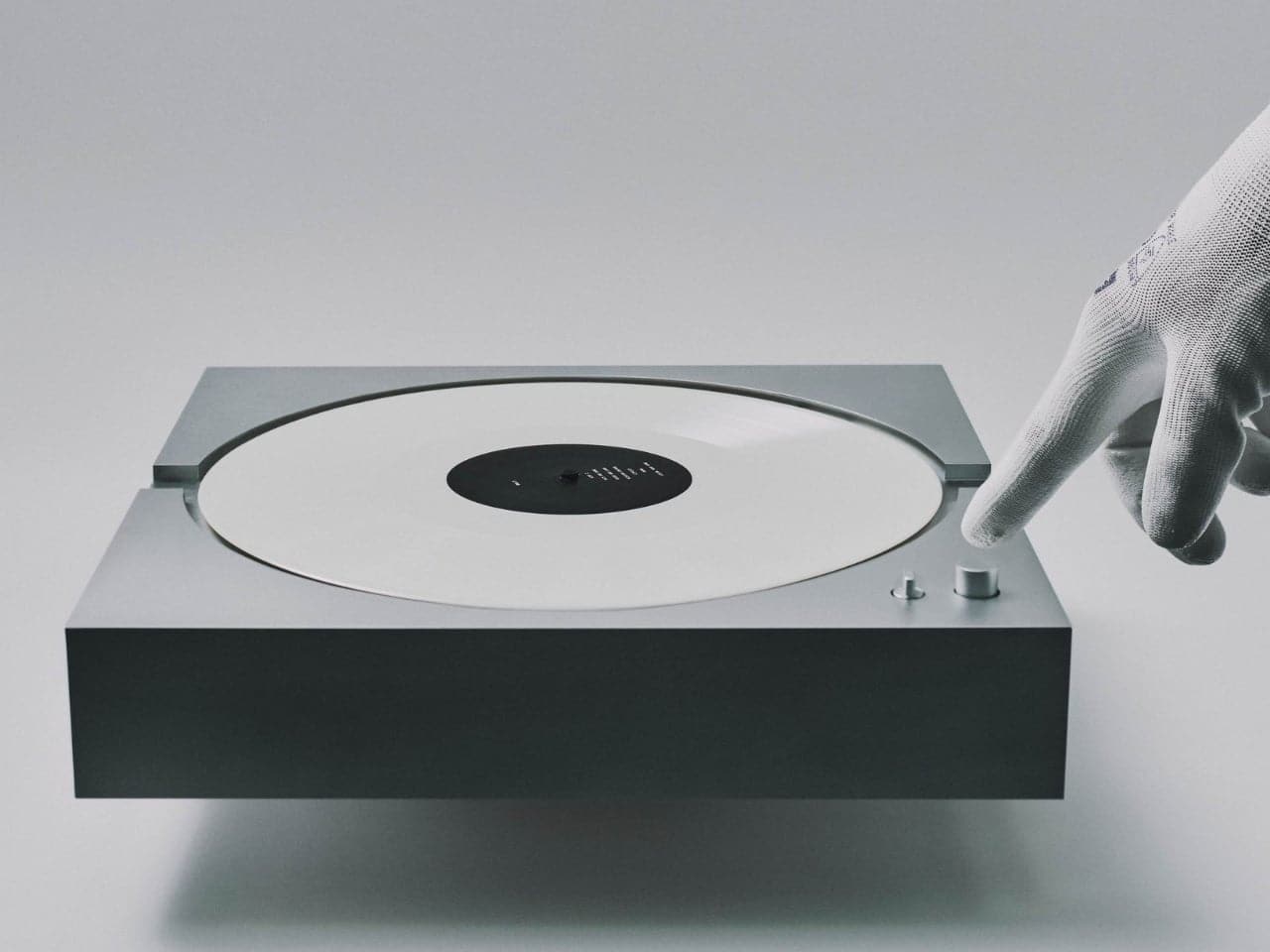
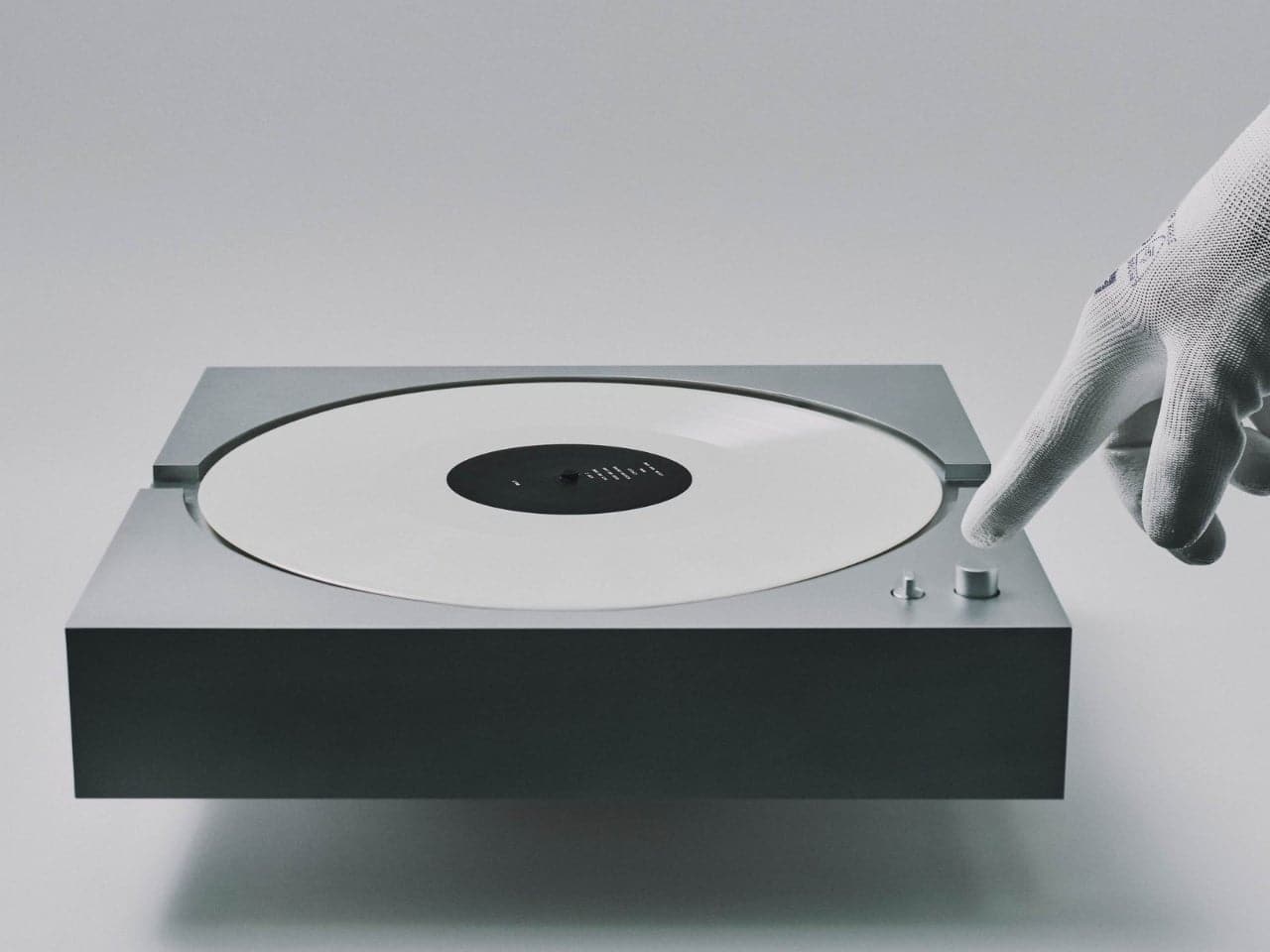
The PP-2 turntable makes vinyl playback wonderfully simple: flip the record, press Play, and let its optical system handle the delicate work.
A New Way to Begin a Record
There’s something wonderfully ceremonial about playing vinyl—choosing an album, sliding the sleeve open, and settling in for the first track. But the moment a delicate stylus has to be lowered onto the groove, that relaxed ritual can suddenly feel like a tiny engineering exam. The PP-2 turntable takes aim at that hesitation by placing the record upside down and moving playback underneath.
Created by Paris-based studio Waiting for Ideas, founded by Jean-Baptiste Anotin, the PP-2 follows the studio’s earlier PP-1 concept, which explored a similar approach to making vinyl playback easier. The earlier design concealed the needle below the record, offering an unusual but convincing argument for removing some of the mechanical fuss from listening.
The PP-2 pushes that thinking further with an optical pickup system. It’s currently listed for preorder, so this isn’t the kind of product you should expect to order today and start spinning tonight. Instead, it’s a carefully considered piece of audio hardware to plan around—particularly if the object itself matters as much as the music.
The Ritual Stays, the Anxiety Goes
That distinction is what makes the concept appealing. Vinyl already has plenty of ritual built into it. You choose a sleeve, pull out the record, inspect it for dust, place it on the platter, and commit to one side of an album. There’s a pleasing sense of intention in all that. What doesn’t necessarily add charm is worrying about whether your hand is hovering at exactly the right angle.
I’ve always felt that the best audio equipment should eventually disappear into the experience. You notice it when setting things up, of course, but once the music begins, the hardware should quietly step aside. The PP-2 seems designed around that philosophy. It leaves the listener with the enjoyable decisions—the album, the volume, the mood—and removes some of the delicate operational work.
That doesn’t make the machine completely automatic in the traditional sense. You still have to handle the record and choose when to begin. But the act of lowering a tonearm becomes less of a performance, which may be especially welcome for listeners who love albums more than they love adjusting equipment.
A Compact Object With Serious Presence
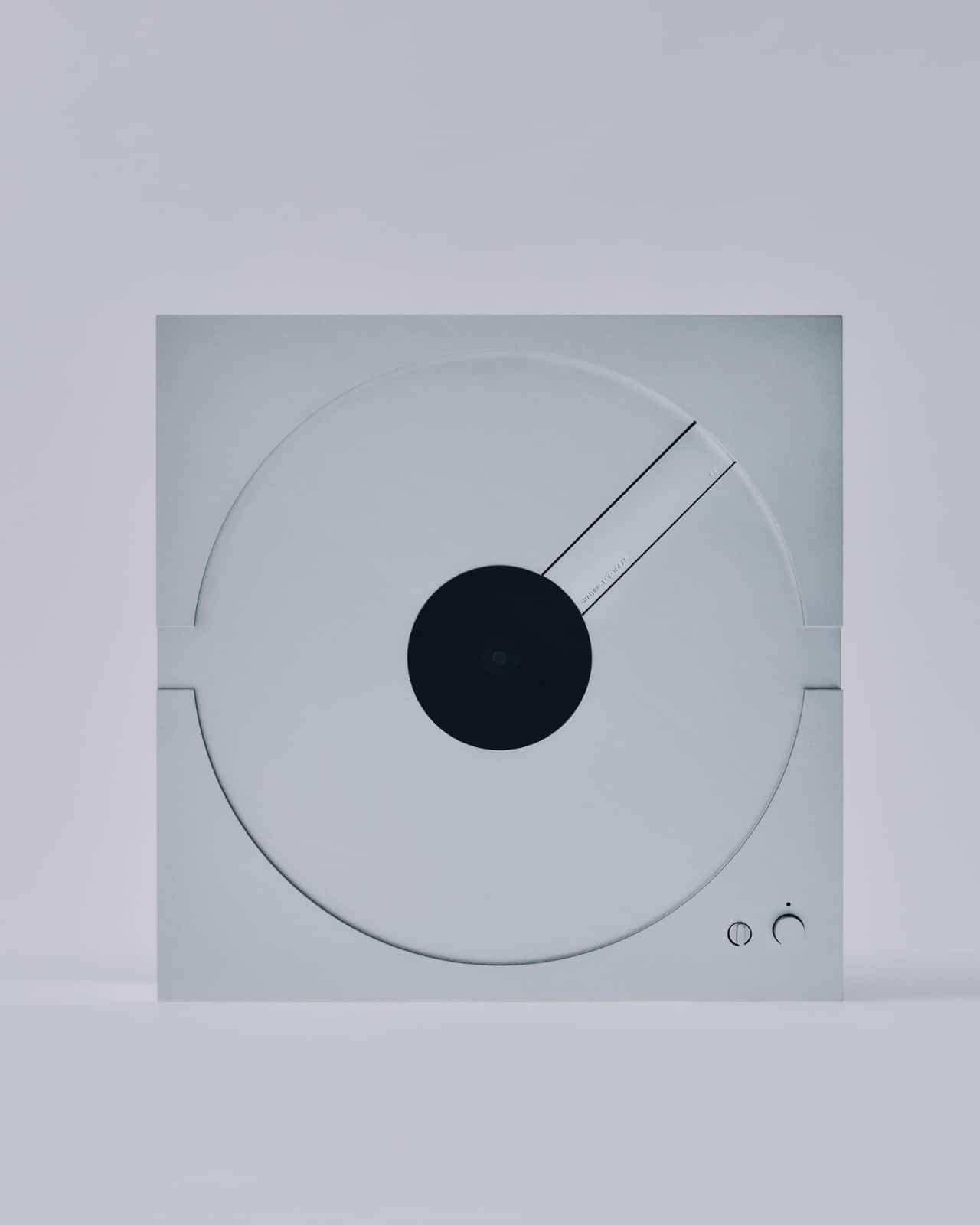
The PP-2’s physical design reinforces that calm, controlled approach. Its body is CNC-machined from a solid block of aluminum and then anodized. It measures roughly 13.8 inches square and stands just under 3 inches tall, giving it a low, compact profile.
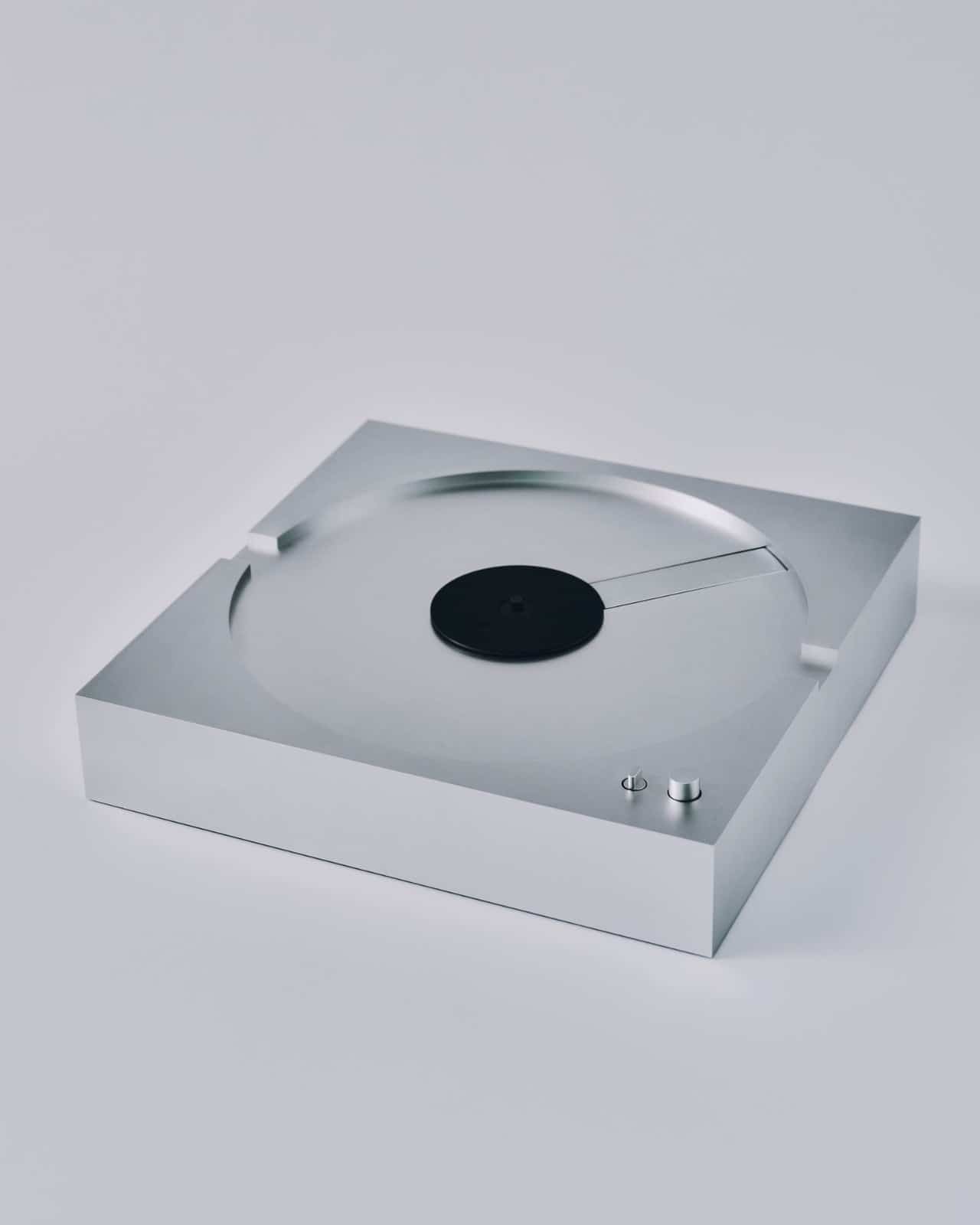
Those proportions give the turntable an almost architectural quality. Rather than looking like a sprawling stack of components, it appears closer to a deliberately positioned object—something that belongs on a shelf or console even when no record is playing.
The square footprint also feels visually appropriate. A vinyl record already provides plenty of shape and movement, from the circular disc to the artwork on its sleeve. The PP-2 keeps the surrounding hardware restrained, allowing the record to remain the main character instead of making the turntable compete for attention.
There’s a certain confidence in that minimalism. The design doesn’t appear to be chasing a retro look with wood veneer and decorative switches. Nor does it bury itself beneath a forest of technical controls. It presents a clear idea: one solid form, one record, and one uncomplicated route to the music.
How the Optical Pickup Works
The most futuristic part of the PP-2 is also the feature most likely to be misunderstood. “Reading vinyl with light” might sound like the record is being scanned by a completely contactless laser system. That isn’t what’s happening here.
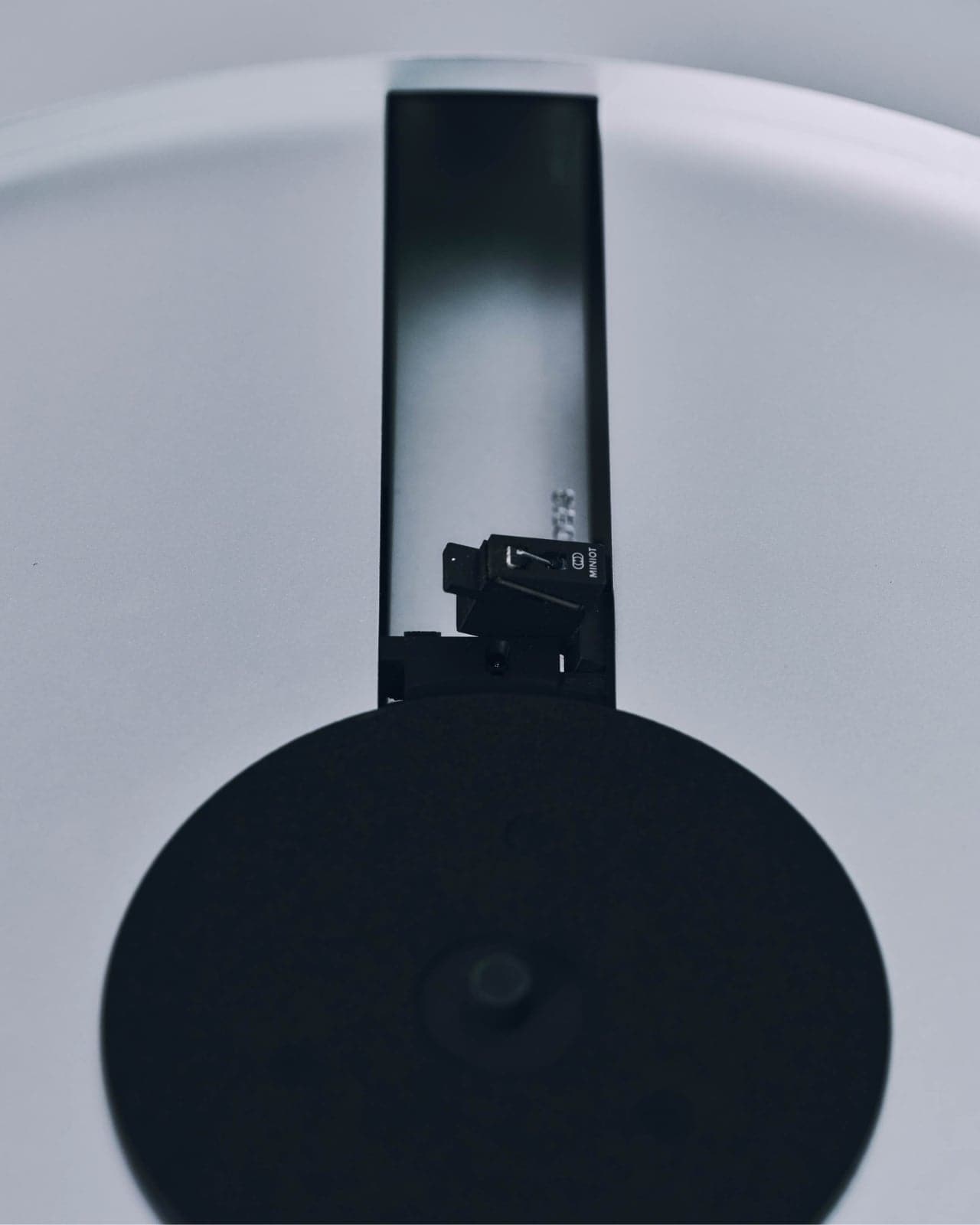
A physical stylus still follows the groove. The difference is that light measures the stylus’s movement rather than relying on the magnets and coils found in a conventional magnetic cartridge. Waiting for Ideas credits Miniot technology for the optical pickup approach, which keeps the signal path analog while changing how the stylus’s motion is detected.
That distinction matters. The PP-2 isn’t turning a record into a digital file simply because it uses optical measurement. The vinyl groove remains central to the process, and a physical stylus remains part of the playback chain. The technology is more like a new set of eyes watching the stylus work than a complete departure from traditional record playback.
Waiting for Ideas says that removing magnets from the moving stylus assembly reduces its mass. In theory, that lighter arrangement could allow the stylus to follow the groove more faithfully and reveal finer detail. Those are certainly attractive claims, though I’d want independent measurements and listening tests before treating them as a reason to replace an existing turntable.
The easier achievement to understand is the practical one. The pickup system helps keep the most delicate part of the playback process tucked beneath the record and largely outside the owner’s daily routine. That’s where the PP-2’s design feels most persuasive.
A Motor Built for Steady Rotation
Once the pickup approach is understood, the motor provides another piece of the same puzzle. The PP-2 uses an axial-flux direct-drive motor paired with optical speed control. According to the studio, the system adjusts rotation 1,000 times per second.
The turntable supports both 33 rpm and 45 rpm records, covering the standard speeds needed for full-length albums and many singles. The headline number attached to the speed control may sound impressive, but the real goal is much simpler: consistent rotation.
That’s the kind of specification I care about most in practice. A turntable doesn’t need to boast about its engineering while an album is playing. It needs to keep the music stable and let the listener stop thinking about whether the platter is behaving correctly.
The PP-2’s motor and optical control appear to serve that same broader philosophy as its upside-down playback. Elaborate engineering is doing the hard work in the background so the user can focus on the record itself. It’s a little like having a very capable stage crew: you notice the smooth performance, not every mechanism moving behind the curtain.
Connections Without Another Equipment Puzzle
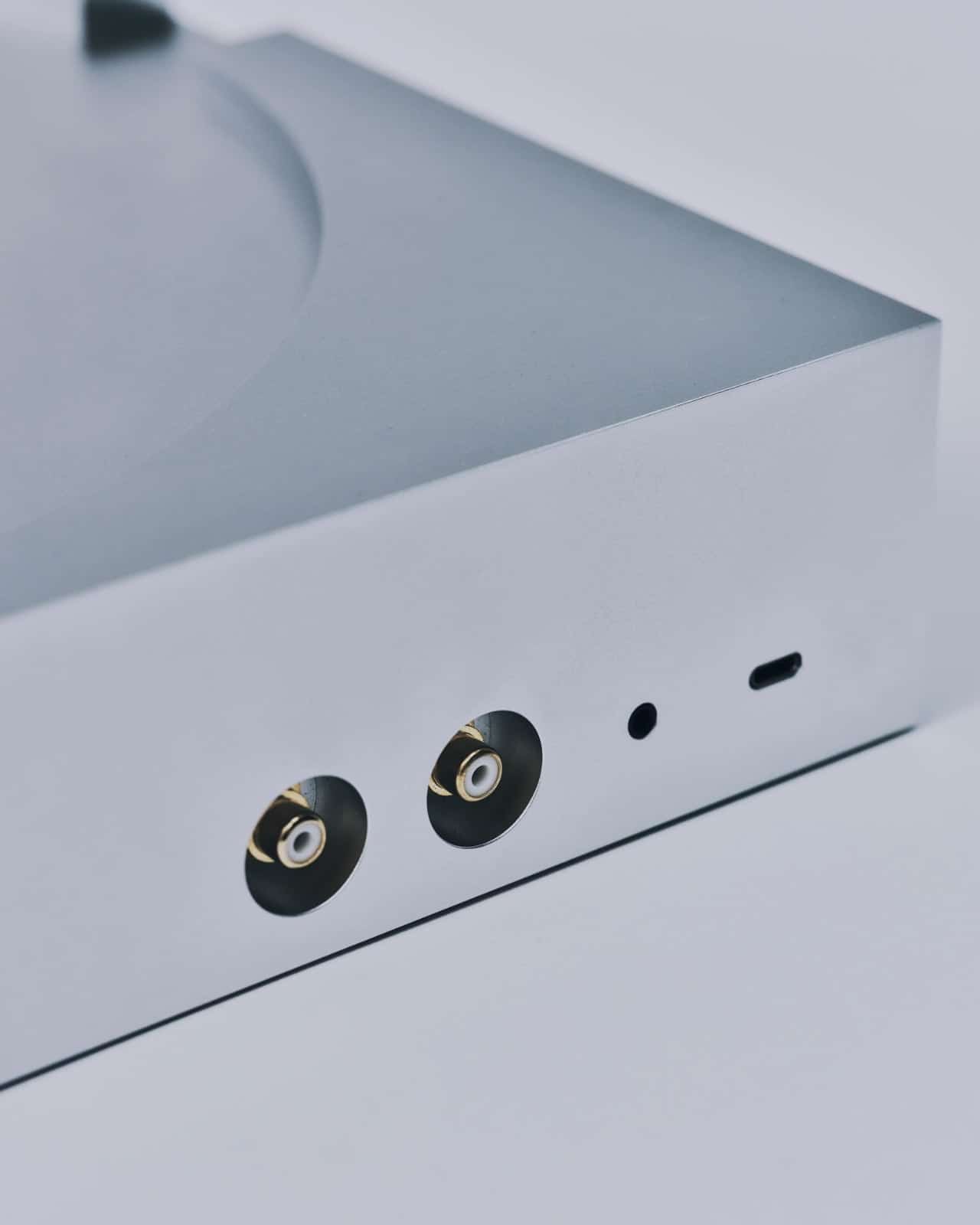
The practical details continue with a built-in preamplifier, RCA connections, a 3.5mm output, and USB-C power. That combination gives the PP-2 a relatively approachable set of connections despite its unusual playback system.
The built-in preamp is particularly useful because it removes the need to add another specialized component immediately. For someone entering vinyl—or simply trying to simplify an existing setup—that can make the difference between a satisfying purchase and a second round of research involving cables, compatibility, and mysterious abbreviations.
RCA outputs provide a familiar route into a traditional audio system, while the 3.5mm output offers another straightforward option. USB-C power also keeps the power connection current and recognizable rather than introducing an unnecessarily unusual standard.
That restraint helps protect the PP-2’s central argument. A turntable can look beautifully simple, but if using it requires assembling an intimidating collection of extra boxes, the simplicity becomes mostly visual. Here, the integrated features seem intended to make the full system easier to understand as well as easier to look at.
Luxury Convenience Comes at a Price
There is, however, one detail that makes the PP-2 considerably less casual: the price. The store lists it at €8,900, with buyers asked to allow up to eight weeks for assembly and shipping. Applicable import duties and taxes outside the European Union are additional.
That places the PP-2 firmly in luxury territory. It isn’t an accessible first turntable for someone who has just bought a few records and wants to see whether vinyl fits into their life. At this level, the purchase is about much more than simply getting music from a groove into a speaker.
The buyer would need to care about the object, the engineering, and the unusual experience it creates. The PP-2 is selling a particular interpretation of vinyl listening—one that preserves the ceremony of choosing an album while reducing the technical delicacy involved in starting it.
At that price, I’d also want clear information about servicing, replacement parts, and long-term support before placing an order. Those questions matter with any specialized audio product, but they matter even more when the design depends on a distinctive optical pickup and a carefully integrated mechanical system.
Still, the core idea remains easy to appreciate. The PP-2 doesn’t treat vinyl as a museum ritual that must preserve every old inconvenience. Instead, it asks which parts of the experience are genuinely meaningful and which parts can be quietly reworked.
The record stays. The album side stays. The feeling of pressing Play and settling into the music stays. The fiddly tonearm adjustment, at least for the most part, moves out of the spotlight.
Conclusion: Is Simpler Vinyl Better?
The PP-2 turntable makes a thoughtful case for modernizing vinyl without stripping away its character. Its upside-down format, optical pickup, direct-drive motor, built-in preamp, and compact aluminum body all support the same idea: the listener should spend more time with the album and less time qualifying as a turntable technician.
For devoted vinyl fans, that may sound like a bold trade-off. For everyone else, it could feel refreshingly obvious. Why shouldn’t playing a record be as simple as choosing one, placing it down, and pressing Play?
FAQ
- How does the PP-2 turntable play records upside down?
The record is placed with its playback surface facing downward, allowing the stylus and optical pickup system to operate beneath it. - Does the PP-2 use a laser instead of a stylus?
No. A physical stylus still follows the groove. Optical technology measures the stylus’s movement instead of using the magnets and coils found in conventional magnetic cartridges. - What record speeds does the PP-2 support?
The turntable supports both 33 rpm and 45 rpm records. - What connections are included?
The PP-2 includes a built-in preamplifier, RCA connections, a 3.5mm output, and USB-C power. - How much does the PP-2 cost, and when is it available?
It is listed at €8,900 and is currently available for preorder. Assembly and shipping may take up to eight weeks, while duties and taxes outside the European Union may apply separately.
If the PP-2’s album-first philosophy speaks to you, a favorite album cover poster can bring that same love of music into your room. Browse the collection at Architeg Prints and find a piece that feels like home.
 | DISCOUNTGET 30% OFF*Use code on your next order:
|
* This post may contain affiliate links, meaning we earn a commission if you make a purchase through these links, at no additional cost to you.