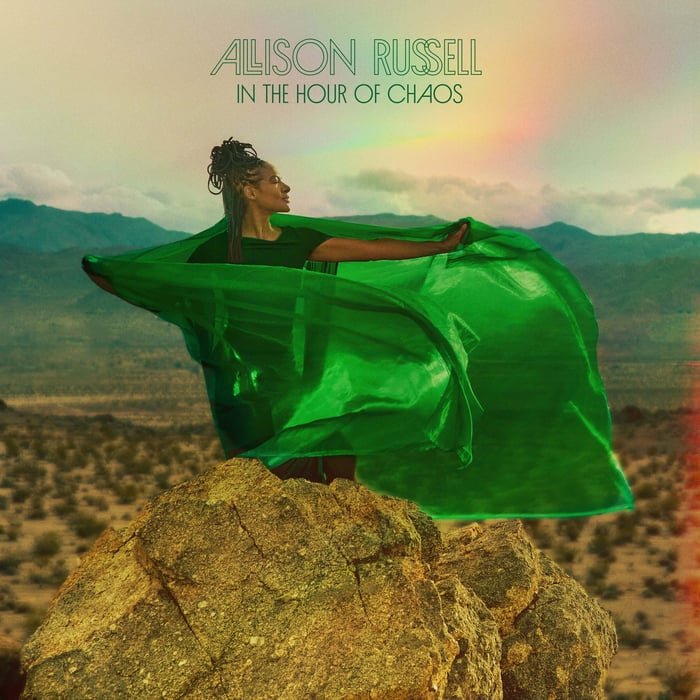
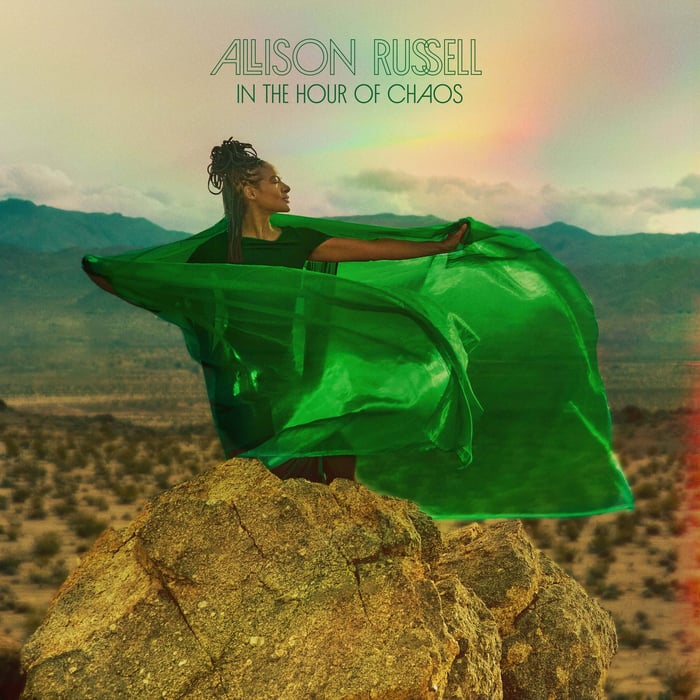
Allison Russell’s *Hour of Chaos* Review: Comfort Music With Teeth


 See more Architeg Prints stories on Google.
Allison Russell’s Hour of Chaos Review: Comfort Music With Teeth
Hour of Chaos sounds like a hug that checks your pulse first—then tells you, politely, to stop lying to yourself.
This album isn’t “about Allison Russell” anymore—and that’s the point
I went into In the Hour of Chaos expecting another album where the spotlight stays locked on Allison Russell’s own survival story. For two records straight, that’s basically how it worked: the childhood geography, the injuries with names, then the big victorious return where the party got so loud it started handing out trophies.
But this time, she turns the camera outward. Not in a vague “community” way—more like she’s running triage. The writing and production (built with her close musical unit, dim star) feels deliberately designed to hold other people’s panic, grief, and relapse cycles without turning them into her autobiography again. And she doesn’t show up empty-handed: banjo in one hand, harp in the other, a youth choir on standby, and enough duet partners to make a holiday dinner seating plan feel like a personal attack.
That choice is arguable, sure. Some listeners will miss the tighter, more solitary narrative. I don’t. This album is trying to be a shelter, not a confession booth.
“Black Lavender” treats anxiety like a body problem, not a personality trait
The first door she opens leads straight into someone whose fight-or-flight never powers down. “Black Lavender” doesn’t romanticize that state. It asks, bluntly, what it’ll take to bring a heart rate down—then answers with tiny, domestic objects: palo santo incense, lavender tea, kindness. Not miracles. Nightstand stuff.
Brittney Spencer shows up and adds a grounded warmth to the chorus, which frames the person in distress as a black swan—full of “rivers of adrenaline” that don’t need shaming, just somewhere to go. An ocean, not a lecture. That’s the album’s whole philosophy in miniature: stop moralizing the symptoms, start making space for them.
If you’re the type who thinks “self-care language” automatically equals shallow songwriting, you might roll your eyes here. But to my ears, Russell makes it work because she doesn’t sell it as a lifestyle—she sells it as emergency care.
“Chaos Theory” is the album’s most practical love song (and that’s a compliment)
From there, “Chaos Theory” repeats the cure, but in regular clothes. The offer isn’t poetry; it’s companionship that doesn’t demand sparkle: we can watch something stupid on TV. That line matters because it refuses the classic songwriter move—turning help into a grand performance.
Wendy Melvoin’s acoustic guitar anchors the track so it doesn’t float away, and the harmonies (Kyshona and Sara Watkins circling Russell) build like a slow exhale. The chorus lands with a promise that’s almost embarrassingly direct:
“In the hour of chaos / In the hour of despair / You’re gonna feel my love coming down / You’re gonna feel my hands in your hair.” — Allison Russell
On my first pass, I thought the chorus was a little too neat, like it wanted to be a candle-label affirmation. On second listen, it hit differently: the neatness is the point. Chaos doesn’t need more complicated language—it needs a hand on the back, slowly, slowly.
Arguably, this is where Russell is most effective: when she makes devotion feel like an action, not an identity.
“Miss Mary Mack” turns a child’s rhyme into a rescue rope
Then she pulls a sharp trick: “Miss Mary Mack,” the old hand-clap rhyme, shows up like an artifact from childhood—and she uses it as a signal flare for a friend who “reached too high.” The repetition of “Come back, come back” starts off sounding sweet, almost playful, and then tightens into something closer to pleading.
What really stuck with me is how the song shifts from assertion into a kind of collective demand: “Mary, choose us.” That’s not a cute twist. That’s someone trying to interrupt a spiral with whatever language still cuts through.
If you hate when artists repurpose nursery material for adult pain, you’ll call it corny. I get the reaction. Still, Russell makes it feel less like a gimmick and more like grabbing the nearest available tool.
“No Springtime” names the loop—and refuses the easy moral high ground
The same emotional terrain carries into “No Springtime,” which begins with counting songbirds—three in the meadow, two by the lake—as if the right number could stabilize a mind that keeps replaying the same wreck. The chorus lands on that brutal, stuck phrase: What’s gone is gone is gone is gone. It doesn’t “resolve.” It just keeps being true.
Joy Oladokun’s presence is crucial here. Russell could’ve turned this into a sermon about breaking free, but Oladokun undercuts that impulse with a line that basically snaps the pious tone in half: I’ll never cast that stone on you / ’Cause oh my God, I do it too. That admission is the whole ethical spine of the song—caretaking without superiority.
I’m not even totally sure the bird-counting motif lands for everyone. Part of me kept waiting for a melodic payoff that never fully arrives. But the lack of payoff also mirrors the point: loops don’t come with satisfying conclusions.
“Really Real” is where the caretaker finally sounds tired
“Really Real,” a slow duet with Norah Jones, is the album’s quiet gut-punch. It’s caretaker music, but not the heroic kind. Russell confesses: “I’ve been driving while you sleep,” and “You never see my indigo mood.” That’s not metaphorical flourish—that’s exhaustion made literal. She’s doing the emotional transport while the other person rests, and nobody’s noticing the driver nodding off.
Norah Jones fits here because she doesn’t overact the sadness. Her steadiness makes Russell’s fatigue feel even more exposed. The song raises the question it refuses to answer: when the caretaker’s eyes get heavy, who takes the wheel?
Arguably, this is braver than the bigger choral moments. It’s smaller, and it doesn’t give you a triumphant line to clap for.
“Searchlight” flips perspective: the refugee and the person texting from the next room
“Searchlight” opens with Kashus Culpepper framing a life like a refugee’s—running from himself through burning buildings at night. Then Russell answers from a place that’s almost worse because it’s so mundane: Lately I’m more lonely when you’re home than when you’re gone, like she’s texting from the next room.
That line is nasty in the best way: it punctures the idea that proximity equals connection. The song closes with them trading parts—Russell taking the “searchlight” role, Culpepper stepping into the comeback-kid energy. It’s a structural decision that matters: the record keeps insisting that people aren’t fixed roles. The broken one can speak. The strong one can sag.
If there’s a risk here, it’s that the duet format can make everything feel like a “special guest episode.” But this track earns its switch because the emotional logic changes with the voices.
“Two Stars” uses banjo like a nervous system, then tells you to stop wasting time
“Two Stars” is banjo-driven, and not in a decorative way. The picked pulse jitters like a brain trying to outrun itself. Russell duets with Chibueze Ihuoma, and the song starts where breathing feels difficult—where it’s “safer” to hide in the back of your own mind.
Her rescue is, interestingly, another hiding place: “a place where I keep / all the reasons you forgot for living.” But then she strips the sugar out of the pep talk and drops the line that made me laugh a little because of how unromantic it is: “There’s no time to fuck around.” That’s the album in one sentence—tender, but not precious.
Some listeners will hate that bluntness. I think it saves the song from floating off into pastel inspiration.
“Love Is a Golden Lion” and “Good Omens” show two different kinds of faith
“Love Is a Golden Lion” turns into call-and-response with Devon Gilfillian over a steady beat. The vow keeps reappearing in different costumes—soft rain, golden lion—both voices insisting that love returns the second the other person stumbles. It’s not subtle, and it’s not trying to be.
Then “Good Omens” pivots into something quieter and stranger: Ahya Simone’s harp ticks like a clock—minimalist, suspended, almost too still. Russell reads signs in the physical world: a black butterfly the size of a sparrow, sunlight on brown skin, light on freckles, a white dog trotting ahead through the greenwood.
I’m a little uncertain here, honestly. The omen-reading could’ve tipped into whimsical filler if the harp weren’t so insistently bare. That ticking forces you to sit with the silence between images. It makes the superstition feel less like fantasy and more like a mind searching for permission to hope.
“Rainbows” is childhood warmth—with one warning label stitched inside
That greenwood leads to “Rainbows,” which feels like a short walk to a grandmother’s window. Outside: black clouds hanging low. Inside: the child at the glass feels safe, warm, possibly amazed that safety can even exist.
Russell explores childhood the way your tongue worries a loose tooth—small, obsessive details: the horn sewn onto the pony’s forehead, stars stuck to the ceiling, an old willow bending its branches over the little one. It’s gentle, but not naive. And right in the middle, she drops the line that exposes her own limits as a fixer:
She can sing “words and words and words,” she says—but you shouldn’t trust “mockingbirds.” That’s basically Russell admitting the record can’t heal anyone by itself. It can only sit with you. That’s a bold thing for an artist to admit while making an album that clearly wants to help people.
Arguably, it’s the most honest moment here—because it refuses the myth that beautiful songs automatically equal salvation.
“Just Like Saturday” finally breaks the slow sway—and admits grief rides along anyway
“Just Like Saturday” has Ruby Amanfu singing alongside Russell, her voice clean and bright over claps and a keyboard push that snaps the album out of its ballad haze. The groove feels like it’s trying to stand upright after a long time lying down.
But grief still walks through the middle of it: Like six white horses pullin’ somethin’ beautiful / Six white horses pullin’ somethin’ beautiful away. The days slide toward Sunday, and the song admits that even your “free” moments can feel like a countdown.
Here’s my mild criticism: some of the surrounding ballads lean on the same underlying bass/drums/keys foundation, and you can feel the arrangements waiting for a guest vocal to inject oxygen. “Just Like Saturday” works because it actually moves—because it doesn’t just decorate the same slow frame.
The clearest line in the song is also the simplest deal: If you shelter me, I will shelter you. No branding. No big metaphor. Just mutual labor.
“Cold April” hands the sheltering down—and turns it into a choir-wide refusal
“Cold April” opens with a counting rhyme: It’s one if you’re scared, two if you’re sad / Three if you know it’s really that bad. It sounds like something you’d teach a kid because kids understand numbers before they understand explanations.
Russell answers with inheritance: sometimes it snows in April. It’s a song she learned from her mother when she was small—when 88 keys and a broken heart didn’t cure anything, but made it feel, for a moment, survivable.
The second verse turns toward a father and names the damage—“99 ways” he broke her heart—then refuses bitterness anyway: He couldn’t make it bitter ‘cause we took back the night. Kara Jackson and Denitia roughen the harmony in a way that keeps the song from turning glossy.
And when the Explore! Pop Choir takes the refrain, the message stops being personal and becomes collective: There’s not enough bullets, not enough guns / They can kill the bird, but not the bird song. Russell calls birds across the nation into a new murmuration, and the youth choir answers like proof-of-life—new voices singing the mother’s weather back to her.
If you think choirs automatically equal emotional manipulation, you might bristle. I did, briefly. Then the lyric landed, and it didn’t feel like manipulation—it felt like refusal, sung in a room full of future.
Where it lands (and what I’m actually keeping)
I’m not going to pretend In the Hour of Chaos is effortless. It’s a record built out of care, and sometimes care repeats itself. But the repetition feels intentional: the point is showing up again, with the same tea, the same hands, the same stupid TV show, because that’s what real support looks like when the crisis isn’t cinematic.
And yeah—this is an album that’s comfortable being useful. That’s a creative decision, and it’s not a safe one.
Favorite Track(s): “Cold April,” “Chaos Theory,” “Two Stars”
In the hour of chaos, Russell isn’t auditioning her pain anymore—she’s building a shared language for staying alive, even when the people you love can’t climb out on schedule.
Our verdict: People who like emotionally direct songwriting—and don’t need irony as a safety helmet—will actually love this album. If you need your records to “go hard” or keep a cool distance, this will feel like being offered lavender tea when you wanted gasoline.
FAQ
- Is In the Hour of Chaos mostly a duet album?
It leans that way, yes—guest voices show up constantly, and the album uses those swaps to change perspective, not just add flavor. - What’s the core keyword idea behind this review—what is “Hour of Chaos”?
Hour of Chaos is the album’s central promise: love showing up during the exact moment you’re least charming, least stable, and least able to “perform healing.” - Does the album sound like a personal diary the way her earlier work did?
Less. The emotional attention turns outward—toward friends, partners, caretakers, and the messy logistics of keeping someone alive. - Which track hits the hardest emotionally?
“Cold April,” because it turns a private inheritance into a communal refusal, and the youth choir makes that refusal feel lived-in, not theoretical. - Any weak spots?
A few ballads share similar rhythmic foundations, and you can feel the arrangement waiting for the next vocal guest to shake it awake—when the song itself should’ve done that job.
If you want something physical to hang on the wall after all this talk of shelter and survival, you can shop a favorite album cover poster at our store: https://www.architeg-prints.com — a quiet way to keep the Hour of Chaos mood in the room without replaying the whole record.
 | DISCOUNTGET 30% OFF*Use code on your next order:
|
* This post may contain affiliate links, meaning we earn a commission if you make a purchase through these links, at no additional cost to you.