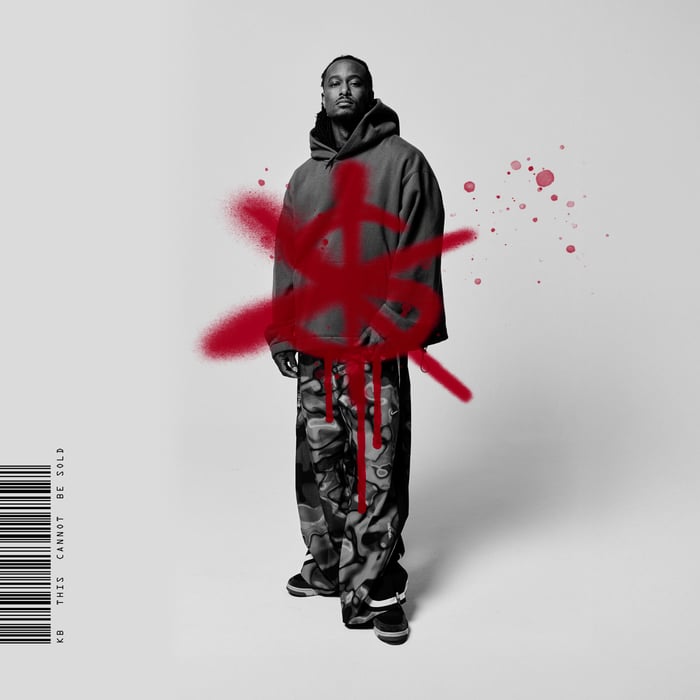
KB’s Cannot Be Sold Is a Price List Disguised as a Testimony


 See more Architeg Prints stories on Google.
KB’s Cannot Be Sold Is a Price List Disguised as a Testimony
KB turns Cannot Be Sold into an audit of clout, church, politics, and family—then dares you to argue with the receipt.
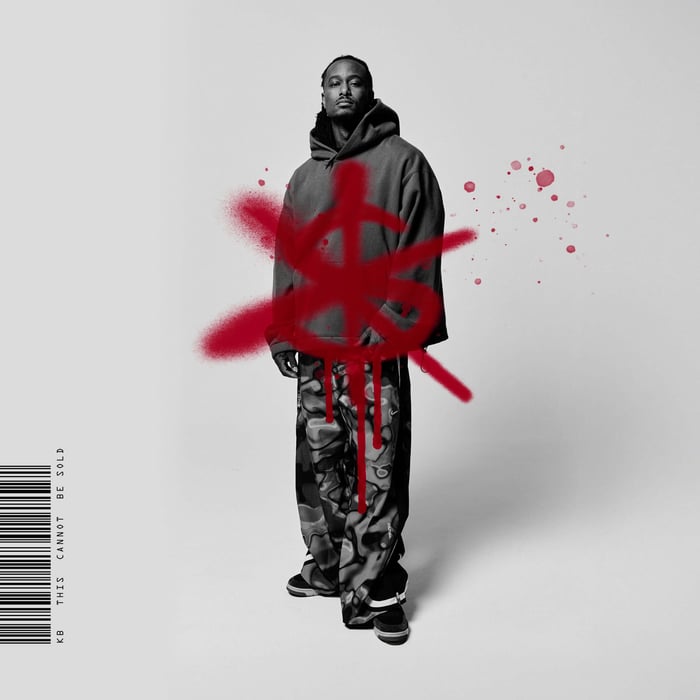
A record that keeps asking: what’s your faith worth, exactly?
Some albums want to entertain you. Cannot Be Sold mostly wants to corner you—politely, with drums—and make you name your price.
KB raps like a man who understands exactly how modern rap commerce works: arenas, brand-friendly storylines, streaming numbers, the whole dashboard life. And he doesn’t stand outside it pretending to be pure. He stands inside it, points at the levers, and tells you which ones he refuses to pull. The point isn’t that he’s above the market. The point is that he’s constantly negotiating with it—then acting like the negotiation itself is a kind of worship.
He comes in as a married father of three with awards, a streetwear line (Native Supply), and even a podcast lane (Southside Rabbi). That matters because the album keeps circling one obsessive idea: value. Not vibes. Not “content.” Value. What’s priceless, what’s expensive, what’s cheap, what’s fake expensive, and what costs your mind.
And if that sounds like it could get preachy, yes—it does. But it also gets uncomfortably specific in a way most “inspirational” rap refuses to risk.
First he invoices the church—then he invoices himself
The album starts swinging at the church before it swings at “the culture,” which tells you KB’s real obsession isn’t outsiders—it’s the people who claim to be insiders.
On “TOO UNFAZED,” he insists he sleeps just fine regardless of tweets… and then spends plenty of energy torching the people sending those tweets. It’s a funny contradiction: he wants credit for not caring, but he’s also keeping a tidy ledger of who’s annoying him. The thinnest part of the song is the actual bars aimed at the critics—more heat than detail. Still, the target lands: people who “love God for content,” the narcissism that thrives inside a church he clearly still wants to defend.
He even drops a weird little flex about seeing a Druski skit before it was a Druski skit, back in ’08—like he’s reminding you he’s been online long enough to hate what it did to everyone. The track isn’t just complaining. It’s KB trying to prove he can’t be dismissed because he’s already paid for his faith in a way most listeners haven’t. He asks—basically—if you’ve ever had a gun in your face for Christ, or lost everything except faith. He claims he has. And he treats that claim like a seal pressed into wax: now listen.
I’ll be honest: on my first pass, I thought this opener was just going to be another “I’m unbothered” anthem with religious branding. But it’s not that lazy. It’s more like the sound of someone trying to keep their worldview intact while the entire attention economy keeps licking at the edges.
Then “FLEX” admits the real problem: he hates clout and still wants a seat
The next move makes the thesis clearer. “FLEX” aims outward, toward rap culture’s usual props—purple Sprite, double cup, the bag, the club—then waves the whole display away like smoke.
The beat sits in this uneasy loop while three rappers pass the argument around: what’s actually impressive anymore? KB frames social media like eternal high school. Clout is just new lunch tables. Engagement is just popularity contests with better lighting. He says he hates it, but the prayer underneath is obvious: please still invite me to sit there anyway. That tension is the point, and it’s more honest than a lot of “I don’t care” posturing.
Bizzle shows up and makes the dilemma sharper: if you’re a kid from the projects, what’s the bigger flex—jet full of women and the debt hangover, or less money and a clean conscience? Then he drops the line that pretty much sums up his role here: he wasn’t called to sweeten the deal; he was called to salt the earth.
That’s the album in miniature: rap as witness, but also rap as temptation. KB never stops sounding like he’s negotiating with the very stage he’s standing on.
When the gospel sample hits, the album finally breathes like music—not argument
After all that friction, “SPEAK THRU ME!” is where the sound finally locks into something with lift. A lifted gospel vocal basically becomes the personality of the beat. Hard drums give it bounce, but the vocal gives it altitude—like the track is physically trying to rise.
And WHATUPRG uses that air to say the bluntest things on the record: ICE raids, police unloading, a man with a sign getting dropped in the street—then the question that stings because it’s practical: how does anyone learn hope if the hands and feet get separated? It’s activism phrased as anatomy, and it works because it doesn’t feel like a slogan—it feels like someone trying to keep their theology from becoming useless.
That urgency flips into celebration on “GOT A REASON.” Group vocals and claps show up like the track is built for a crowd response. KB fills his verse with survival snapshots: .22s barely missing him, a mother’s prayer he calls bulletproof, and the kind of chaotic life patterning where “three ex-wives in a row” gets compared to tic-tac-toe. Even his near-miss with pills becomes a sound-alike image—Tic Tacs where something darker could’ve been.
By the third verse he’s punning “hymn” against “hem” and telling you to check the seams. It’s corny on paper, but in the moment it plays like a man trying to turn wordplay into a moral flashlight: look closer, there’s stitching everywhere.
“LEFT HAND” and “KEANU’S SONG” turn marriage into the only flex he trusts
From there the album slides into domestic storytelling, and it’s not a detour—it’s KB’s actual alternative to rap’s standard brag script.
“LEFT HAND” rides a Gap Band-style uptempo sample with wedding-reception claps. The funniest (and best) writing here is basically gossip: he had $600 for the first ring and had to squint to see the diamond. When the money improved later, he bought a bigger ring for himself—then his wife told him to take it back because they had a baby coming, and she preferred the first ring anyway.
Terrian matches that energy with her own detail: 2018, her hand still up, and her father getting pulled into the song with a direct call—“Hey, Mr. Bass, can I take your daughter’s hand?” It’s corny in the way real life is corny. That’s why it lands.
Then “KEANU’S SONG” extends the same premise: the only boasts he’ll allow are about loyalty. No mistresses. A wife who wants purpose over purses. And a line that tells you how badly he wants to keep rap’s athletic metaphors without keeping rap’s emptiness: like Curry, he’s “dropping thirty in his thirties.”
The second half starts with a child’s voice: “Daddy I love you.” KB even asks if the kid’s just saying that because he got to be on the song. Then the kid says his favorite thing about God is “That He made you.” It’s disarming in a way that almost feels unfair—like the album just used tenderness as a trump card. I’m not totally sure if that moment is meant to humble the listener or humble KB. Maybe both.
“FATHER” is where the album stops posing and just bleeds
Here’s where Cannot Be Sold stops sounding like a thesis and starts sounding like a person.
Ben Fuller opens “FATHER” questioning whether God can change sinners into sons and daughters—whether sobriety can really stick, whether pills and alcohol can stop calling your name. KB answers with the most direct verse I’ve heard from him here, and it doesn’t hide behind punchlines.
He says every father he’s known abandoned him. He describes his own father leaving him at six years old at a friend’s house and never returning. Then the line that changes the temperature of the whole record:
A teenage girl stole his innocence. He says he can barely speak on what she did.
That’s not “content.” That’s a wound being described out loud with the mic still on. He says he hates that he can’t forget, and he hates how people reduce pain to statistics. In the second verse he talks about choosing to keep the last name he almost lost, and deciding that for his sons he will be what he needed.
If the album has a center of gravity, it’s here. Everything else—politics, doctrine, clout—starts to sound like coping mechanisms orbiting this.
“NO FEELING LASTS FOREVER” goes lower than most listeners will be comfortable with
The next plunge is “NO FEELING LASTS FOREVER,” and it’s structured as spoken confessions that feel like somebody turned the lights on in a room people prefer to keep dim.
One section describes belief collapsing from the inside: miracles reread as coincidences, doubts that feel like logic, like clarity. It’s the particular dread of scanning your own memories looking for proof that you’re not losing it.
Another confession is about craving—not framed as lust, but as wanting five minutes where you’re not failing at everything. The brain starts bargaining: just this once… you’ve been good lately… you deserve relief. The lie arrives like oxygen. Shame shows up before the click.
Then another voice entirely: a woman whose husband doesn’t understand, kids don’t understand, body and brain turning into betrayal. It widens the song from “my struggle” into “this is what it sounds like when a mind turns on its owner.”
Between each confession, KB recites Psalm 103 in near-paraphrase—compassion, mercy, the reminder that humans are dust—until the final word goes to Robert Lowry’s 1876 hymn about the blood.
It’s heavy, and not in the cinematic way. It’s heavy like reading a text you weren’t meant to see.
When the hooks aim for stadiums, the writing has to work harder
From that depth, the album pivots back toward bigger, cleaner “worship-ready” refrains—and this is where it gets uneven for me.
On “WE STILL BELIEVE (HLY FOREVER),” KB integrates his testimony into the “Holy Forever” refrain. The one line that actually stayed with me is this:
“Your presence is my surgery.” — KB
That’s a killer bar—sharp, memorable, weirdly physical. The problem is the song around it feels like it’s built to support the refrain more than the refrain is built to deepen the song. I kept waiting for the track to get as specific as that one line, and it mostly doesn’t.
“GOD CAME THROUGH” plays his testimony over a big-room hook and, to its credit, doesn’t overcomplicate the mission. It’s straightforward: here’s what happened, here’s what I believe now, sing it if you agree.
Then “BLOOD 2” veers into shouted, rock-edged chant territory. Caleb Conley brings grit, and the track comes closest to feeling like an actual beat you could run through a wall to. But there’s also a line—“let the bodies hit the floorboard”—that’s pure cheese, like somebody wanted mosh-pit energy and grabbed the first blunt object they saw.
What saves it is KB turning doctrine into trash talk: “Athanasius pack, Arius get smacked / Heresy is whack.” It’s ridiculous. It’s also kind of effective, because it treats theology like something you’d actually fight about—not just something you’d post about.
The title track turns doctrine into politics, then admits the therapy bill
That doctrine-as-trash-talk instinct goes fully political on “THIS CANNOT BE SOLD.” It opens with a warning: this isn’t for the algorithm. Which, of course, is the kind of thing you say right before you say something designed to travel.
He addresses the Left and MAGA types in the same breath. He calls himself “pro-life from the womb and the Gaza,” brings up the Epstein list, and imagines sinners deporting sinners at report-in centers. The point isn’t that he’s offering a policy plan. The point is that he’s refusing to let any tribe rent his mouth.
“We conservative with an asterisk,” he says, which is a neat way of admitting he wants some of the values without the brain rot.
Then the track does something smarter: it turns the mic back on him. Therapy every week. Confessions to four or five guys who’d be horrified if he disappointed them. And then an ownership flex folded into theology: no master over him anymore; now he owns his masters.
The exit terms are blunt, almost spoken: the moment it can be sold, he’s out. That’s not a chorus. That’s a contract clause.
“CAMPAIGN” is the cleanest rap moment—and the calmest response to a bitter truth
By the time “CAMPAIGN” hits, it feels like KB already settled the question and is just jogging past the rest of us.
It’s a sprint of phrase clusters over a hard beat. Ad-libs work like drum hits. This is the purest rapping he does on the whole record—less sermon, more muscle.
Someone tells him that if his skin color were different, he’d be way bigger. He answers without rage, which is either maturity or exhaustion:
He believes in a sovereign King. He refuses the “underrated” storyline. “What’s meant is what’s meant.”
After fifteen years in the business (by his own account), he says he’s achieved everything he wanted—and the loudest boast is that he wanted exactly this much. That’s a wild thing to say in rap, where ambition is usually performed as infinite hunger. Here, contentment becomes the flex, and I can see listeners disagreeing with that… but I also think it’s the most consistent thing he says all album.
Conclusion
Cannot Be Sold isn’t trying to be your favorite album. It’s trying to be your mirror—held at an angle that makes you look guilty for even asking what it costs.
Our verdict: People who like rap that argues with itself—faith, ego, politics, family, temptation—all in the same verse, will actually like Cannot Be Sold. People who want clean “inspirational” background music will not; this album keeps pulling the car over to talk about the dashboard lights.
FAQ
- What is the core theme of Cannot Be Sold?
The album keeps circling value—what KB will monetize, what he refuses to monetize, and what faith costs when it’s not a slogan. - Which songs hit the hardest emotionally?
“FATHER” and “NO FEELING LASTS FOREVER” go past performance into confession, and they don’t flinch. - Does KB focus more on church issues or wider culture?
Both, but the church critique lands first—like he’s more bothered by inside-the-house hypocrisy than outsider disbelief. - Is THIS CANNOT BE SOLD heavily political?
It’s political in the way a person is political when they’re sick of being sorted into teams—more confrontation than platform. - What track best shows KB’s pure rapping ability here?
“CAMPAIGN.” It’s tighter, faster, and less interested in decorating the message.
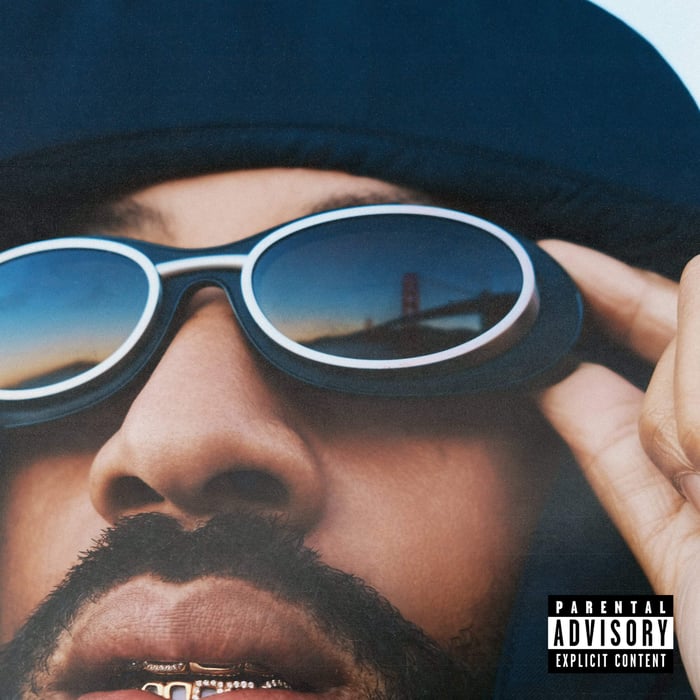
If you’re the type who treats album art like a personal flag, you can always grab a favorite album cover poster for your wall over at https://www.architeg-prints.com—it fits the whole “value” theme without needing a sermon.
 | DISCOUNTGET 30% OFF*Use code on your next order:
|
* This post may contain affiliate links, meaning we earn a commission if you make a purchase through these links, at no additional cost to you.