Andover FreePlay Review: The Stereo Boombox Modern Listeners Wanted



Andover FreePlay Review: The Stereo Boombox Modern Listeners Wanted
Andover FreePlay combines true stereo sound, thoughtful design, long battery life, and modern charging features in a refined portable boombox.
A Better Kind of Boombox
There’s a particular magic in carrying music somewhere it doesn’t traditionally belong. The original boombox understood that instinct perfectly. The Andover FreePlay takes the same idea and gives it a more refined soundtrack, a cleaner silhouette, and enough thoughtful technology to make the old-school format feel surprisingly fresh.
The Boombox Never Really Left
There’s an alternate version of audio history where the boombox never disappeared. It simply became smaller, cheaper, and—let’s be honest—far less satisfying to listen to.
Most modern portable speakers are spiritual descendants of that classic shoulder-carried sound system. Yet many of them have been designed around one priority: getting loud. The result is often a familiar combination of plastic construction, aggressive styling, and sound that favors impact over detail. They look ready for battle, even when all you want is a pleasant afternoon playlist.
The legendary image of John Cusack holding a stereo above his head in Say Anything captured what made the boombox so appealing. It was one of the most powerful music systems you could physically carry. Today’s portable speaker should be able to offer more than raw volume. It should sound good, look considered, and fit naturally into everyday life.
That’s where the Andover FreePlay makes its case. It doesn’t reject the boombox tradition. Instead, it polishes the idea until the rough edges are gone.
Andover Audio’s Hi-Fi Philosophy
The FreePlay comes from Andover Audio, a Boston-based brand known for compact hi-fi systems, all-in-one turntables, and powered speaker bases. The company’s guiding idea is summed up by the phrase “Hi-Fi for Modern Living”—serious sound without demanding a serious amount of room.
That philosophy has usually meant keeping high-quality audio within reach of people who don’t want a rack of equipment dominating the living room. With the FreePlay, Andover adds portability to that formula. Think of it as the brand’s compact hi-fi approach with a handle attached.
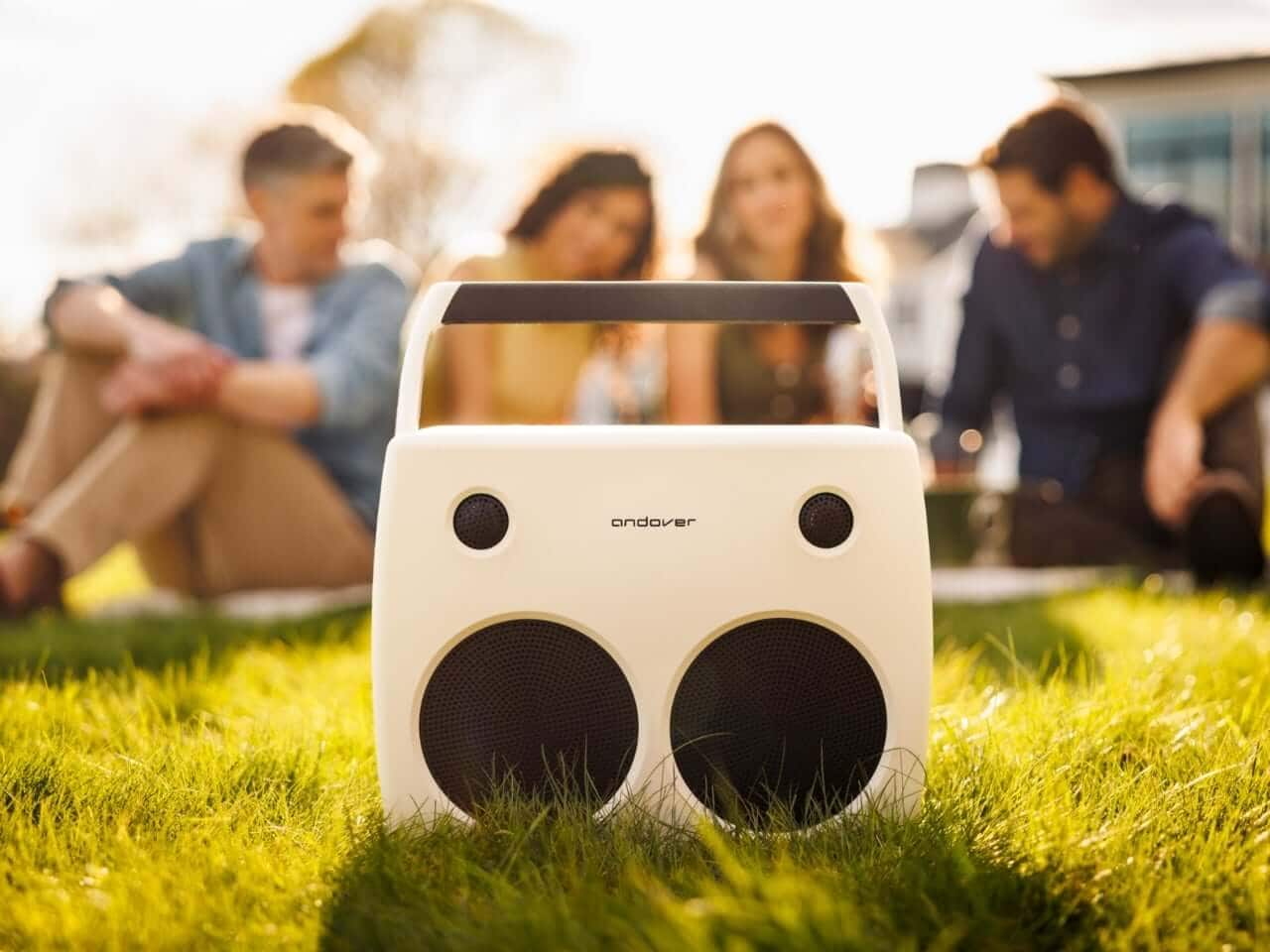
A Portable Speaker With Real Presence
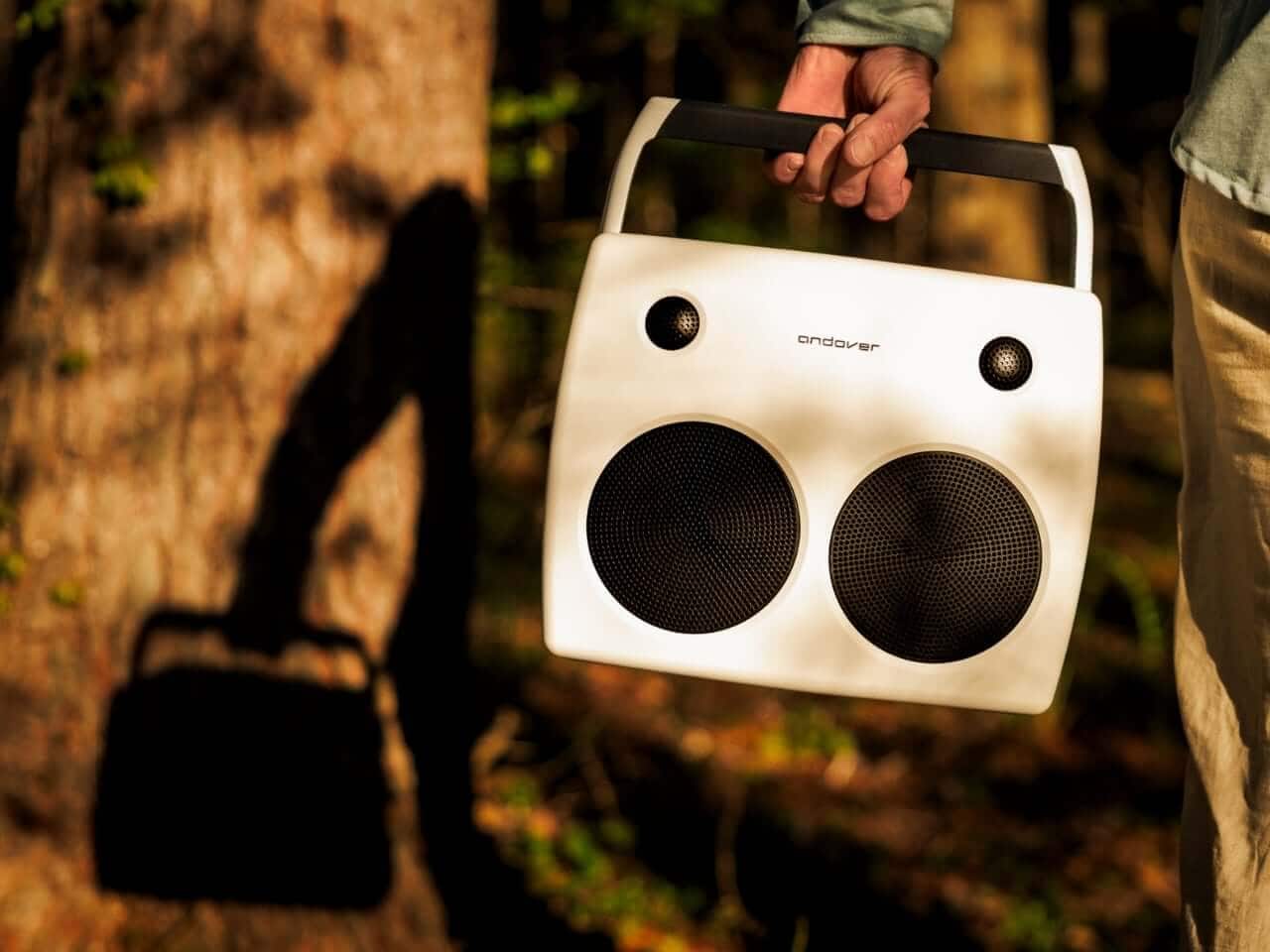
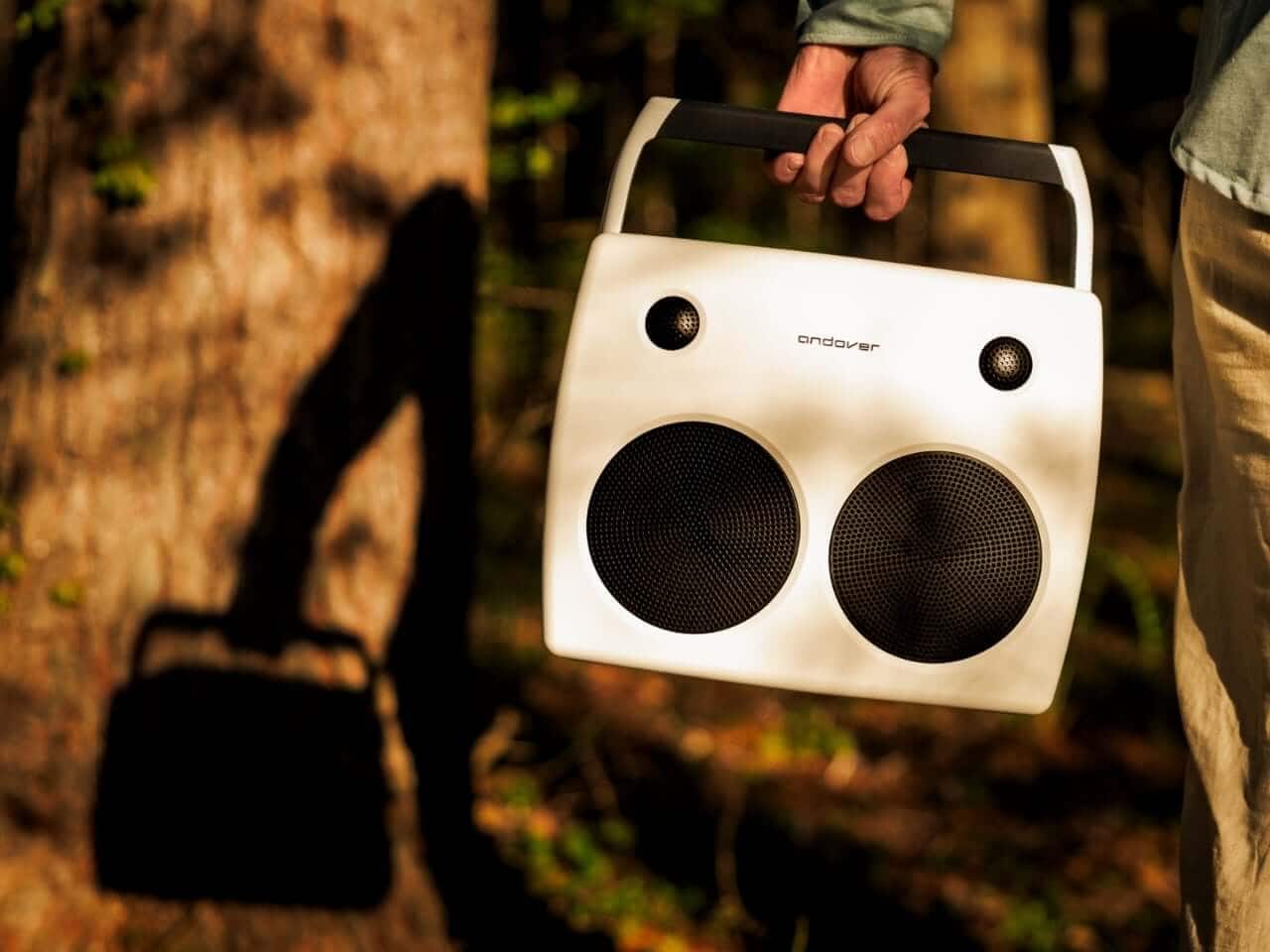
The FreePlay isn’t a pocket-sized speaker, and it doesn’t pretend to be. Measuring 10 inches tall, 13 inches wide, and 6.5 inches deep, it occupies a meaningful amount of space. At nine pounds, it also has the reassuring heft of something built to stay put when you set it down.
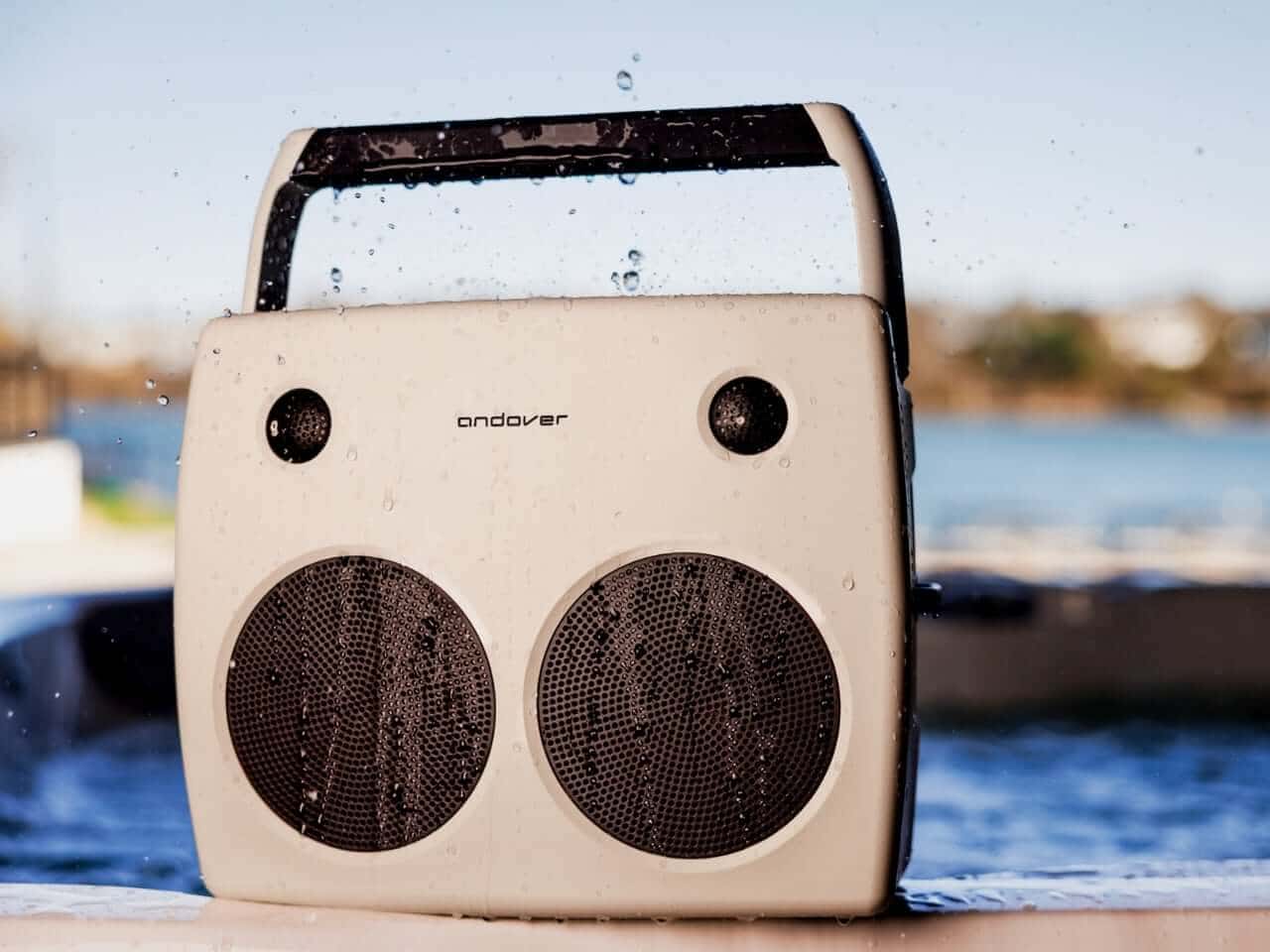
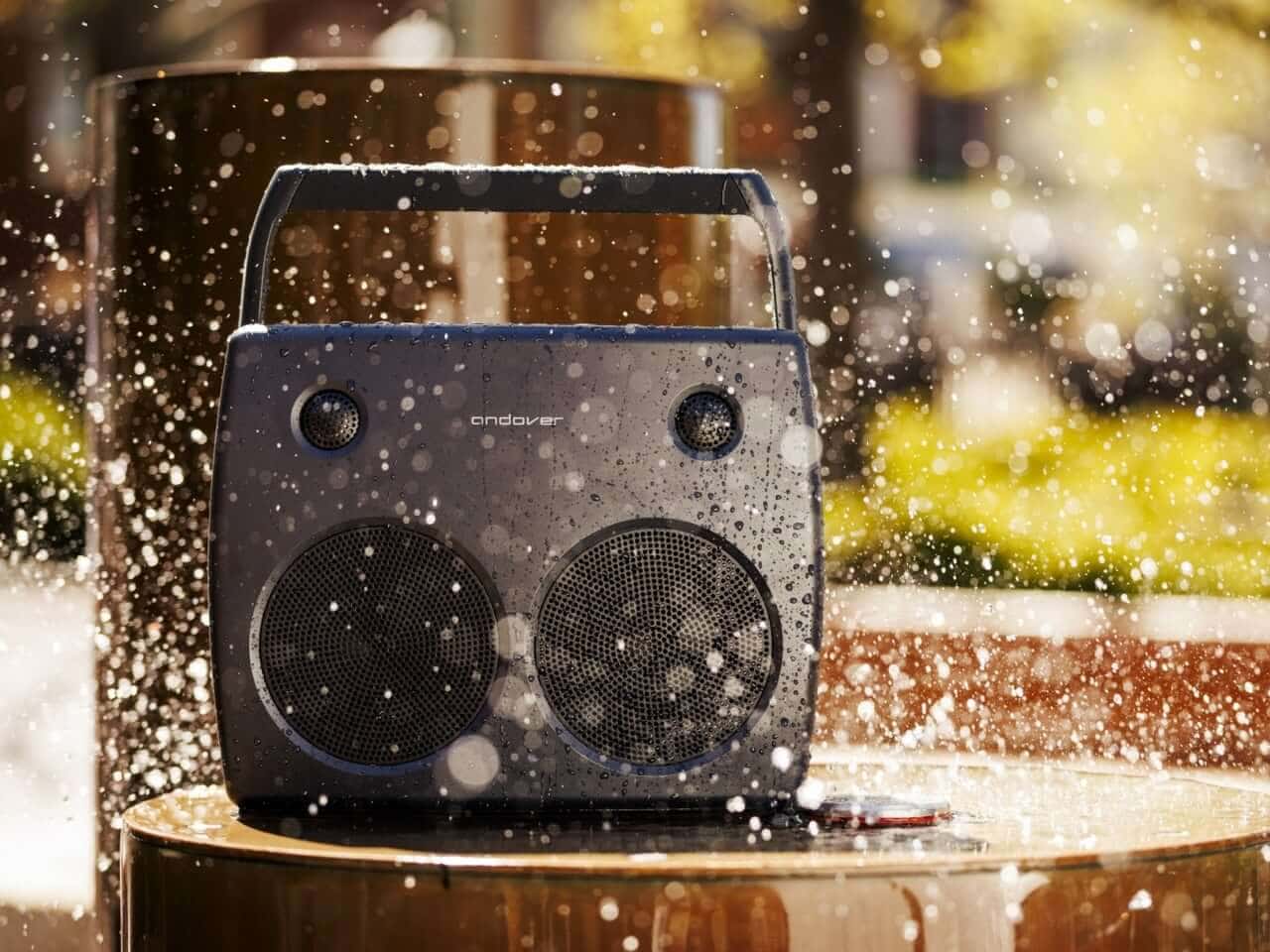
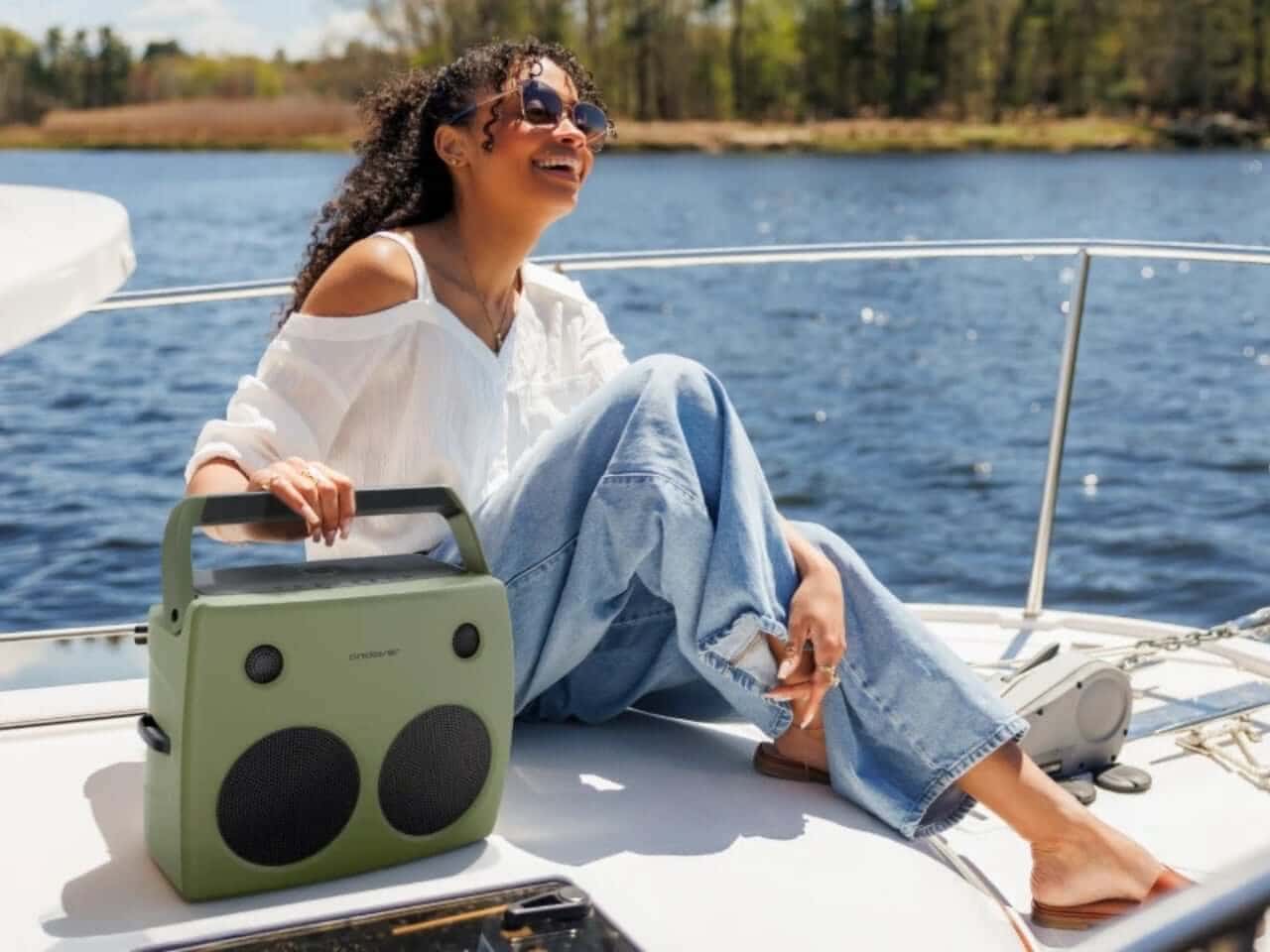
A fold-down carry handle makes transport straightforward, while utility tie-down bars on either side help secure the speaker when you’re taking it somewhere more adventurous. It also carries an IP67 rating for dust and water resistance, meaning it’s designed to handle outdoor conditions and an unexpected spell of rain.
That ruggedness is balanced by a matching shoulder bag with a cinch-top closure, included with every unit. It’s a small but telling detail. The FreePlay hasn’t been treated like a side project or an ordinary accessory. Even the packaging suggests that the complete ownership experience was considered from the beginning.
A Softer Look for Outdoor Audio
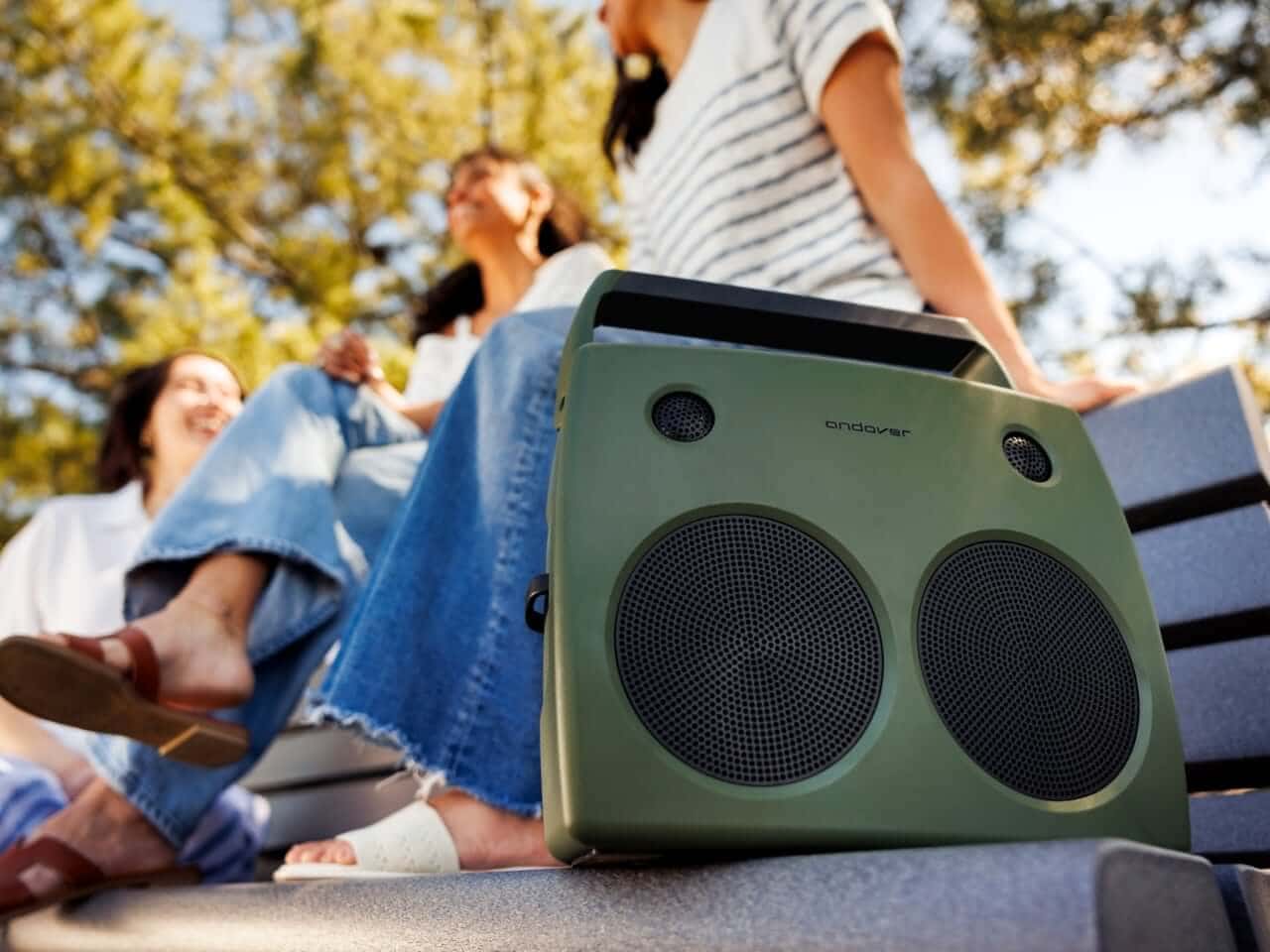
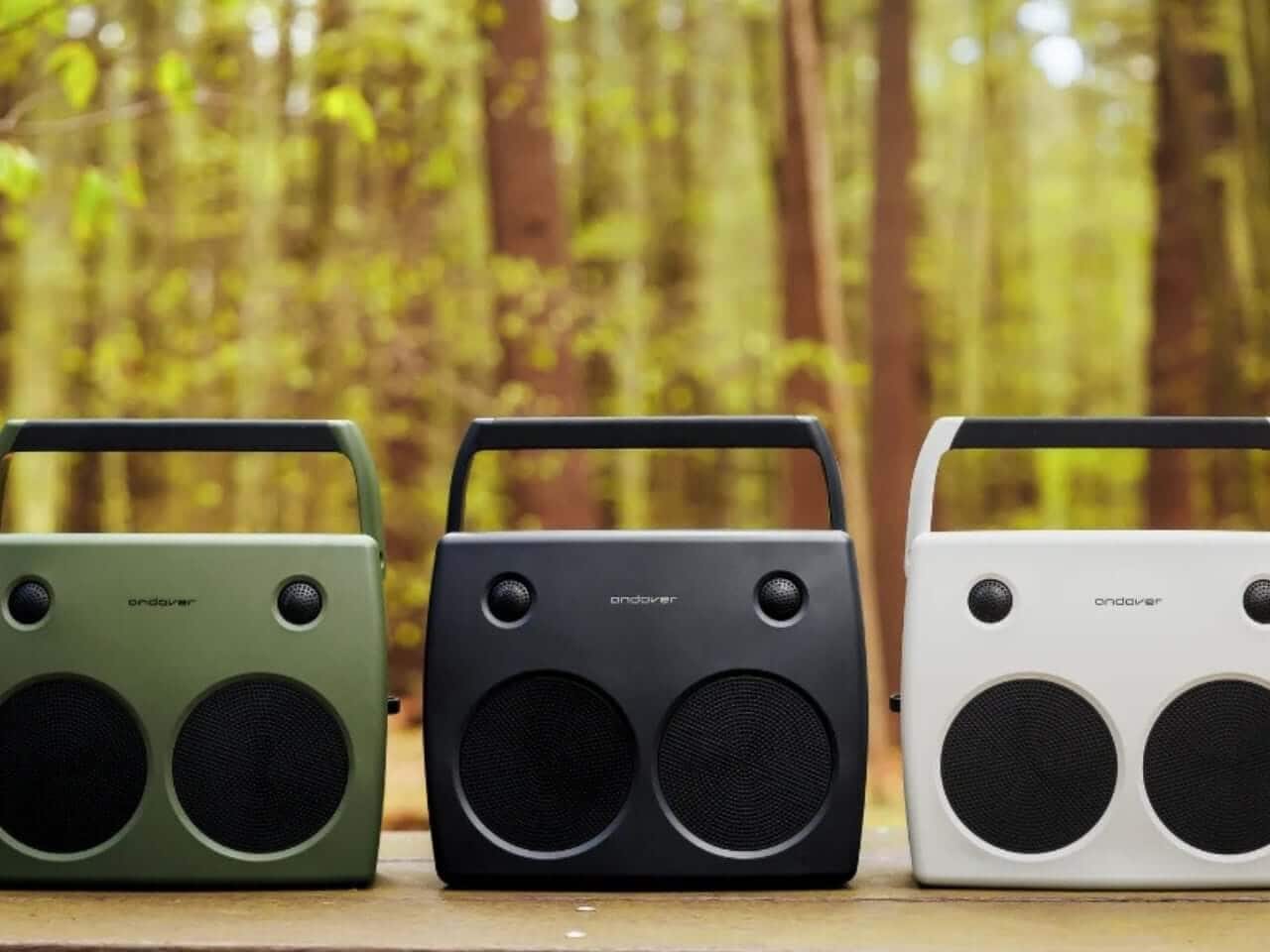
Design is probably where the FreePlay separates itself most clearly from the crowd. It’s available in Ivory, Olive, and Slate, with a visual language that feels calm rather than confrontational.
Instead of leaning into the usual rugged-industrial look, the speaker resembles something you might find in a carefully styled interior. Its clean lines and soft presentation have more in common with Scandinavian furniture than with a chunky piece of outdoor equipment.
That flexibility matters. The FreePlay can sit comfortably on a bookshelf, kitchen counter, or patio table without looking like it wandered in from a camping supply aisle. It’s a speaker you can leave out in the open instead of hiding whenever guests arrive. That sounds simple, but many portable speakers never quite manage the trick of being both durable and attractive.
True Stereo in a Portable Format
The FreePlay’s most important feature is hidden behind its approachable exterior: a genuine stereo speaker architecture.
Inside are dual 5.25-inch aluminum-cone woofers with neodymium magnets, two 25mm dome tweeters, and a 160mm passive radiator mounted at the rear. Its stated frequency response stretches from 55Hz to 20kHz, giving the system a serious technical foundation for a portable design.
The larger point, however, is that this is true stereo. Many portable speakers combine left and right channels into mono to save space and simplify the hardware. That approach can be convenient, but it often leaves music sounding flat, sharp, or tiring after extended listening. Familiar tracks lose some of their shape. Guitars blur together. Vocals and percussion occupy the same narrow patch of air.
The FreePlay keeps the left and right channels separate. That allows a stereo recording to retain more of its width and dimensionality, with clearer instrument separation, deeper tonal character, and a stronger sense of bass presence. It treats those qualities as fundamental rather than optional upgrades.
For anyone who has ever taken a favorite album outside and felt that the music suddenly became a thin approximation of itself, this is a meaningful distinction. Portability shouldn’t require the song to leave half its personality at home.
Two Modes for Two Listening Moods
The FreePlay offers two listening modes. Wide Range is the default hi-fi setting, intended to preserve the speaker’s balanced presentation. Loud Mode adds 6dB of output for situations when background noise, wind, or a lively group begins competing with the music.
That arrangement feels sensible. Rather than forcing extra volume—and potentially extra harshness—on every listener, the speaker keeps its more refined sound as the standard setting. Loud Mode remains available when the moment calls for it.
It’s the kind of practical compromise that makes a product easier to live with. Quiet morning in the kitchen? Wide Range. Patio gathering where everyone has suddenly started talking at once? Loud Mode. No drama, no unnecessary app menu, just a toggle when you need a little more muscle.
Modern Connectivity Without the Fuss
Wireless performance comes through Bluetooth 6.0 with LE Audio, along with support for LC3, AAC, and SBC codecs. That combination is intended to provide dependable playback, including in busier wireless environments where connections can sometimes become temperamental.
The FreePlay also includes a 3.5mm auxiliary input and a microphone input, giving it flexibility beyond standard Bluetooth listening. For larger events, broadcast mode can connect up to 99 FreePlay units at the same time for synchronized playback. That’s a considerable leap from the days when two speakers simply meant dragging a second cable across the room.
Battery life is rated at up to 24 hours, which gives the speaker enough stamina for a full day away from an outlet. The charging setup is especially useful. Its 45W USB-C port supports bidirectional fast charging, so it can both recharge the speaker and provide power to external devices.
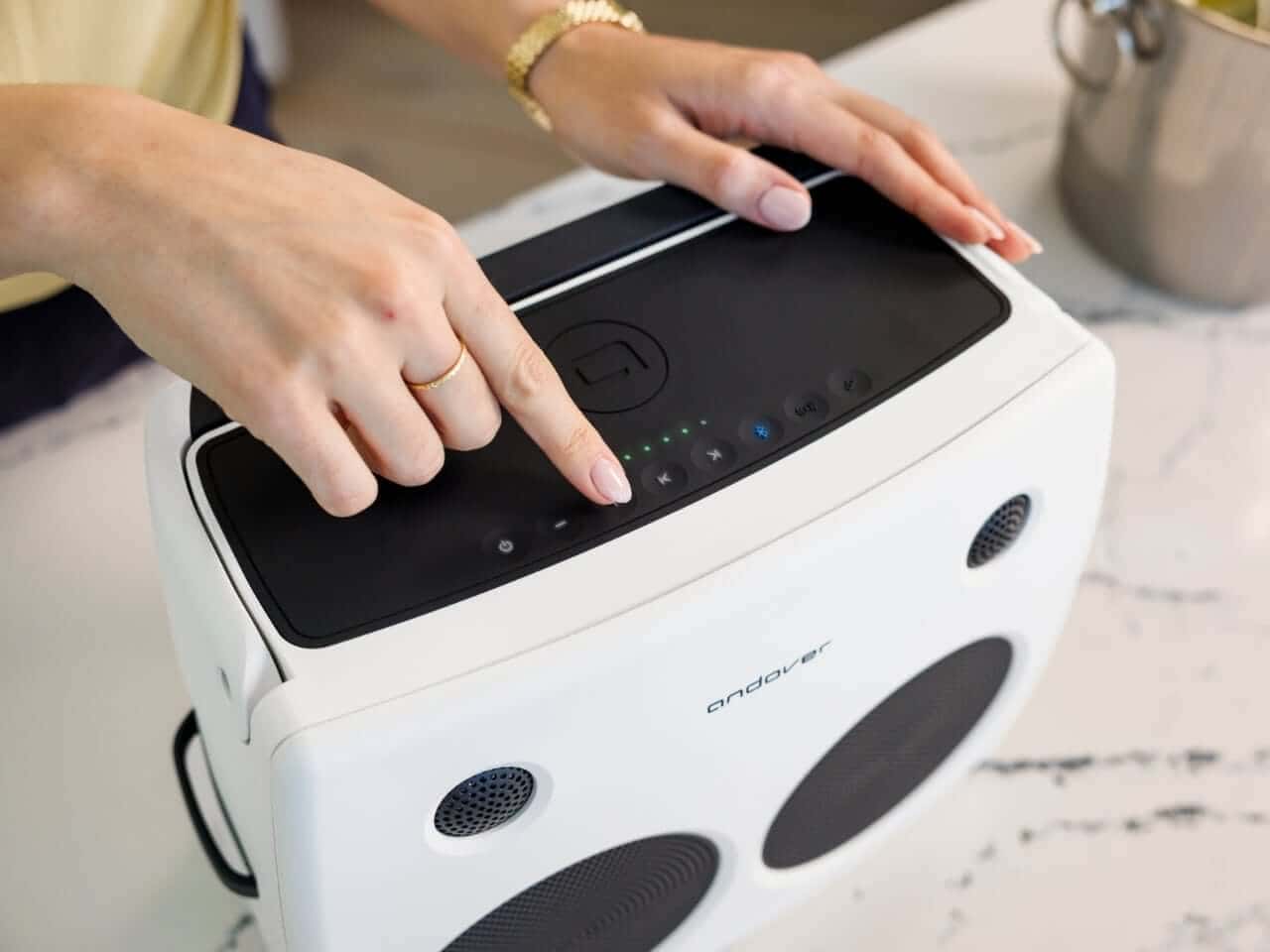
There’s also a 5W Qi wireless charging pad on the top deck. Place your phone there while the music plays, and it quietly tops it up in the background. Andover includes a 45W wall charger in the box, too—a welcome inclusion when many products quietly expect you to supply the right adapter yourself.

Controls That Respect Your Attention
Everyday controls sit directly on the top panel. Volume adjustment, track selection, pairing, battery status, and listening modes are all accessible without opening a phone app.
That may sound like a minor convenience, but it reflects a thoughtful attitude toward technology. The best portable products don’t make you negotiate with a screen before you can enjoy them. Sometimes you just want to press a button, change the song, and get back to whatever you were doing.
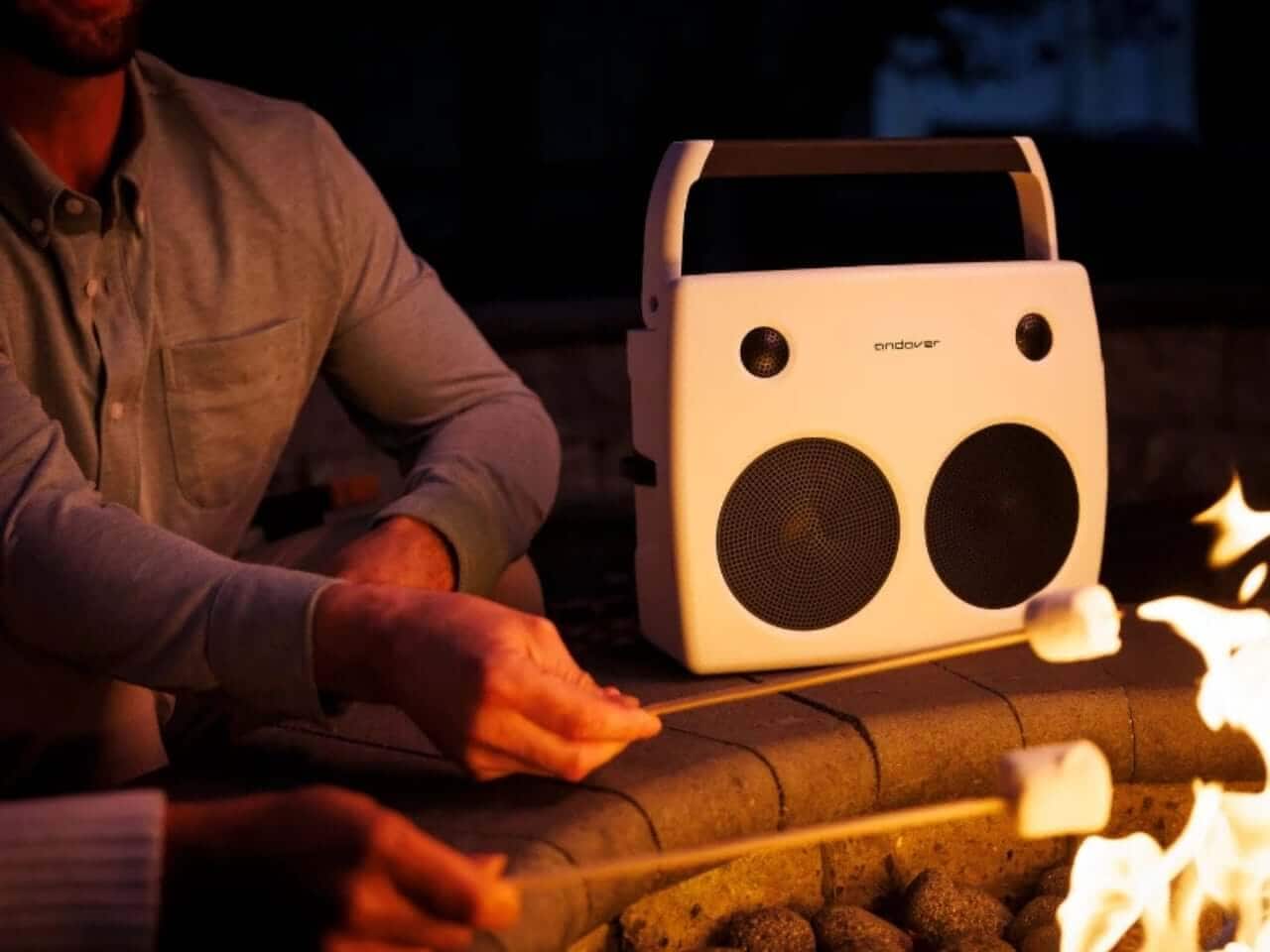
In that sense, the FreePlay understands the original appeal of the boombox. The whole point was to take music somewhere unexpected—to the sidewalk, the backyard, the beach, or a friend’s place—and start listening immediately.
The difference is that Andover has added the features the old boxes never had: reliable wireless connectivity, water and dust resistance, extended battery life, phone charging, multi-speaker playback, and a stereo presentation that gives music room to breathe.

Why the FreePlay Feels Like a Proper Evolution
The Andover FreePlay succeeds because it doesn’t treat nostalgia as an excuse to stop improving. It borrows the emotional appeal of the classic boombox—the handle, the portability, the sense of taking your music with you—and updates the rest with genuine hi-fi ambitions.
It’s substantial without being clumsy, durable without looking overly tactical, and modern without making basic controls unnecessarily complicated. Most importantly, its stereo architecture suggests that outdoor listening can be more than a volume contest.
The FreePlay isn’t trying to be the smallest speaker in the room. It wants to be the one you actually enjoy listening to, whether it’s sitting beside a turntable-inspired setup indoors or keeping the soundtrack going outside. That feels like a much more convincing future for the boombox.
The best boomboxes always carried a little attitude. The Andover FreePlay keeps that spirit, then adds the sound quality and design discipline many modern portable speakers have been missing. Would you bring this updated classic to your next backyard listening session?
FAQ
- What is the Andover FreePlay?
The Andover FreePlay is a portable hi-fi speaker designed as a modern take on the classic boombox. It combines a carry handle and outdoor-ready construction with true stereo audio and contemporary connectivity. - Does the FreePlay use stereo sound?
Yes. It features separate left and right channels rather than combining the music into a single mono output. Its driver system includes dual woofers, twin tweeters, and a rear-mounted passive radiator. - How long does the FreePlay battery last?
Battery life is rated at up to 24 hours, allowing for extended listening away from a wall outlet. - Is the Andover FreePlay water-resistant?
The speaker has an IP67 dust and water-resistance rating. It is designed to handle outdoor use and exposure to rain without incident. - Can multiple FreePlay speakers play together?
Yes. Broadcast mode can link up to 99 FreePlay units for synchronized playback.
For music lovers who like their favorite records close at hand, an album cover poster can bring that same listening-room feeling to your walls. Browse the collection at Architeg Prints and give your space a little more musical character.
 | DISCOUNTGET 30% OFF*Use code on your next order:
|
* This post may contain affiliate links, meaning we earn a commission if you make a purchase through these links, at no additional cost to you.