Smart Ceiling Fan Speaker Combines 80W Hi-Fi Audio and Lighting



Smart Ceiling Fan Speaker Combines 80W Hi-Fi Audio and Lighting
Smart ceiling fan technology brings together quiet airflow, 80W Hi-Fi sound, and adjustable lighting in one streamlined fixture.
One Ceiling Fixture, Three Everyday Jobs
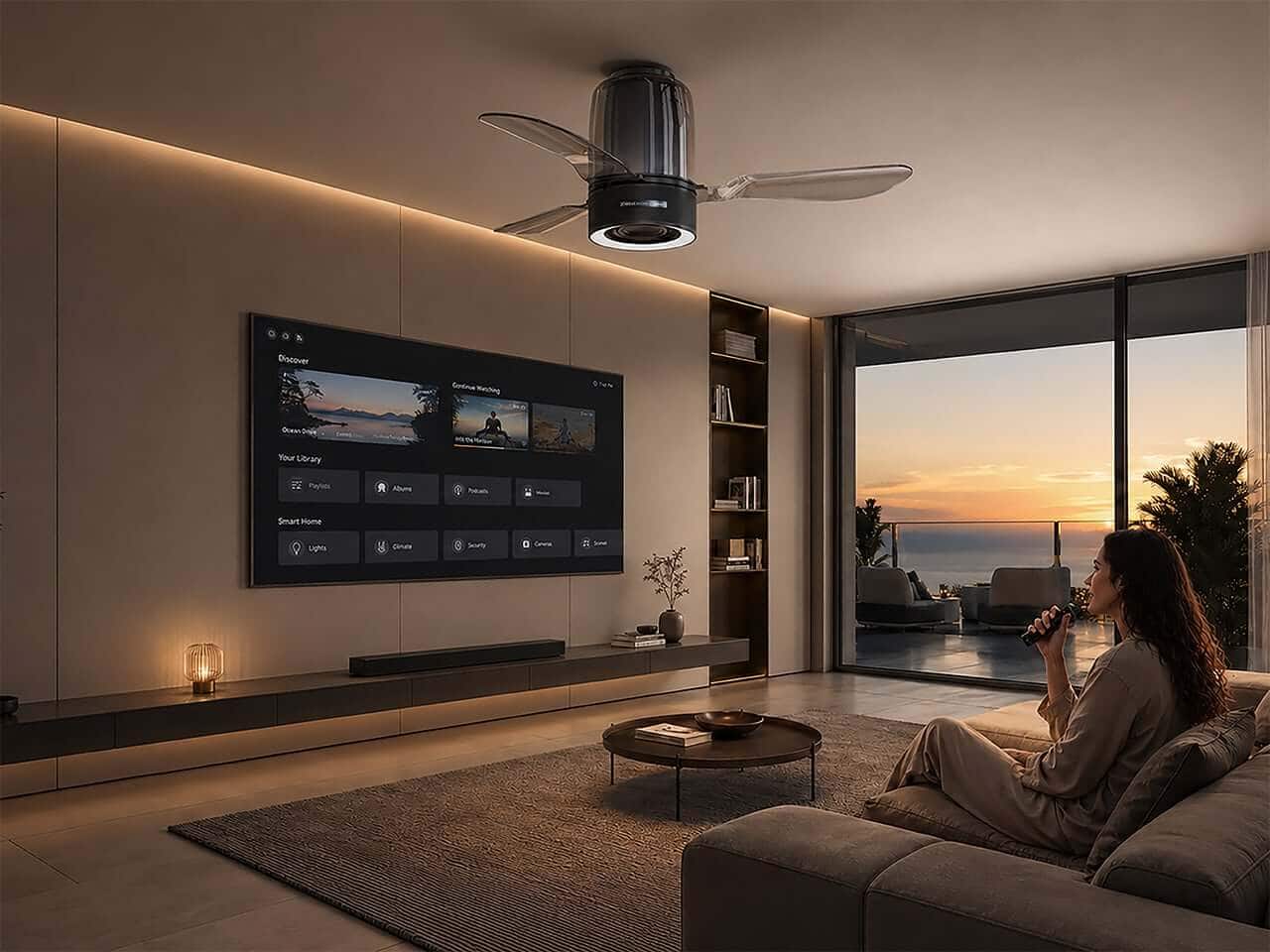
What if the ceiling fixture above your head could cool the room, light it beautifully, and play music without turning your living space into a cable jungle? That’s the clever promise behind WindGroove’s AirFi One ceiling fan speaker, a ceiling fan speaker designed to make your living space feel more open, calm, and pleasantly uncluttered.
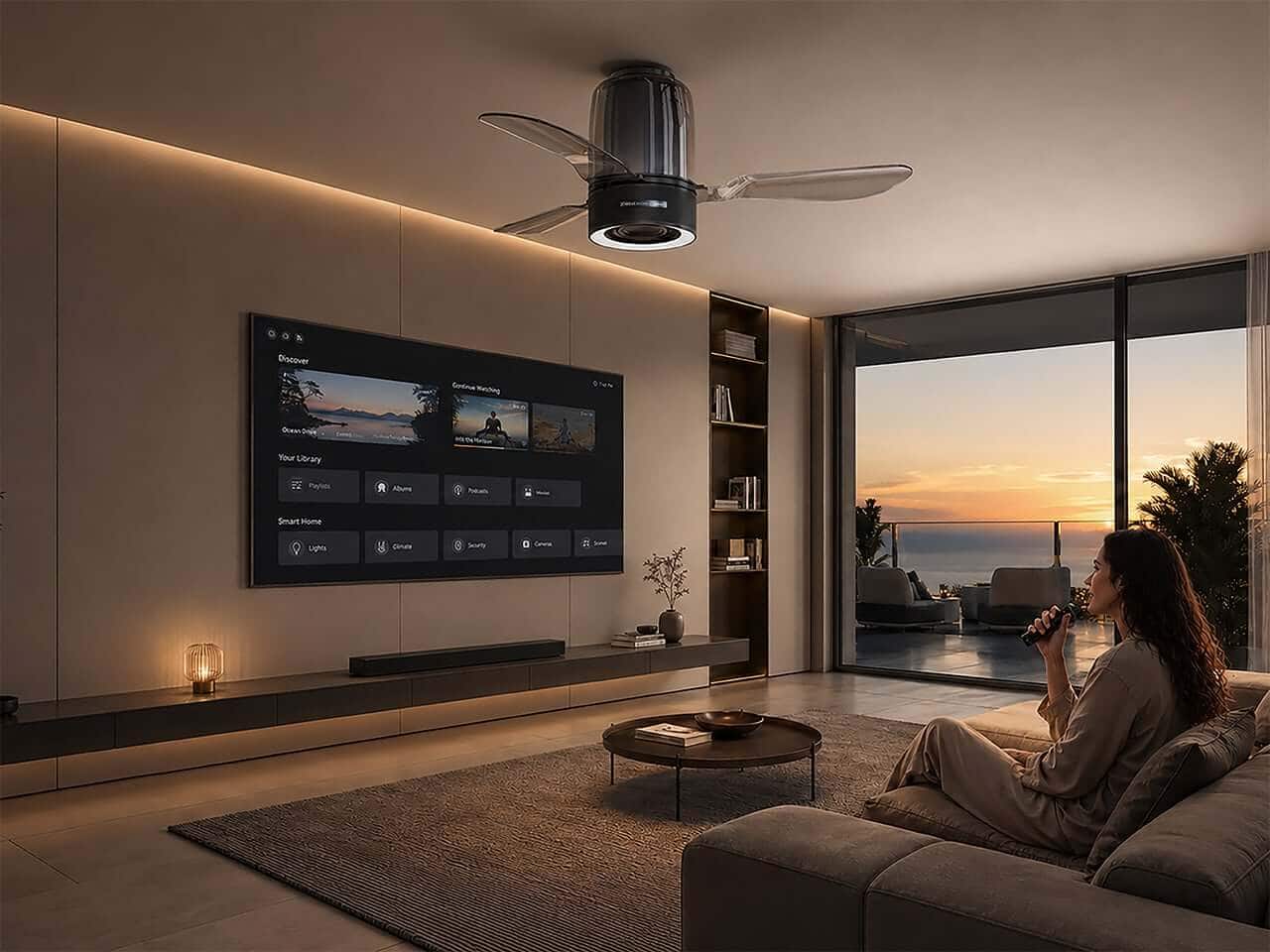
We’ve already seen ceiling fans take on extra duties. First came built-in lamps, then remote controls, timers, and the occasional smart-home feature. Still, most fan-and-light combinations felt like practical upgrades rather than objects anyone would get genuinely excited about. AirFi One takes the familiar ceiling fan formula and stretches it much further by adding an integrated Hi-Fi audio system and atmospheric lighting.
The result is a single ceiling-mounted unit that handles airflow, illumination, and music from above. That might sound like one appliance trying to do too much, but the idea becomes surprisingly persuasive once you picture how much floor space separate speakers, lamps, and fans can consume.
A Fan Speaker Has a Real Acoustic Challenge
Before getting carried away by the tidy design, it’s worth pausing over the engineering problem. Putting a speaker inside a spinning mechanical system is no small trick. Motors naturally create vibration, and that vibration can travel through the housing, mounting hardware, and speaker chassis. If it reaches the driver, the result can be unwanted rattling or distortion.
The rotating blades create another complication. As each blade passes through the air, it produces recurring changes in air pressure. At higher speeds, those pulses can become a rhythmic disturbance around the blade-pass frequency, potentially causing the speaker cone to flutter instead of reproducing music cleanly.
Then there’s the ceiling itself. A speaker mounted overhead projects sound into a room where a large, reflective surface sits just behind it. Reflections can create phase cancellation and comb filtering, meaning some frequencies reinforce one another while others partially disappear. The listening experience can become uneven, with certain tones sounding exaggerated and others losing their shape.
That’s a lot to overcome in a product that is also expected to cool a room quietly. A conventional speaker gets to focus on sound. AirFi One has to share its body with a motor, blades, lighting components, and the ceiling mount. In other words, this isn’t simply a speaker with a fan attached—it’s a balancing act in hardware form.

DSP Helps the Sound Disappear Into the Room
That acoustic challenge leads directly to WindGroove’s main design strategy: technology should blend into the architecture instead of demanding attention. The AirFi One doesn’t want to look like a speaker, a lamp, and a fan awkwardly sharing the same address. It aims to become part of the ceiling itself.
WindGroove uses intelligent digital signal processing, or DSP, to account for overhead projection and the reflective behavior of the ceiling. The processing is intended to correct the sound in real time, helping music spread more naturally through the room rather than sounding as though it is coming from a small point directly above your head.
The company lists total harmonic distortion at 1% or below. In practical terms, that specification suggests the system is designed to keep the audio from becoming harsh or noticeably colored as it works. The goal is for music to retain its character instead of reminding you that it’s being produced by a multi-purpose appliance.
The motor is rated below 32 decibels, which is important for both cooling and listening. A quieter motor creates less mechanical noise and vibration at the source, giving the DSP less interference to manage. Nobody wants a dramatic guitar intro interrupted by the mechanical equivalent of a throat clearing. Keeping the fan quiet is therefore just as important as making the speaker powerful.
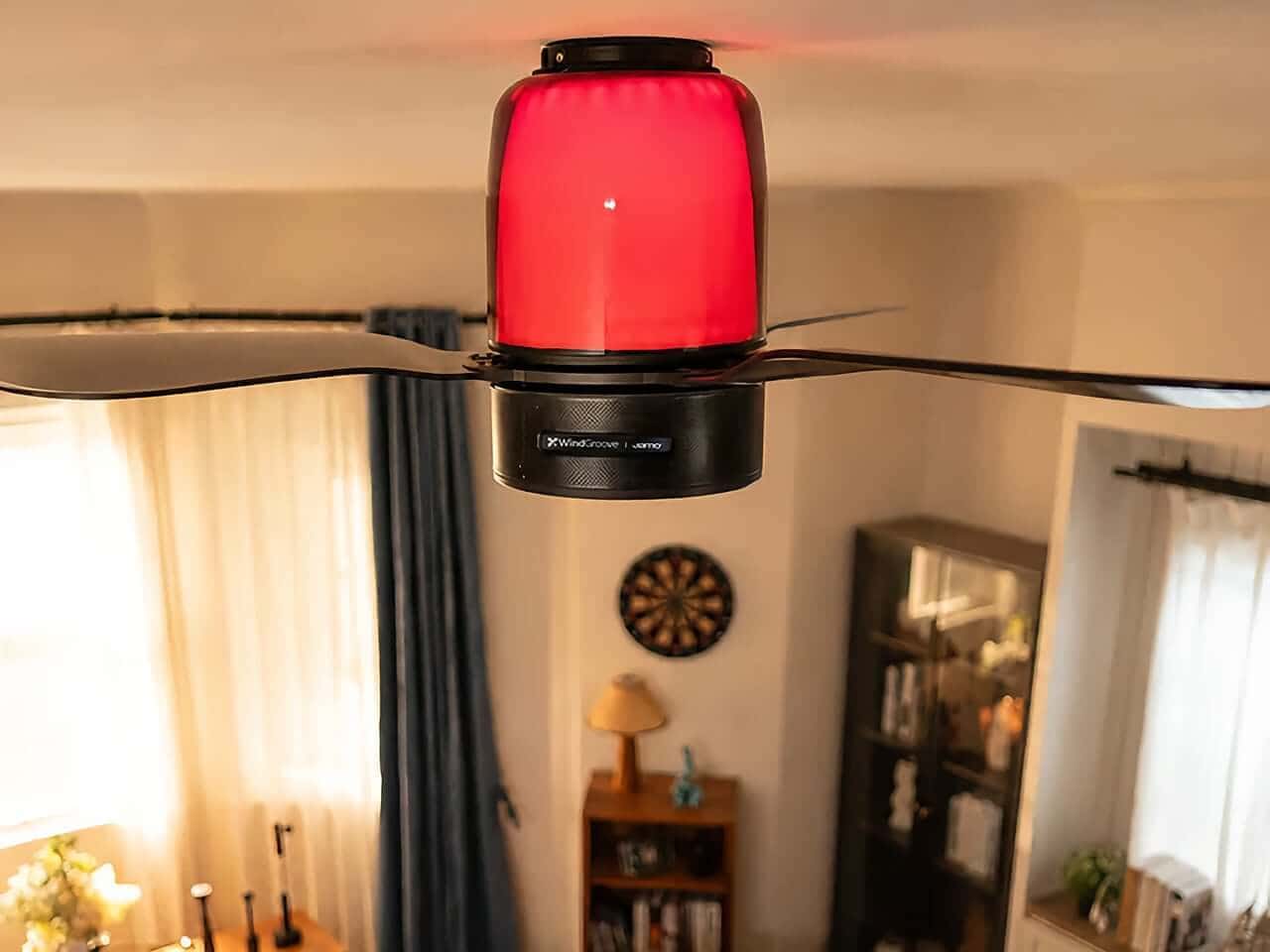
Jamo Tuning Gives the Audio More Ambition
The audio system was co-developed with Jamo, the Danish speaker brand founded in 1968. That partnership gives the AirFi One a more serious audio identity than the typical built-in speaker found in an appliance. Rather than treating music as a polite background feature, the product is presented as a genuine Hi-Fi system that happens to live inside a ceiling fan.
Its 80-watt, three-way configuration includes two 15-watt mid-high drivers and a dedicated 50-watt subwoofer. The arrangement gives the system separate responsibilities across the frequency range, with the smaller drivers handling mid and high frequencies while the subwoofer focuses on lower-end weight.
The stated frequency response runs from 45Hz to 20kHz. That range is intended to cover bass texture, vocals, instruments, and high-frequency detail across a broad selection of recorded music. It won’t turn the ceiling into a concert hall, of course, but the specifications show that WindGroove isn’t settling for thin, tinny audio that exists only to fill silence.
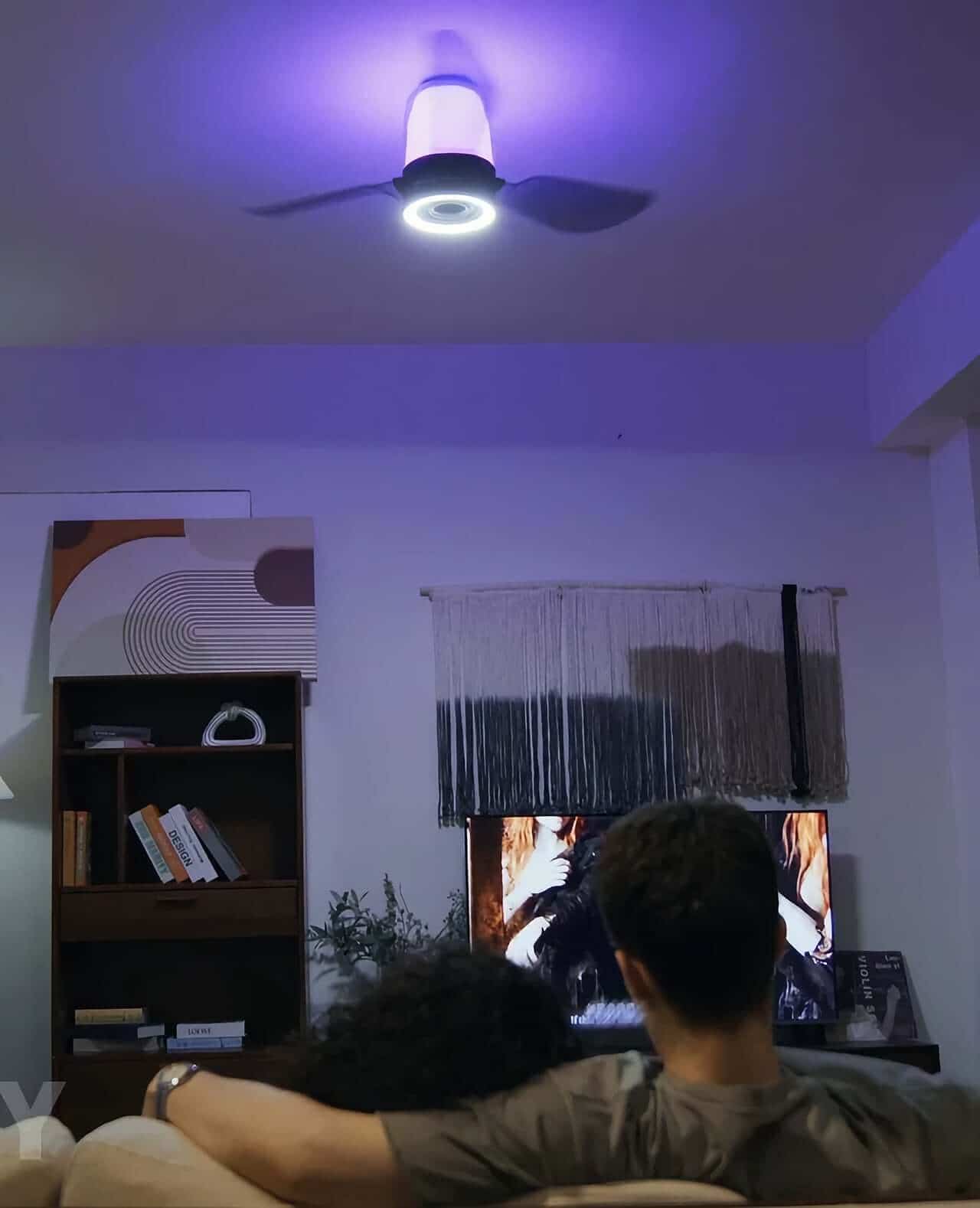
There’s also something appealing about the design philosophy here. If the hardware is going to disappear visually, it still has to perform when you sit down and listen. Hidden technology can be easy to overlook, but weak sound has a way of announcing itself immediately. By using a Jamo-tuned speaker system, WindGroove is signaling that the AirFi One is meant to be heard—even if it isn’t meant to be seen.
Quiet Airflow for More Than Just Summer
The music system may be the headline feature, but the fan still has to do its original job. AirFi One is rated for maximum airflow of 4,621 CFM while operating below 32 decibels. That combination is designed to provide a noticeable breeze without forcing you to raise the volume every time the fan starts moving.
The blade direction can also reverse seasonally. In warmer months, the fan can circulate air downward for a cooling effect. When the weather turns cooler, reversing the direction helps move air differently through the room. The feature gives the fixture a purpose beyond summer and helps it earn its place overhead throughout the year.

Of course, airflow numbers only tell part of the story. The more interesting detail is how the fan fits into daily life. A ceiling fan that barely registers acoustically can run while you’re listening to an album, watching a movie, reading, or working. That kind of quiet background performance is exactly what a smart ceiling fan should offer: useful, present, and never annoyingly loud.
Two Lighting Zones Change the Mood
AirFi One also includes a dual-zone lighting system, separating practical illumination from more atmospheric light. The lower section acts as the primary light source, spreading bright and even illumination across the room rather than leaving the space dependent on a single harsh bulb.
You can choose between three color temperatures:
- Warm white for a cozy, relaxed atmosphere
- Natural white for comfortable everyday use
- Cool white for a crisp, energized feel
Stepless dimming allows the brightness to be adjusted gradually instead of forcing you to choose between a few fixed settings. That matters in real homes, where lighting needs change constantly. A bright setting might suit reading or getting ready in the morning, while a softer glow works better when the evening winds down.
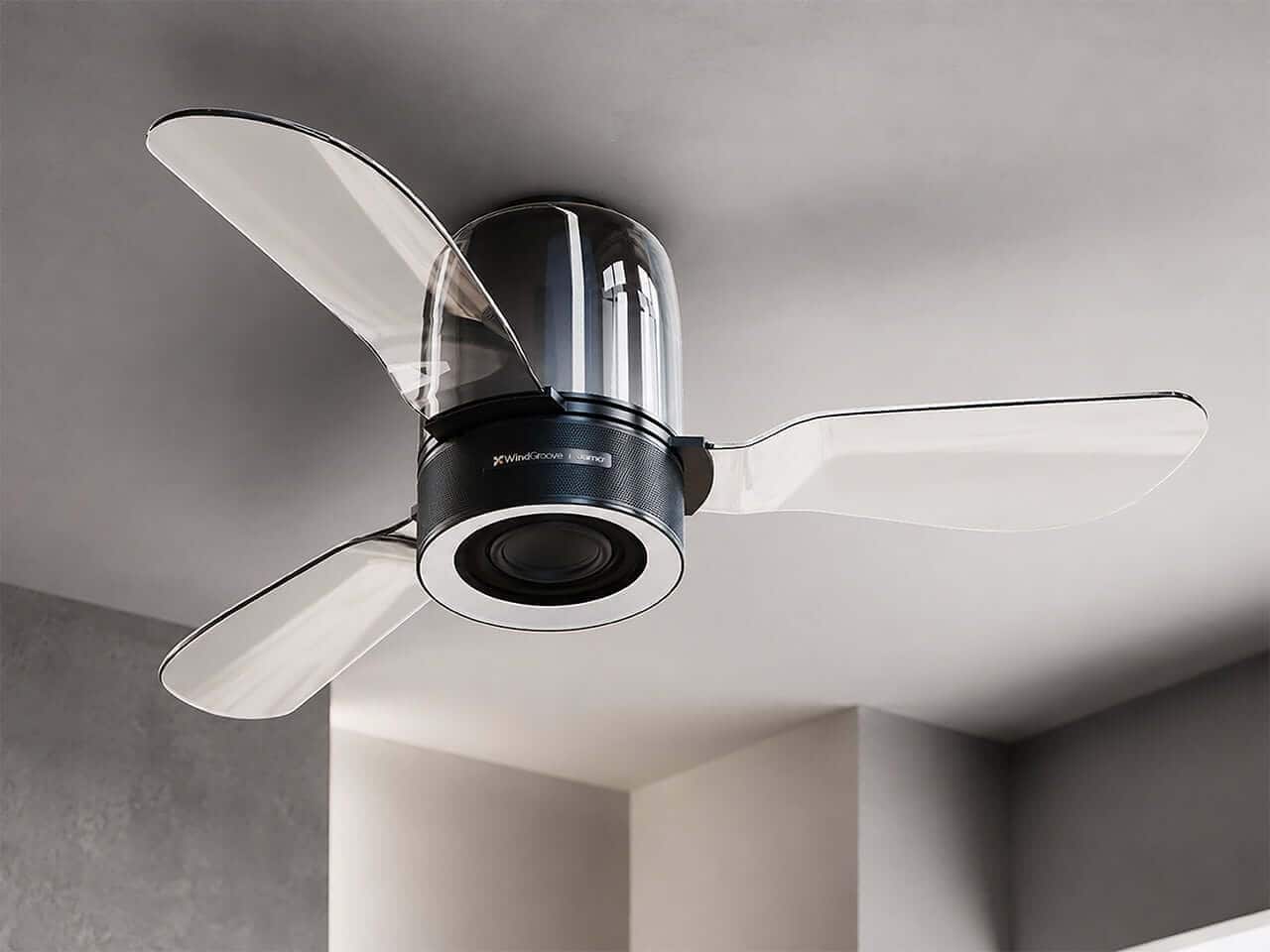
The combination of adjustable light, quiet airflow, and overhead audio creates a room that can shift personality without adding another object. Bright and practical in the morning. Calm and warm at night. A little music in the background when friends arrive. The ceiling fixture becomes less like a single appliance and more like a built-in stage manager for the atmosphere.
The Appeal Is in the Clutter-Free Experience
Picture a Friday evening. The lights are dimmed to a warm glow, the fan is moving air almost silently, and the music fills the room without coming from a speaker perched on a shelf. There’s no standing fan occupying the corner, no bookcase being slowly colonized by electronics, and no hunt for the one remote control that somehow disappeared beneath a cushion.
That’s the real appeal of AirFi One. Its strongest feature may not be any individual specification but the way the system reduces visual noise. The fan doesn’t ask you to make room for it. The speaker doesn’t need a dedicated stand. The lighting doesn’t require another fixture on the wall or table.
It’s the kind of change that can feel almost invisible at first. Then you spend an evening in the room and realize the space feels more open. The furniture has room to breathe. The music seems to belong to the room rather than sitting inside a box. Sometimes the best technology is the gadget you stop noticing.
Pricing and Availability
WindGroove lists AirFi One at a retail price of $499, with the product available through the company’s website. The promotional listing included a $480 offer compared with a crossed-out $815 price, described as 40% off when using the coupon code “YD15.” Because promotions can change, shoppers should verify the current terms before ordering.
The difference between this fixture and a makeshift setup is obvious, even if the joke is tempting. You could try attaching a Bluetooth speaker to a standing fan and call it innovation—but that arrangement would hardly deliver the same integration, acoustic tuning, lighting control, or polished appearance.
AirFi One is a more deliberate answer to a simple question: if light and airflow already come from the ceiling, why shouldn’t music join them there too?
Conclusion
AirFi One turns an overlooked ceiling fixture into a quietly ambitious piece of room technology. With an 80W three-way Jamo-tuned audio system, adjustable lighting, seasonal airflow, DSP-based sound correction, and a motor rated below 32 decibels, it aims to make the room feel better without making the hardware feel busier. Would you welcome a ceiling fan speaker into your living space, or do you still prefer your music equipment where you can see it?
FAQ
- What is the WindGroove AirFi One?
WindGroove AirFi One is a ceiling-mounted fixture that combines a fan, an 80W Hi-Fi speaker system, and adjustable smart lighting in one unit. - How powerful is the integrated audio system?
The speaker system is rated at 80 watts and uses a three-way arrangement with two 15-watt mid-high drivers and a dedicated 50-watt subwoofer. - What does the Jamo partnership add?
Jamo co-developed the audio system and contributed its speaker-tuning expertise and Scandinavian design heritage to the AirFi One’s sound profile. - How quiet is the ceiling fan?
The motor is rated below 32 decibels, allowing the fan to operate with less mechanical noise while music is playing. - What lighting options are included?
The system offers warm white, natural white, and cool white color temperatures, along with stepless dimming for more precise brightness control.
If you love the way music can shape a room, take a look at our favorite album cover posters. They’re a warm, visual companion to the listening experience—perfect for giving your walls a little more personality.
 | DISCOUNTGET 30% OFF*Use code on your next order:
|
* This post may contain affiliate links, meaning we earn a commission if you make a purchase through these links, at no additional cost to you.