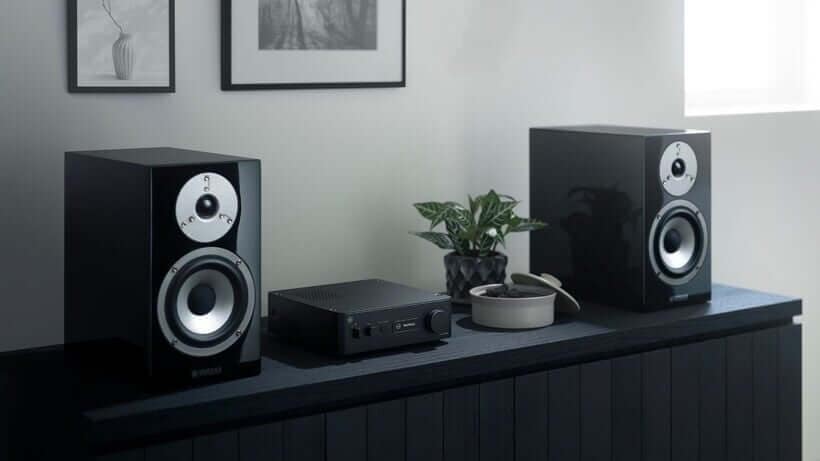
Yamaha Streaming Amplifiers: Meet the WXA-70A and WXC-70A



Yamaha Streaming Amplifiers: Meet the WXA-70A and WXC-70A
Yamaha streaming amplifiers arrive with premium ESS conversion, room correction, smart-home control, and broad wireless support for modern hi-fi systems.
Yamaha’s New Hi-Fi Pair
There’s something wonderfully satisfying about a proper hi-fi separate: one carefully built component, one clear purpose, and none of the clutter of an all-in-one system. Yamaha is leaning into that appeal with two new additions, the WXA-70A streaming amplifier and the WXC-70A streaming pre-amplifier.
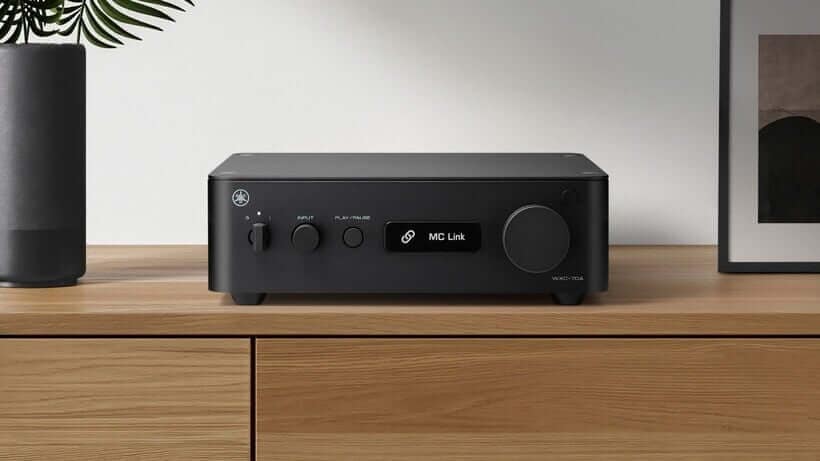
The two models share the same digital architecture and connectivity features, but they serve different roles in a stereo setup. The WXA-70A adds built-in amplification for passive speakers, while the WXC-70A is designed to act as the control center in a system that already has a separate power amplifier.
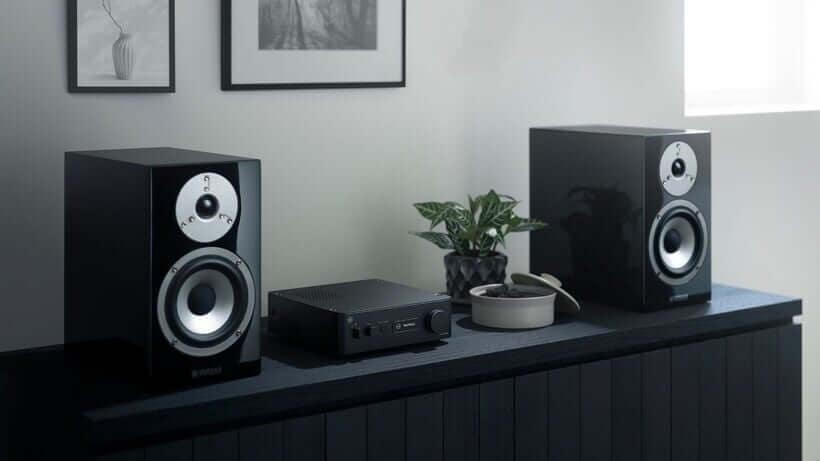
For anyone who remembers when a streaming system meant juggling a computer, a cable, and a small external box, these Yamaha streaming amplifiers represent a much tidier direction. Music, television audio, and multi-room playback can all sit inside one polished ecosystem.
A Premium DAC at the Heart of the System
The technical foundation of both units is an ESS SABRE ES9039Q2M digital-to-analogue converter. This is the component responsible for turning digital audio data into the analogue signal that eventually reaches your amplifier and speakers.
Yamaha positions this DAC as a chip more commonly associated with higher-priced separates, which gives the WXA-70A and WXC-70A a serious digital front end on paper. That matters because today’s listening habits are rarely limited to a single source. A system might be asked to handle wireless music streaming in the morning, a television soundtrack in the evening, and a high-resolution album later at night.
Rather than treating those sources as separate experiences, the Yamaha pair is built to process them through the same core conversion system. It’s a little like having one well-organized kitchen for every meal instead of collecting a different appliance for every snack.
D.O.P.G. Design Targets Digital Noise
That converter works alongside Yamaha’s proprietary D.O.P.G. circuit design. Its purpose is to isolate sensitive analogue signals from digital noise within the component.
This is an important detail in a modern streaming product. Digital circuitry is busy by nature, with processing, wireless communication, and data handling all happening inside the chassis. Analogue audio signals, by contrast, are delicate. If those two worlds are allowed to interfere with one another, the result can undermine the clarity a carefully selected DAC is supposed to provide.
Yamaha’s approach is to separate those signal paths as much as possible. The aim isn’t flashy technology for its own sake; it’s a cleaner handoff between the digital information entering the system and the analogue music leaving it.
ASRC Technology Helps Preserve Timing
The same DAC is paired with Yamaha’s ASRC clock-rebuilding technology. This system works to reduce jitter before the audio signal reaches the converter.
Jitter refers to unwanted timing variation in the digital signal. Music is made from precise relationships between notes, rhythms, and transients, so timing accuracy plays a major role in how stable and focused playback feels. When the signal is properly timed, instruments can sound better organized and the presentation can feel less blurred around the edges.
Yamaha says this architecture is designed to preserve timing accuracy across a wide range of sources, from wireless streaming services to audio supplied by a television. That broad source coverage is useful because a living-room hi-fi system now has to behave like both a music player and a home entertainment hub.
The result is a design that tries to keep the digital side of the experience controlled, even when the incoming audio comes from very different places.
The WXA-70A Adds Class D Power
The WXA-70A takes the shared digital platform and combines it with Class D amplification from ICEPower’s newest 125ASX2 generation.
Its rated output is 70 watts per channel into 8 ohms and 105 watts per channel into 4 ohms. Those figures describe how the amplifier responds to different speaker loads, giving prospective owners useful information when matching it with passive speakers.
In practical terms, the WXA-70A is the more self-contained option of the two. You can connect a pair of speakers directly to the amplifier rather than adding a separate power amp to the rack. That keeps the system compact while preserving the separate-component approach that many hi-fi listeners enjoy.
It’s a neat middle ground: less sprawling than a traditional stack of boxes, but more deliberate than a basic wireless speaker. The amplifier remains the engine room, while the streaming and conversion technology handles the modern source material.
YPAO Room Calibration Fine-Tunes Playback
Of course, even an excellent component can’t completely ignore the room around it. Walls, furniture, floor coverings, and speaker placement all affect what reaches your ears. Yamaha addresses that challenge with YPAO room calibration.
An included microphone measures the listening space, allowing the system to adjust playback so the soundstage better suits the room. The process is intended to account for the environment rather than assuming every listener has a perfectly symmetrical space with speakers placed at textbook distances.
That’s especially helpful in real homes, where the listening position might share space with a sofa, a television cabinet, a bookshelf, or the occasional houseplant that has somehow claimed prime acoustic territory. Room calibration doesn’t remove the importance of speaker placement, but it gives the system another tool for adapting to its surroundings.
Television Audio Fits Into the Setup
The WXA-70A and WXC-70A can both connect to a television through HDMI eARC or ARC. This lets the Yamaha units handle TV audio alongside music streaming, making them suitable for a living-room system rather than a music-only corner.
The HDMI connection also allows a compatible television remote to control volume and power. That small convenience can make a big difference during everyday use. Nobody wants to reach for three remotes just to lower the volume during a movie, especially when the dramatic dialogue has suddenly become louder than the soundtrack.
With the right television connection in place, the Yamaha system can become part of the normal viewing routine. Music playback and TV listening remain available without requiring a separate soundbar or an additional audio hub.
Dialogue Level Brings Voices Forward
For films and sports, Yamaha includes a Dialogue Level control. This feature adjusts vocal clarity without increasing the overall volume.
That distinction is useful when voices are getting lost beneath background music, crowd noise, or cinematic effects. Instead of turning up everything and making the next action sequence painfully loud, listeners can focus on the spoken content while keeping the overall listening level more comfortable.
It’s a practical touch, and one that feels particularly relevant for late-night viewing. The goal is simple: clearer voices without making the whole room feel as though it’s hosting a live event.
MusicCast Extends Playback Around the Home
The WXA-70A and WXC-70A also support Yamaha’s MusicCast multi-room platform. This allows them to connect with other compatible Yamaha speakers around the home.
Multi-room audio can be wonderfully convenient once it’s set up. A playlist can begin in the main listening room and continue elsewhere, or different compatible products can be used in separate spaces. The appeal is less about filling every room with maximum volume and more about making the home feel connected through the same music system.
For listeners already invested in compatible Yamaha products, the new models can slot into that wider environment rather than operating as isolated components.
Streaming Support Covers the Major Services
The streaming compatibility list is extensive. Both models support AirPlay 2, Google Cast, Roon Ready, Spotify Connect, Tidal Connect, and Qobuz Connect.
That collection covers a broad range of listening preferences and control methods. AirPlay 2 and Google Cast make it easy to send audio from compatible devices, while Spotify Connect, Tidal Connect, and Qobuz Connect allow their respective apps to communicate directly with the system.
Roon Ready support is also included for listeners who organize their libraries through a dedicated music-management platform. The overall approach is refreshingly broad: owners shouldn’t need to purchase a separate bridge device or hub simply to access the service they already use.
In other words, Yamaha is treating streaming as a central part of hi-fi rather than an afterthought attached to an amplifier later.
Smart-Home Features for Custom Installations
The pair is also designed with more advanced installations in mind. Both models include Control4 integration, a built-in web setup tool, an IR input for wired control systems, and 12V trigger support.
These features are aimed at systems where several components need to work together. Control4 integration can help the Yamaha units communicate with a broader smart-home setup, while the web-based configuration tool gives installers another way to manage the system.
The IR input supports wired control arrangements, and the 12V trigger can synchronize power with other connected components. That means the Yamaha unit can be part of a coordinated system rather than requiring every component to be turned on and adjusted separately.
Wireless Settings Offer Extra Control
Installation flexibility continues with the wireless settings. During setup, installers can disable Wi-Fi and Bluetooth independently.
That may sound like a small feature, but it can prevent unwanted source selection in busy environments. If guests or nearby devices are able to connect freely, the wrong phone can occasionally become the unexpected DJ. Disabling either wireless function when it isn’t needed gives installers more control over how the system behaves.
For a carefully configured home theater, listening room, or smart-home installation, that extra level of management can make the experience feel more intentional and dependable.
Pricing and Availability
Yamaha has priced the WXA-70A at £1,199, while the WXC-70A is listed at £859. Both models are scheduled to reach UK retailers in November this year.
The pricing reflects their different functions. The WXA-70A includes the amplification stage needed to drive passive speakers, while the WXC-70A works as a streaming pre-amplifier for systems that use a separate power amplifier.
Together, they offer two routes into Yamaha’s latest streaming platform: a more self-contained amplifier for a compact setup, or a dedicated pre-amplifier for listeners building a larger separates system piece by piece.
Conclusion
Yamaha’s new streaming amplifiers bring together premium digital conversion, room calibration, television connectivity, multi-room playback, and serious installation control in two clearly defined formats. The WXA-70A is the straightforward all-in-one amplifier option, while the WXC-70A gives separates fans a flexible streaming command center.
Would you choose the compact power of the WXA-70A, or build around the WXC-70A with a separate amplifier?
FAQ
- What is the difference between the Yamaha WXA-70A and WXC-70A?
The WXA-70A is a streaming amplifier with built-in Class D amplification for passive speakers. The WXC-70A is a streaming pre-amplifier intended to connect to a separate power amplifier. - How much power does the WXA-70A provide?
The WXA-70A is rated at 70 watts per channel into 8 ohms and 105 watts per channel into 4 ohms. - Do both Yamaha models support television audio?
Yes. Both units can connect to a compatible television through HDMI eARC or ARC, and the TV remote can control volume and power through that connection. - Which streaming services work with the new Yamaha units?
The models support AirPlay 2, Google Cast, Roon Ready, Spotify Connect, Tidal Connect, and Qobuz Connect. - Can the WXA-70A and WXC-70A be used in a multi-room system?
Yes. Both models support Yamaha MusicCast, allowing them to link with other compatible Yamaha speakers around the home.
Bring a little of that thoughtfully engineered hi-fi spirit to your listening space with a favorite album cover poster from Architeg Prints. It’s a warm, stylish way to give your music corner the visual character it deserves.
 | DISCOUNTGET 30% OFF*Use code on your next order:
|
* This post may contain affiliate links, meaning we earn a commission if you make a purchase through these links, at no additional cost to you.